I keep a sticky note on my desk that says “9 sets” in green pen. It’s been there since January, when I tallied up everything Wizards announced for 2026 and tried to decide whether to keep buying boxes the way I used to. Nine sets. One a month, basically, with prerelease cycles overlapping. I’ve been collecting since Onslaught and even I felt pre-tired looking at it.
Then Hasbro’s preliminary Q1 numbers came out last week, and the sticky note suddenly made a lot more sense.
Hasbro pre-released projected Q1 2026 revenue of 970 to 985 million dollars, up 9 to 11 percent year over year, with operating profit growing 38 to 44 percent. The company filed prelims early because of a March cybersecurity breach that delayed the proper Q1 report (the full one drops May 20). They wanted investors to see one specific story before that: Magic is the engine.
That’s not a casual claim. Last Q4 alone, Magic revenue jumped 141 percent year over year, hitting 502 million dollars for the quarter. Q3 2025 came in at 459 million, up 55 percent, with a 44 percent operating margin inside the Magic segment. Year-to-date through Q3, Magic was up 40 percent. Hasbro authorized a one-billion-dollar buyback in February largely on the back of those numbers.
So when I look at the 2026 schedule and think “this is too many sets,” what I’m actually looking at is the financial plan of a publicly traded company. The schedule isn’t easing up.
The numbers tell a specific story
Here’s what jumped out reading the earnings transcripts, which is something I do mostly to feel less surprised every February when a Secret Lair drops a card I just paid full retail for.
Magic now generates more revenue per quarter than the entire Wizards segment used to a year ago. Final Fantasy became the highest-grossing Magic set ever the moment it released. Tarkir: Dragonstorm took the title of best-selling premier set in franchise history. Avatar: The Last Airbender carried Q4 to a 141 percent year-over-year jump. The CFO on the Q3 call mentioned, sort of offhand, that Magic’s backlist sets — meaning anything not the current release — had hit an “all-time annual sales record” by mid-2025.
That last one matters more than the headline numbers, I think. Backlist means people aren’t just chasing the new shiny thing. They’re going back and buying older sealed product, completing collections, picking up Commander precons from sets that came out 18 months ago. Hasbro now has data showing a Magic set sells essentially forever once it’s printed, which is why they keep printing more of them. Why wouldn’t they.
For 2026 they’ve already announced collaborations with Teenage Mutant Ninja Turtles, The Hobbit, Star Trek, and Marvel Superheroes, plus original-IP sets. Anyone who was hoping the Universes Beyond ratio would peak and stabilize should look at investor language: management describes UB as “new player and total player expansion.” That’s a forecasting term. UB is the growth lever.
What this changes for collectors
So I sat with all this for a couple days and then I went and looked at my own binder.
The rules of “what stays valuable” are different now than they were five years ago, and I don’t think the community has fully internalized that. Reprint pressure on Commander staples is permanent. Sol Ring being in every precon is the obvious example, but the same logic now applies to format-defining cards in any color. If a card is too good not to play in Commander, it’ll get reprinted. Probably this year. Possibly next month, in a Secret Lair you didn’t know was coming. The collectors I know who track this carefully have already moved away from sit-and-hold on staples, because the sit-time keeps getting shorter.
What tends to hold value? Three things, roughly. Limited-print specialty products (Festival in a Box, certain Secret Lairs once they’re past the drop window). Cards from sets that get unusual treatment, like the Star Wars Holo Stamp Strixhaven cards being a recent example. And cards that hit Commander demand inside formats that don’t get reprinted often, which is mostly Reserved-List-adjacent stuff and pre-modern singles.
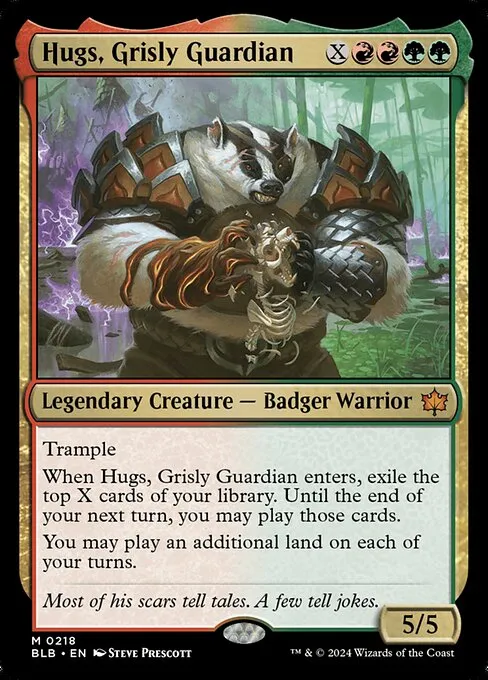
Notice what’s not on the list. New-set chase rares from in-universe sets, mostly. The hot card from Bloomburrow that everyone wanted last summer? Some of those are bulk now. I had a foil Hugs, Grisly Guardian I pulled from a Bloomburrow prerelease pack, held thinking Rakdos legendary creature decks would push it, and sold it last month for under two dollars. Less than I paid for the prerelease kit. Net negative if you count my time.
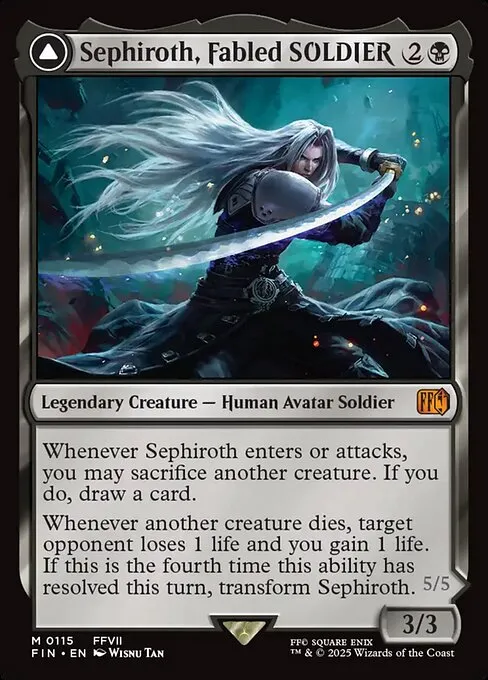
I’m a little less sure about Universes Beyond, honestly. The pattern with Final Fantasy and Avatar so far has been: huge initial spike on collector-relevant cards, then a slow grind down as Hasbro reprints the staples in non-IP versions. But because the IP cards have outside-MTG demand (FF fans, Avatar fans), the floor on those ends up higher than for in-universe equivalents. So a Sephiroth, Fabled SOLDIER maintains real value even after the mechanical effect gets reprinted, because someone who doesn’t play Magic might still want one. I don’t know if that holds equally for every collaboration. The Hobbit is more obvious to me than TMNT. Ask me again in 2027.
Practical takeaways
The takeaway, for managing a collection: get your baseline tight before the rest of 2026 lands. I’ve gone monthly with the value sweeps instead of quarterly. If you’re holding a Commander deck that depends on cards that haven’t been reprinted in three years, write down what they’re worth. Today. Before the next Secret Lair shows up and either confirms them or knocks 30 percent off your floor.
I scanned my whole rare binder again last weekend. Took maybe an hour spread across two evenings, and the value had shifted by something like 18 percent in either direction across enough cards that I would’ve gotten the total wrong by a lot if I’d been guessing. Most of the movement was Commander demand on cards I’d assumed were sleepy. I keep going back to the bulk box approach too, because the math on bulk-found rares has gotten unreasonably good lately. LGS owners are still pricing on 2023 assumptions.
Be skeptical of any sealed-investment pitch right now. Hasbro is incentivized to print as long as the demand curve allows it, and “we will probably reprint this set” is now part of the published growth strategy. Final Fantasy boxes are already sliding two months out, and that was the highest-grossing set in franchise history.
Past that, there’s not much to do except plan. Hasbro’s full Q1 call is May 20. The 2027 set lineup gets revealed sometime in August or September, traditionally. If you find yourself on a forum complaining about the cadence, save the post — you’ll want to copy-paste it again in October when the next collab gets announced. I drafted my plan for the rest of 2026 already. Mostly it’s: buy less sealed. Scan more. Accept I’m not finishing every set this year. Maybe I do, I don’t know. Sticky note still says nine.