Seven bucks a pack. That’s where we are now. A single Play Booster of The Hobbit runs $6.99 at MSRP, and the first time I saw that on a preorder page I assumed some third-party seller was padding their margin. Nope. That’s the number Wizards printed. A normal Standard booster sits around $5.25 to $5.49, so we’re paying an extra buck-fifty a pack before we’ve cracked a single one.
The Hobbit lands August 14, and preorders have been live since the start of May. It’s the second Universes Beyond set of the summer, right on the heels of Marvel Super Heroes, and it follows the exact playbook that made 2023’s Lord of the Rings set a secondary-market monster. Middle-earth sells. Wizards knows Middle-earth sells. The whole product line is priced like a company that knows it.
So consider this a Hobbit product guide, the “which box should I actually buy” kind. Except the honest answer depends on who you are more than it normally does, because Wizards did one thing with this lineup that quietly rewrites the usual math.
No Commander precons. None.
There are no preconstructed Commander decks in The Hobbit. That’s not a small thing. For years now the default move on a release weekend has been simple: walk into your LGS, grab a precon for fifty or sixty bucks, and you’ve got a hundred-card deck you can shuffle up that afternoon. It’s the cheapest real way to play a new set without gambling on packs.
Gone. The replacement, if you can call it that, is a Draft Night kit at $119.99 that bundles twelve Play Boosters, a Collector Booster, and a stack of lands, built for four-person draft pods rather than a Commander table. So the cheapest “buy one thing and actually play on launch day” option is now the Bundle at $69.99. Everything above that starts at a hundred and twenty and climbs.
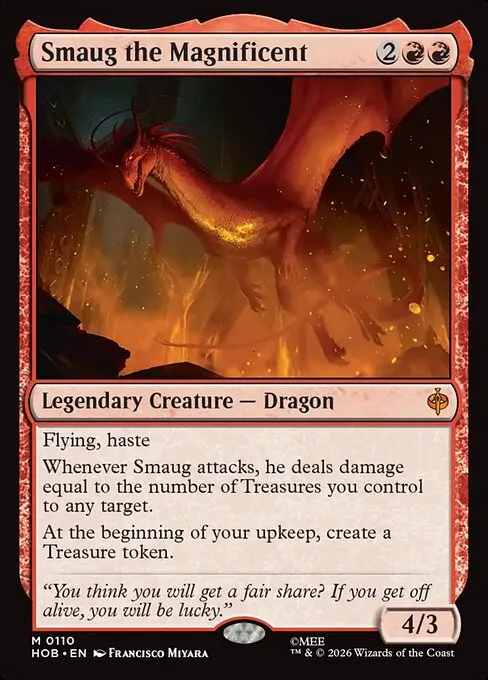
So yeah. No precons. Which, for me, is the strange part. I don’t draft much anymore. Most of my Magic these days is Commander with the same four people, and a precon is how I usually onboard a new set into that group. This time there’s just… no obvious front door. You either draft it or you buy singles after the fact. That’s a real shift in how a set gets into your collection, and nobody’s really talking about it because the Smaug art is very shiny.
What you’re choosing between
Here’s the whole board, at MSRP:
- Play Booster Box (30 packs): about $209.70
- Collector Booster Box (12 packs): about $450
- Bundle: $69.99
- Gift Bundle: $89.99, and note it doesn’t ship until September 4
- Draft Night: $119.99
- Scene Boxes (Crack the Plates and Treasures of Smaug): $41.99 each
Line those up against a typical recent Standard set and the premium is real across the board, roughly a quarter more on the Play side and closer to forty or fifty percent per pack on Collector product. A Standard Play box usually runs $150 to $165. This one’s two-ten. Wizards points at the Universes Beyond licensing and the set-exclusive treatments, which, fine, the Dragon Hoard frames and the surge foils genuinely don’t exist anywhere else. Whether that’s worth a fifty-dollar-per-box tax is a you problem, not a me problem.
The Gift Bundle and the Collector Boosters, predictably, are the first things to vanish. Both were already out of stock at Amazon’s direct fulfillment when I checked, and the Gift Bundle only got hard to find because people worked out it contains a Collector Booster. Secondary listings on Collector boxes are already sitting at $480 to $530, comfortably over the $450 floor, and that’s before launch week does its thing.
The $37.99 question
That’s the one worth slowing down on. A single Collector Booster is $37.99. Twelve of them plus a box topper is your ~$450 box. What’s the pitch? Fifteen cards, everything foil or Booster Fun, and a lottery ticket at the top: the Gleaming Gold version of Smaug the Magnificent, of which only about 500 exist, Collector Booster exclusive across every language.
I dug into the general Collector-versus-Play question in more depth in what $37.99 actually buys you, and the short version holds here: you’re paying for foils and treatments, not for expected dollar value. The Gleaming Gold Smaug will price itself into the stratosphere (early guesses throw around numbers I’m not going to repeat because they’re pure speculation), but at 500 copies your odds of pulling one out of a box are, statistically, a rounding error. Everything else in the box is the “nice foils of cards I’d have bought anyway” bucket.
And the reprints are a genuine draw here, more than most sets. The One Ring comes back with a new Box Topper treatment (the original LTR copy still runs north of $100, so a fresh printing matters). Tom Bombadil, Sauron, and a Dwarvish-language Arcane Signet round it out. The Signet’s a bulk card at about seventy cents in any normal printing, but a version of it written in the runes Gandalf scratched on Bilbo’s door? People will pay silly money for that, and I say that as someone who owns four Signets I’ve never sleeved.
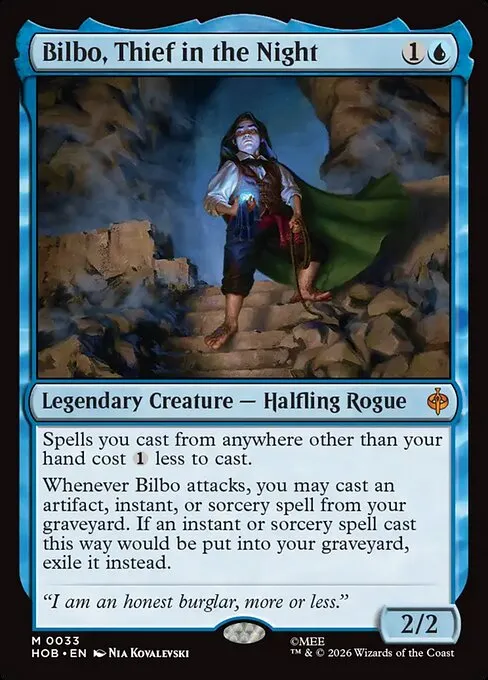
One thing to keep in your head: those preorder singles prices you’re seeing right now are preorder prices. Smaug’s regular version is listed around $67.70 as I write this, Bilbo and Thorin in the forties. Those are spoiler-season numbers, propped up by a thin market of people who need it today. Once boxes crack open on the 14th and supply floods in, most of those settle downward. How far, I honestly don’t know. Marvel’s did. LOTR’s chase cards mostly didn’t. This set’s somewhere in between and I’d stop pretending anyone can call it to the dollar.
What a Hobbit product guide can’t tell you yet
The set’s still mid-spoiler. Scryfall’s only showing a few dozen cards. So any guide claiming to rank the “best value box” right now is guessing at the back half of the set, and so am I. What I can tell you is who each product is for, because that part doesn’t depend on the last forty commons.
If you just want to play the new set, get the Bundle. $69.99, nine Play Boosters, some lovely full-art Shire lands, and you’re done. If you want a real chunk of cards to draft or brew with, the Play box at two-ten is the honest workhorse, and IGN noted it may drift toward $189 before release the way Marvel’s did, so there’s no rush to lock it at full price.
Look, I keep going back and forth on the Collector box. Part of me says $450 for foils and a near-zero shot at a gold dragon is exactly the kind of thing I’ve talked friends out of. Then I remember opening a Collector box of Tales of Middle-earth on launch night in 2023, fully expecting a serialized something, and pulling a foil Nazgûl and three Scene cards I already had framed on a shelf. Total letdown in the moment. But I still have that box’s cards, they’re gorgeous, and I don’t actually regret it. So my head says skip it and my collection says otherwise. Make of that what you will.
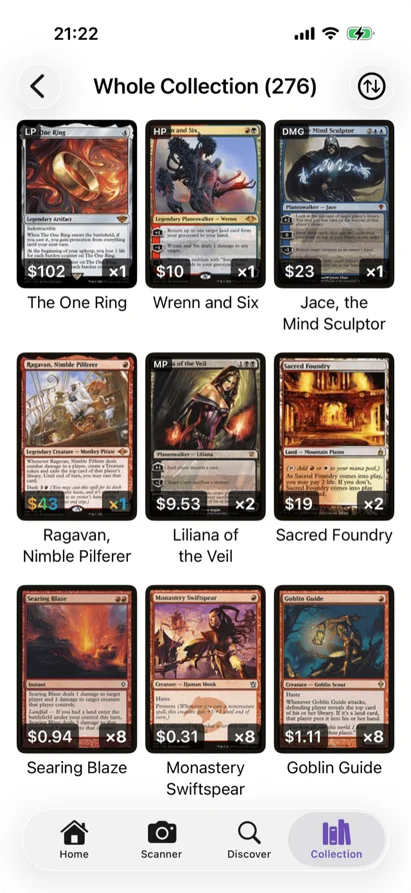
Whatever you land on, buy it from a store selling at or near MSRP, and check your local shop before Amazon or a marketplace listing. The apparent savings online tend to evaporate once a third-party seller quietly pockets thirty bucks over retail, or the wrong SKU shows up on your doorstep. And when your box does arrive, log what you pull before the prices move. I scan a box straight into Eldwyn on crack night now, partly so I’ve got a record of what the thing actually returned at release, and partly because I’ve learned the hard way that “I’ll sort it later” means finding an unsleeved mythic under the couch in October. Whether you hold the rest sealed or open it all is a separate decision, and one this set makes surprisingly tempting given how fast Middle-earth product tends to dry up.