There’s a specific kind of paralysis that hits me in the singles aisle at my LGS. I’ve got a sealed Commander precon in one hand, $50 on the price tag, and I’m doing the thing where I flip it over to read the decklist on the back and mentally price out the cards I actually care about. The other hand is hovering over the singles binder. I stand there long enough that the guy behind the counter starts to look concerned.
The question underneath all that hovering is whether to buy the precon or the singles. It’s one of the oldest arguments in Commander, and it comes back around every time Wizards drops another batch. Which, lately, is constantly. We’re seven precons into 2026 already and it’s barely summer.

Most of the advice you’ll hear is some version of “the precon is great value, look at all those reprints.” Sometimes that’s true. But “value” is doing a lot of lifting in that sentence, and I want to actually pull it apart, because the way I think about it now is pretty different from how I thought about it five years ago.
The math nobody actually does
Here’s how the value pitch usually goes. Somebody on YouTube fans out the decklist, points at the chase reprints, adds up the singles prices, and announces the deck contains $90 of cards for a $50 box. Free money.
The problem is that number is the value of all 99 cards. You are never going to use all 99 cards. Nobody builds a precon and keeps every card in it. You swap the bad commons, cut the filler, upgrade the mana base. So the “$90 in singles” figure is measuring a thing you won’t do.
The number that matters is smaller and more annoying to calculate. Of the cards in this precon, how many would I have bought as singles anyway? That’s your real overlap, and almost always the value is concentrated in one, two, maybe three cards.
Take a typical recent precon. The reprint value that makes the thumbnail is usually a Smothering Tithe (around $53 depending on printing) or a Cyclonic Rift (sitting near $35 across most of its printings). Those two cards alone justify a $50 box if you needed both. But then you look at the rest of the “value” and it’s Sol Ring at $1.86, Arcane Signet at 62 cents, Cultivate at about 30 cents. Real cards. Fine cards. Cards you want in the deck. Worth basically nothing as singles.
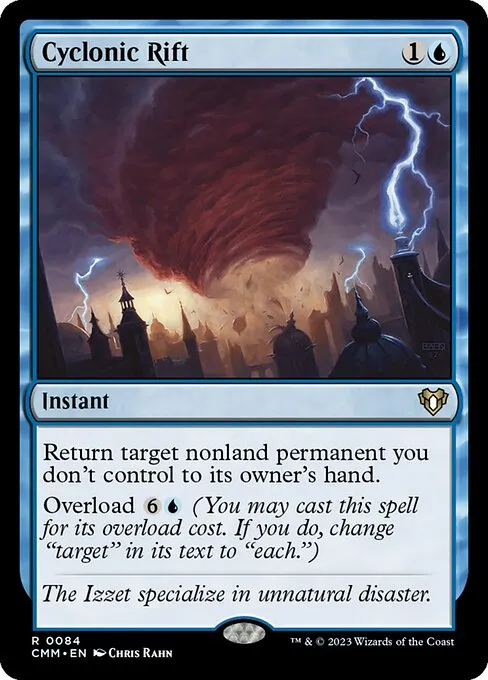
So the honest comparison isn’t “$50 box vs $90 of cards.” It’s “$50 box vs the two cards I’d actually go buy, which cost $53 and $35.” Framed that way the precon usually wins, but only because of those one or two heavy hitters. Pull them out and the math collapses.
The reprint timing trap
There’s a wrinkle that trips people up, and I’ve been on the wrong side of it. When a card gets its first reprint in a precon, the price you’re staring at is the old price, the pre-reprint price. It hasn’t absorbed the new supply yet.
I wrote a whole thing about how Commander spec cards crash after a reprint, and this is the same mechanism from the buyer’s side. The decklist drops, everybody screenshots the current $53 Smothering Tithe, and three weeks after the precon actually hits shelves that number is sliding because there are suddenly a lot more copies in circulation. If you bought the precon to “save money” on a card that was about to get cheaper anyway, you didn’t save anything. You paid early.
This is why I’ve mostly stopped buying precons for their reprints specifically. If I want a reprint and it’s in a product about to flood the market, I can usually just wait and buy the single after the dust settles, often for less than my share of the box would have cost. The precon math looks best the day the decklist leaks and gets a little worse every week after.
Although. Okay, counterpoint to myself. That’s only true for the genuinely chase reprints with deep demand. The cheap connective tissue, the Arcane Signets and the basics-fixing lands, those don’t really drop because they were already sitting on the floor. So if what you want is the whole functional shell of a deck, the timing trap doesn’t apply to you, because you weren’t buying the box for the one expensive card.
When “just buy the singles” falls apart
The singles-only crowd has a blind spot, and it’s a big one. Their advice quietly assumes you already own a collection.
“Just buy the cards you need” is fantastic if you’ve been playing ten years and have a box of 2,000 random cards to pull lands and ramp and removal from. You snag the four cards from the precon list you actually want and build the rest from your stuff. For you, the singles route wins almost every time.
If you’re newer, or moving into a color you’ve never played, you don’t have the chassis. You don’t have 37 lands sitting around. You don’t have the Swords to Plowshares and the Arcane Signet and the eight pieces of interaction that turn a pile into a deck. Buying all of that as singles, even though each card is cheap, is a genuinely miserable afternoon. You’re placing a cart of forty cards that cost 40 cents each, paying shipping or driving to the store, sleeving them one at a time. The precon hands you the entire skeleton for $50 and you’re done.
So I’ve landed somewhere boring and reasonable. The precon is a chassis purchase. You buy it when you want a functioning deck in a color or strategy you can’t already assemble from your shelf, and you cherry-pick singles when you’ve already got the bones and you only need the two or three cards that matter.
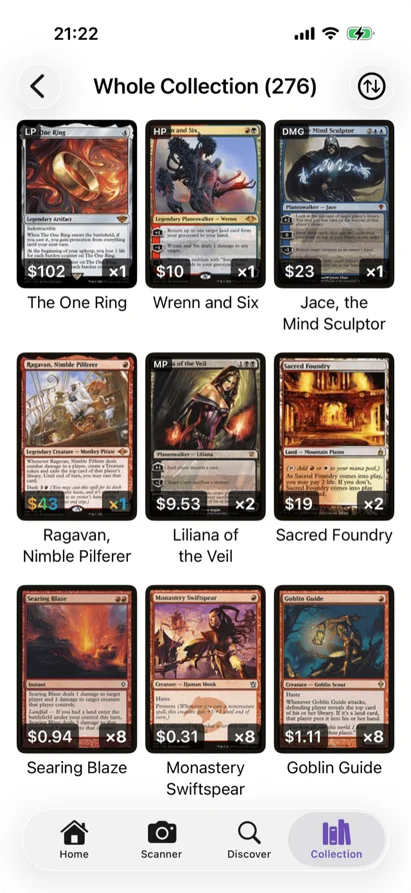
If you’re not sure which camp you’re in, the fastest way to find out is to look at what you own. I run the precon’s decklist against my collection before I buy anything now. Pull up the list, check it against what I already have, and the answer falls right out. If I own 60 of the 99, buying the box to get the other 39 is silly. If I own 12 of them, the box is the easy call. There’s a whole approach to building a deck from cards you already have that starts the exact same way.
The premium precons are a different animal
The math above is for the $50 standard precons. The Universes Beyond decks are their own conversation now, and they’re getting pricier. The Final Fantasy Commander decks last year ran well above the standard price, and the four Marvel Super Heroes Commander decks just got fully revealed this week ahead of the June 26 release, sitting in the same premium tier.
At $100-plus, the reprint-value defense gets shakier, because you need a lot more chase reprints to cover the box, and these decks lean part of their price on new-art and franchise-exclusive cards that don’t have a settled secondary market yet. The flip side is that the brand-new cards in a hyped UB precon can spike instead of sink, which is the opposite of the timing trap. I genuinely don’t know how to price that risk cleanly, and anyone who tells you they do is guessing. If you want to think it through deck by deck, I did that exercise for the Strixhaven Commander precons and the framework carries over.
The thing I do that I can’t fully defend
I’ll admit a habit that makes no financial sense. Sometimes I buy the precon and I already own most of the cards, because I like having the deck intact, in its box, ready to hand to someone at game night who didn’t bring anything. There’s a social value to a sealed-up precon that doesn’t show up in any reprint spreadsheet.
The worst version of this happened a couple of years back. I bought two copies of a precon I liked, with the explicit plan of keeping one pristine and tearing the other apart for the good cards. Classic move, lots of people do it. Except I then never played the pristine one, lost interest in the archetype inside a month, and now I have a sad upgraded pile in a deckbox and a still-sealed precon I’m weirdly attached to. The singles I harvested were worth maybe $20. I’d spent $100. So.
Running this math isn’t about winning the argument with the guy at the counter. It’s about knowing which question you’re answering before you’re standing in the aisle doing arithmetic with a sealed box in your hand. The rest is just deciding whether you want the cards or the deck, and those turn out to be very different purchases.