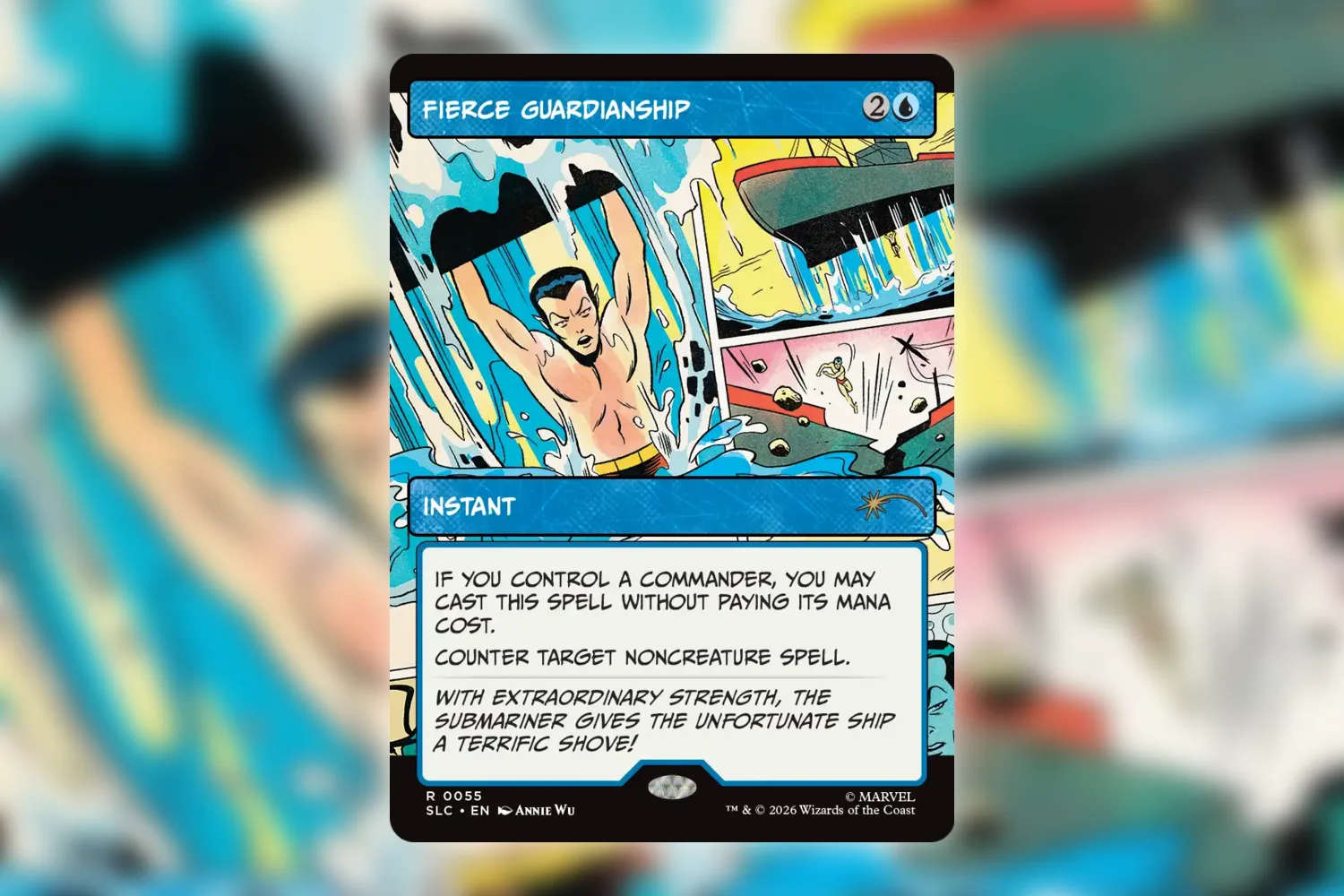
I’ve owned the same four copies of Steam Vents maybe six times, and the Star Trek set is about to make it seven. Not the same cardboard, exactly. I keep buying shock lands, sleeving them into a deck, trading that deck away a year later with the lands still inside, and then needing shock lands again for the next brew. So when the news broke that Magic: The Gathering | Star Trek reprints all ten of them at once, my honest first reaction was “great, I’ll rebuy Steam Vents, and this time it has a Cardassian taking a sauna on it.”
That’s the big reprint story of the set on the finance side. Every shock land, Blood Crypt through Watery Grave, stuffed into Play and Collector Boosters with a weird glowing computer-terminal frame that’s supposed to look like the Enterprise’s LCARS system. Wizards even dropped a little “you’re welcome, Standard players” into the reveal. And within about an hour of the First Look going up, I saw people asking whether they should sell the shocks they already have before the price tanks.
Don’t. Or at least, don’t sell them because of this. The shock lands are the part of this reprint list that matters least, and I think the panic has it backwards.
Star Trek’s shock lands were already the most reprinted good lands in Magic
Count how many times these have come back lately. Watery Grave and Godless Shrine were in Edge of Eternities last summer. Steam Vents and Overgrown Tomb were in Lorwyn Eclipsed back in January. Now Star Trek brings back all ten at once. Whatever shock you’re holding, it probably already caught a reprint inside the last year or so, and Star Trek is stacking another one right on top.
Prices already reflect the flood. As I’m writing this, Steam Vents sits around $13, Overgrown Tomb around $10, Watery Grave and Godless Shrine down around $8 to $9. These are cards every two-or-more-color deck in Standard, Pioneer, Modern, and a huge slice of Commander actively wants, and they still can’t push much past $14, because Wizards keeps opening the tap. A card that’s this cheap and this heavily supplied doesn’t have far to fall when it gets reprinted again.
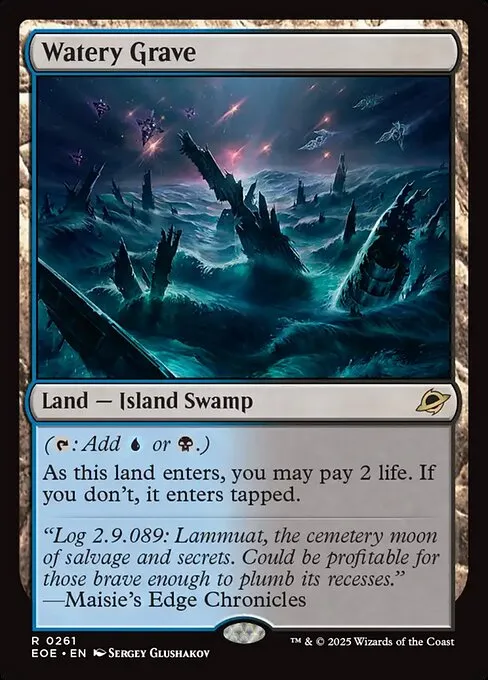
There’s good history here too. Years back, Star City Games ran a finance piece calling the shocks “the safest, most stable cards in Standard,” and the data held up: when Guilds of Ravnica brought five of them back, Steam Vents bottomed out around $7, and even that was a brief dip before it climbed again. The floor held because the demand underneath it is basically bottomless. Newer players enter, decks get built, the lands get absorbed. That’s why I trade for shocks whenever I can. They’re the closest thing Magic has to a savings account, and about as liquid as cardboard gets.
Could this time be different? I keep asking myself that, because the cycle getting hit this often, three sets touching it in barely more than a year, is genuinely a lot, more than it’s ever seen packed this tightly. Maybe the well finally runs a little dry and Steam Vents drifts to $9 or $10 and just stays there. But even in that version, you’re talking about a couple of dollars of slippage on a card that’s already down near its historical floor. That’s not a reason to dump a playset. That’s a rounding error.
The reprints that actually move your binder aren’t the lands
The stardates cards, though. Those are the ones I’d actually watch.
Wizards is putting 30 of these into the set. Each one is an existing Magic card given new Star Trek artwork, sprinkled through Play and Collector Boosters. And as of the First Look, they’ve shown maybe a handful. So I can’t hand you the list of all 30, because it doesn’t exist publicly yet. I don’t know what’s on it. Nobody outside Wizards does, and that blank space is the part actually worth watching.
A reprint only meaningfully moves a card that was scarce to begin with. When a card spikes on a new commander and then craters two weeks later, it’s because the supply changed while the demand was still speculative. I wrote a whole thing about that pattern in the reprint trap, and the short version is that reprints punish thin, hype-driven prices far more than they touch broad, structural ones. Shock lands are the most structural demand in the game. A $25 Commander staple that hasn’t been printed since 2019 has nothing like that floor holding it up.
So the stardates list is where a real number could show up. If one of those 30 slots turns out to be some pet card you’ve got four copies of tucked in a deck, and it hasn’t been reprinted in six years, that’s the one that quietly loses a third of its value in November while you’re busy watching the shock lands do nothing.
What to actually do before November 13
Baseline the dual-heavy part of your collection now, while the stardates list is still mostly a mystery.
I don’t mean sell anything. I mean write down what you have and what it’s worth today, so that when the full reveal drops you can see what actually changed instead of guessing. This is the same move I make every rotation, and I’ve got a longer version of the argument in the rotation baseline post, but it applies just as cleanly to a reprint set. The point of a baseline is that “did this reprint hurt me” becomes a two-second lookup instead of a vibe.
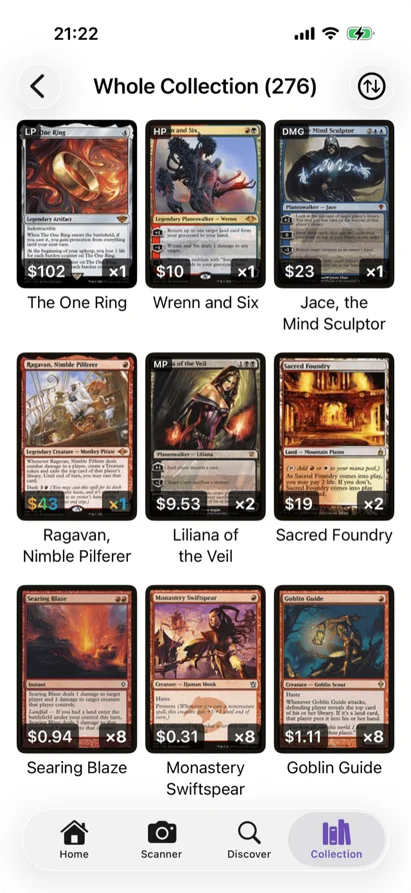
For me that’s mostly a scanning job. I pull the binder pages with the shocks, the fetches, the fixing, anything expensive-ish and multicolor, and I run them through Eldwyn so I’ve got a timestamped value on the lot. Takes maybe ten minutes for a couple hundred cards. Then I forget about it until the Star Trek gallery is complete, pull the same pages, and compare. If a stardates reprint clipped one of my staples, it shows up. If the shocks did what I expect and barely moved, that shows up too, and I get to feel smug for a paragraph.
Quick honesty check on myself, because I’ve been on the wrong side of this exact thing. Back during Guilds of Ravnica preorders I bought a playset of Watery Grave at around $18 each, dead certain they’d only climb because “shocks always hold.” They were under $10 by spring. I wasn’t wrong that shocks hold, I was wrong about when, and I paid for the timing. So take my “don’t panic-sell” with the appropriate grain of salt: the same instinct that says hold through a reprint is the instinct that had me buying at the top. What actually saved me since then is boring. I just know my numbers now, so I’m reacting to a real price instead of a gut feeling.
So yeah. Shock lands. Every single one, again, barely a year after the last batch got reprinted, now with a starship terminal glued to the frame. You know the drill by now. They’ll dip a dollar or two, the floor will hold, and six months from now they’ll be right back where they were and some new player will be thrilled to open one. The reprint that actually costs somebody money is sitting in that unrevealed pile of 30 stardates cards, and nobody knows which one it is yet.
If you want the wider view on what else is worth flagging in the set, I went through the collector angles on the Star Trek First Look separately. But if you only do one thing this week, it’s the boring one: write down what your duals are worth today. Future you, staring at a half-revealed spoiler gallery in October, will be glad you did.