One in a thousand is an excellent number for selling MTG God Packs to the part of my brain that thinks the next pack will be different. It’s also a terrible number for planning a purchase around. I can understand both of those things and still want to see someone open fourteen rares at the next table.
Wizards’ October 5 announcement puts God Packs into Magic’s in-universe sets starting with Nauctis: The Sunken Realm on February 5, 2027. Play Boosters become “Booster Packs.” Collector Boosters keep their name. The announced changes come with no increase to MSRP, though shops will still set their own prices.
The bit I’ve been rereading is further down the page: ordinary boosters lose foil commons and uncommons, and traditional foil Japan Showcase cards become available in their wildcard slot. Those changes will alter what collectors can find in everyday packs long after the first God Pack opening has done the rounds.

The Theorist, Jace Beleren above is a current Japan Showcase printing from Reality Fracture. It’s here as an example of the treatment. These changes apply to future products; they don’t put this particular Jace into today’s Play Boosters.
MTG God Pack odds, without the opening video
For eligible in-universe sets, Wizards gives ordinary Booster Packs a God Pack rate of 1 in 1,000. Collector Boosters get 1 in 300. Universes Beyond God Packs are expected in 2028, so extending those odds to every crossover next year would get ahead of the announcement.
The ordinary version’s listed contents are ten non-foil rares or mythics, two non-foil Booster Fun rares or mythics, and two traditional foil Booster Fun rares or mythics, plus a God Pack celebration card. That’s fourteen rare-or-mythic slots. The announcement lists the celebration card separately, and gives little explanation of what that card actually is.
The Collector version lists a celebration card, a foil land, three foil default-frame rares or mythics, three non-foil Booster Fun rares or mythics, and five foil Booster Fun rares or mythics. Wizards says those five premium foil slots could hypothetically contain multiple headliner cards. It doesn’t give a probability for that particular outcome.
I wouldn’t try to calculate the value of either version yet. We don’t have the first set’s card prices or enough collation detail, and “rare” is a rarity symbol that can sit on a card nobody wants. A pile of rares can be gorgeous and still leave you buying the single you opened the packs to find.
Here’s the useful calculation we can do. Assuming independent pulls at the published rates, the chance of opening at least one God Pack across a batch is 1 - (1 - p)^n, where p is the per-pack chance and n is the number opened:
| Eligible packs opened | Ordinary Booster Packs | Collector Boosters |
|---|---|---|
| 1 | 0.10% | 0.33% |
| 12 | 1.19% | 3.93% |
| 30 | 2.96% | 9.53% |
| 100 | 9.52% | 28.39% |
These are illustrative batches, not announced box sizes or a promise about how packs are distributed across cases. Wizards hasn’t given us a guarantee that any particular box contains one. Even after a hundred ordinary packs, roughly nine out of ten such batches would miss under that model.
And 1 in 1,000 doesn’t mean pack number 1,000 is waiting to reward you. A run of misses leaves the next independent pull with the same chance. I’ve watched myself understand this perfectly while looking at somebody else’s purchases, then get suspiciously flexible about it when there’s a sealed display in front of me.
Okay, yes. I’d love to open one. Obviously. Fourteen rares, people coming over to look, someone saying you should film it after you’ve already torn the wrapper. I’d be useless for about five minutes. I just want to decide how many packs I’m buying before that imaginary version of the evening gets a vote.
The Collector Booster versus Play Booster comparison already gets into the cost of chasing premium slots. The new odds give us another reason to make that decision with an actual spending limit. They don’t give us enough information to rank next year’s products by expected singles value.
The foil commons are moving
Ordinary Booster Packs will stop containing foil commons and uncommons. They also lose the guarantee of a foil in every pack. Any foil you open in one will be rare or mythic, and Wizards says foil rare and mythic drop rates are increasing.
Collector Boosters lose two foil commons and one foil uncommon, with no replacement for those three cards. They retain some foil commons and uncommons. The announcement leaves the remaining count unspecified.
That’s the functional version of the change. It makes Collector Boosters the remaining route for these lower-rarity pack foils in the affected products, while also reducing the number of those slots there. Total supply will depend on how much of each product gets printed and opened. We don’t have those numbers.
My first reaction was that removing the ordinary shiny common was a free improvement. Then I thought about someone trying to foil a Pauper deck, or someone collecting a whole set in traditional foil. They’ve just lost the option of pulling those copies from the packs used for their regular drafts. I’d still take the change as someone who mostly wants the rare slot, but I can see why a different collector would find the same announcement irritating.
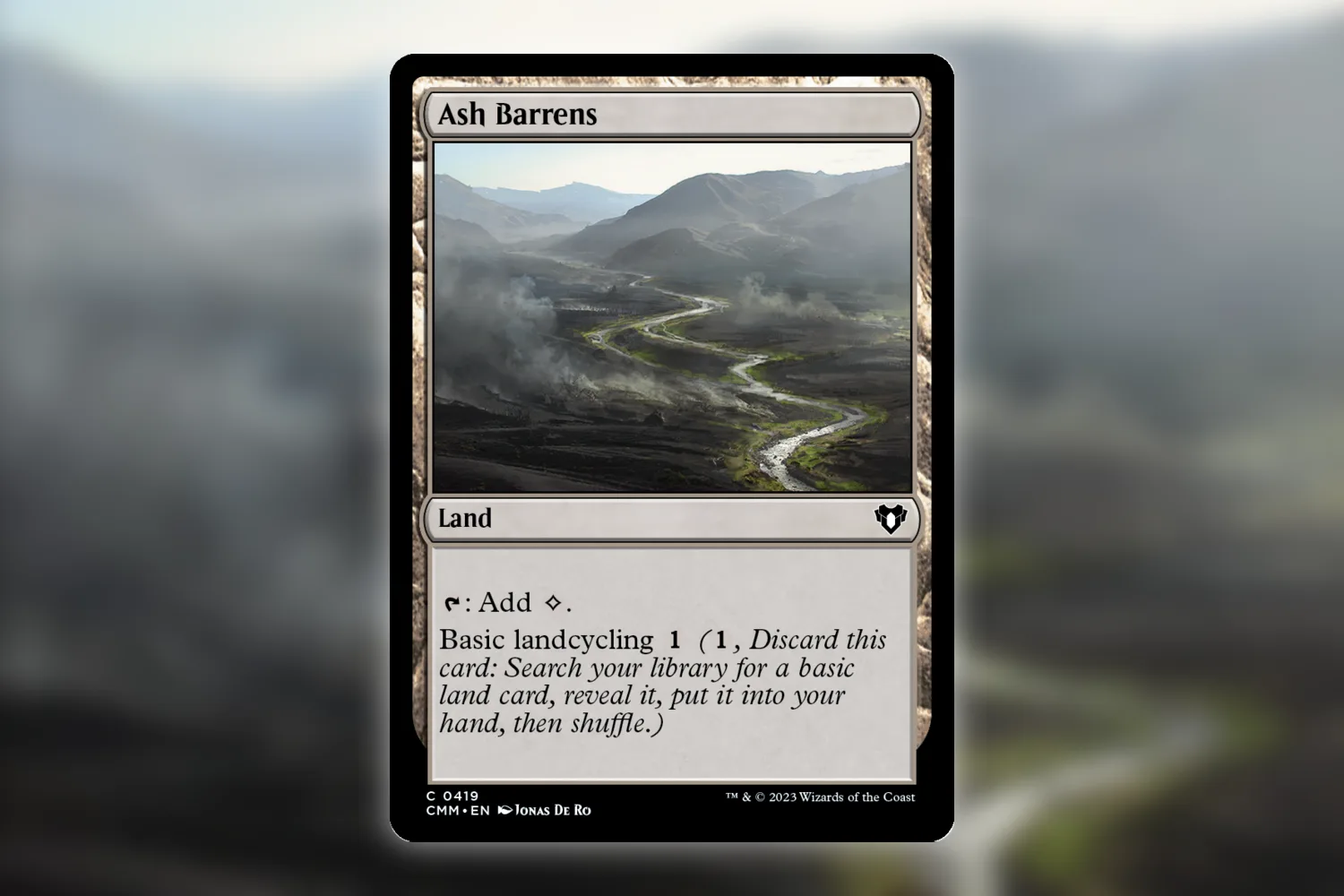
Ash Barrens in Commander Masters is a handy reminder of how specific this gets. As of October 6, Scryfall lists that printing at $0.22 non-foil and $0.32 foil. It’s a common that has a foil version, sees play, and still costs pocket change. Today’s announcement doesn’t change how many copies of that 2023 printing already exist.
I once spent most of a Commander Masters opening trying to flatten a foil Ash Barrens under a deck box while everyone else was reading their rares. I kept lifting the box to check on it, which presumably undid whatever the box was accomplishing. Eventually it went into a sleeve, curved, and I went back to opening packs. I have no idea where that copy ended up.
There’s a tempting leap from “fewer new foil common slots” to “buy the old foils.” I can’t get there from this announcement. Demand for an exact printing, future reprints, and the volume of Collector Boosters opened could all overwhelm the effect of cutting a slot. The older Ash Barrens above also has its own supply history, separate from whatever Nauctis eventually contains.
The foil-premium piece found that modern foil prices often sit surprisingly close to their plain counterparts. That was a snapshot of existing cards. Next year’s changes give us a reason to check new sets separately once prices settle, rather than applying the old sample to a different pack configuration.
Japan Showcase gets another way into a binder
Traditional foil Japan Showcase cards will become available in the wildcard slot of ordinary Booster Packs. The announcement doesn’t publish their exact drop rate. It also doesn’t say that every premium finish is making that move; the stated addition is traditional foil.
For someone collecting those treatments, there’s a straightforward benefit: another product can produce the copy you want. Whether that produces noticeably cheaper singles will depend on the frequency, how many ordinary packs get opened, and which cards get the treatment. I don’t know the relative weight of those things yet, and I wouldn’t pay a preorder premium based on a supply estimate assembled from adjectives.
I do like that a draft pack can produce one. A surprising art treatment is a nicer interruption to opening commons than checking whether the obligatory foil has already curled. Wizards says printing capacity is part of the trade-off: cutting some foil slots creates room for God Packs and the additional Showcase availability. That’s their explanation for the production changes, and it leaves plenty of unanswered questions about the actual print runs.
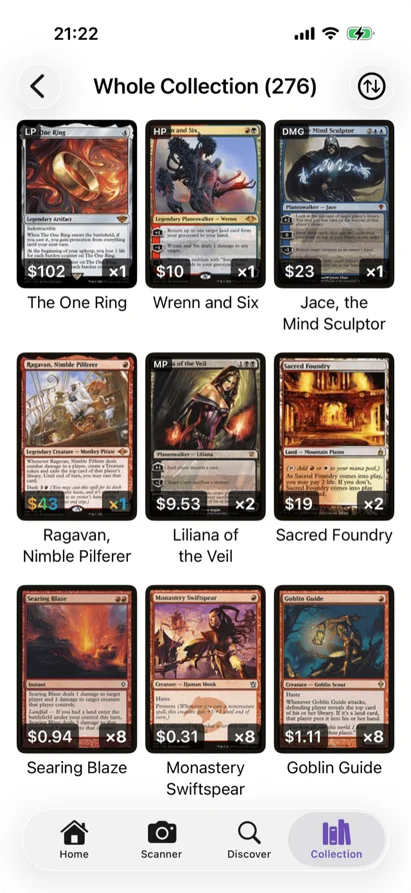
When the first affected set arrives, I’d log its foils by exact collector number and finish in Eldwyn, then take another price snapshot after the initial opening rush. If you’re using a spreadsheet, the same approach works. Keep ordinary-frame traditional foils and Japan Showcase traditional foils in separate rows, even when the card name is identical. The guide to identifying card treatments helps with that distinction.
I’d also keep the new lower-rarity foils separate from older sets when looking for a trend. A combined average could hide a change in either direction. There might be fewer copies available, there might be fewer buyers than the excitement suggests, or prices might barely move. We can check that once there are actual cards on sale.
For now, my list of things to wait for is short: the Japan Showcase wildcard odds, the remaining common and uncommon foil slots in Collector Boosters, and an explanation of the celebration card. I can leave the imaginary God Pack unopened until February. Probably.