For about fifteen years I had a reflex where pulling a foil rare meant the pack had paid off. Didn’t matter what the card actually was. The foil was the good slot, you’d tilt it toward the light to watch the shimmer move, and you’d mentally staple some vague premium onto whatever the card was worth.
I still do the tilt. The premium is the part that quietly stopped being true.
I went and pulled real numbers this week because a few days ago I wrote something about Lorwyn-era foils being absurd, and in that post I tossed off a line claiming modern foils run “maybe 1.5x to 3x” their non-foil. I wanted to check whether I’d invented that. Turns out I mostly had.
What the modern MTG foil premium actually is
I took every rare and mythic from nine sets between Dominaria United and Secrets of Strixhaven, stripped it down to plain main-set printings only (no showcase, no borderless, no extended art, no promos, nothing from a Collector Booster), and compared each card’s foil price against its non-foil price. That left 757 cards.
Median multiplier: 1.20x.
Not 2x, not 1.5x. Twenty percent, which on the median rare in that pool works out to well under a dollar of real difference. And 17% of those 757 have a foil worth the same or less than the plain version.
For contrast I ran the identical query on old sets. Lorwyn’s median is 5.14x. Shadowmoor is 6.64x. Zendikar, two years later, 3.37x. Somewhere after that it falls off a cliff and never climbs back.
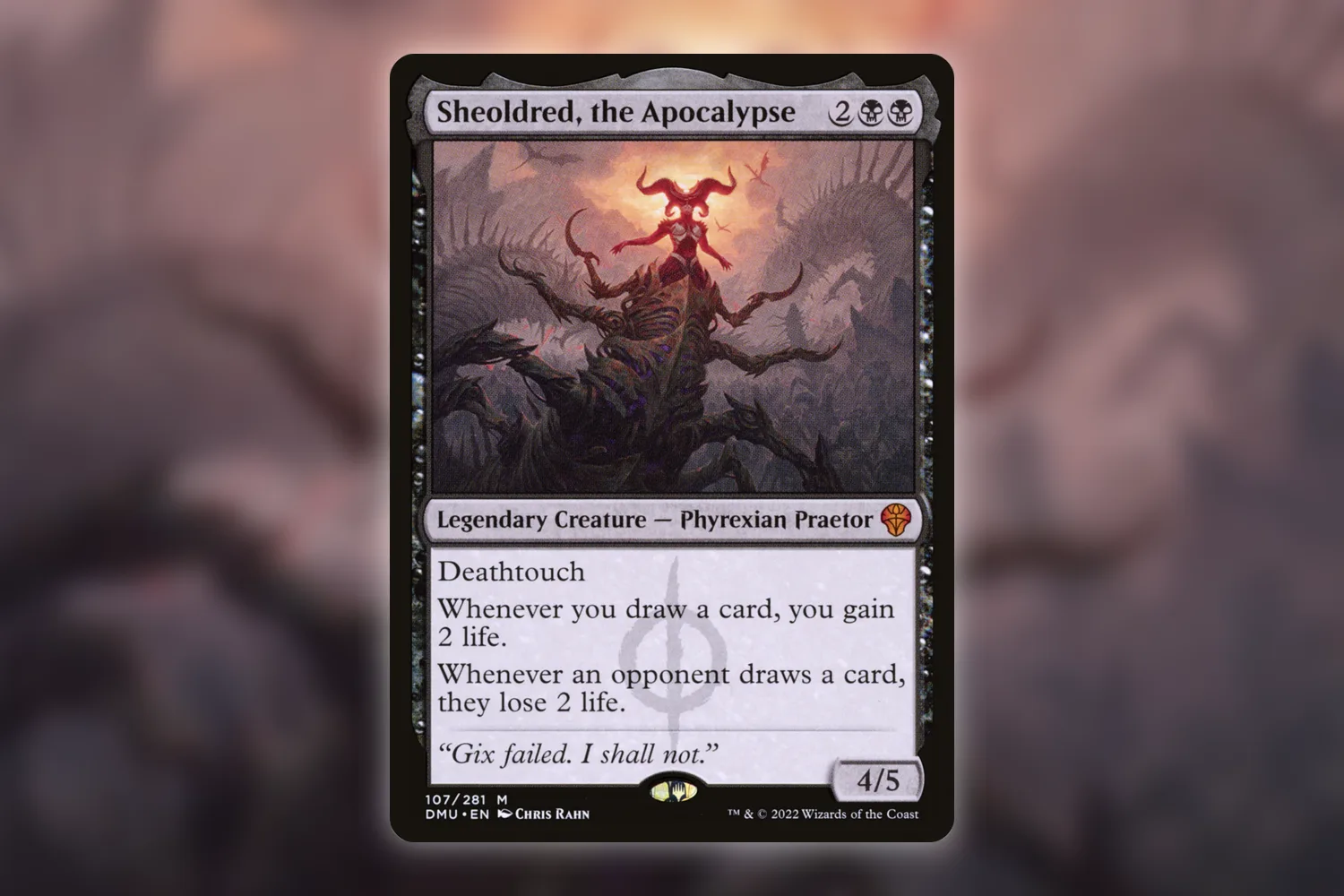
The thing that genuinely surprised me was what happens at the top of the price range. Sheoldred, the Apocalypse is $101.83 non-foil and $106.27 foil, a 4% premium on a hundred-dollar card. Doubling Season in Foundations is $36.78 plain and $36.58 foil, so the foil is actually cheaper. Elspeth, Storm Slayer runs $44.39 and $43.23. Three Tree City is $30.27 and $29.61.
Every expensive main-set card in my sample landed between 0.97x and 1.09x. On the cards where a premium would actually move your collection total by real money, there isn’t one.
Why it went away
The supply answer is the boring one and probably the right one. MTGStocks ran a good piece on foil multipliers that pins most of it on Project Booster Fun, the shift that gave us Collector Boosters and the whole zoo of etched, textured, borderless, and gilded treatments. Before that, a foil was the premium version of a card and there was one of them. Now there are six premium versions, the traditional pack foil is the least interesting of them, and it’s competing for the same pool of buyers who want a shiny one.
Then there’s the physical problem. Foils warp, badly, and modern ones seem worse about it than the old ones ever were. A near-mint 2007 foil is scarce because almost nobody kept them flat for eighteen years. A near-mint 2024 foil is scarce for about four months and then everyone realizes theirs has a banana curve in it. Some of the demand collapse is just players deciding they don’t want to sleeve a pringle.
Honestly I don’t know how much of the drop is supply and how much is that second thing. I’d guess supply is the bigger lever, but I’ve never seen anyone separate them cleanly with data, and I’m not going to pretend I have either.
The ones that went negative
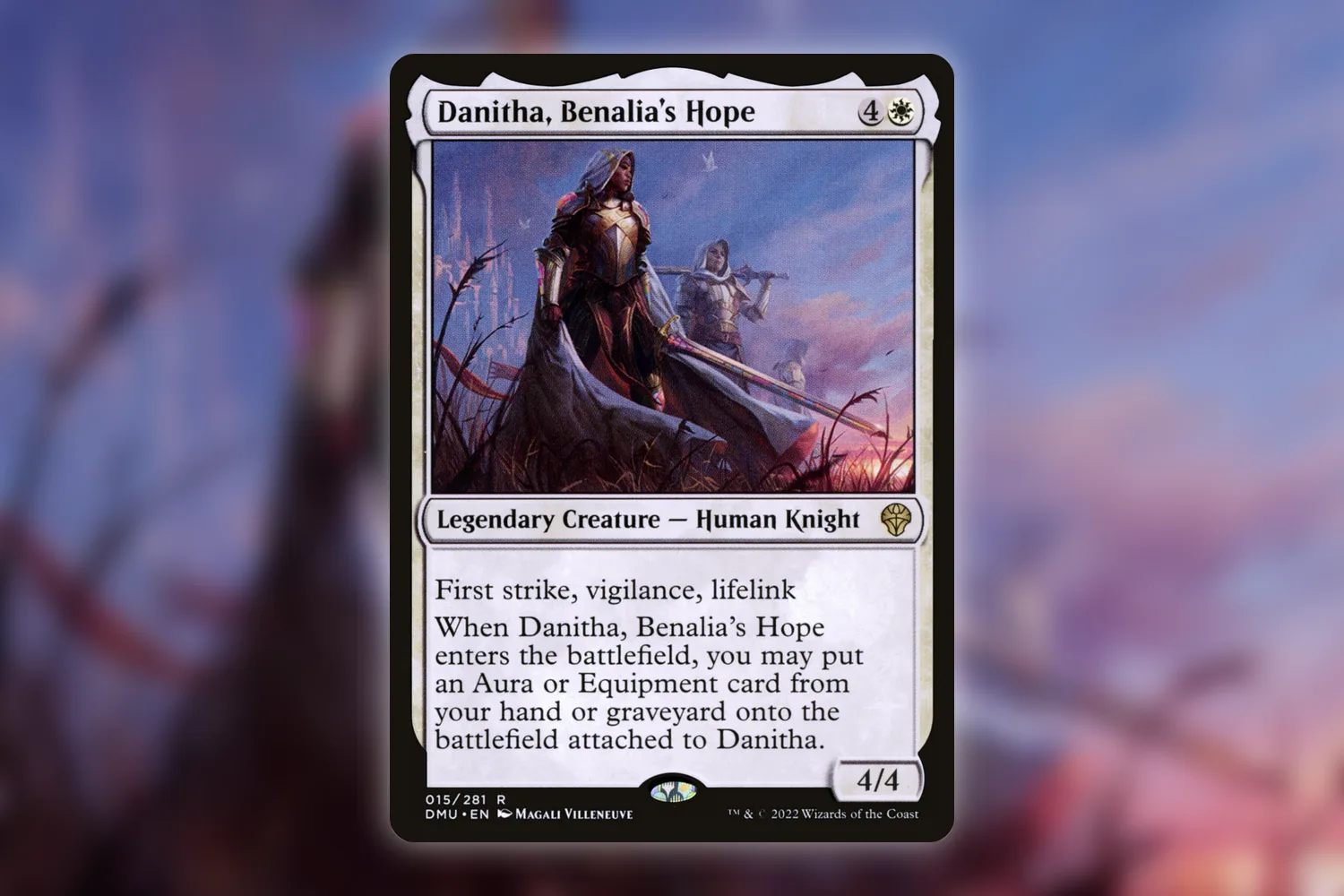
Danitha, Benalia’s Hope is $1.91 as a normal card and $0.95 in foil. Half price for the shiny one. Elvish Archdruid in Foundations does the same thing, $1.30 against $0.70. Those are cheap cards where the spread is pocket change, fine.
Ichormoon Gauntlet is the one that made me actually stop. $19.34 non-foil, $13.92 foil. That’s a five-and-a-half dollar hole on a card most people would assume goes the other way.
I don’t have a clean theory for the negative ones. Probably some mix of the foil being opened more than the non-foil in Collector-heavy sets, plus whatever weirdness happens when a card’s demand is concentrated in Commander players who mostly don’t care. But it’s common enough now that it’s not really an anomaly, it’s just a thing that happens to about one card in six.
So yeah. Foils. I grew up believing the shiny one was worth more and for most of my time playing that was correct, and now I run the numbers and it’s a rounding error, and I keep having to talk myself out of the old reflex. Every time. The tilt is load-bearing at this point.
Anyway, the reason I care about any of this is boring and practical.
What your collection total is probably doing
A lot of tracking setups, including plenty of spreadsheets people built themselves years ago, handle foils with a blanket multiplier. Two times the non-foil, or one and a half, applied across the board. That was a defensible shortcut in 2012. Applied to a modern binder it inflates your number, and it inflates it worst exactly where you’d least want to be wrong, on the expensive cards, because that’s where the real premium is closest to zero.
The fix is the unglamorous one. A foil is its own printing with its own price, the same way a borderless copy is its own printing, and it wants to be stored that way rather than derived from the base card at display time. When I scan a foil into Eldwyn it gets logged against the foil price for that exact set and collector number, which is the only version of this that doesn’t drift.
Although, let me push back on myself, because I think there’s a decent argument this barely matters for most people. If your foils are mostly cheap rares, a wrong 2x multiplier on a $0.60 card is nine cents of error, and nine cents times four hundred cards is thirty-six dollars on a collection worth several thousand. That’s noise. You’d have to be fairly foil-heavy at the top end for the blanket multiplier to really hurt you. So if you’re sitting there with a shoebox and no spreadsheet, this is not the thing to fix first.
It does start mattering if you’re pricing a collection you intend to sell, though, because that’s the moment someone else checks your math against reality.
The good news, if you like foils
Flip it around and the same numbers are a gift. If you’ve ever wanted to play a foil Sheoldred and talked yourself out of it because foils are for rich people, the premium is four dollars. On Doubling Season and Elspeth you’d be saving money. The cards where foiling used to be financially insane are now the cards where foiling costs the least in relative terms, and nobody seems to have updated the folk wisdom about it.
Cheap cards are where the multiplier still bites a bit, weirdly. A 1.4x on a two-dollar uncommon is the last place the old ratio survives.
I traded a foil Thragtusk away in 2013 for a stack of Return to Ravnica shocklands because I’d convinced myself the foil premium was going to keep climbing forever and I should cash out at the top. That was wrong in both directions and I think about it more than a reasonable person would. The shocks were fine. It’s the reasoning I can’t let go of.

If you want to check your own binder, the fastest version is to pick your five most expensive foils, look up the plain printing of each, and see how far apart they actually are. My guess is closer than you think.