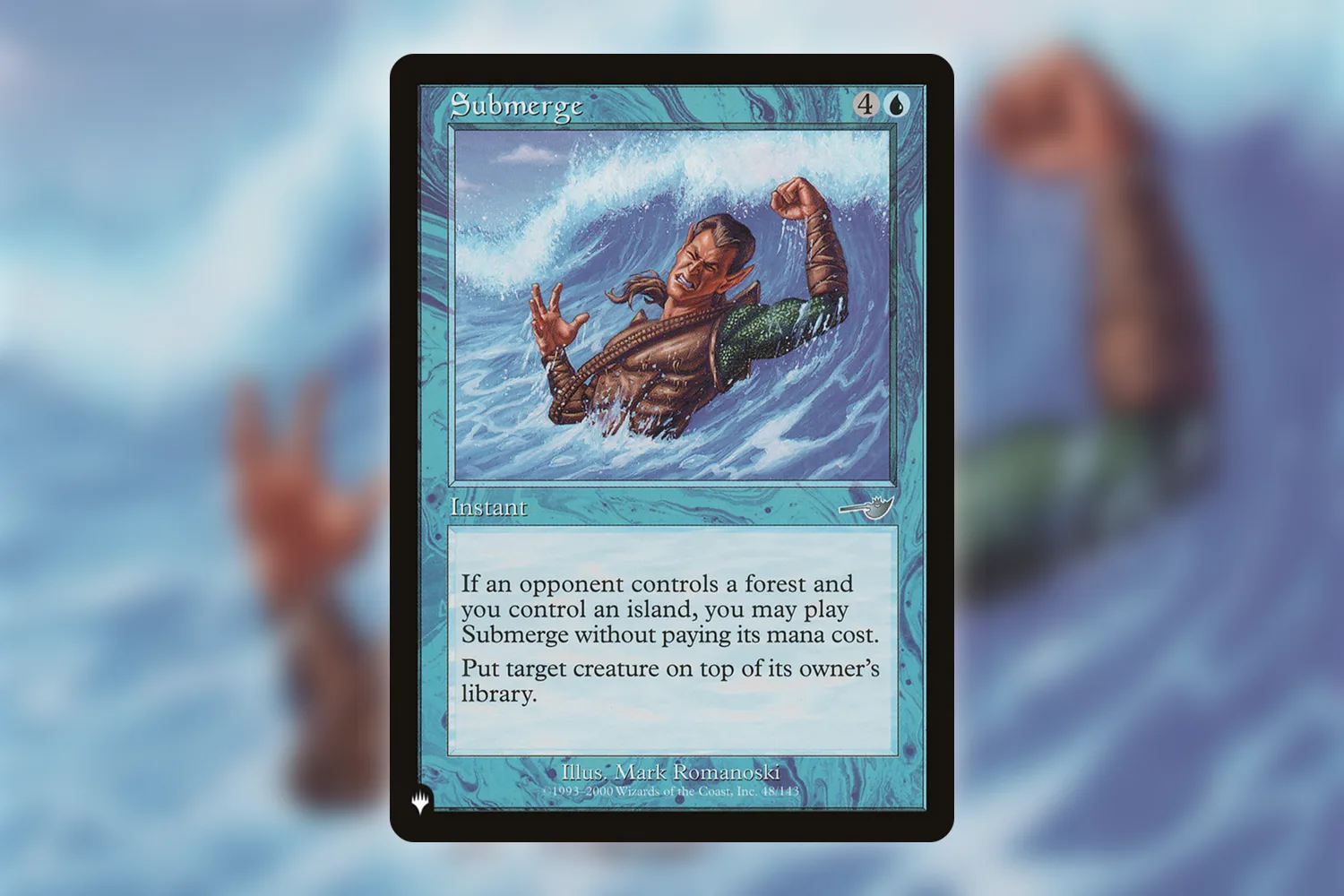
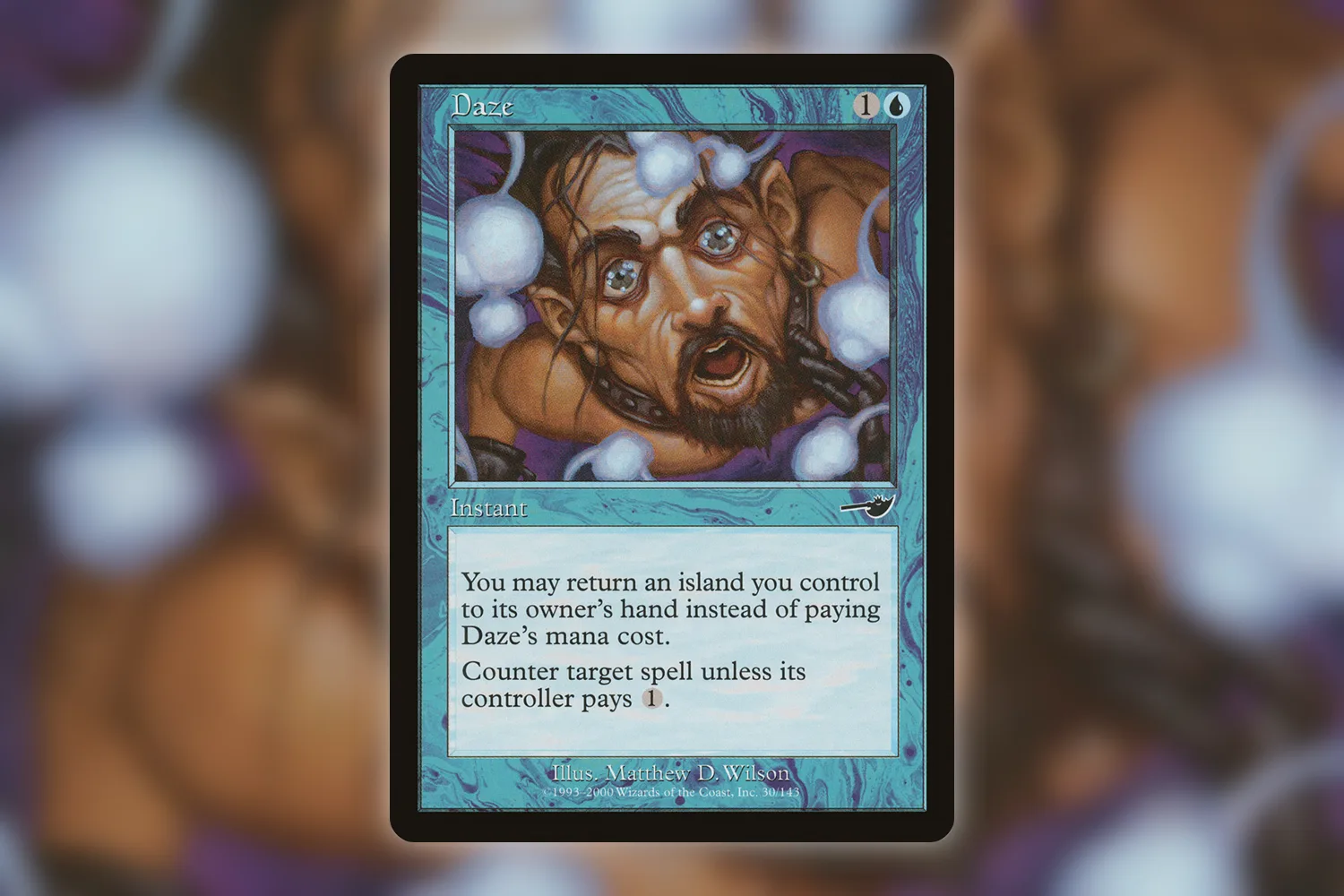
Old MTG counterspells are a lousy pile to price by memory. Daze looks like something you’d find four copies of behind a draft deck divider. The Nemesis printing is currently $3.05 nonfoil on Scryfall. Select foil and the number becomes $400. I’d check the actual card under a lamp before congratulating myself on either figure.
The useful audit here is small: six familiar spells, a few specific editions, and the finishes that change which box they belong in. Pull these names while sorting, then identify each copy before assigning it a price. A modern reprint can be perfectly good deck material while an older foil needs its own sleeve and a slower look.
All prices below are Scryfall’s USD figures checked October 17, 2026. They’re reference prices for the exact versions named. Condition, language, available buyers, and selling costs still affect what you’d actually receive.
Old MTG counterspells worth a second look
I’d start with this table. The foil column refers to a physical foil copy of the named edition; the card images and hover previews are identification references, and won’t reproduce its shine.
| Card | Edition to check | Nonfoil | Foil |
|---|---|---|---|
| Daze | Nemesis (nem, #30) |
$3.05 | $400.00 |
| Counterspell | Mercadian Masques (mmq, #69) |
$3.15 | $151.35 |
| Spell Snare | Dissension (dis, #33) |
$3.61 | $73.97 |
| Pyroblast | Eternal Masters (ema, #142) |
$10.57 | $39.31 |
| Spell Pierce | Zendikar (zen, #67) |
$0.43 | $14.77 |
| Mana Leak | Eighth Edition (8ed, #89; foil #89★) |
$0.32 | $9.35 |
Daze is the distracting one. Four hundred dollars makes a good headline and a terrible assumption about a copy with cloudy surfaces and worn corners. I don’t know how quickly a particular Nemesis foil would sell at that figure. Before listing one, I’d compare recent completed sales and live listings for copies in similar condition, then get an actual buy offer if I wanted a quick exit. I’d leave the reference price in my notes alongside those checks.
The Mercadian Masques Counterspell is easier to understand emotionally. Old frame, familiar spell, a foil from 1999. Someone who wants that particular object is shopping differently from someone who needs a two-blue-mana answer for a deck. The nonfoil copy from the same set sits at $3.15 in the same data snapshot. Look closely at the surface before putting two otherwise matching copies in one inventory row.
Spell Snare adds a more recent trap. The Lorwyn Eclipsed printing is $0.37 nonfoil and $0.64 foil today. Dissension’s foil is $73.97. Knowing that the spell got a cheap reprint tells you very little about which price belongs on a foil you’ve had since 2006.
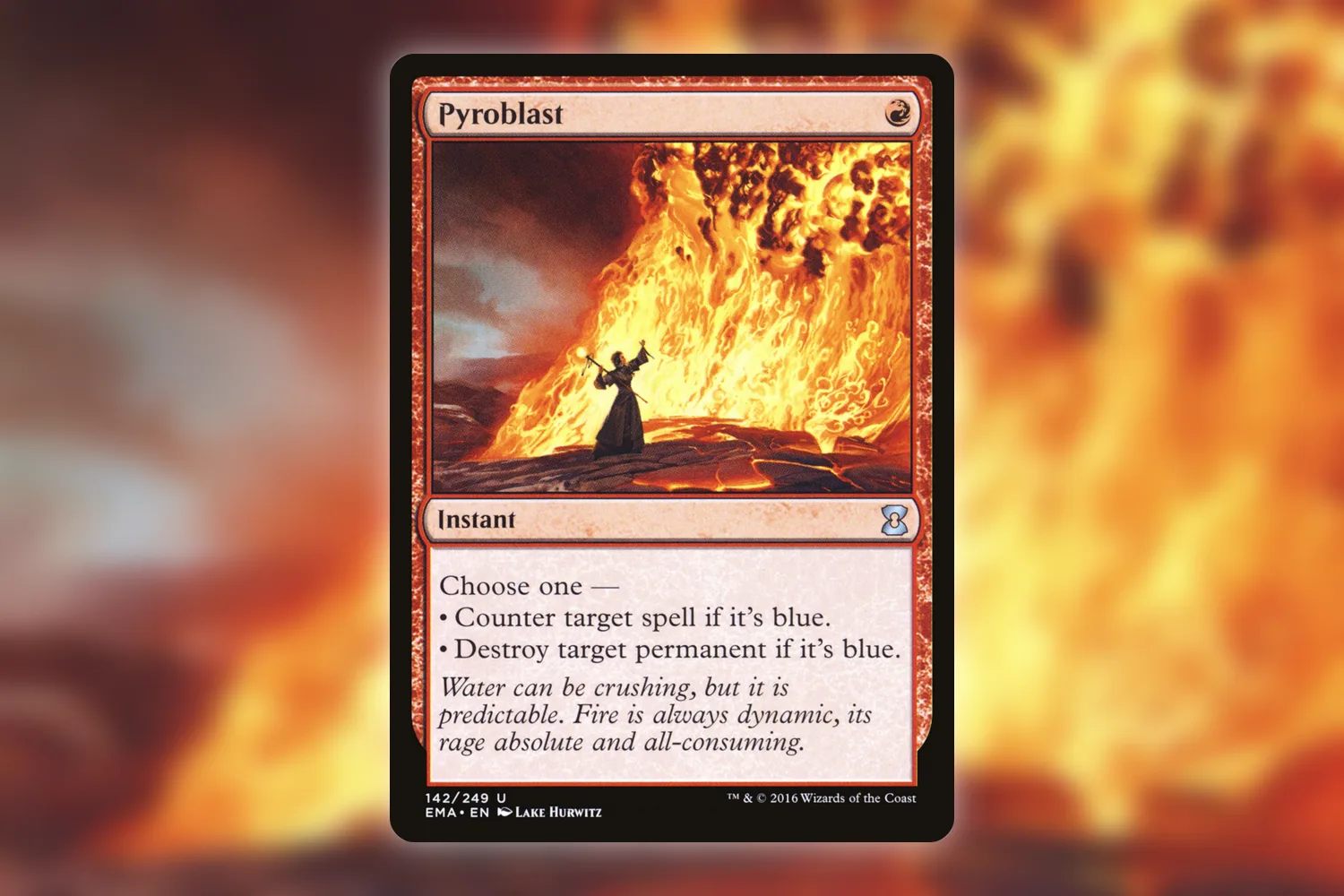
I’d be tempted to save time by pulling every foil counterspell and ignoring the ordinary ones. Pyroblast makes me reconsider that immediately. Its Eternal Masters nonfoil is $10.57, enough that I’d want it out of an outgoing bulk lot even if I had no interest in the foil.
The little numbers can get awkward
Mana Leak’s Eighth Edition entries caught my attention while checking this list. Scryfall separates the nonfoil #89 and foil #89★ into different records. A lookup that lands on the ordinary record returns a nonfoil price and an empty foil field. The foil record has the $9.35 figure.
That empty field would be very easy to read as “nothing to check here.” The foil entry is still there. Expand the printing list when a result looks incomplete, and compare the scan to the card in your hand. On an older card, you may need the expansion symbol, artwork, border, and copyright details to resolve the edition; modern set-code text isn’t available on every printing.
There’s a longer guide to collector numbers and identifying printings if those details are unfamiliar. For this sorting job, I only need enough information to distinguish the copies on the table. Reconstructing every edition of Counterspell sounds like a pleasant way to lose the entire evening.
Spell Pierce is the modest example I’d actually expect to make this exercise useful. Zendikar nonfoil: $0.43. Zendikar foil: $14.77. That’s a difference worth checking without needing to find a spectacular collectible. Keep the foil apart while you inspect it, even if the other copies are heading into a box of inexpensive playable cards.
And some foil copies really can stay in that inexpensive box. Double Masters 2022 Mana Leak is $0.31 nonfoil and $0.39 foil in today’s snapshot. I’d happily keep one for a deck, but spending twenty minutes preparing an individual sale would be a strange use of my afternoon.
I’d make three piles and leave the rest of the box alone
Start with the expensive-looking editions and any finish you’re unsure about. Those go into a small inspection pile. Ordinary copies with meaningful value, such as that Eternal Masters Pyroblast, go into a separate trade or sale pile. The cheap copies you might use can share a labeled playable section.
For each card in the inspection pile:
- Confirm the name and edition against the linked printing.
- Check the finish with the physical card under changing light.
- Record the language and quantity, keeping foil and nonfoil copies separate.
- Look at the back, corners, and foil surface before choosing a condition.
- Write down its physical location so the checked copy can be found again.
Okay, the lamp. Hold the card. Tilt it a little. The sleeve too, if it’s catching the light. This is exactly the sort of job where I’d confidently choose a finish in the app and then realize I was looking at the sleeve’s reflection. Take the extra few seconds with the actual card.
If you’re scanning into Eldwyn, check the recognized printing and selected finish before saving a stack. I wouldn’t assume that recognizing the name has resolved every detail in this table. The foil-scanning guide covers lighting problems in more detail; for this audit, the manual printing and finish check is the part I’d slow down for.
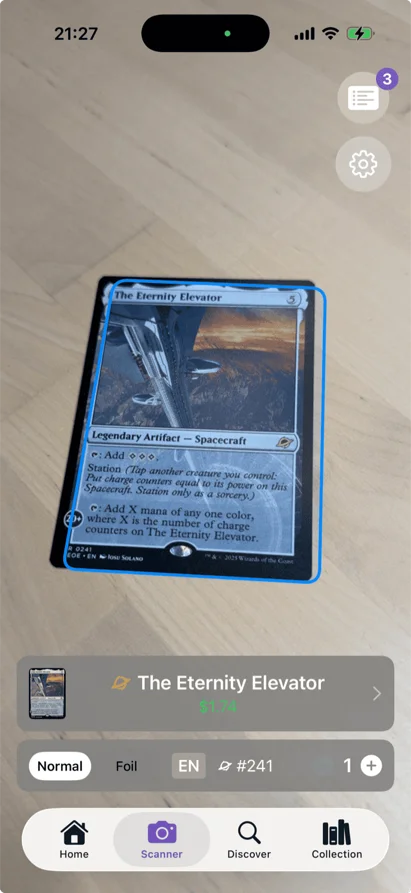
I’m imagining a particularly embarrassing version of this evening: a Zendikar Spell Pierce carefully sleeved because I’d just seen the foil price, then the lamp reveals a very ordinary nonfoil. Meanwhile the actual foil is still in the outgoing pile. That’s a hypothetical, but it seems entirely within reach once the sorting has gone past midnight.
The three piles can also change after the condition check. A scratched old foil might be a card you keep for play or sentimental reasons. A clean ordinary Pyroblast might be much easier to trade. If you want help naming the wear you’re seeing, there’s a separate card-condition guide rather than another grading argument here.
Give the cheap copies a destination
I’d keep a small selection of affordable counters with the other usable blue spells, with their restrictions written on the divider or inventory notes. Spell Snare only counters a spell with mana value two. Spell Pierce hits a noncreature spell unless its controller pays two. Mana Leak asks for three, and Daze asks for one. Those distinctions help when deciding which spare copies are worth retaining for your own decks.
Pyroblast belongs with the red interaction. Its counter mode works if the targeted spell is blue; it can also destroy a targeted permanent if that permanent is blue. A box sorted purely by blue counterspells could miss it entirely.
I lean toward keeping a few cheap copies because replacing them later means another order and more shipping. Then again, that reasoning can preserve an astonishing amount of cardboard. Pick a quantity you can imagine using, record where it lives, and let the excess go with your other playables.
For the copies that earned a closer look, finish the entry while they’re still on the table: exact printing, finish, language, condition, quantity, location. Put the Nemesis foil in its sleeve before opening another box. I’d also label the sleeve, because “the good Daze” is a retrieval system with a fairly obvious expiration date.