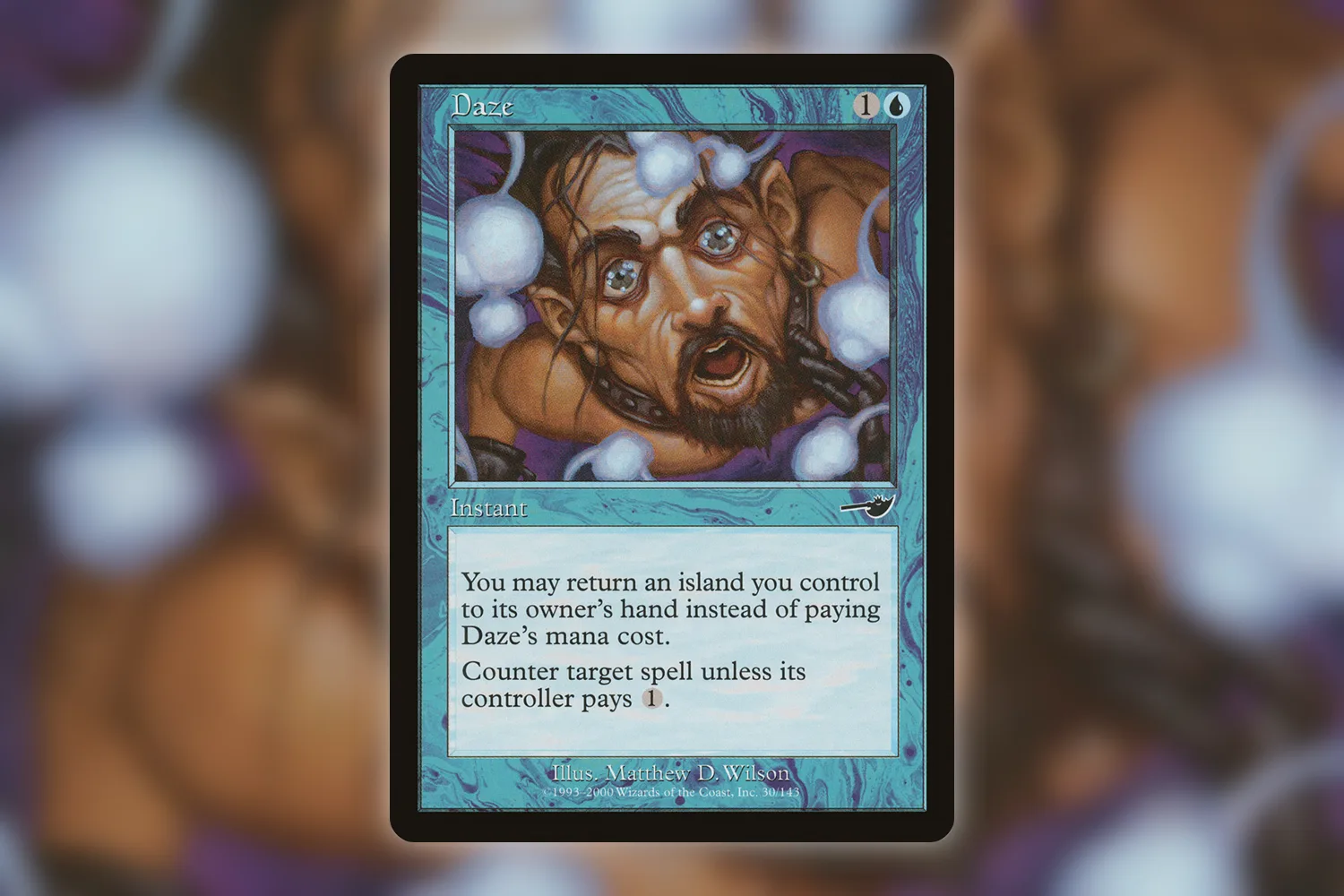
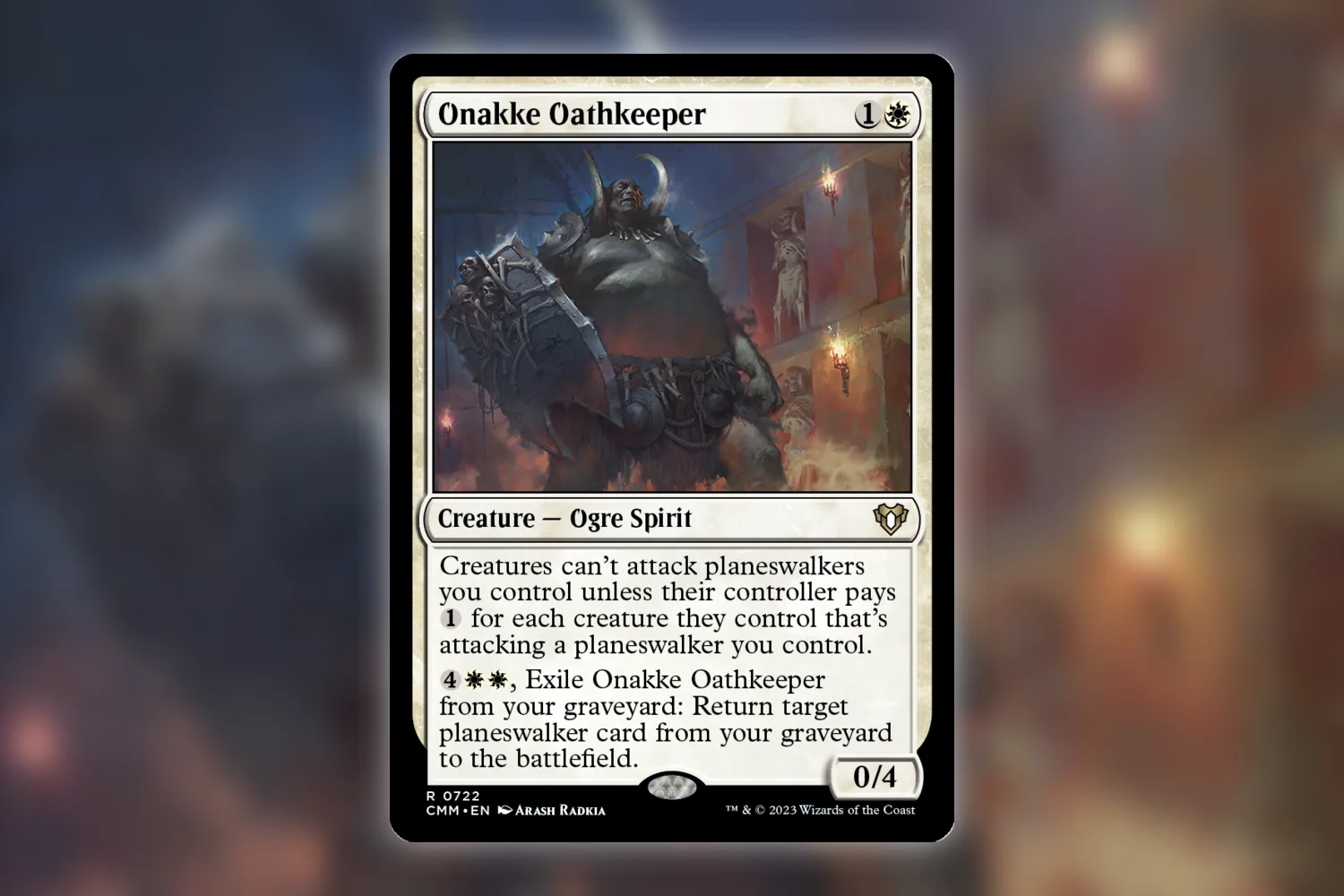
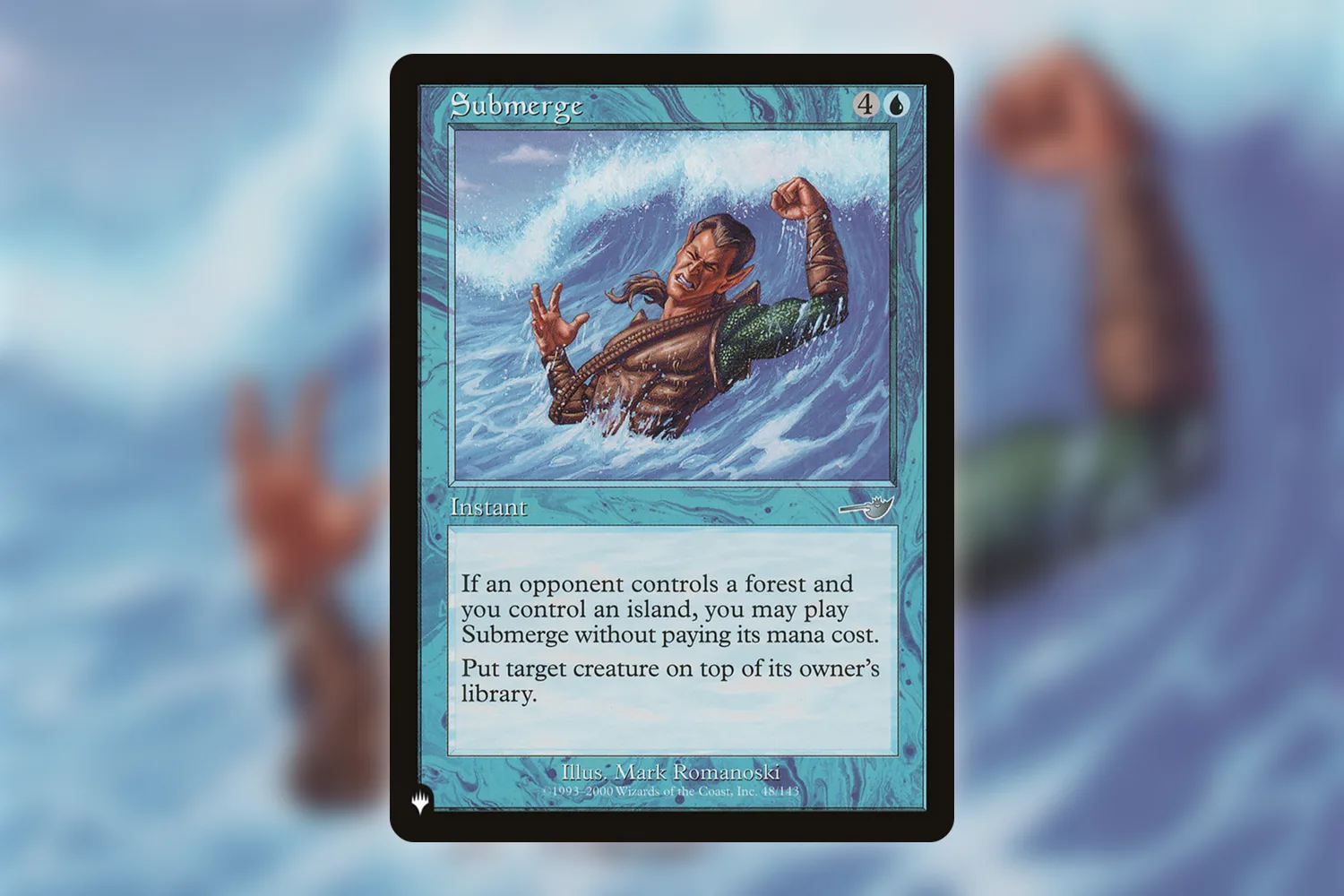
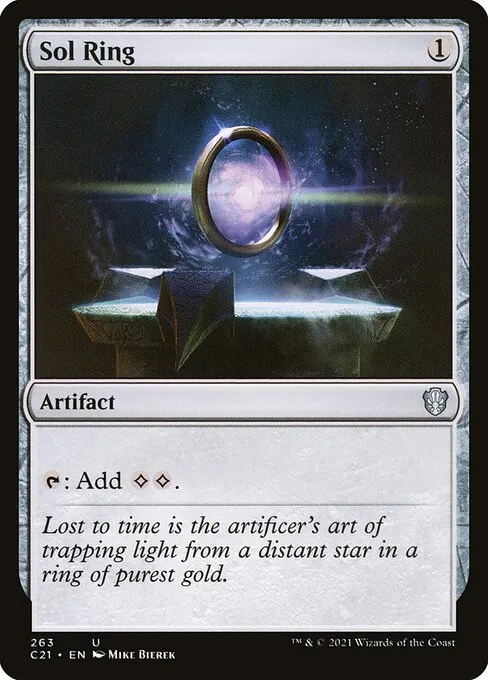
I’ve got two Sol Rings sitting on my desk right now. Same art, same mana cost, same tapped-artifact ability every Commander player has had memorized since their first precon. One is worth about $1.60. The other is worth about $26. The only way to tell them apart is a line of text so small I have to tilt the card under a lamp to read it.
That line lives at the very bottom of the card, below the art and the text box, and most people never look at it. I didn’t for years. Once I started actually reading the collector number and set code down there, a couple of cards I’d written off as bulk turned out to be worth real money, and a few I was proud of turned out to be the cheap reprint. So this is the decoder. What every number and symbol along the bottom means, and why the set code is the part that quietly decides the price.
Reading the collector number and set code
Pick up any card printed in the last decade and look at the bottom-left corner. On the current frame (the one that’s been standard since Magic 2015 back in 2014) you’ll see two little stacked lines of text. They’re easy to miss because they’re printed in a gray that nearly disappears into the border.
The top line is the collector number, usually written as a fraction. Something like 123/281. That first number is the card’s slot in the set, and the second is how many cards are in that set’s main run. Right next to it is a single letter for rarity: C for common, U for uncommon, R for rare, M for mythic. You’ll occasionally hit weirder ones, S for a special slot, L for a basic land, P for a promo, but those four cover the vast majority of what’s in your boxes.
The line under it has the set code and the language. The set code is the three-ish letter abbreviation for the set the card came from. DOM is Dominaria, MH2 is Modern Horizons 2, LTR is the Lord of the Rings set, NEO is Kamigawa Neon Dynasty. The language is a two-letter code, EN for English, JA for Japanese, DE for German, and so on. Then there’s the artist’s name with a tiny paintbrush icon, and along the very bottom edge, the copyright line nobody reads.
There’s a second rarity tell too, up on the type line. See that little symbol on the right, level with the card’s type? That’s the expansion symbol, and its color is the rarity. Black is common, silver is uncommon, gold is rare, and a sort of orange-bronze is mythic. The mythic color showed up with Shards of Alara in 2008, which is also when mythic rarity itself was invented, so if you’ve got a card with an orange symbol you know it’s from 2008 or later without reading anything else.
Honestly the symbol color is the fastest way to eyeball rarity. Except half my older cards have symbols so faded or so tiny that I genuinely can’t tell silver from gold under normal light, so scratch that, the set code text is the more reliable read. Usually.
Why the set code is the part that matters
Here’s the thing the collector number is really for. A card’s price isn’t attached to the card, it’s attached to the printing. The same Sol Ring exists in dozens of sets, and the market treats each one as a separate item with its own price.
My $1.60 Sol Ring is the Commander 2021 printing, set code C21. The $26 one is from Revised Edition, set code 3ED, printed back in 1994. Identical function, wildly different market, and the only thing on the card that tells you which is which is that bottom line. There are fancier Sol Rings too, the various Secret Lair versions cost more again, and they all share the same name and rules text. Wizards has reprinted that card so many times it’s basically a running joke, but every printing has its own collector number, so every printing has its own price.
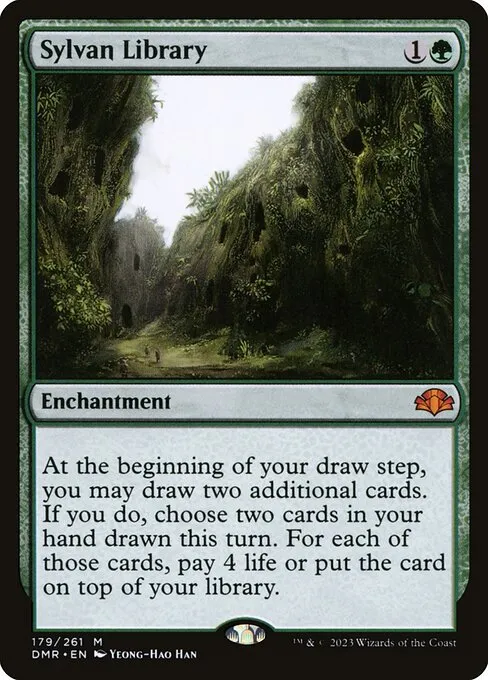
Sylvan Library is the example that actually cost me money. Most copies run somewhere around $28 to $32, and it doesn’t much matter whether you’re holding the Dominaria Remastered version, the Eternal Masters one, or a roughed-up Fourth Edition. They all sit in roughly the same range. But the original from Legends, the 1994 printing, goes for about $150. I once sold a small stack of Sylvan Libraries to clear shelf space, lumped them together as the usual thirty-dollar reprints, priced them that way, and only later realized one of them was a Legends copy I’d had since forever. Left a hundred-some bucks on the table because I didn’t look hard at that one card. Lesson learned, sort of. I still forget half the time.
Counterspell is the cleanest illustration of the whole problem because it’s been printed approximately forever. Tempest, Seventh Edition, Modern Horizons 2, Dominaria Remastered, Mystery Booster, on and on. Most of the modern reprints run a couple of bucks, a Modern Horizons 2 or Fourth Edition copy sits around $2.50. The old ones are a different animal. An Unlimited Counterspell is about $60, and a Beta copy pushes $900 for the exact same rules text it’s had since 1993. If somebody hands you a Counterspell and asks what it’s worth, the honest answer is “which one,” and the bottom of the card is how you answer that.
And then there’s the counter-example, because not every old card is a winner. Llanowar Elves looks ancient and important, it’s been in the game since the beginning, and every modern printing of it is worth about thirty cents. Dominaria, M19, Foundations, doesn’t matter. Old name, common rarity, printed into the ground. The set code saves you from getting excited about the wrong card just as often as it saves you from undervaluing the right one.
The older the card, the less it tells you
Everything above assumes a modern frame. Go back far enough and the bottom line gets sparse, then vanishes. A lot of older cards don’t have a collector number printed on them at all, which is exactly why people argue about whether a card is Revised or Fourth Edition or Summer Magic in forum threads that go forty replies deep.
Push back even further and the expansion symbol itself disappears. They didn’t always stamp a little icon on each set. I’m pretty sure it started with Exodus in 1998, that’s the set everyone credits, though I’ve honestly never bothered to verify it. Before that, telling an Antiquities card from a Revised one meant knowing the card pool by heart, reading the border and the corners, comparing the copyright date. It’s a whole skill, and it’s the reason graders and old-school dealers can pick a printing out of a pile in two seconds while the rest of us squint.
So yeah. The bottom line. It’s right there on every card. You’ve been ignoring it your whole MTG life and so was I. Takes two seconds to read. Tells you which of the twelve printings you’re holding. Decides whether the card is bulk or rent money. And nobody looks.
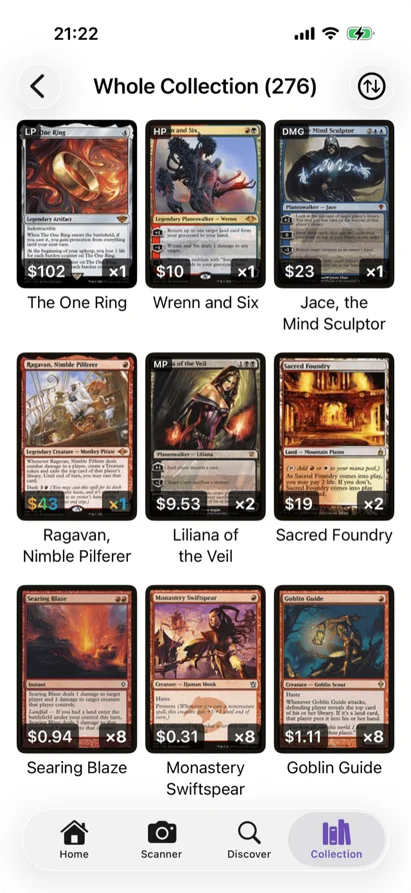
When I scan a card now, the app reads that set code off the bottom and pulls the price for that exact printing instead of me eyeballing it and guessing wrong. That’s most of why I stopped mis-pricing my own stuff. If you’d rather do it by eye, the bottom line is also one of the first places a fake gives itself away, since counterfeiters get the front art perfect and the tiny text wrong constantly.
A couple of things worth knowing once you start paying attention. If the difference you’re actually chasing is borderless versus extended-art versus showcase frames, that’s a related but separate rabbit hole about treatments, and those usually share a set code with the normal version but carry their own collector number further up the count. And if you’re trying to put a real number on a stack of cards, knowing the set code for each one is the whole foundation of pricing your collection without lying to yourself. You can’t price what you can’t identify.
Next time you crack a pack or dig through a bulk box someone handed you, flip a card over and read the bottom. You’ll feel a little ridiculous squinting at six-point gray text. Do it anyway.