I’d happily pay to have an artist sign a card I love. I’d be much less happy discovering afterward that the shop I usually sell to wants a different kind of transaction. Signed MTG cards sit in that awkward gap between a familiar game piece and a collectible someone needs to look at individually.
My preference is to choose the selling route before choosing the copy to sign, especially when the card already has a substantial price attached. You might decide you’ll keep it forever. Fine. I’d still want to understand what I’m changing before the pen comes out.
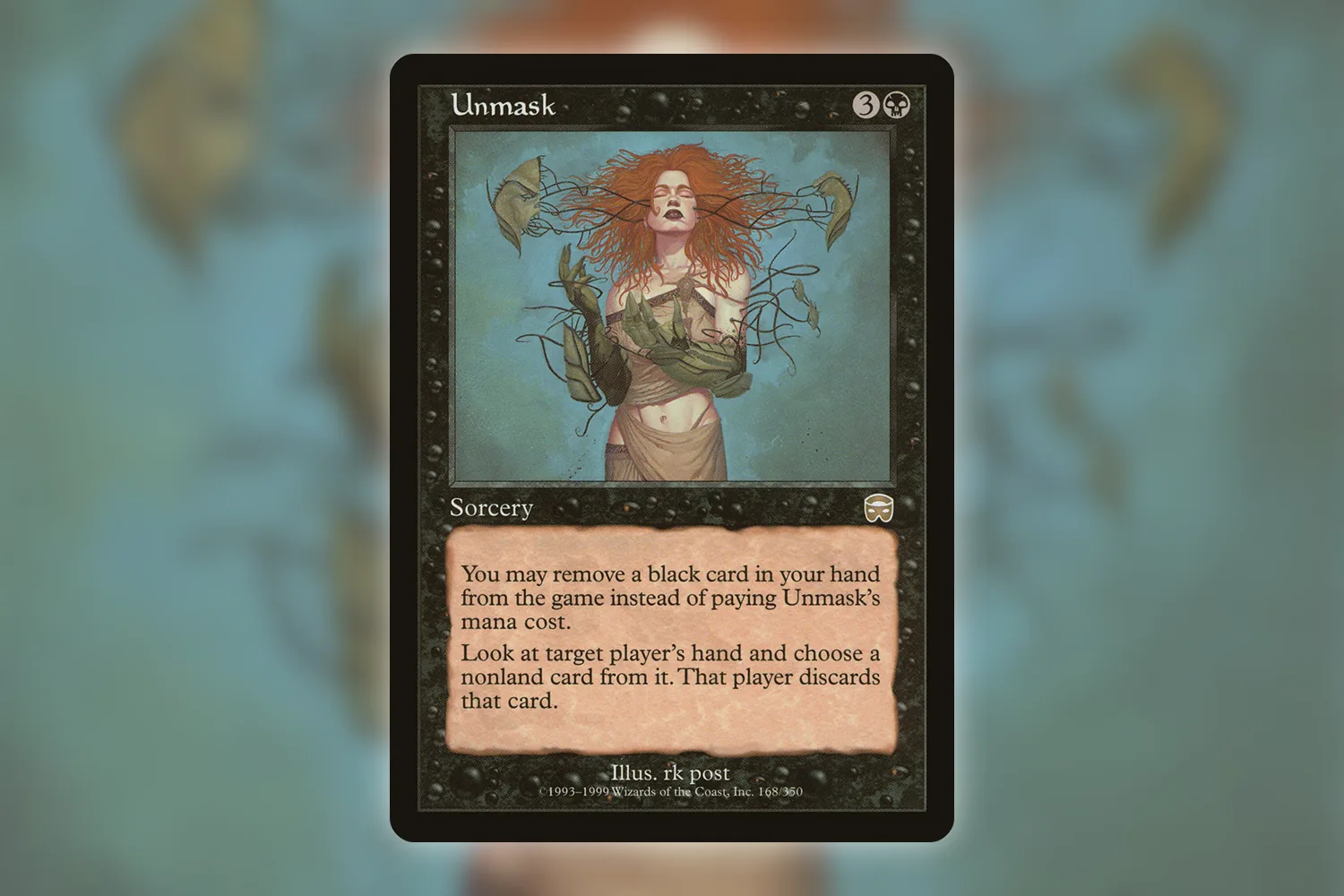
Unmask is a useful example. The Mercadian Masques printing has rk post’s artwork, an ordinary nonfoil version, and an old foil with a very different price. Same illustration to enjoy, very different amount of money to have sitting under the signature. The image below shows the ordinary unsigned printing; a database image won’t show the handwriting on your particular copy.
Which copy would I actually hand over?
On October 25, Scryfall lists Mercadian Masques Unmask at $22.98 nonfoil and $380.57 foil. Those are reference prices for the printing and finish. Neither number tells us what a signed copy would sell for.
I’d take the nonfoil. Partly because I like the old frame without the reflective layer, partly because I know I’d spend the whole queue worrying about the foil. Someone building a signed foil set could reasonably make the opposite choice. They’re trying to complete a specific project, and substituting the cheaper finish leaves them with a different card from the one they wanted.
The artist credit is worth checking on the physical copy before you leave home. Reprints can have different artwork. Buying a card because you remember who painted an older version is an extremely avoidable way to discover this while standing beside the artist’s table.
I once took an Unmask out of a black binder for an event, tucked it into the back of a deck box, and spent most of the morning convinced I’d left it at home. Found it after I’d bought another copy from a vendor. The original was behind the sideboard divider, exactly where I’d put it so I wouldn’t lose it. I wish I could blame the size of the collection for that one.
Artists publish different instructions and prices. When checked on October 25, rk post’s mail-signing page lists $5 for a single signature, $10 for a shadow signature, and $15 for a triple. It asks for specific instructions and return postage. Ten single signatures would cost $50 before postage; elaborately signed playsets can become their own little purchase.
Mark Poole’s FAQ, meanwhile, says he’s currently not accepting mail-in signatures. I’d check the artist’s own page immediately before sending anything, even if a forum guide says they accept cards. An old address and a generous assumption can leave your cards travelling without anyone expecting them.
For an in-person signing, I’d bring the chosen copies in an order I can explain, check the posted fee, and ask about placement if I care where the ink lands. Let the artist tell you when the signature is ready to sleeve. The convention packing guide covers the rest of the bag; this is one case where a tiny separate card box would save me from myself.
Signed MTG cards meet the condition menu
The phrase “Near Mint, signed” needs some care when you turn it into a marketplace listing.
TCGplayer’s condition guide classifies alterations including signatures as Damaged under its standard conditioning rules. It also says a Listing with Photo may be more suitable, and permits the condition that the card would have without the alteration when using that route. Check the current listing instructions before you sell; the distinction is easy to miss if you only read the condition dropdown.
That gives a seller two different things to describe: the physical wear and the added signature. A crisp card with clean corners still needs its ink disclosed. Calling a creased card “signed” doesn’t make the crease disappear either. I’d photograph the front and back, then describe the wear separately from the artist’s name and signature placement. Our card-condition guide helps with the wear assessment.
Card Kingdom offers another useful example. Its Collections buying guide, updated May 28, explicitly discusses artist-signed cards and lists autographs among the oddities its team considers. The process starts with contacting the team and supplying information about the collection, with photos or a spreadsheet encouraged. I’d send a clear picture and ask whether that specific card fits their buying program before making a shipping plan. Being considered for a purchase doesn’t establish a quote or guarantee an offer.
I don’t know what either route would pay for your particular signed card. A buyer has to assess the actual object, and the ordinary unsigned price is only one piece of that conversation.
The listing you found might still be there next year
A seller can ask twice the unsigned price. You can also ask twice the unsigned price. Until someone pays it, we’ve learned how two people feel about their cards.
I’d look for completed sales matching the artist, printing, finish, and approximate condition. Then I’d inspect what was signed. A signature across the artwork, a signature on a sleeve, and a signature on a graded holder leave the underlying card in different states. I’d also check whether the sale included a sketch, an authentication service, or another feature that my copy doesn’t have.
There may be too few relevant sales to produce a useful number. I’d leave the premium unknown in that situation. The signing fee belongs in the amount you spent; adding it to an unsigned market price doesn’t produce evidence of what someone else will pay.
Here’s a completely hypothetical budget. You buy a card for $20, spend $5 on a signature, and allocate $8 of postage to it. Your outlay is $33. If the only available comparison is an unsigned copy selling for $20, you still haven’t established a signed resale price. You do know how much the experience cost you, which is useful when deciding whether to do another twenty cards.
Actually, I’d relax all this price homework for a cheap card I intend to keep. Paying an artist for something I’ll enjoy looking at is a perfectly good use of hobby money. I can make the resale discussion sound so dreary that it starts to imply every signature needs an exit strategy. It doesn’t. I’d simply choose a copy whose unsigned value I’m comfortable putting into that more specialized market.
So, yeah. Pick the card you want. The copy you actually like. If you’re already calculating how much more a stranger will pay for the ink, pause a minute. Find one convincing sale first. You can always get another card signed later, assuming the artist’s taking requests.
Give the signed copy its own record
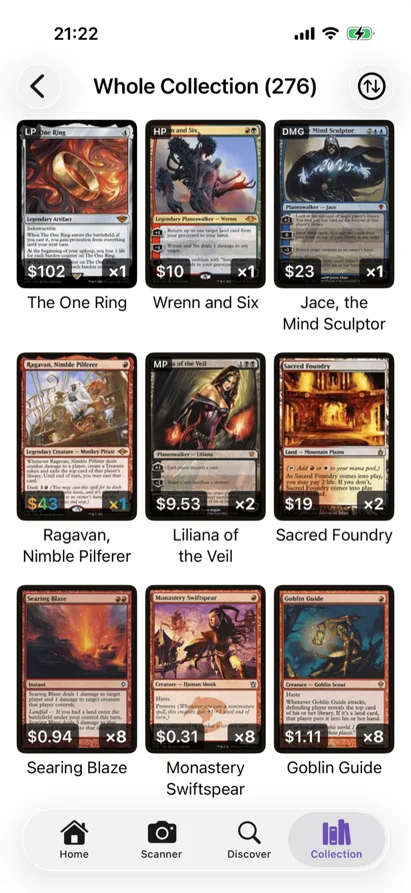
A scan can identify Unmask. The catalog entry can identify Mercadian Masques and the correct finish. Documenting the handwriting needs a photo of your own card.
I’d start with the printing in Eldwyn, confirm the edition against the physical card, and keep a separate note and photo record wherever it’s convenient. If you’ve got four identical nonfoils and one is signed, make the signed quantity explicit. Otherwise a later collection export can leave you with four apparently interchangeable copies.
My record would include the artist’s name, when and where the signing happened, what I paid, and the location of the photos. For a mail signing, I’d save the correspondence and payment record too. A photograph and a receipt document what you recorded; a professional authenticator may still need to evaluate the signature if a future buyer requires that service.
These are ordinary playing cards with handwriting added. Artist proofs have their own manufacturing history and identifying features, so I’d keep those categories distinct in the inventory even when both carry the same artist’s signature.
I’d also keep the unsigned reference value separate from any estimate for the signed copy. If there’s no suitable sale comparison, my note would literally say “signed value unknown.” That leaves something useful for the next person checking the binder, including me six months from now when I’ve forgotten why there’s an extra Unmask behind the divider.