The card arrived taped to the inside of a toploader. Not in a sleeve inside the toploader. Taped. Someone had run a strip of clear packing tape across the opening and, at some point between Ohio and my mailbox, the card had slid up and kissed the adhesive. Peeling it off took the top layer of the card face with it.
It was an Ohran Frostfang, so we’re talking about maybe six dollars of damage, and the seller refunded me without arguing. But I think about that card a lot, because the person who shipped it clearly cared. They spent money on a toploader. They just did the one thing that guarantees a ruined card.
So this is the post about how to ship MTG cards without doing that. I’m going to skip the part where I tell you sleeves are good, because you know that. What I actually want to get at is that most of the decisions here have already been made for you by the marketplaces, and once you see their numbers, the whole thing stops being a judgment call.
The thresholds aren’t yours, they’re eBay’s and TCGplayer’s
Every “how to ship cards” guide you’ve read tells you to use a plain white envelope under some dollar amount and tracking above it. The amount is always different and nobody explains where it came from. It came from here:
eBay Standard Envelope includes a shipping protection plan of $20 on a single item, $50 on combined orders. Above $20, if that envelope vanishes, you eat the difference. That’s the line. Not a vibe, an insurance cap.
TCGplayer requires tracking on marketplace orders over $50 before tax and shipping. It’s in their seller terms, and their buyer-facing help page says it plainly. Under $50 you can do whatever you want. Over it, you’re out of compliance without a tracked label.
USPS Ground Advantage includes $100 of insurance at no extra cost. Above $100 you’re buying coverage, which runs a couple bucks for a couple hundred dollars of protection.
Three numbers, three tiers, and they line up almost cleanly. Under $20, an envelope is defensible. $20 to $50, envelope is legal but you’re gambling with your own money. Over $50, tracked package. Over $100, tracked and insured. I’ve been doing this for years by feel and it turns out my feel was just a worse version of these numbers.
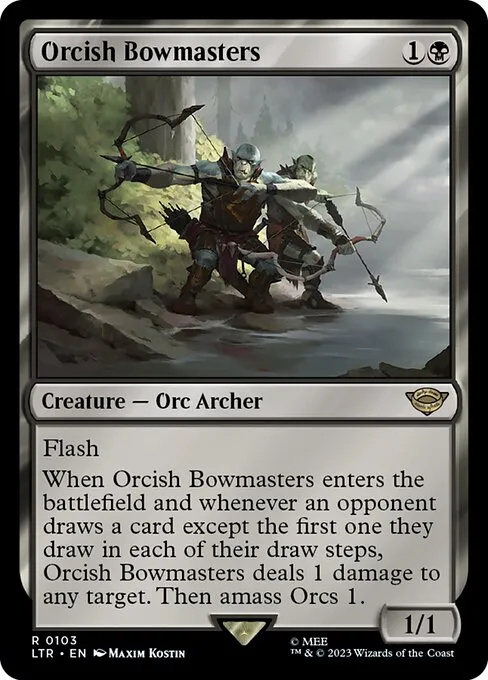
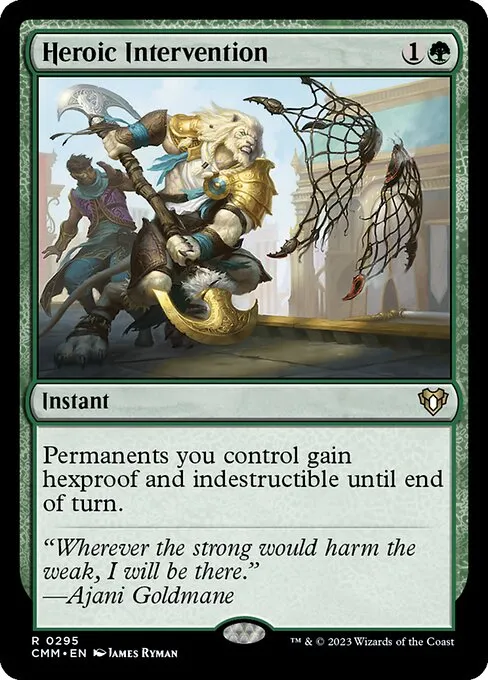
An Orcish Bowmasters from the original Tales of Middle-earth printing is sitting at $46.02 right now. That card is a perfect illustration of the awkward middle, because it’s under the TCGplayer line by four dollars and you’d technically be allowed to drop it in an envelope. I wouldn’t. A Heroic Intervention from Commander Masters at $15.08, sure, envelope, all day. An Esper Sentinel at $59.58 is over the line and doesn’t even get a decision.
eBay Standard Envelope has rules that will bite you
If you’re shipping through eBay, the envelope service is genuinely cheap. $0.74 at one ounce, $1.03 at two, $1.32 at three. Compare that to a $0.78 Forever stamp with no tracking whatsoever and it’s not close.
But the requirements are strict and mostly about the machines:
- No more than 24 raw cards per envelope
- No more than two cards in toploaders
- No graded cards, ever
- Envelope thickness under 0.25 inches at all points, uniform, and “not too rigid”
- No clasps, no strings, no plastic envelopes
- Address parallel to the long side
That “not too rigid” clause is the one that trips people. Sellers over-armor the envelope, the post office kicks it out of the automation stream, and either it comes back to you or it lands at the buyer’s door with postage due. There’s a $0.49 nonmachinable surcharge on First-Class letters that can’t run through the sorters, which is a 63% premium on a $0.78 stamp, and it exists exactly for this.
Which is the argument for semi-rigid card savers over toploaders in envelopes, and I go back and forth on this. The conventional wisdom is that a card saver flexes, so if the envelope gets bent the card bends slightly with it and recovers. A toploader doesn’t flex, so when the machine forces it, it cracks and the crack becomes a crease in your card. That logic is sound. It’s also true that I’ve received hundreds of cards in toploaders in PWEs and I can count the damaged ones on one hand, so the failure rate might just be low enough that it doesn’t matter much either way. I still use card savers for anything going in an envelope. Partly conviction, partly habit.
The actual assembly
Purely mechanical, no opinions in this section. Penny sleeve on the card. Card into the toploader or card saver. That assembly into a team bag. Seal the team bag, then put a small piece of painter’s tape across the team bag opening. Cut two pieces of cardboard to fit the envelope or mailer with no slack, tape the bagged card to one of them, lay the second on top, tape the whole sandwich together. Into the envelope.
The tape goes on the team bag. Never on the toploader, never on the card saver, never anywhere a card could migrate into contact with adhesive. Painter’s tape rather than packing tape because painter’s tape comes off clean if the buyer is careless opening it, and because if it does touch a card the damage is recoverable.

For bubble mailers the process is identical, just with a bigger cardboard sandwich, and then packing tape over the mailer’s adhesive strip because those strips fail in humidity. If you’re shipping a box, fill the empty space. A single toploader rattling around in an oversized box is worse than the envelope would have been, which feels wrong but isn’t. Cards bounce off the walls and pick up corner wear.
Slabs get their own treatment and I’m not going to spend much time on it here, since most cards shouldn’t be graded in the first place. Short version: a resealable slab sleeve, bubble wrap so the case can’t move, tracked package, always. eBay’s envelope service explicitly forbids graded cards and the reason is that a slab in the sorting machinery is a bad afternoon for everyone.
The stuff that actually goes wrong
So yeah, tape on the toploader is number one. By a lot. I’d guess three quarters of the damaged cards I’ve received in twelve years of buying singles online came from that specific mistake, and every single time the seller was trying to be careful. That’s the frustrating part. It’s not laziness, it’s a good instinct pointed the wrong way.
Number two is skipping the team bag. People think of it as optional plastic, and then it rains on a mail truck somewhere in Missouri and water wicks into the toploader opening. Team bags cost about two cents each in bulk.
Number three is the one I did myself, which I’ll admit to. I sold a Commander deck’s worth of singles a few winters back, maybe thirty cards across four orders, and I packed them all at once at like eleven at night while half-watching something. Wrote the wrong address on one of them. Not a wrong number, a wrong buyer, because I had the packing slips stacked and grabbed out of order. Two people got each other’s cards. Both of them were nice about it and we sorted it out with a three-way reship, but I lost about twenty dollars in postage and roughly a week of low-grade dread waiting to find out if the more expensive package was gone forever. Pack one order start to finish before you touch the next one. I don’t do batches anymore.
I keep a running note of what’s gone out and to whom, which sounds obsessive until the first time a buyer messages you three weeks later. Marking cards as sold in Eldwyn when the label prints, rather than when the order lands, means the collection number and the shipping queue never drift apart. Small thing. Saved me from double-listing a card I’d already mailed at least twice.
Condition is the thing you’re actually protecting
The dollar case for good packing is narrower than people make it sound. A near-mint to lightly played drop on a $15 card is a dollar or two. On a $50 card it might be five or six. You’re not going bankrupt over sloppy envelopes.
Where it bites is reputation, and refunds, and the fact that a condition grade is a claim you made in a listing. You listed it NM. It arrived LP. That’s a not-as-described case whether or not you packed it well, and the buyer doesn’t care that the sorting machine did it. On TCGplayer and eBay both, that’s the outcome that actually costs you, and it’s why the cheap end of the packing ladder is worth doing properly even when the math on any single card looks silly.
If you’re selling in enough volume for this to matter, the venue you pick shapes a lot of this too, and the fee and shipping structures differ more than people expect. Buylists ship in bulk and don’t care about your team bags. Individual sales to strangers care a great deal.
One last habit worth stealing. Photograph the sealed, addressed package before it leaves your hands. Takes four seconds. It has never once helped me, and I’d still do it every time, because the one occasion it matters is the occasion where someone claims an empty envelope showed up and you have nothing.