I have a shoebox in my closet with “SELL THIS” written on the lid in Sharpie. It’s been there since around Kaldheim. Every few months I open it, look at the cards, feel a low hum of guilt, and close it again. Deciding to sell was never the hard part. Figuring out where to sell my MTG cards was.
There are four places most people end up: the big marketplaces (TCGplayer and eBay), store buylists, your local game store, and the send-it-all consignment services that have shown up in the last few years. They pay wildly different amounts for the exact same card, and the gap between them is almost entirely about how much work you’re willing to do.
TCGplayer and eBay: the most money, the most hassle
If you want the highest price for a single card, you list it yourself. TCGplayer is the biggest singles market in North America, it works like eBay but built for cards, and a buyer searching for your exact printing will find it. eBay catches the stuff TCGplayer doesn’t handle as well: graded slabs, weird foreign printings, sealed product, anything where the photos do the selling.
The catch is fees. Between the marketplace cut and payment processing you’re looking at somewhere in the 10 to 15 percent range, plus shipping, plus the envelope, plus the time it takes to photograph, list, pack, and drive to the post office. On an $80 dual land that’s fine. On a $3 uncommon it’s a joke. By the time you’ve paid for a stamp and a penny sleeve and a toploader, that $3 card nets you almost nothing, and you spent ten minutes listing it.
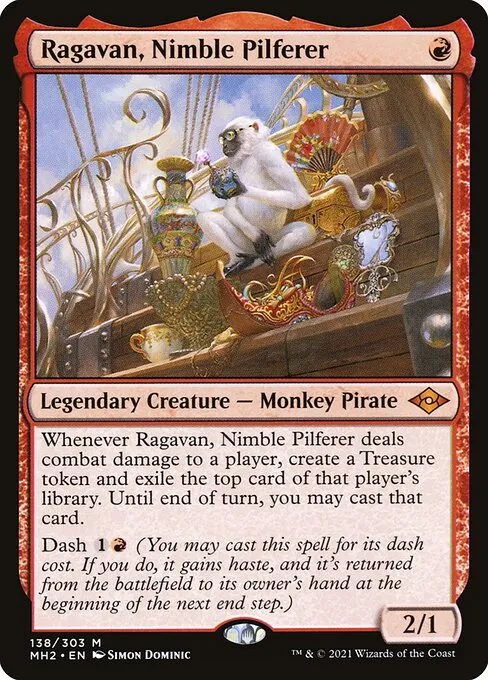
I sold a Ragavan on TCGplayer a couple years back. Listed it near market, it sold in a day, I felt great. Then the buyer opened a claim saying the corner was dinged. It wasn’t, I’d had it sleeved since I cracked it, but arguing a condition dispute through the system ate an afternoon and I eventually refunded part of it just to make it go away. That’s the marketplace tax nobody quotes you. The fees are printed. The headaches aren’t.
This is the route for your genuinely valuable cards. The chase rares, the reserved list stuff, the format staples that actually move. Anything where 15 percent of the price is a number worth caring about.
Buylists: you lose money on purpose, and sometimes that’s correct
A buylist is a store offering to buy your card outright at a set price. Card Kingdom and Star City Games are the big ones. You punch in your cards, they tell you what they’ll pay, you ship them a box, you get paid. No waiting for a buyer, no condition disputes, no listing.
You also get less. Often a lot less. A buylist is paying you so they can resell at full retail, so cash offers tend to land well under market, and the rate swings card by card depending on what they actually want in stock right now. Store credit usually beats cash by a noticeable margin, which is great if you were going to buy from them anyway and a trap if you weren’t.
For a while I was snobby about buylists. Felt like leaving money on the table for no reason. And then I actually added up what my time was worth listing forty individual $2-$5 cards and realized I’d rather buylist the whole stack, take the haircut, and get my Sunday back. So I’ve softened on them. For a pile of midrange cards you don’t want to babysit, buylisting is the correct lazy answer.
The thing buylists punish hardest is condition. Every vendor docks played cards, lightly for lightly played, brutally for anything rougher. If your card’s beat up, a marketplace where a budget player actively wants a cheaper played copy will usually treat you better than a buylist will.
The LGS: convenience you pay for in cents on the dollar
Your local game store will usually buy cards or take them in trade. The pitch is obvious. You walk in with cards, you walk out with money or credit, today, no shipping. For offloading a chunk of a collection without thinking about it, it’s hard to beat.
So yeah, the LGS thing. You’re not getting top dollar. You know that going in. The store has rent and a buylist of its own to worry about, so the cash number is going to sting if you’ve been staring at TCGplayer all week. Trade credit is where it gets better, because a lot of stores give you meaningfully more in credit than cash, and if you’re an active player buying sleeves and singles and the next set anyway, that credit spends just fine. (Same logic applies if you’re trading cards directly across the table instead of selling.)
I once dumped most of a Standard binder at my LGS for credit during a rotation panic and immediately blew the whole thing on a Commander precon and a booster box I did not need. So the credit worked exactly as the store intended. Worth knowing that about yourself before you walk in.
The LGS is also just the right home for cards nobody online wants individually. The bulk rares, the playable commons, the stuff that costs more to ship than it’s worth. A store will hand you something for a longbox of that. eBay will hand you a headache.
The send-it-all services
Newer option, worth knowing about. Services like Card Conduit take your whole box, sort it, buylist it to the best vendors for you, take a service fee (often around 5 percent on their curated submissions), and send you the rest. You skip all the sorting and typing.
The math lands close to selling at buylist prices yourself, minus their fee, which for near-mint non-bulk cards works out to roughly 85 percent of TCGplayer low in practice. So you’re trading a slice of the proceeds for never having to alphabetize anything. If you’ve got real volume of mid-value cards and zero desire to process them, it’s a genuinely reasonable deal. If you’ve got ten good cards, just buylist them yourself, the fee isn’t worth it.
One warning: bulk will eat you alive on these. A box of 5,000 commons with a few fifty-cent cards sprinkled in can net you basically zero after the per-card fees and shipping. Pull the bulk out first, or just keep it for draft chaff and cube fodder.
Where to sell your MTG cards, sorted by what’s in the box
Honestly the reason that shoebox sat in my closet for years is that it had all four categories jammed together, and “where do I sell this” has a different answer for each.
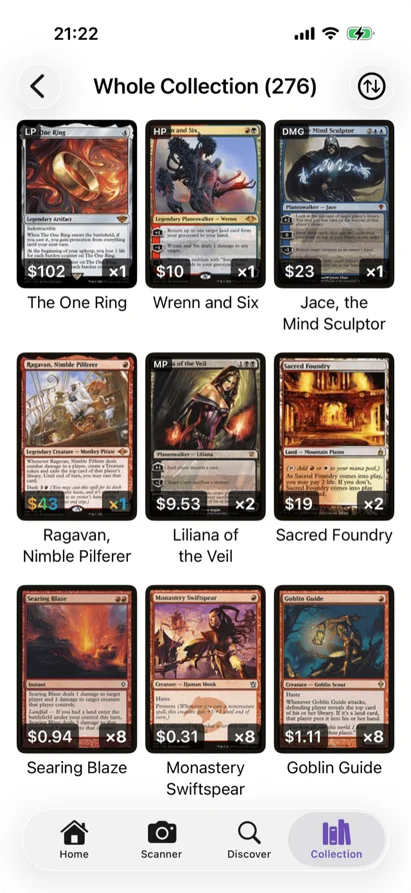
The way I finally did it: I scanned the whole box first so I knew what I actually had, instead of guessing. (I used Eldwyn for that. Scanning a few hundred cards beats typing them into a buylist site one row at a time, but any method that gets you a real number works.) Then I split the pile. The handful of genuinely valuable singles went up on TCGplayer one at a time. The mid-tier stuff I didn’t care to list got buylisted in a single shipment. The bulk and the beat-up playables went to the LGS for credit I knew I’d spend within a month.
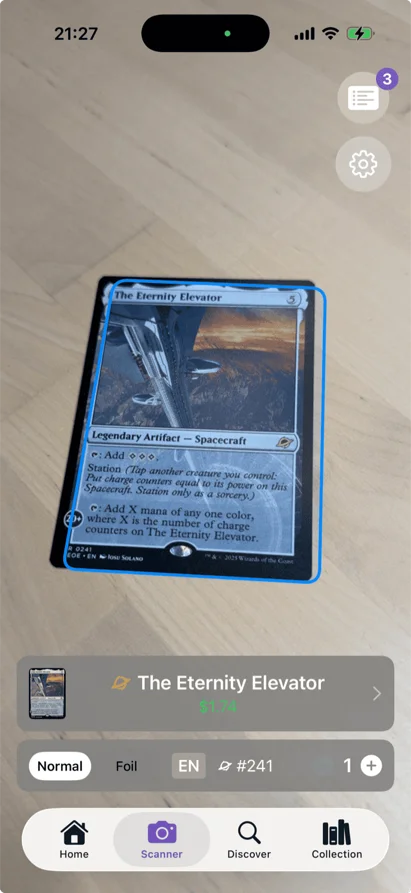
Knowing the numbers first is what made the whole thing solvable, because “is this card worth the 15 percent fee and the trip to the post office” is a question you can only answer if you know what the card is worth in the first place. Half of selling well is just pricing your collection honestly before you let anyone make you an offer.
I still haven’t sold the signed Birds of Paradise that was sitting at the bottom of the box. It’s not really worth anything. It’s staying.