There’s a long flat box on the floor next to my desk that’s been there since February. It’s full of commons. Maybe four thousand of them, from a dozen different sets, none sleeved, none sorted past “I already pulled the rares out.” Every few weeks I move it so the vacuum can get under the desk, and every few weeks I put it right back, because I genuinely don’t know what to do with it.
Most collecting advice is about the good stuff. Which rares to hold, when to grade, how to spot a fake. There’s a whole cottage industry of articles, including a few I’ve written, about finding the hidden value in your bulk box. And that’s fine. But it skips the actual problem, which is that after you pull the twelve cards worth money, you still have three thousand nine hundred and eighty-eight cards left, and they have to go somewhere.
The buylist math is brutal and you should know it anyway
Here’s the number nobody likes. Star City Games, one of the biggest buyers in the country, pays $5 per 1,000 commons and uncommons. Basic lands are slightly better at $8 per 1,000. Foils get you two cents each, which feels generous until you remember you have to sort the foils out first.
So that February box, four thousand commons, is worth about twenty bucks to a buylist. Before shipping. And you have to pack it, label it, drive it to the post office, and wait. I did the math on the gas alone once and concluded I was effectively paying SCG to take my cards. Which, honestly, is sometimes the right move.
The thing is, bulk buylists aren’t really about the money. They’re about the space. If you have a closet full of these boxes, getting twenty dollars and an empty closet is a fine trade. Card Kingdom runs a similar program, and last I checked they’ll bump your payout 30% if you take store credit instead of cash, which makes sense if you were going to buy singles from them anyway. Stack a few buylist orders together and the store credit actually starts to mean something.
But don’t go in thinking you’re cashing out. You’re paying someone to haul away cardboard, and they’re paying you a little for the privilege of reselling it in thousand-card lots to the next person starting a collection. Which, by the way, is exactly the loop I wrote about when I picked apart what buying bulk lots actually gets you. It’s the same cards going in circles.
Just give them away
I came around on donating slowly. For years my answer to “what do I do with commons” was “hoard them in case I ever build a janky pauper deck,” which is a lie I told myself for most of a decade.
The cleanest option I’ve found is MagiKids. It’s a 501(c)(3), an official Wizards partner, and they take exactly the cards nobody wants. Bulk commons, underused cards, old sets, the works. They sort it all at their place in Rochester and pack it into kits that go out to school Magic clubs, dice and sleeves and instructions included. They move something like five million donated cards a year, which is a genuinely staggering amount of cardboard when you picture it. You ship them a box and a bunch of kids who’d never otherwise afford a deck get to learn the game.
That’s the use case bulk commons are actually good for. Not value. Teaching. A pile of Theros commons is a terrible investment and a great first deck for a ten-year-old who doesn’t care that Voyaging Satyr isn’t constructed playable.
Your local game store is the other obvious answer. A lot of shops keep a “free decks” bin or run learn-to-play events and will happily take a box of commons off your hands. Some won’t, because they’re already drowning in the same bulk you are. Ask first. Don’t be the person who leaves a longbox of unsorted Dragon’s Maze on the counter like it’s a donation and not a problem you’ve transferred to someone else.
The basic land problem is its own thing
Basic lands deserve their own paragraph because they breed. Every prerelease, every precon, every bundle dumps another forty of them into your life. I have a four-pocket binder page that’s just Islands and I could not tell you why I keep it.
Here’s the honest accounting. Basic lands are worth, charitably, nothing. You can buy a thousand played basics online for about $10, which works out to a penny each, and that’s the retail price, meaning what someone’s selling them for, not what you’d get. The exception is the fancy ones. Full-art lands, foil lands, the nice Unstable and Unsanctioned basics, those have a small but real market because Commander players want their decks to look good and will pay a quarter or two per land to make that happen.
So I split them. The pretty ones, full-arts and foils, go in a binder I actually pull from when I’m building. The plain ones get bagged up by color in sandwich bags and live in a drawer, and that’s my land station. When I’m jamming a new Commander deck out of cards I already own, I grab a fistful of the right color and I’m done. No buying, no proxying basics, no nonsense. A few hundred basics in a drawer is the single most useful “worthless” thing in my collection.
When to stop sorting
This is the part I had to learn the hard way. The instinct, especially if you’ve read enough finance content, is that every common could be the one. There could be a Rancor in here. There could be an old Counterspell.
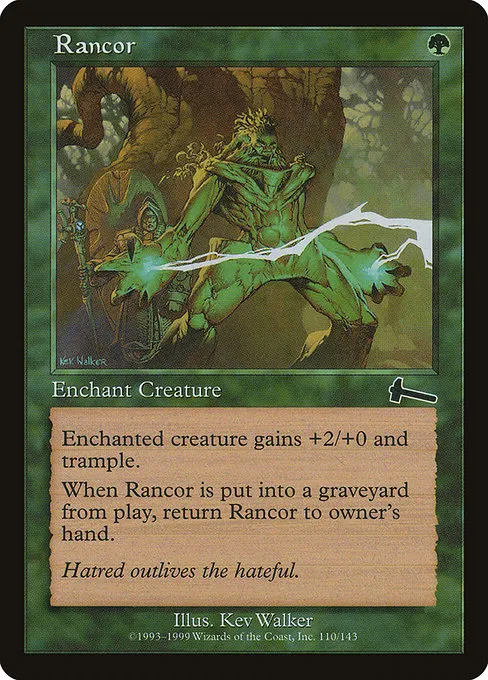
And, fine, sometimes there is. Original Rancor from Urza’s Legacy still goes for around $2.55, and there’s a tier of commons, the Pauper staples and the cards that got loved into Modern, that genuinely aren’t bulk no matter what rarity symbol they’re wearing. That’s real. I’m not going to pretend it isn’t.
But the time math on combing four thousand commons by hand to find the three that matter is worse than the buylist math. If it takes you four hours to find eight dollars of cards, you’ve earned two dollars an hour and given up a Saturday. I did this exact thing with a Khans-era box last year, sat there for an entire evening, found one foil Treasure Cruise and a playset of Mardu banner-cycle commons worth a combined six dollars, and felt like a genius for about ten minutes before I realized I’d missed dinner.
So yeah. Sorting. The trap is that it feels productive. It feels like work. You’re touching every card, you’re making piles, the piles look organized, and at the end you’ve converted a chaotic box into a slightly-less-chaotic box and recovered the price of a sandwich. The honest move is to skim fast for the obvious stuff and let the rest be bulk.
What I do now is run the whole box through a scan first. Eldwyn will chew through a few hundred cards faster than I can sort them by color, and at the end I’ve got an actual valued list instead of a vibe. If the list says there’s forty dollars of playable stuff buried in there, great, I’ll dig. If it says eleven dollars across four thousand cards, the box goes to MagiKids and I get my floor space back. The point isn’t the scanning, it’s that you stop guessing whether the box is worth your time and just know.
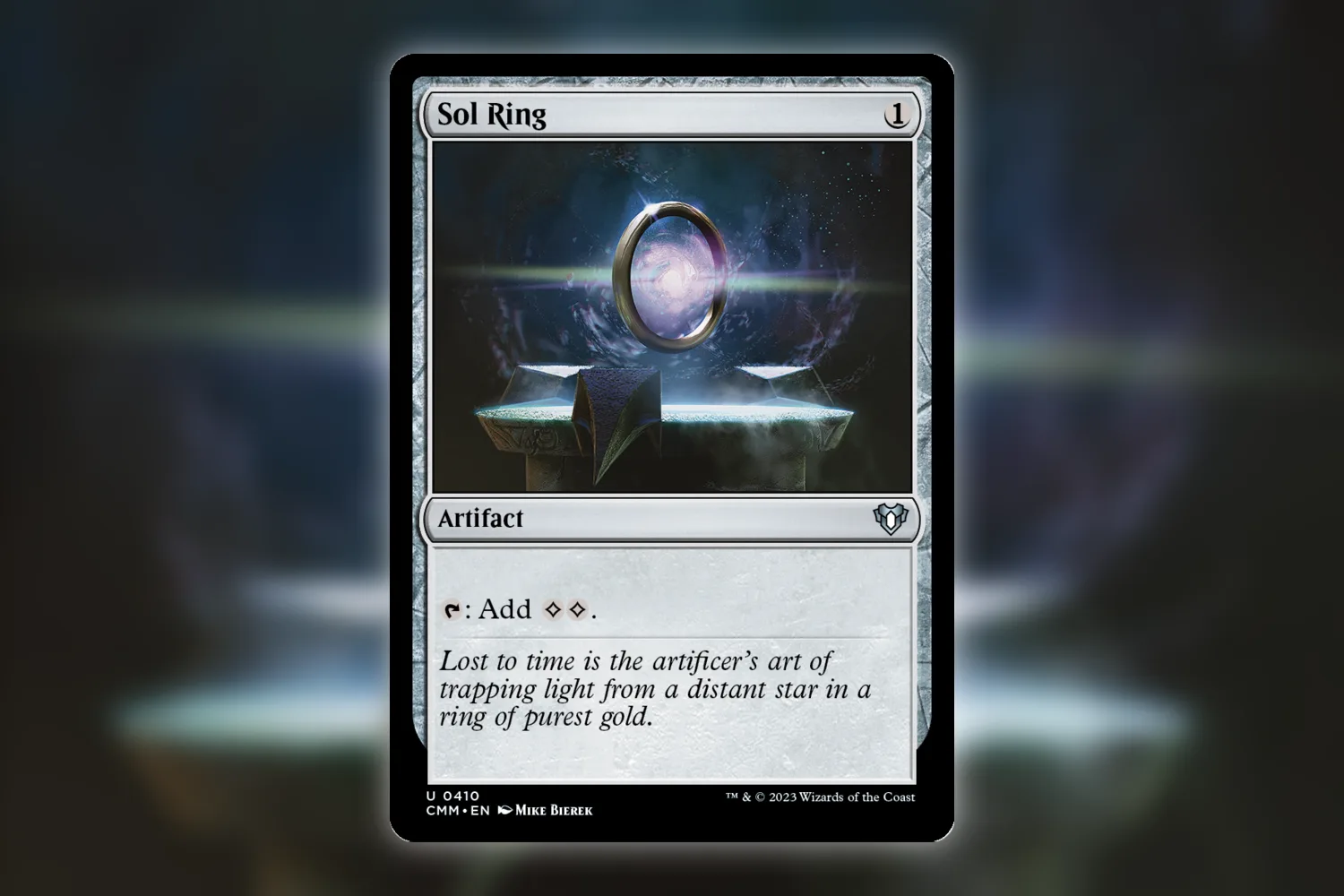
I still haven’t dealt with the February box, for the record. But I scanned it last week, and it came back at about fourteen dollars of anything that matters, most of which was a single mana rock I’d somehow overlooked. So I know what it is now. It’s a donation. I just have to actually carry it to the post office, which, given my track record, means I’ll be moving it for the vacuum until at least August.