Eighty-five cents a card sounds reasonable until I remember how many cards I usually take out of a precon. That’s the tempting bit of the Star Trek Commander surge foil premium: divide the extra $85 across a hundred cards and the expensive box starts looking almost restrained. Then I start making cuts.
Wizards’ buyer’s guide lists the regular Commander decks at $74.99 MSRP and the Collector’s Editions at $159.99. Each premium deck has the same decklist as its regular counterpart, entirely in surge foil. These are US suggested retail prices, checked October 29, before tax and shipping; a store’s actual price can change the comparison considerably.
I’d choose the regular deck for a list I expect to rebuild, and consider the Collector’s Edition when I want to keep that particular Trek deck together. The awkward purchase is the expensive box bought because three cards look lovely, with ninety-seven other cards coming along for the ride.

What the Star Trek Commander surge foil premium buys
The official decklist page, updated October 28, spells out the contents. The four decks are Federation Fleet, Landing Party, Klingon Fury, and We Are the Borg. Wizards gives November 13, 2026 as their release date. At this check, Landing Party’s full list is still awaiting reveal, so I’m leaving a four-way singles-value ranking alone.
| Contents | Regular edition | Collector’s Edition |
|---|---|---|
| Deck | 100 cards | Same 100-card list |
| Face commander | Traditional foil, borderless | Surge foil, borderless |
| Other 99 cards | Nonfoil | Surge foil |
| Double-sided tokens | 10 nonfoil | 10, surge foil on one side |
| US MSRP | $74.99 | $159.99 |
Both include a reference card and deck box. The premium is $85, about 113% of the regular deck’s MSRP. Buying all four at those suggested prices would cost $299.96 for regular editions or $639.96 for Collector’s Editions, a $340 difference.
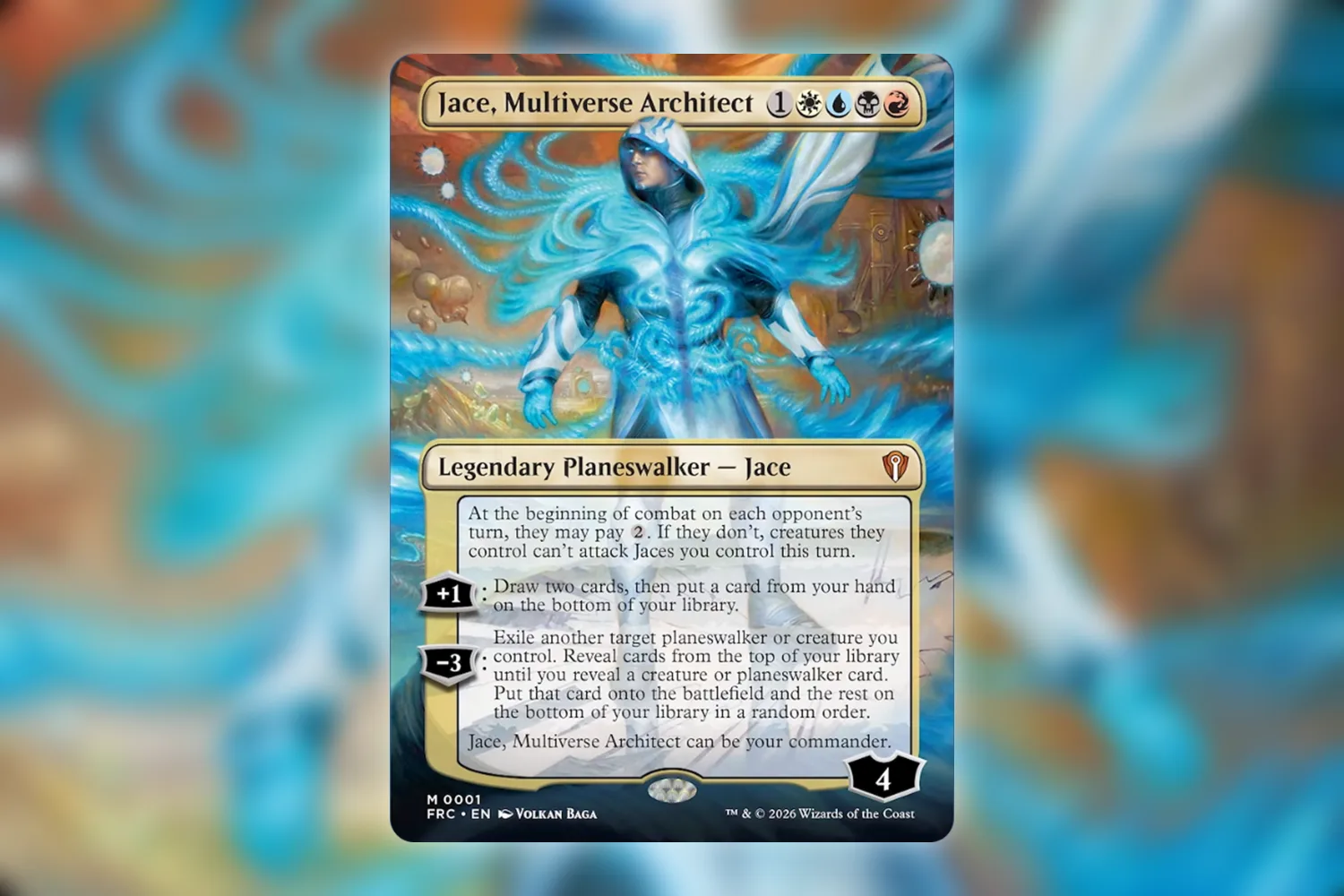
Federation Fleet’s face commander is Jean-Luc Picard, Luminary. His regular-deck version already has a borderless frame and traditional foil finish. The corresponding surge-foil version has its own TRC printing, number 7. If your priority is a shiny commander sitting beside the battlefield, the cheaper box already covers that preference. The change in finish needs to be something you specifically like.
The picture above shows the regular borderless printing. A flat digital card image is a poor way to judge a moving foil pattern, so I’d want to see the treatment under ordinary lighting before spending twice as much on a whole deck. I don’t actually know how these particular cards will look through my usual sleeves. Product renders can’t settle that for me.
Also, the word “Collector” is doing dangerous work across this product lineup. A Collector’s Edition Commander deck has fixed contents. It doesn’t contain a Collector Booster or a chance at an actor autograph. Wizards puts those signed headliner cards in Collector Boosters. If someone is shopping for a Trek fan, I’d check the exact product name on their list before ordering the shiny rectangular thing.
How much of this deck are you keeping?
I can imagine buying Federation Fleet, sleeving it immediately, and leaving it ready for a game with another Trek fan. That’s a fairly clear purchase: I want the whole crew in matching finishes, including the cards I’d replace in a more competitive build.
My more likely behavior is less tidy. Open the list, find several cards I want elsewhere, start changing the mana base, decide the deck needs a different direction. Anyone planning that should make a rough cut list before choosing the edition. Our guide to tracking precon upgrades without losing the original list is useful for keeping the two versions straight once the swapping starts.
Here’s the arithmetic I’d use. Divide the $85 edition premium by the number of cards whose surge treatment you actually want to retain. These are hypothetical allocations of the box premium, with tokens left out, rather than market prices for singles.
| Cards whose surge finish you want | Premium allocated to each |
|---|---|
| 5 | $17.00 |
| 10 | $8.50 |
| 20 | $4.25 |
| 50 | $1.70 |
| 100 | $0.85 |
Keeping only ten favorites means you’re effectively assigning the entire extra spend to those ten, unless you can recover something from the others. You still own the cut cards. They might be useful in another deck, tradeable, or worth selling. I’d give those possibilities a realistic estimate before counting them as money back.
There’s a slightly embarrassing imaginary version of this purchase that involves me paying for a complete foil deck, removing half of it on Friday, and discovering on Saturday that the replacements make the matching-finish idea look rather optimistic. Picture a pile of spare foil basics beside a very ordinary borrowed land. I’ve managed to buy an aesthetic and immediately dismantle it.
Although, I can talk myself back toward the premium box. Buying a hundred matching singles later would involve finding the exact printings, dealing with availability, and paying shipping across however many sellers have them. A complete deck in one purchase has a convenience I tend to undervalue when I’m pretending my hobby time is free. For someone who wants essentially every card, that convenience deserves space in the budget.

So, okay. Pick a deck. Open the list. Which cards are staying? That one? Fine. Those eight are already getting cut? Leave them out of the shiny wish list. You can put them back later if you change your mind. Just get something on the page before you’ve paid for everything.
Buying a few surge singles leaves a different bill
For a selective upgrade, the useful number is the price difference between the versions you want, plus the costs of getting them. If you’ve already bought the regular deck, you’ll also own its original copies. Keep those as spares, trade them, or account for realistic sale proceeds separately.
As a hypothetical example, suppose ten desired surge versions cost $30 more in total than their ordinary equivalents, and consolidating the order adds $8 in shipping. That puts the incremental treatment cost at $38. If the same comparison comes to $95 delivered, the $85 whole-deck premium becomes attractive, assuming the two sealed decks really are available at MSRP. Neither example is a quote for Trek singles.
I checked Scryfall’s TRC Picard entries on October 29. The traditional-foil printing has a $9.95 reference quote; the surge printing has no USD foil price. With the official release date still ahead, that first number is an early quote, and the empty field supplies no usable premium comparison. I’d wait for actual stock and a delivered cart price before claiming that upgrading him separately saves a specific amount.
Older releases show why I wouldn’t assume every desired upgrade will be inexpensive. On the same check, Ghyrson Starn, Kelermorph’s regular Warhammer 40K printing is $27.28 in Scryfall’s USD field. His surge-foil printing, 124★, is $110.59 in the foil field. That’s an $83.31 gap on one card, before shipping or selling fees.
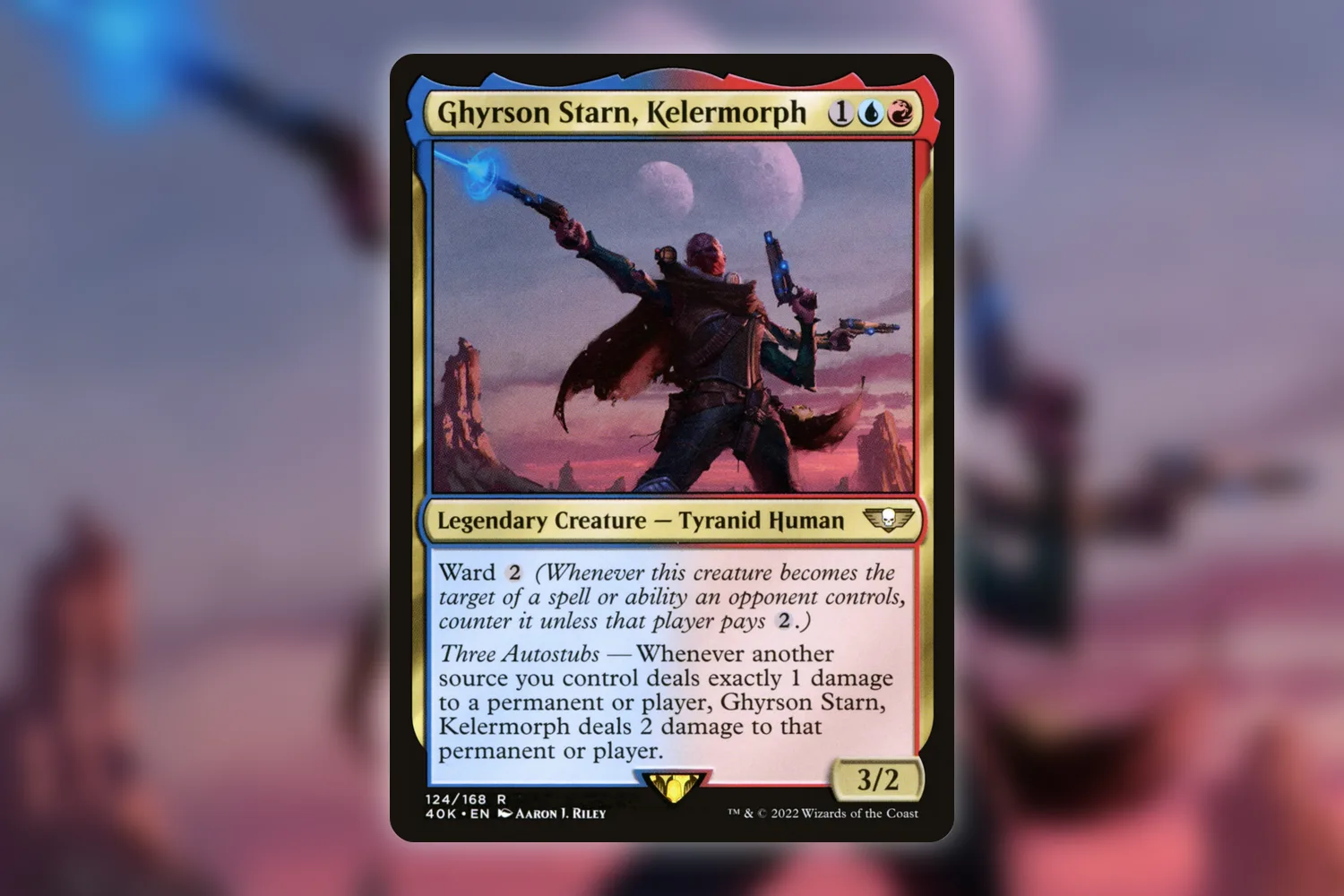
Those are reference prices for the specified printings. They don’t establish what a buyer would pay for your copy, and they certainly don’t forecast Picard’s future. We recently looked at the regular 40K reprint and its separate surge-foil market; the supply histories have already diverged. I included Ghyrson because “I’ll just buy the best ones later” can have an expensive exception.
I’d write down the five or ten Trek upgrades I actually want, with their printing and finish, then check available copies after release. That leaves room for an annoying outcome: the favorites could carry most of the premium while the rest of the deck is cheap. It also leaves room for deciding that an ordinary copy looks perfectly good once the excitement wears off.
Keep the finish attached to the card record
An opened premium deck becomes a collection-management job as soon as cards start leaving it. Record the TRC printing, collector number, finish, quantity, and location for each copy you move. Picard 3 and Picard 7 demonstrate why the collector number deserves a check alongside the name. Our card-treatment identification guide covers the broader problem of matching the object in your hand to the catalog entry.
In Eldwyn, I’d check the matched card details as I add the deck, then keep a dated note of the purchase total and any cuts. A missing price should stay unknown in that note. Substituting the ordinary printing’s price makes the inventory look complete while losing the detail you paid extra for.
For my own purchase, the next useful step is a local shop’s quote for both editions of the same deck. I’d put the delivered difference beside that short list of cards I want in surge foil. And I’d check whether the shop has a sample of the finish I can tilt under a lamp, preferably before I start imagining an entire matching fleet.