The building in Monroe doesn’t announce itself from the road. I drove out there one Tuesday with a 1,600-count box on the passenger seat, because Card Kingdom’s sell page says to mail your cards in and I had decided that “mail” was a flexible concept if I happened to be nearby anyway.
It is not flexible. The person at the front desk was nice about it, in the specific way you’re nice when you’ve had this conversation four times this week. No drop-offs at the warehouse, ever. I drove home with the box still on the passenger seat.
Most of that box was the middle of my collection. A Cavern of Souls I’d been telling myself I would build around for three years, a stack of two-dollar rares, and a few hundred cards that should never have made it into a sell cart in the first place. Typing it all in took an evening. Then I sat on the order for two weeks, because that’s what I do.
So the August news landed differently for me than it probably did for most people.
What the Card Kingdom deal actually says
On August 13, UFCW 3000, the union representing Card Kingdom’s workers, was notified that Citadel Acquisition LLC would be purchasing a majority stake in the company, effective late September 2026. Citadel is a subsidiary of ZMC Management. Card Kingdom’s own post about it calls the investment a partnership with “the media firm ZMC,” and lists what customers can rely on: the same people and teams, the same stores, and accounts, orders, the buylist, and affiliates all staying as they are. CEO James Buckley says Monroe is still the base.
The union’s version is more specific about what it exists to protect. Card Kingdom told them that all bargaining unit employees are retained, with no changes to wages, benefits, working conditions, job locations, schedules, or duties, and no change to union representation or the collective bargaining agreement. The union is requesting the purchase agreement and bargaining over the effects of the sale, which its contract entitles it to do.
Both of those can be true at once. A majority investment announced as a growth partnership, and a union making sure the terms hold on paper.
ZMC is worth knowing if you’re going to think about this at all. It’s a New York private equity firm founded in 2001 by Strauss Zelnick, who is also the chairman and CEO of Take-Two Interactive. Which is a roundabout way of saying that part of the money coming into Card Kingdom comes from the guy whose company ships Grand Theft Auto. The portfolio is media and entertainment: The Second City, the creator platform Raptive, the ticketing company Logitix, 9 Story Media Group, a marketing agency or two. No trading cards, no collectibles, nothing in the hobby at all. What they’d be bringing is a playbook for websites, warehouses, and physical retail, which is roughly the list Card Kingdom published: a better site, tools people have asked for, faster fulfillment, deeper selection, and investment in the Mox Boarding House stores.
The part I keep going back and forth on
My first instinct was bad. Private equity buys a hobby retailer, and the buylist is the first place you’d expect to feel it. Tighter offers, stricter grading, a credit bonus that quietly goes from 30% to 25%.
Then I argued myself out of it, at least partly. The buylist at a retailer like Card Kingdom is closer to an intake valve than a profit center. Stop buying and you stop having inventory, and stocking deeply is on the company’s own list of things the new money is supposed to fund. An owner who guts the buying desk is starving the exact part of the business that produces the thing they sell. A version of this where Card Kingdom buys more over the next year, not less, is at least as easy to believe as the scary one.
Then I went back the other way, because I’ve watched this movie elsewhere in the hobby. After Collectors Holdings rolled up PSA and BGS, PSA paused its four cheapest grading tiers and the cheapest slab became a card that costs about eighty dollars to grade. Nobody announced that as a retreat. It showed up as a service update, with a vague promise about bringing the tiers back once a ten-million-card backlog got cut in half. The stated plan and the slow drift of terms are two different things, and the drift is what you find out about a year and a half later.
Which is a long way around to this: I don’t think there’s a reason to panic-sell anything. I do think it’s a reason to actually understand the mechanics of the order you were already going to send.
What I’d do with a box I was already planning to ship
The price on a Card Kingdom sell order gets quoted when you submit it, and the company asks that the package be postmarked within seven days of that. So a sell cart you built two weeks ago is priced off a two-week-old list. Re-check it before you print anything. If a card in there spiked since then, or ate a banning, that difference is yours to notice.
Once your box arrives, the timeline is documented: contents verified and marked received within 48 hours, then graded and finalized in one to five business days after that.
Here’s the part I wish I’d known the first time. You can leave a note in the customer comments on your order asking to be contacted with the grading breakdown before it’s finalized. You get to see every grade and the new total, and you get three days to ask for anything graded EX or below to be sent back to you. Near mint cards are absorbed automatically and can’t be returned, so this only buys you anything on the played stuff. The played stuff is where a buylist haircut actually stings. Pricing your collection honestly before you ship is what makes that three-day window useful, because you can’t argue a grade on a card you never looked at twice.
Then there’s cash versus credit. Store credit pays a 30% bonus over check or PayPal, and that’s the entire reason the credit number on the screen looks so much better than the cash one. The question is whether you were going to spend that money at Card Kingdom anyway. Taking a large balance in store credit means holding a claim on one retailer while its ownership changes hands, which is a sentence about concentration and not a prediction about anybody.
If you’re moving real volume, split it. Card Kingdom, Star City, and your local store all want different things, and any buylist stops buying a card once it’s overstocked on it. A card missing from one list is often sitting on another. I went through the four selling venues in more detail a while back if you want the longer version.
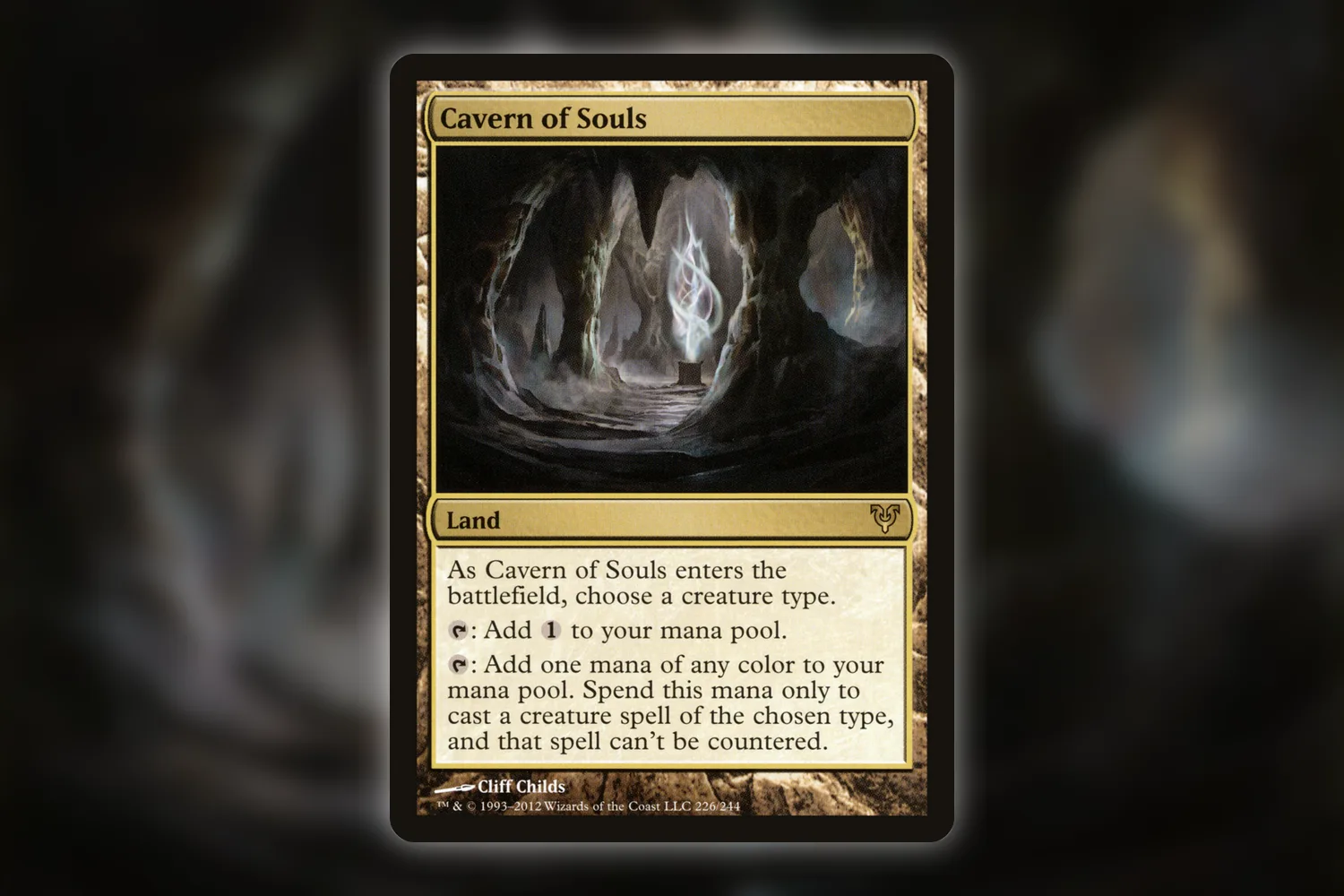
The Cavern of Souls from that box is still here, by the way. It runs about $51 in Avacyn Restored. The Lost Caverns of Ixalan reprint, eleven years newer, is $51.05. Six cents apart. I’ve been trying to come up with a clean explanation for that all week and I don’t have one, which might be the most honest thing I can say about this hobby’s pricing. What a buylist will pay you for a card has almost nothing to do with how old it is and everything to do with how many people are trying to buy one this month.
What I’m watching after the Card Kingdom deal closes
The sale is supposed to be effective around the end of September. Between now and then, nothing about the buylist changes. After that, there are four things I’ll actually be looking for.
- The store credit bonus. If 30% becomes 25%, that’s a pay cut wearing a help-article costume, and it’ll show up in the FAQ before it shows up anywhere else.
- The collections buying program, which Card Kingdom relaunched in January for collections that don’t fit the singles buylist.
- Buy-list depth on staples. Every buylist stops buying cards it’s overstocked on. The question is whether the shop is still hungry three months in.
- Whether the money shows up. New Mox locations, a rebuilt site, faster shipping, the stuff they said the investment was for.
That’s the whole list. None of it is dramatic. All of it is checkable.
So, print the order, put the paper inside the box, and don’t drive to Monroe.