For about a decade I had a habit of circling a date on my calendar every September without really thinking about why. Big set drops, format resets, time to figure out which of my Standard rares are about to become bulk. It’s such a deep instinct at this point that I did it again this year out of muscle memory, penciled in October for Reality Fracture, and then remembered halfway through writing it that the habit itself is about to stop meaning anything.
Standard rotation has happened in the fall for as long as most of us have been playing. That’s ending. Starting in 2027, rotation moves to whatever month the year’s first set releases, and it stays there permanently. Wizards announced this back in October 2024, tucked into the bottom third of an article that was mostly about something else entirely, and I don’t think most collectors clocked it at the time because the headline news that day was Universes Beyond becoming legal in every format.
The fall deadline was never actually a rule
Here’s the part that surprised me when I went looking for where this tradition even came from. It’s not a rule. It’s a leftover. Wizards said as much themselves: the pattern of a big fall set resetting the format traces back to 1995, and it stuck around mostly because that’s just how the release calendar happened to shake out for thirty years, not because anyone decided rotation specifically belongs in autumn.
Once Wizards started releasing similarly sized sets throughout the year instead of building up to one enormous fall block, the fall reset stopped making sense as a design decision and started looking like an accident nobody had bothered to fix. Their words on the change, from the same announcement: it’s “purely for ease of communication.” As of the first release of 2027, whatever sets came out in 2025, 2026, and 2027 are Standard-legal, and that math holds every single year after without anyone having to remember which specific fall set was the cutoff.
I’ll admit my first reaction to that phrase was pretty cynical. “Ease of communication” sounded like corporate speak for “we wanted a cleaner marketing calendar” and nothing more. But sitting with it a while, a fixed three-year rolling window that resets at a knowable point actually is a real improvement over “it depends which set was the big one that year.” I used to have to think for a second every time someone asked me what’s legal in Standard. Now I don’t. That’s not nothing, even if it’s also convenient for Wizards’ own press cycle.
2026 doesn’t get a rotation at all
The detail that got buried hardest in all this: 2026, the year we’re in right now, has no Standard rotation whatsoever. None. It’s a bridge year, built specifically to get the format from the old fall-timed system to the new calendar-aligned one without either double-rotating or leaving too big a gap. I’ve written before about how that turns February 2027 into a six-set pileup instead of the usual three or four, and that’s the direct consequence of skipping 2026 entirely.
What that skip year also means, quietly, is that a couple of sets are getting shortchanged on their Standard lifespan. Wizards said outright that Bloomburrow and Duskmourn: House of Horror will both be legal for less time than players had reason to expect when those sets came out. Nobody buying a booster box of Duskmourn in September 2024 was doing math based on a Standard rotation calendar that hadn’t been announced yet. They were assuming the usual three years. Instead they’re getting something closer to two and a half.
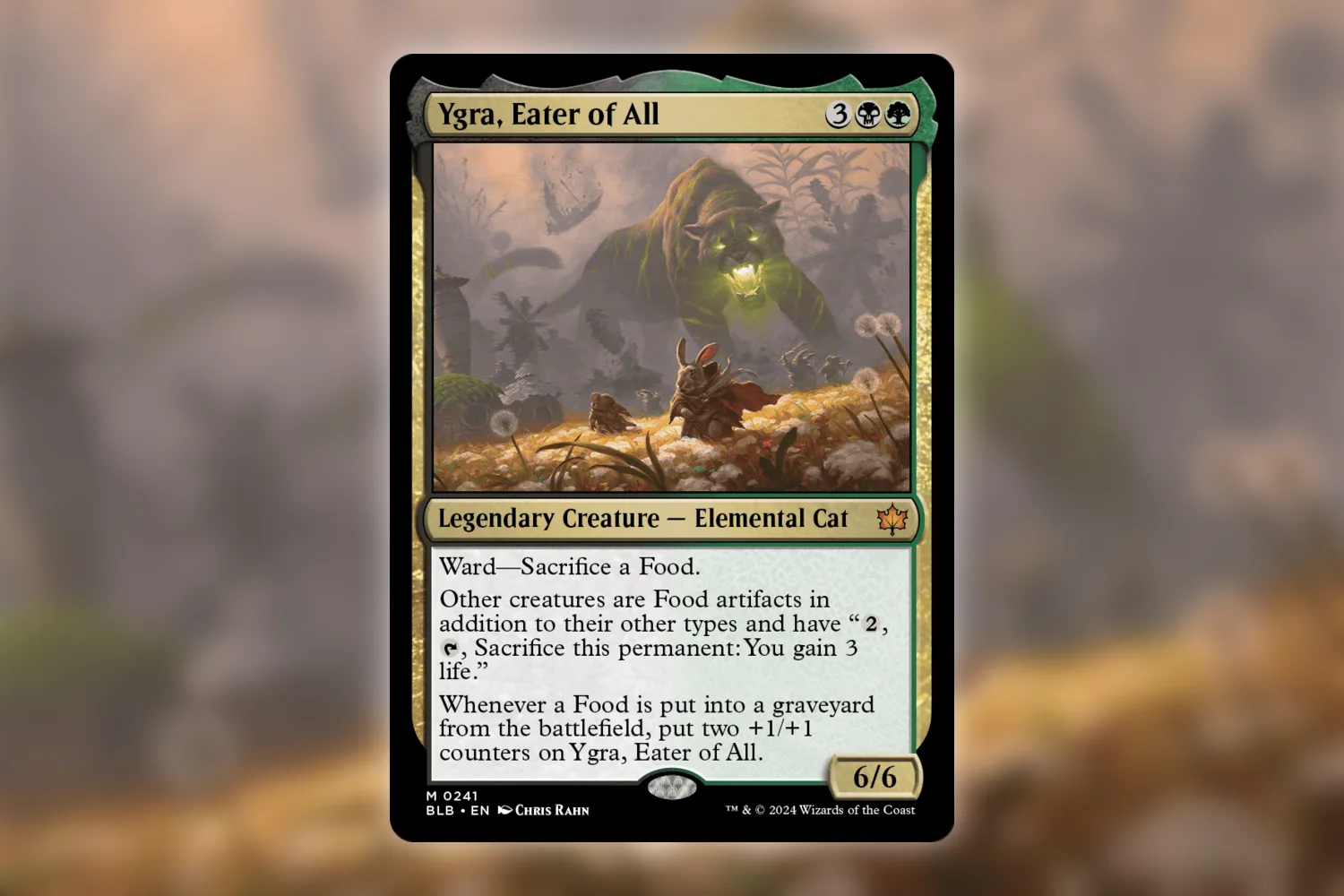
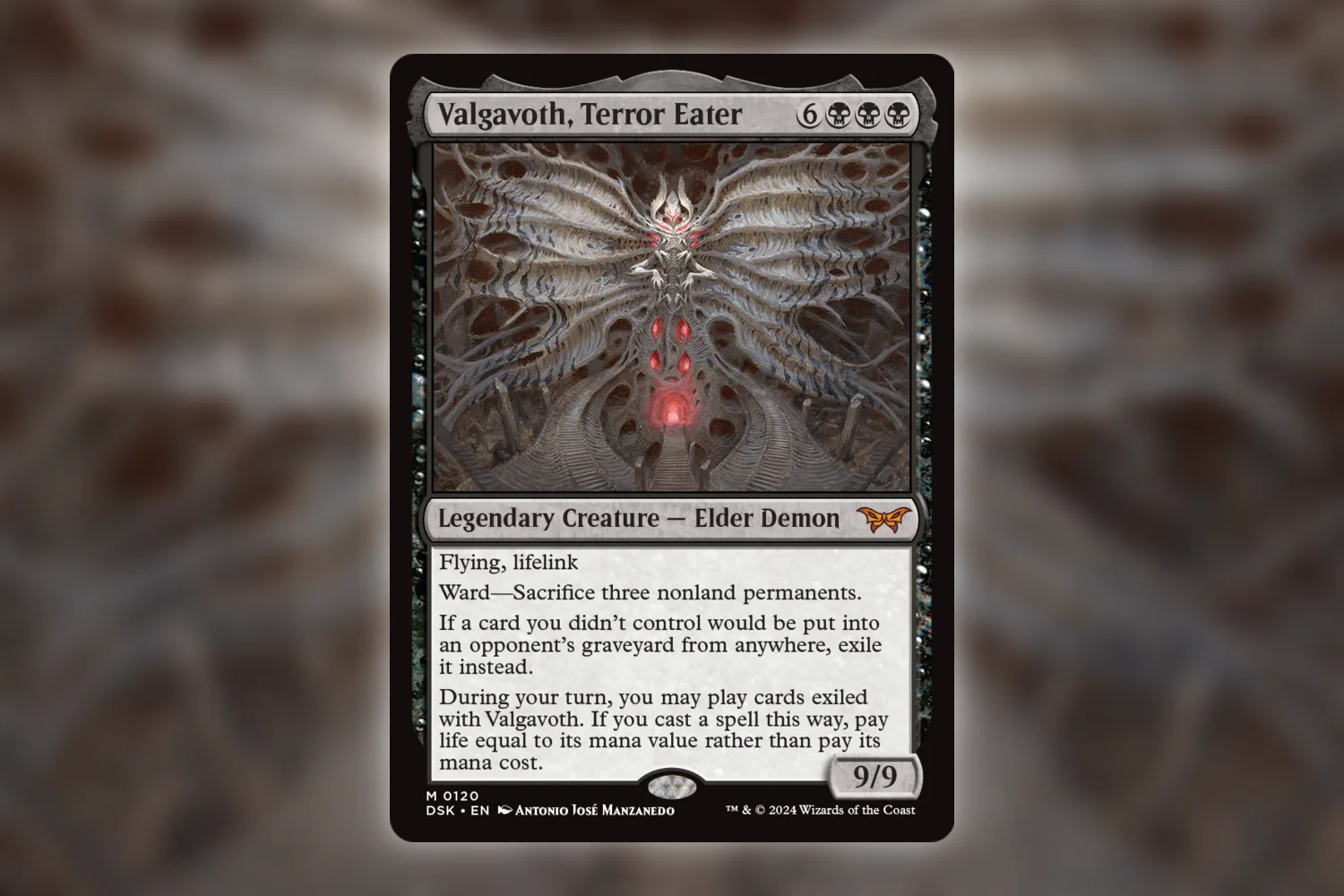
If you’re holding onto Standard-relevant Duskmourn cards for the ride, that shortened runway is worth knowing about. Valgavoth, Terror Eater is sitting around $16.61 right now, which is still real money for a card that’s going to have less time doing Standard-legal things than the set’s own marketing implied. Same story on the Bloomburrow side with Ygra, Eater of All at roughly $13.70. Neither is falling off a cliff tomorrow, but the runway got shorter than either of us signed up for.
Not every Bloomburrow card cares, to be fair. I pulled a stack of Mabel, Heir to Cragflame out of a box while writing this, currently worth about 33 cents, and losing a few months of Standard legality changes literally nothing about that card’s life. It was never a Standard card in anyone’s actual gameplan. It’s a Commander piece that happened to also exist during a Standard season. Most of what’s in your binder is like that, honestly, whether or not the rotation calendar around it just got rewritten.
The part that actually changes your yearly habits
Here’s what I think collectors are going to feel more than anything else about this whole shift. Once 2027 hits and the new system is running, the rotation date itself starts moving around from year to year, because it’s tied to whenever that year’s first set happens to release, and that date isn’t fixed. Some years the first set might land in early February. Other years, depending on how Wizards spaces things out, it could land later. The 2027 lineup currently has Nauctis: The Sunken Realm as the opener on February 5, which is about as early in the year as it gets, but there’s no guarantee every future year lines up the same way.
So the September instinct, the one I described at the top of this, just becomes wrong. Not wrong once. Wrong every year, differently, depending on the schedule Wizards happens to publish that January. You can’t pattern-match anymore. You have to actually go look up the release calendar instead of trusting your gut, which is a genuinely different habit to build after a decade of the other one.
I keep going back and forth on whether that’s actually worse for players day to day. On one hand, losing a predictable seasonal rhythm is a real loss, the kind of thing that made “fall rotation season” its own little cultural moment at every LGS I’ve played at. On the other hand, a rolling three-year window with one clean rule is objectively easier to reason about than trying to remember whether this particular fall set was a rotation trigger or not, which, if I’m honest, I got wrong more than once over the years.
So yeah, practically, what do you actually do with this. Stop assuming October. If you’re the type who sets a value baseline before rotation hits, the trigger to watch for going forward is the calendar year’s first set announcement, not a season. Scan whatever you’re holding from a set that’s approaching the back edge of its three-year window sooner rather than later, because “sooner” is now a moving target instead of a fixed date you can circle in September out of habit.
The next time someone at my LGS asks me when Standard rotates, I’m going to have to actually check instead of just knowing. Which, honestly, might be the most disruptive part of this whole announcement.