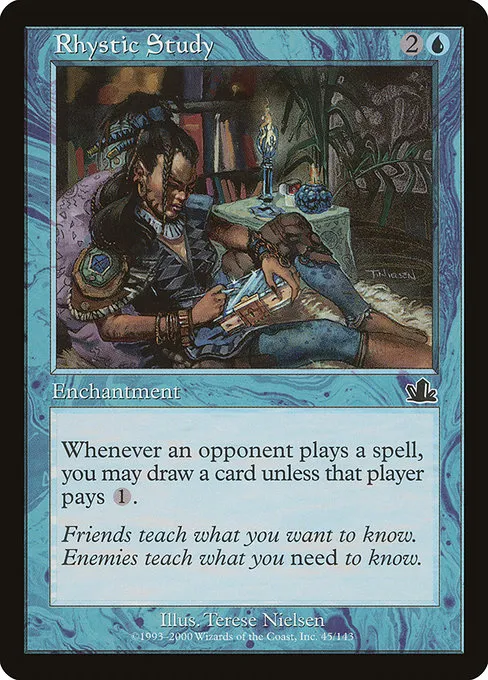
Last summer I pulled a foil Rhystic Study out of a binder that had been sitting in a closet for maybe nine months. The card had a faint S-curve to it. Not catastrophic. Just enough that if you laid it flat on a table, you could see daylight under one corner. That binder lives in a closet sharing a wall with my apartment’s bathroom, and I’m pretty sure now that the wall just runs slightly more humid than the rest of the place. The card is fine, in the sense that nobody at an LGS would call it played. But Prophecy foil Rhystic Study sells for around $308, and watching it slowly curl over a season of unwatched humidity made me actually think about how I store my MTG cards for the first time in years.
The thing nobody really tells you when you start collecting MTG is that cards aren’t stable objects. They’re layered paper sandwiched with a thin printed coating, and on foils, a metallic film glued in between. Paper is hygroscopic — it absorbs moisture from the air whenever the air is wetter than the paper, and releases it when the air is drier. The foil layer doesn’t expand and contract at the same rate as the paper does. So when humidity changes, foils warp first, and they warp visibly. That’s why foil curl is the canary in your collection. By the time the non-foils look bad, the conditions were probably bad for a long time.
Most posts about card storage have an upsell baked in. You need a temperature-controlled case, archival sleeves, a hygrometer, silica gel packets in every box. Some of that is real. Most of it is overkill for a 2,000-card binder collection. The actual question isn’t “what’s the absolute optimal storage” but “what’s the realistic floor I need to clear so my cards don’t degrade.” Those are very different problems and you almost never see people answer the second one.
The numbers that actually matter
If you read enough card-care threads you’ll see the same range cited: 45-55% relative humidity, somewhere around 16-20°C (60-68°F). Those aren’t arbitrary. Below 40% RH, paper gets brittle and edges chip more easily when you sleeve and unsleeve. Above 60% RH, foils start curling, glue lines on packaging soften, and non-foils gradually warp. Mold becomes a real risk above 70%, especially if the air isn’t moving. Most homes in the US sit somewhere between 30% and 70% depending on season and HVAC. Which is a long way of saying: your living room is usually fine, but a closet against an exterior wall in a humid month often isn’t.
Temperature mostly matters insofar as it creates condensation cycles. Cards heating up during the day and cooling at night will pull moisture from the air every cycle. That’s why attics and garages are the worst place to store cards, even if you live somewhere dry. The temperature swings do the damage. Cards stored in a 10°F daily swing for a year often look worse than cards stored at a constant 75°F.
UV is the third one. Sunlight fades the inks on cards faster than people expect, especially the reds and yellows. A sun-faded copy of any Boros card looks washed out next to a fresh one. Reds pink out first, yellows go cream. Even slabs don’t fully block UV. PSA’s plastic shell stops most of it but not all, and a few years of direct window light will dull a slabbed card visibly. If you display a card on a shelf opposite a window, assume it’s losing color value every season.
What I actually do to store mine
OK so here’s where I’m going to admit I don’t run a humidor or a climate-controlled box. I have a cheap hygrometer ($12 on Amazon, the little white ones that look like a sleep tracker) sitting on top of the bookshelf where my binders live. I check it once a month, more in summer. If it reads above 55% for more than a couple of days, I know I need to either run the AC longer or move the binders to the bedroom, which is drier because that’s where the dehumidifier lives.
That’s it. That’s the system. No silica gel. No sealed boxes. No special UV film on the windows.
The reason this works: cards degrade slowly. Consistent exposure to bad conditions over months or years is what gets them. If you keep your collection in roughly the same range as your living room, and you keep your living room in roughly the same range that humans find comfortable, you’ve already cleared most of the bar. The big risks are the ones people don’t think about — leaving a binder in a hot car, storing a longbox in a basement that floods once a year, keeping foils in a sealed plastic box that traps humidity instead of letting it equalize.
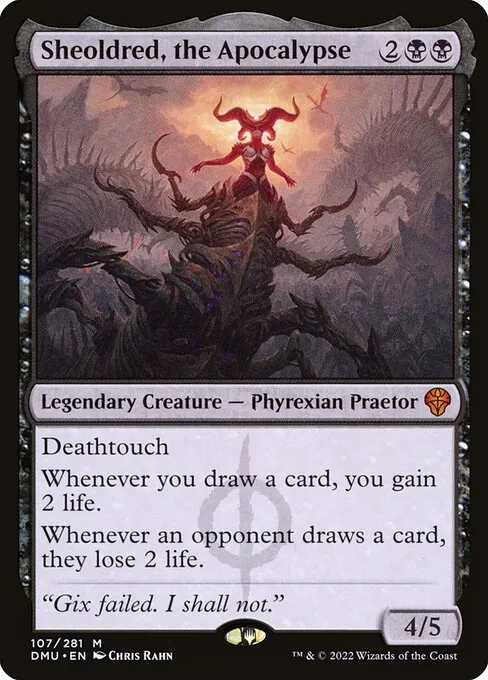
So yeah, storage. Mostly people overthink it. The card that’s gonna get you isn’t the one you put in a slab. It’s the one you stuck in a deck box, took to FNM, forgot in the car, and didn’t think about for six months. That Sheoldred you’ve been holding since DMU, the one that’s worth $96 now? Fine in your bedroom. Not fine in a deck box in the trunk of your car in July.
Foils, slabs, and the special cases
Foils warp more than non-foils. Even in good storage, some foils from the late 1990s and early 2000s — Urza’s Saga foils especially — were printed on cardstock that just can’t hold its shape. If you have those, a flat press with weight on top is the only fix that consistently works, and you have to apply it before the curl becomes permanent. Some Pre-Modern foils I’ve owned have been re-flattened three or four times over the years. They keep coming back. It’s a maintenance relationship.
Slabs are mostly forgiving. They’re sealed, rigid, and the plastic does most of the work. Two things still kill them though: heat (which can warp the slab itself and create internal pressure on the card) and stacking pressure (laying slabs flat under weight will hairline-crack the cases over time). Store slabs upright like books. Heat and pressure are the only real grade-killers for slabbed cards, and standing them up handles both at once.
There’s a subcategory of “I want this card to survive a fire” collectors who use safe-deposit boxes or fireproof safes at home. I don’t have a strong opinion on this. I will say that most fireproof safes are sealed pretty tight, and if you put cards in one without a desiccant, the trapped air will eventually equilibrate to whatever the most humid moment was when you last opened the safe. Which is to say: even a safe needs ventilation. Or silica gel. One or the other.
Actually wait, I want to walk something back. I just said most fireproof safes trap humidity, and that’s the consensus I’ve read on collector forums, but I should be honest that I’ve never tested it with cards in a real safe. It’s what makes physical sense to me given how those safes are sealed. If you have a fire safe full of cards that’ve been fine for years, your data beats my reasoning.
The boring stuff that actually helps
If you’ve been collecting for more than a few years, you probably already have most of the right habits without thinking about it. Cards in sleeves, sleeves in binders or boxes, binders on shelves out of direct sunlight, in a room you spend time in. That’s the whole setup. The handful of things worth being a little more deliberate about:
- Don’t store cards on or near an exterior wall in winter. Cold wall plus warm room equals condensation point right where your binder lives.
- Don’t stack longboxes more than three deep. The bottom ones get compressed and the cards near the bottom of those boxes will eventually show pressure marks.
- Don’t store cards in PVC sleeves. PVC outgasses over years and the gas damages card surfaces. Polypropylene sleeves (Ultra Pro, Dragon Shield, KMC) are the standard for a reason. If you’re thinking about sleeve and toploader strategy more broadly, the same logic applies to top loaders too.
- Don’t trust a basement that’s ever flooded, ever. Even if it’s been dry for years. One leak ruins a longbox.
If you’ve inherited a collection that’s been in someone’s basement for 20 years, the first thing to do is take it out of the basement. Then air the cards out flat for a couple of days before sleeving them. They will smell like the basement for months. That’s normal.
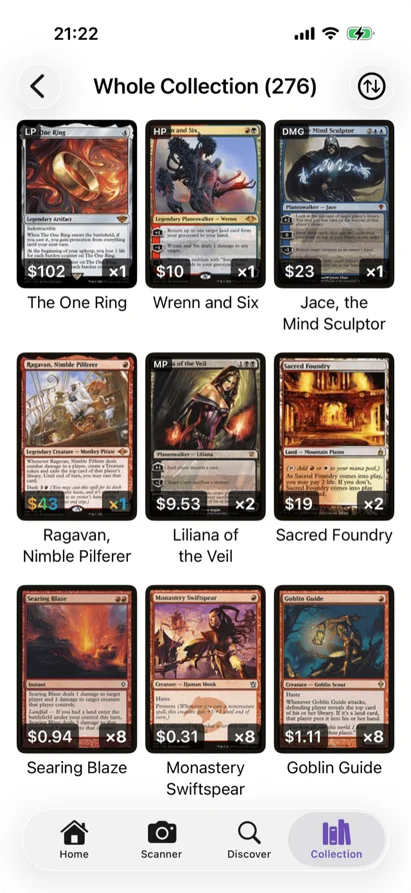
I’ll close with the unsexy version. Knowing what you have matters more than how you store it. If you scan your collection so you know which 80 cards out of 4,000 are worth real money, you can put those 80 in toploaders in a closet near the center of your house and stop worrying about the other 3,920. Most of my collection lives in unsleeved longboxes. The cards I actually care about, I sleeved and toploaded and put in a binder I check on. That’s the whole pyramid.