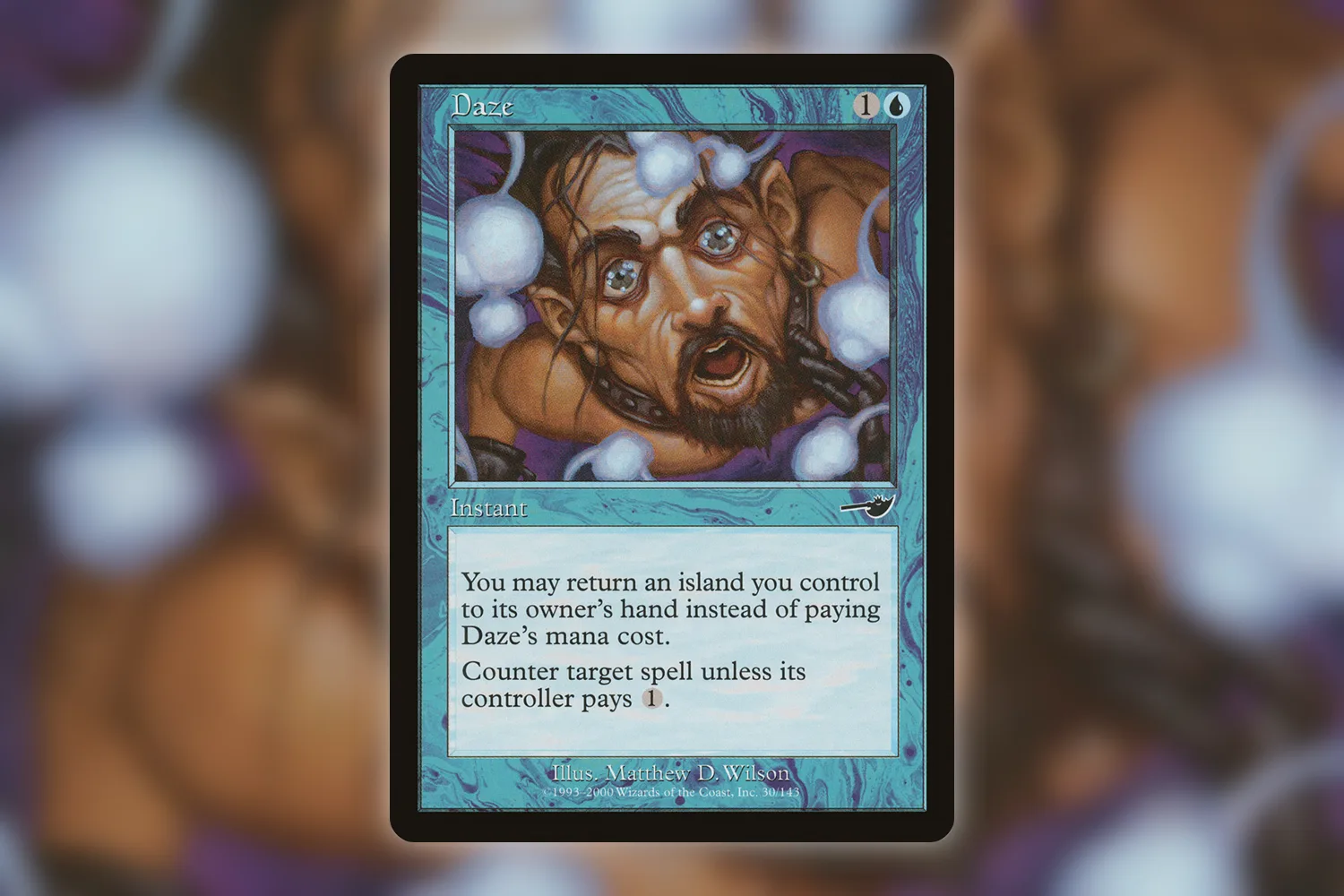
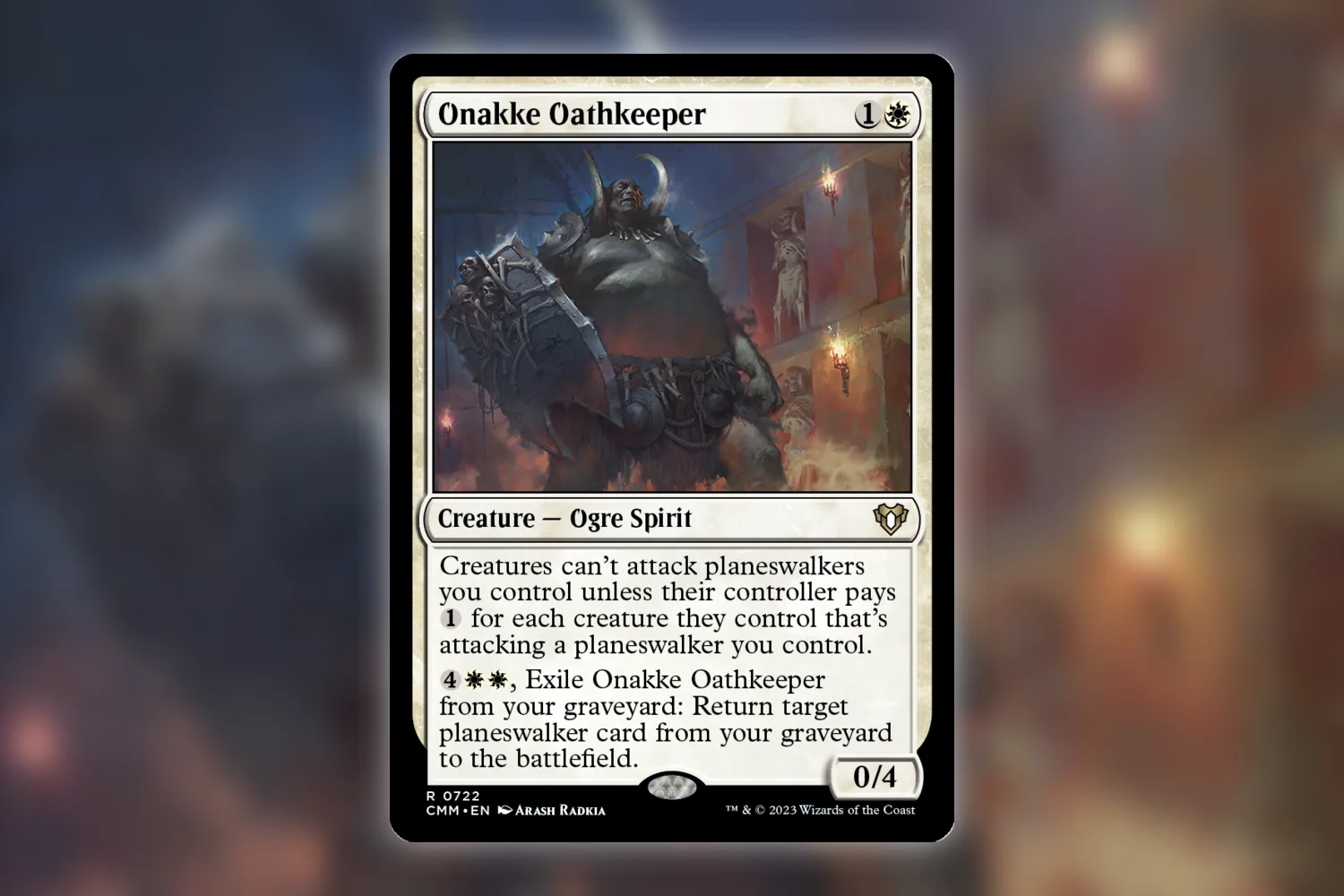
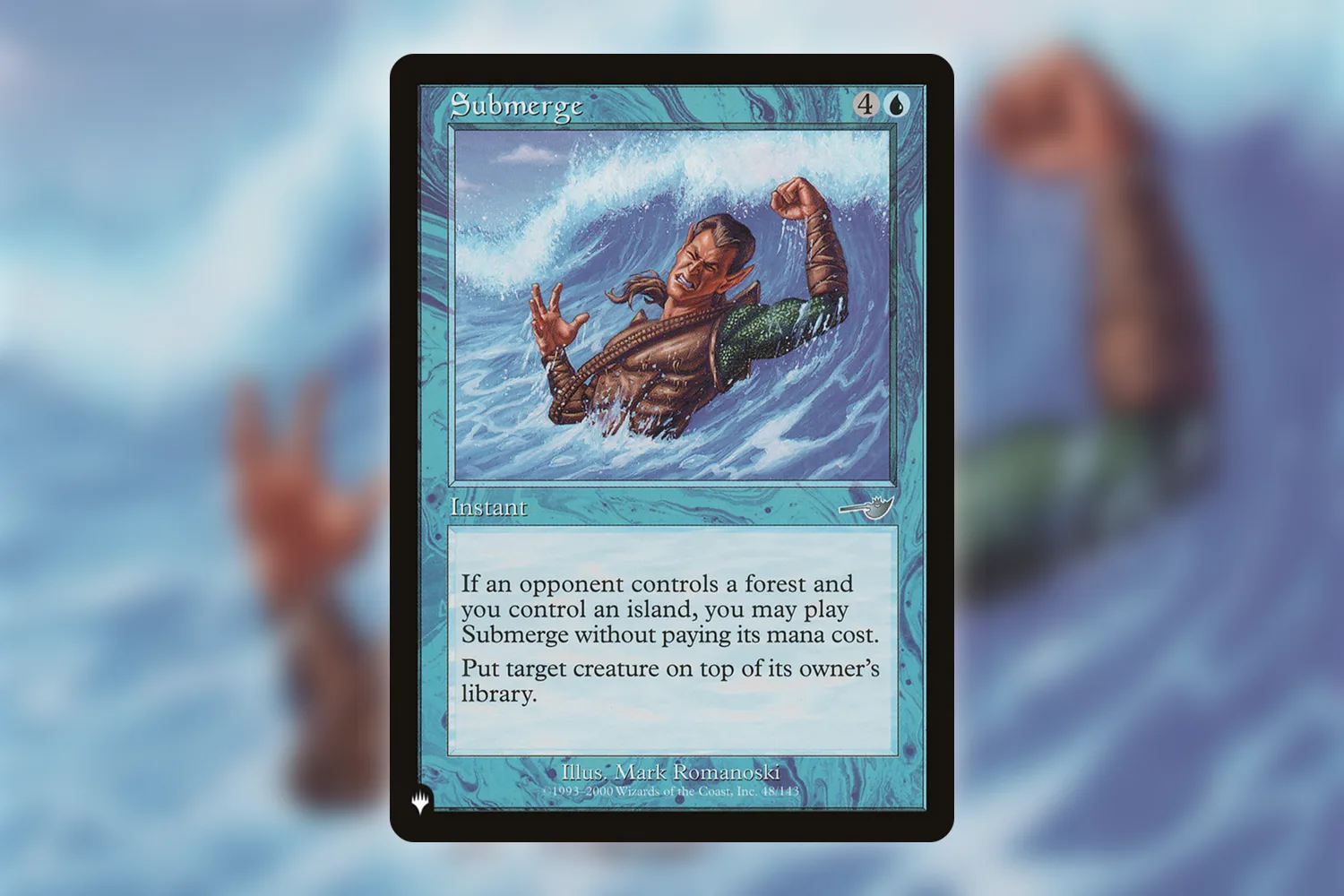
There’s a page in my main binder I think of as the nervous page. Nine cards, all of them somewhere between fifty and a hundred and fifty dollars, all of them things I bought exactly once and would rather not have to buy again. Whenever a new set gets announced I flip to that page before I read a single spoiler.
I did this for about four years without ever asking myself what I’d do with the answer.
Working out which MTG cards are most likely to get reprinted next isn’t really guesswork. The signals are public, they all live on Scryfall, and checking one card takes maybe a minute once you know what you’re looking at. The part that took me longer to accept is that for most of the cards on that page, knowing the answer wouldn’t have changed anything I did.
The Reserved List is the only hard wall
Everything starts here because it’s binary. A card on the Reserved List will never be printed again in a functionally identical form, in any language, in foil or non-foil. Wizards committed to that in writing and reaffirmed it as recently as their current reprint policy page. No cards get added, none get removed.
Grim Monolith is my favourite example because it looks like exactly the kind of card that should have been reprinted six times by now. Urza’s Legacy rare, February 1999, sits in a huge number of cEDH lists, currently $481.90. Twenty-seven years and one paper printing. It’s on the list, so that’s the end of the conversation.
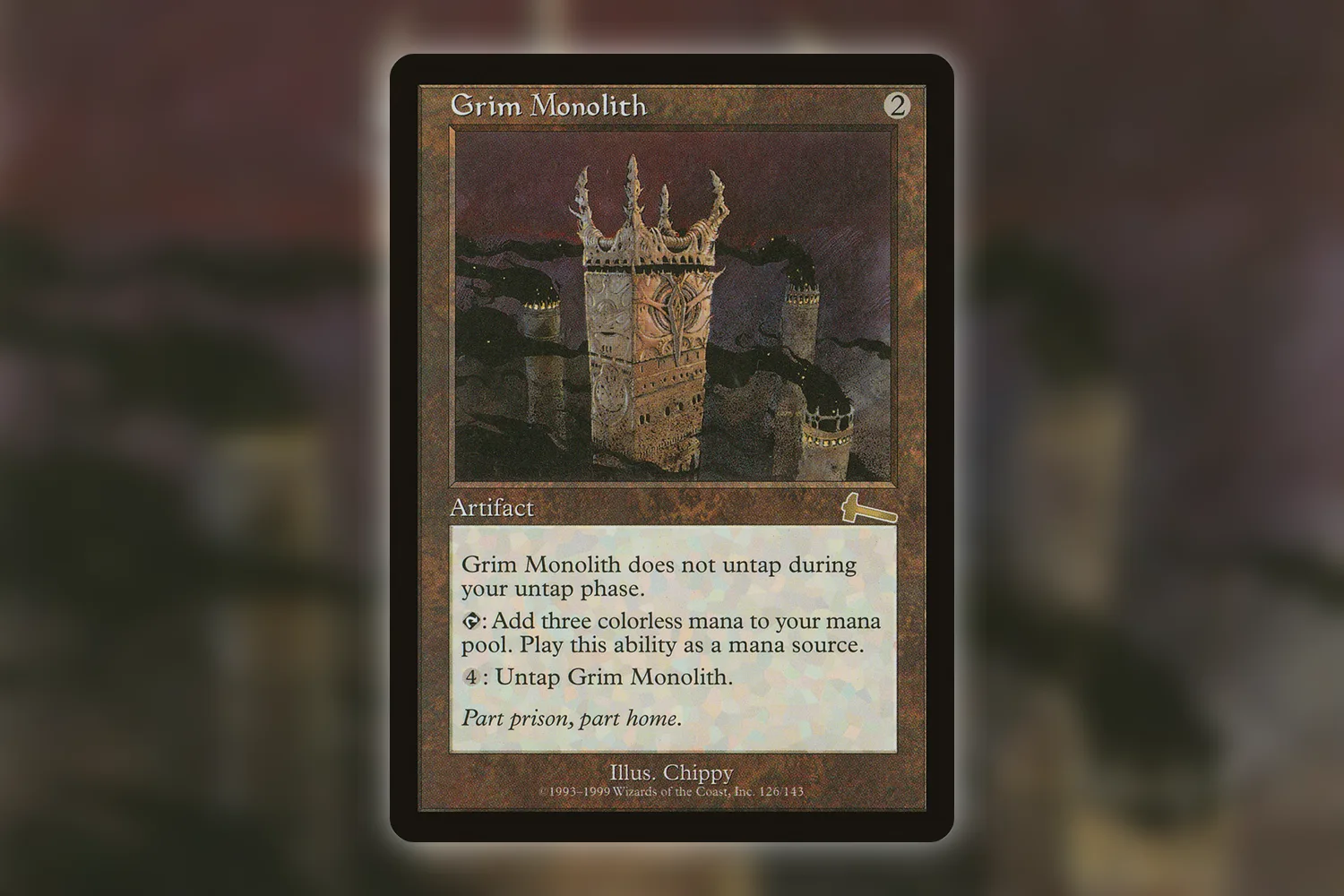
The list is smaller than people assume and it stops dead at Mercadian Masques, so nothing printed after October 1999 is on it. If you want the full shape of it I wrote about what the Reserved List actually covers a while back. For the purposes of this exercise it’s a thirty-second check on Scryfall, and it either ends your worry or it doesn’t.
Expensive because it’s rare, or expensive because everyone wants it
This is the distinction that actually does the predictive work, and I stole it wholesale from an old Saffron Olive piece on MTGGoldfish about reprint equity. His framing is that Wizards treats every card’s secondary market price as money in a savings account, and a reprint is a withdrawal. Reprint a card and you’ve spent some of what made it exciting. Some cards refill the account on their own. Others don’t, and once they’re spent, they’re spent.
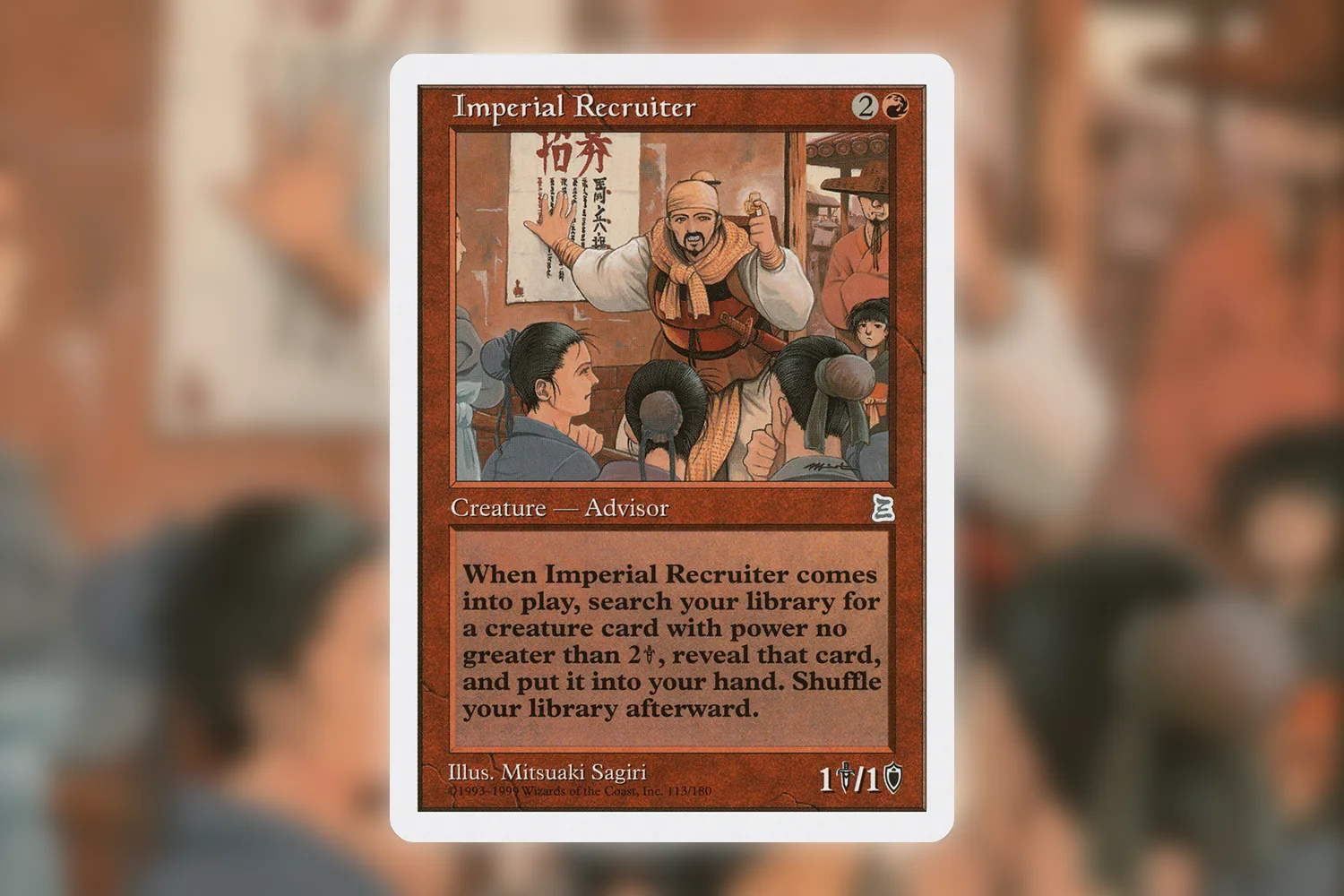
Take Imperial Recruiter. The Portal Three Kingdoms original is $135.24, and the reason is that Portal Three Kingdoms barely exists as a product. Demand had very little to do with it. Masters 25 reprinted it in 2018 and it landed at $15.01. Double Masters put it at $15.41. The Modern Horizons 2 copy is $13.26. It showed up in the Zeta Set again this month.
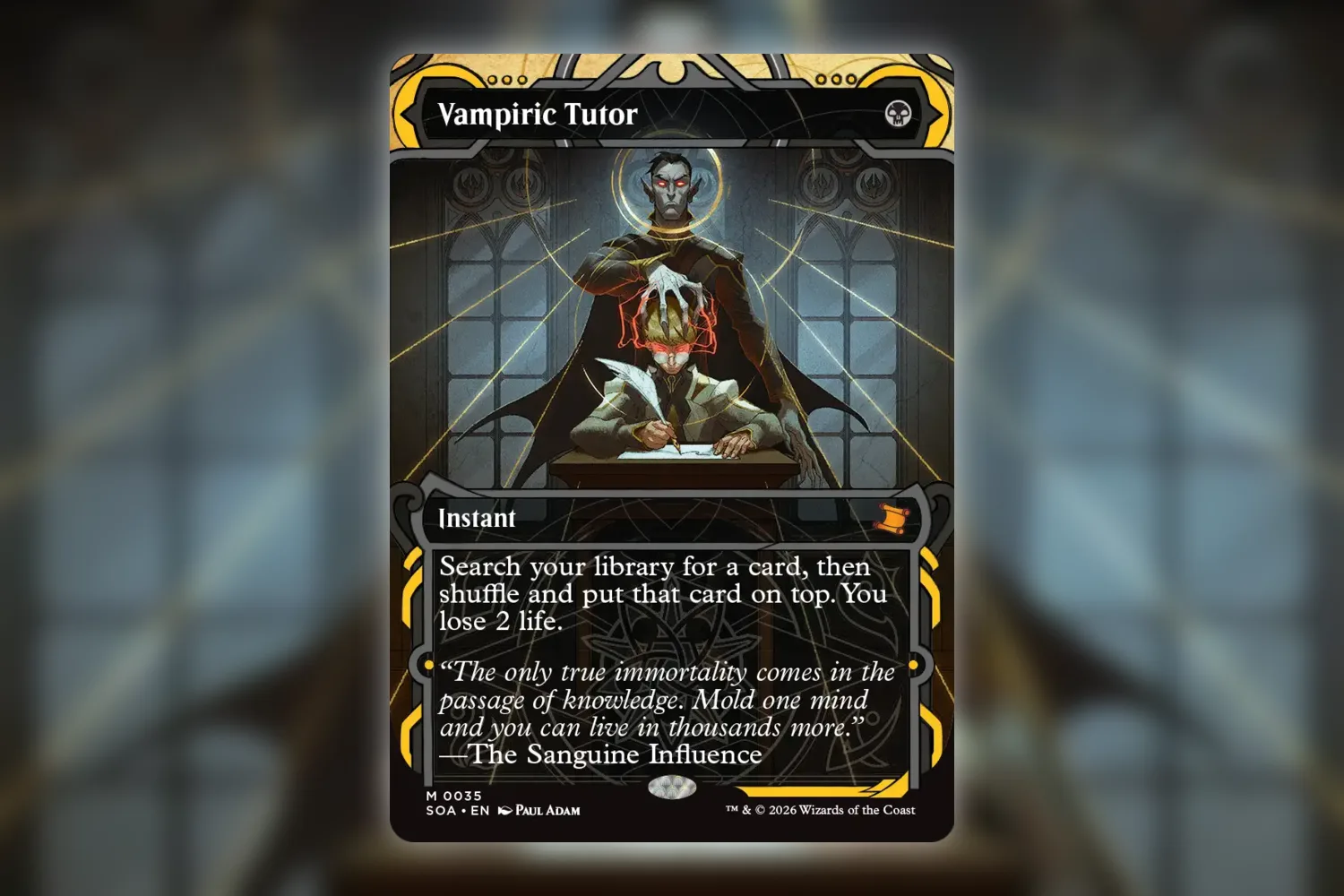
Now the other kind. Vampiric Tutor has been printed in Visions in 1997 ($74.24), Classic Sixth Edition ($67.73), Eternal Masters in 2016 ($57.96), Commander Legends in 2020 ($53.27), Dominaria Remastered in 2023 ($53.97), and then again in April this year in the Secrets of Strixhaven Mystical Archive, where the new copy sits at $56.86. Seven printings across twenty-nine years and the newest one costs within twenty dollars of the version from before I could drive.
Cavern of Souls does the same trick. Avacyn Restored 2012, $52.98. Six-ish reprints later, the Lost Caverns of Ixalan copy is $49.45. The supply has gone up enormously and the price has moved by three dollars.
So the question isn’t how long it’s been since a card was printed. It’s whether the demand underneath the price is deep enough to eat new copies. A card forty commanders want will absorb a Commander Masters printing and a precon printing and a Secret Lair and land in roughly the same place. A card that’s expensive because a 1999 set had a tiny print run gets cut in half the first time and can’t really be cut again.
The tangent I promised myself I’d cut
I once drove forty minutes to a shop in Reading because their site listed a Grim Monolith at what worked out to about a hundred and forty quid, which was a genuinely stupid price even then. When I got there it had sold that morning and the guy behind the counter had no idea it had ever been listed. I bought a Commander precon out of pure spite, drove home, and never sleeved it. I think it’s still in a cupboard.
Anyway.
Where it actually matters, which is narrower than I want it to be
Here’s where I have to argue with the version of myself who started writing this. If Vampiric Tutor and Cavern of Souls shrug off reprint after reprint, and Imperial Recruiter already took its hit years ago, then who is this check for?
I nearly convinced myself the answer was nobody. Then I thought about the middle band and changed my mind again. The cards that get genuinely hurt sit somewhere in the thirty to eighty dollar range, propped up by one old low-supply printing plus demand that’s real but nowhere near universal. A single Commander precon appearance can take forty percent off one of those, and there’s no wave of arriving players to soak the copies back up.
Toxic Deluge is what the end state looks like. Eternal Masters in 2016 had it at $7.76. Eleven printings later, the Marvel Super Heroes Commander copy from June is $4.66. Nobody got hurt badly by any individual one of those, but a card that was heading somewhere interesting just never got to go.
I don’t have a clean rule for spotting the middle band in advance and I’m suspicious of anyone who says they do. It’s a judgement call about demand depth, and demand depth is exactly the thing nobody has good public data on.
What I check now, in order
Reserved List first, because it’s instant and it settles a surprising number of cases. Then printing count and dates on Scryfall, which tells you whether Wizards has already been to this well and how recently. Then the honest question about why the card costs what it costs, which usually means opening EDHREC and seeing whether it’s in eight hundred decks or eighty thousand.
That’s it. Three things. It’s genuinely faster than the amount of time I used to spend refreshing a price page during spoiler season, which was, and I’m being conservative here, a lot.
So yeah, the nervous page. I still flip to it. I’ve just stopped pretending the flipping is analysis. What changed is that I now know roughly what’s in there and what it’s worth without having to physically go and look, because the whole binder is scanned into Eldwyn and I can pull up the ones over fifty dollars in about two seconds. Which means when a reprint does land, I’m checking a list instead of a shelf, and I find out the same week instead of the next time I happen to open the binder.
The other half of this, which I’d argue matters more, is knowing what you paid. A reprint that takes a card from $60 to $40 is only a loss if you bought at $60. If you opened it in a pack in 2019 it’s still a card you own that does a thing in a deck. Repricing your collection on some kind of schedule mostly exists so you’re not surprised, and being surprised is the expensive part.
None of this applies to the speculation version of the question, by the way. Buying a card because you think it’s safe from reprints is a different game with worse odds, and I’ve written about how that one usually ends.