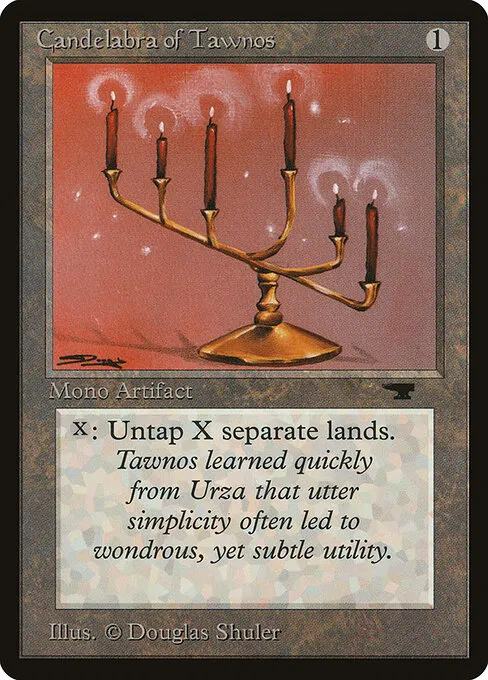
I keep a running list in my phone of cards I sold too early. Near the top is a Candelabra of Tawnos I traded away sometime around 2016 for a stack of fetchlands and a foil Snapcaster Mage. At the time it felt like a heist in my favor. The Candelabra was doing absolutely nothing in my binder, and I actually played the fetches. You can probably guess where this is going.
That card was worth a couple hundred bucks then. This week it’s worth north of two grand, and it just got banned in Legacy. Which is the kind of sentence that only parses in Magic, where a card can get more expensive at the exact moment it becomes less playable. So the question I want to poke at: what happens to a Reserved List card’s price when it gets banned? Candelabra is about to hand us a pretty clean answer, and it’s more interesting than “it goes down.”
The ban, quickly
On June 29, Wizards banned Candelabra of Tawnos in Legacy. Brawl lost a pile of blue staples, Pauper lost Seeker of Skybreak, but the finance story was Candelabra, because it’s the only card in the batch that costs more than a used car payment. Antiquities, 1994, Reserved List, Douglas Shuler art. Still legal in Vintage and Commander. Just gone from Legacy, where it powered Tron and High Tide ramp shells by untapping a fistful of lands for absurd mana. If you want the full rundown of the rest of that update, I wrote about everything in the June B&R and what it does to your binder separately. This post is just about the expensive one.
Why a ban usually tanks a card
The normal ban story goes like this. A card dominates a format. Everyone rushes to buy four copies. The price climbs. Wizards bans it. Demand from that format evaporates basically overnight, and if the card’s been printed anytime in the last decade, there are plenty of copies floating around, so the price falls off a cliff. Then, because Wizards has now proven the card is “safe” to reprint, it lands in the next Masters set or Commander precon, and the reprint finishes the job.
Sensei’s Divining Top is the poster child for this. Banned in Legacy back in 2017 for making Miracles the best deck in the format and turning every match into a slow-motion stall. And afterward it got reprinted into oblivion, Eternal Masters, Double Masters, The List, Mystery Booster.
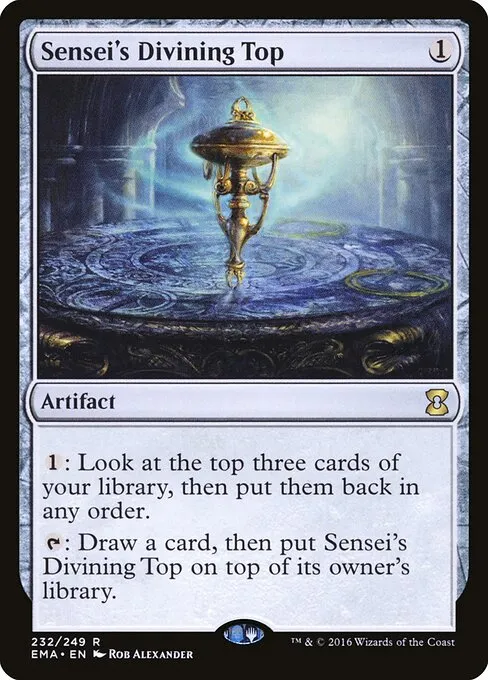
And yet. Go look it up. It still runs forty to sixty bucks depending on the printing. A card banned in two formats and reprinted five separate times somehow won’t drop below the price of a decent draft. Because Commander never stopped wanting it.
I keep wanting to call that a failure of the whole ban-tanks-a-card theory, and it sort of is, but it’s really the exception that explains the rule. The rule was never actually about the ban. A ban removes demand. A reprint adds supply. You need both working together to truly crater a card’s price. Sensei’s Top got the reprints but kept enough Commander demand to hold a stubborn floor.
Candelabra can’t be reprinted, and that’s the whole thing
The Reserved List changes the math. Candelabra sits on it, which means Wizards has promised in writing to never print it again in a tournament-legal form (if you’ve never gone down that rabbit hole, the Reserved List explained covers why that promise exists and why it’s basically load-bearing for old card prices now). No Masters reprint. No precon. No sneaky functional Secret Lair. So the second half of the usual ban-crash, the reprint that floods the market, physically can’t happen here.
The number of real Candelabras on Earth is fixed at however many got cracked out of Antiquities packs in 1994, minus the ones that got tossed, water-damaged, or lost to a kitchen table three decades ago. That puts a floor under the price that a normal banned card just doesn’t get.
And because these are 1994 cards, condition does a lot of the pricing work. A beat-up, well-loved copy still buylists for around fourteen hundred. A clean ungraded one is closer to twenty-five hundred. A PSA 10 pushes near four thousand, and a BGS black label is a used Honda. If you own one, knowing which of those buckets your specific copy falls into matters more than the format legality does. This is exactly the kind of card where logging the real condition instead of eyeballing it is worth the ten minutes.
But was Legacy even holding it up?
This is the part I actually find interesting, and I’m not fully sure of the answer.
Candelabra went from around eight hundred dollars this time last year to somewhere between twenty-three hundred and thirty-six hundred now, depending on whether you’re looking at TCGplayer market price or a Card Kingdom shelf listing. That is a colossal run for a card whose Legacy deck was, let’s be honest, a fringe pile that maybe three people at any given event were actually sleeving up.
So yeah. Eight hundred to twenty-five-hundred-plus in a year. On a card almost nobody was casting in Legacy. That’s not format demand doing that. That’s specs, that’s cEDH tables running Rofellos-style ramp, that’s collectors who want an Antiquities artifact in the display case, and it’s the general “old Reserved List stuff only goes up” mood that’s been running hot for a while. Legacy was probably just along for the ride.
Which means the ban might barely register. If the run was driven by Commander and collector demand, and both of those survive the ban completely untouched, then banning it out of Legacy takes out the smallest leg of the stool. My honest guess is a short dip while panic-sellers dump copies in week one, then a slow drift back to roughly where it was. Could be wrong. Maybe there was more Legacy money baked in than I think and it slides toward a grand. I don’t know, and anybody telling you they’re certain is just guessing with a straight face.
What to actually do with a banned card you own
Any time a card you hold gets banned, before you dump it in a panic (I wrote a whole ban playbook on this), run two quick questions.
First: can it be reprinted? If it’s on the Reserved List, no, and that alone puts a hard floor under it. If it’s a normal card that’s already been reprinted a couple of times, the ban plus the inevitable next reprint is where the real damage comes from.
Second: was the banned format actually paying for the card? A Modern staple banned in Modern is in genuine trouble. A card banned in Legacy but adored in Commander, like our friend the Top, barely flinches. Work out where the money was really coming from before you assume the ban took it with it.
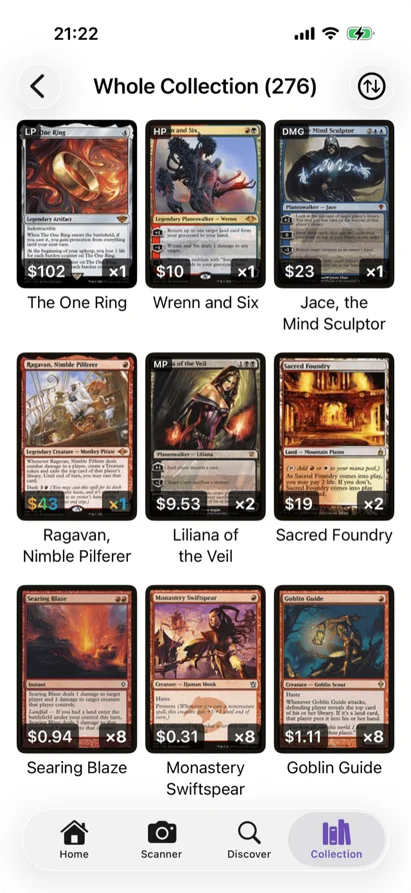
I re-scanned my own binder the week the list dropped, mostly out of paranoia, and Eldwyn flagged two cards I’d forgotten were even format-relevant. Neither was on the banlist. But it’s a five-minute pass, and it beats finding out three months later that something in a box quietly doubled or got cut in half while you weren’t paying attention.
The Candelabra I traded away is not coming back, and honestly the fetchlands were the correct call for 2016 me, who actually went to Legacy events. Doesn’t make the list in my phone any shorter, though.