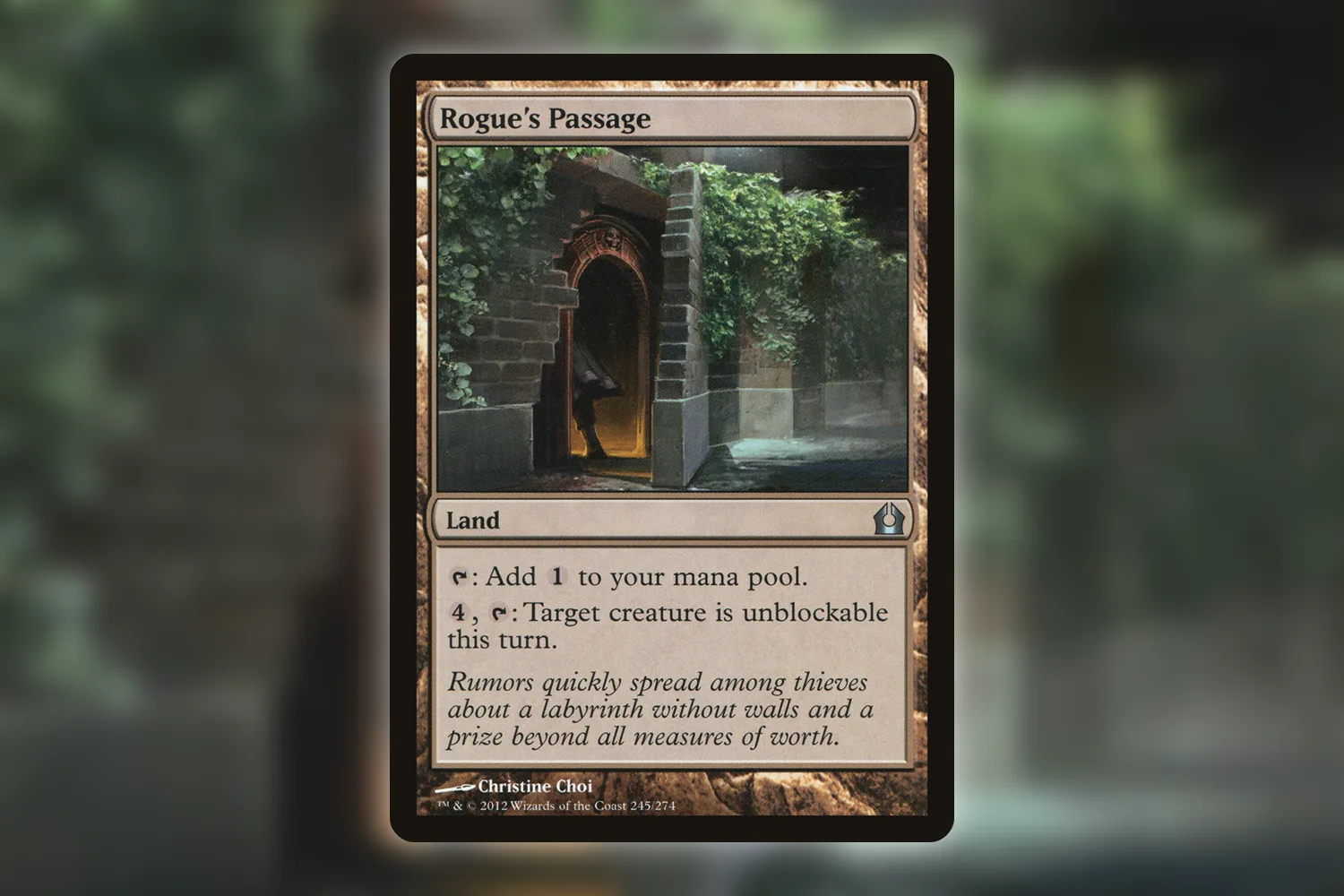
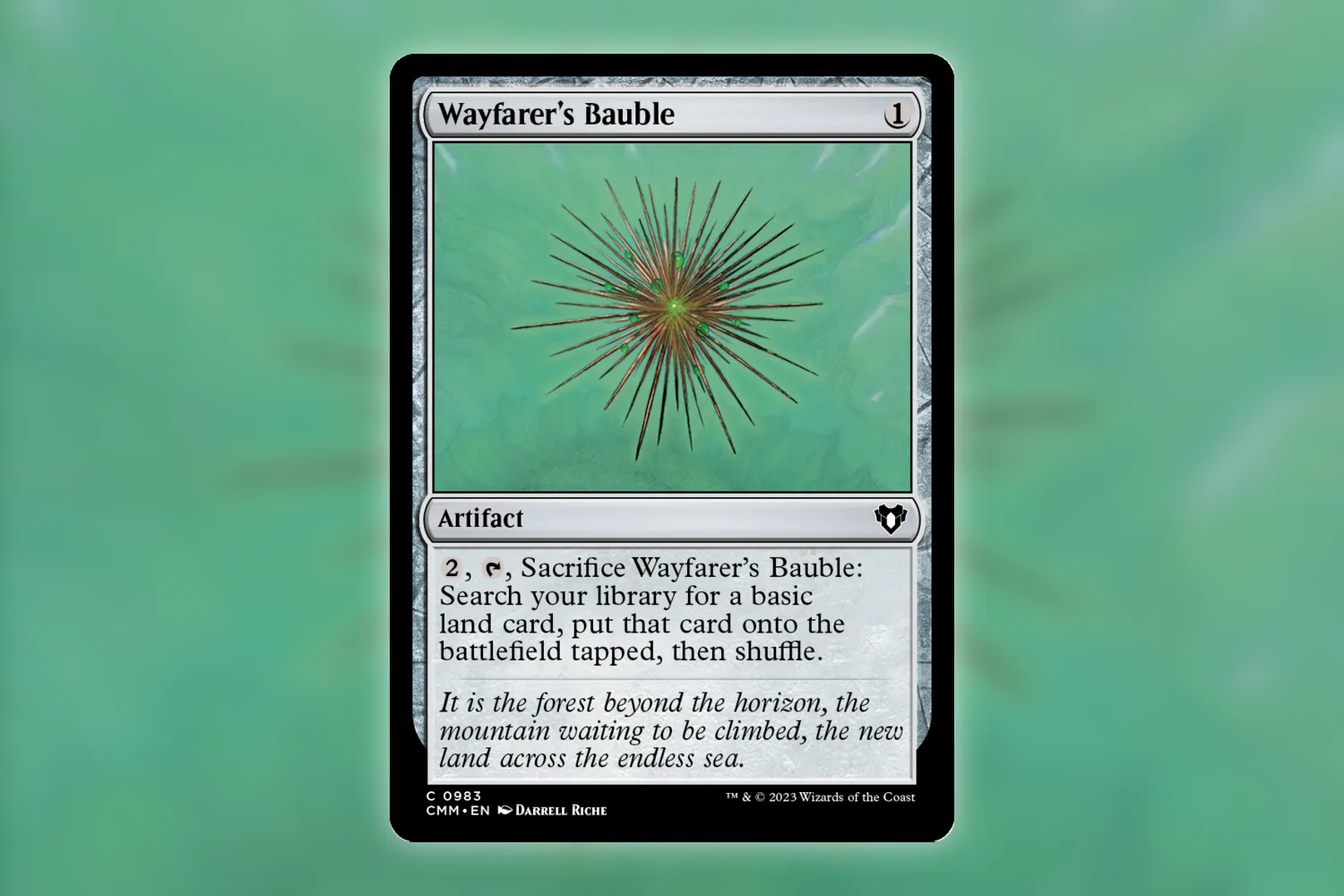
Wayfarer’s Bauble has a one-mana casting cost and a two-mana activation. That’s three mana spent before the extra basic land arrives, tapped. I’d put that whole bill on the divider of a Commander ramp kit, because sorting by the number in the top-right corner makes some very different cards look interchangeable.
Without green in the deck, I’d pull the available artifacts and land-search creatures from my collection before choosing the ramp slots. The kit is a candidate pool I can keep using for different decks. Some cards will help cast a four-mana commander early. Others need more setup, fix particular colors, or work best when the deck can reuse a creature.
Our weird-mana-rocks article looks at individual finds and their prices. For this exercise, I’m interested in what happens after I draw the card. Which turn does it give me more usable mana, and can that mana pay for the spells in my hand?
A Commander ramp kit needs the colors written down
Mind Stone costs two generic mana and taps for one colorless. Cast it using two lands on turn two and, assuming it survives, three lands plus the Stone can give you four mana on turn three. You can also tap the Stone on the turn you cast it. Later, paying one mana, tapping it, and sacrificing it draws a card.
I’d happily use that for a commander whose cost has plenty of generic mana. A hand full of double-colored costs makes me hesitate. Four available mana can still leave you unable to produce the second white symbol you need. Reid Duke’s mana-base guide makes that relationship between available colors and castable spells a useful starting point.
Three more familiar artifacts belong beside it, with different notes:
| Card | What I’d write on the kit’s checklist |
|---|---|
| Arcane Signet | Two mana to cast; taps for one mana of a color in your commander’s identity. |
| Boros Signet | Two to cast; pay one and tap it to produce red and white together, a net gain of one mana. |
| Fellwar Stone | Two to cast; its available colors depend on what opponents’ lands could produce. |
The Boros Signet activation deserves its own scribble. If casting it used your last two available mana, you still need another mana to start it up. On a later turn, you can feed it mana from a land and use the resulting red-white pair for a spell. Remember that the input was already part of your available resources when counting the total. Its red-white color identity also requires a commander whose identity includes both colors; check other Signets against their own symbols.
Fellwar Stone’s colors can change as opponents play or lose lands. I’d pay attention to whether it actually supplies the colors my deck needs in our games. An opponent’s land that produces green is perfectly capable of giving the Stone a color my red-white deck has little use for.
Ornithopter of Paradise also costs two and taps for a mana of any color. It’s an artifact creature, so summoning sickness normally keeps it from tapping for mana on the turn you cast it. Give it haste and that changes. Being a creature also exposes it to creature removal, including sweepers that leave your noncreature artifacts alone.
I’d mark all five as early candidates, then check those distinctions against the deck. The one that flies might be particularly welcome in an artifact-creature strategy. Another deck might prefer having a Mind Stone left over after the creatures die.
The extra land arrives after you’ve paid for it
Bauble can be played on turn one, activated on turn two, and leave you with four lands on turn three if you make each ordinary land drop. Its fetched land joins the battlefield tapped, so budget for using it afterward. The basic also stays around when someone destroys your artifacts, although land removal has its own opinions about that arrangement.
Count the basics still in the library. Bauble searches for a basic land card. If the mana base has very few basics, several land-search effects can exhaust the available targets. Pulling a spare Bauble out of a precon box should come with a glance through the lands you’ve chosen for its new home. Our budget Commander lands guide covers finding the other half of that mana base in your existing cards.
Burnished Hart asks for three mana to cast and another three to sacrifice for up to two basic lands, both entering tapped. Six mana invested across those payments is a substantial commitment. You can activate it the turn it enters if you have the mana, since the ability has no tap cost. I’d give it a later-ramp slot, particularly in a deck with ways to return artifact creatures from the graveyard.
Solemn Simulacrum costs four, finds one basic tapped when it enters, and lets you draw a card when it dies. The creature body and eventual draw can be useful. Its mana cost also tells you which deadline it can meet: it needs four mana available before it helps you reach the next step.
I like the Sad Robot enough that I’d probably pull it into the kit regardless. Then I’d sit down with a deck that already has too many things to cast for four mana and quietly put it back. A familiar card can be a perfectly reasonable inclusion in one deck and the reason another deck spends its early turns doing very little.
There’s a Commander Masters evening I can imagine in ridiculous detail: me carefully alphabetizing the artifacts, filing Solemn Simulacrum under “S,” then spending ten minutes looking under “R” for Robot. In this entirely invented memory, I’ve also made a separate divider for cards I haven’t sorted yet. It contains most of the box. The imagined system is suspiciously close to something I’d actually build.
White’s catch-up ramp needs someone ahead
Knight of the White Orchid costs two white mana. When it enters, its land-search ability requires an opponent to control more lands than you. That condition is checked both when the ability would trigger and when it resolves, as the card’s rulings explain.
It searches for a Plains card, which can include a nonbasic with that land type if it fits your deck’s color identity. The ability itself doesn’t require the land to enter tapped. Any entry condition on the chosen land still applies. A basic Plains normally arrives ready to tap.
Suppose you control two Plains and an opponent controls three lands. You have another land in hand and haven’t made your land drop. Cast the Knight first, let its ability find a Plains, then make your ordinary land drop. You’ll have four lands afterward. Play your third land before casting the Knight and, if no opponent has more than three, you’ve removed the condition that would have triggered its search.
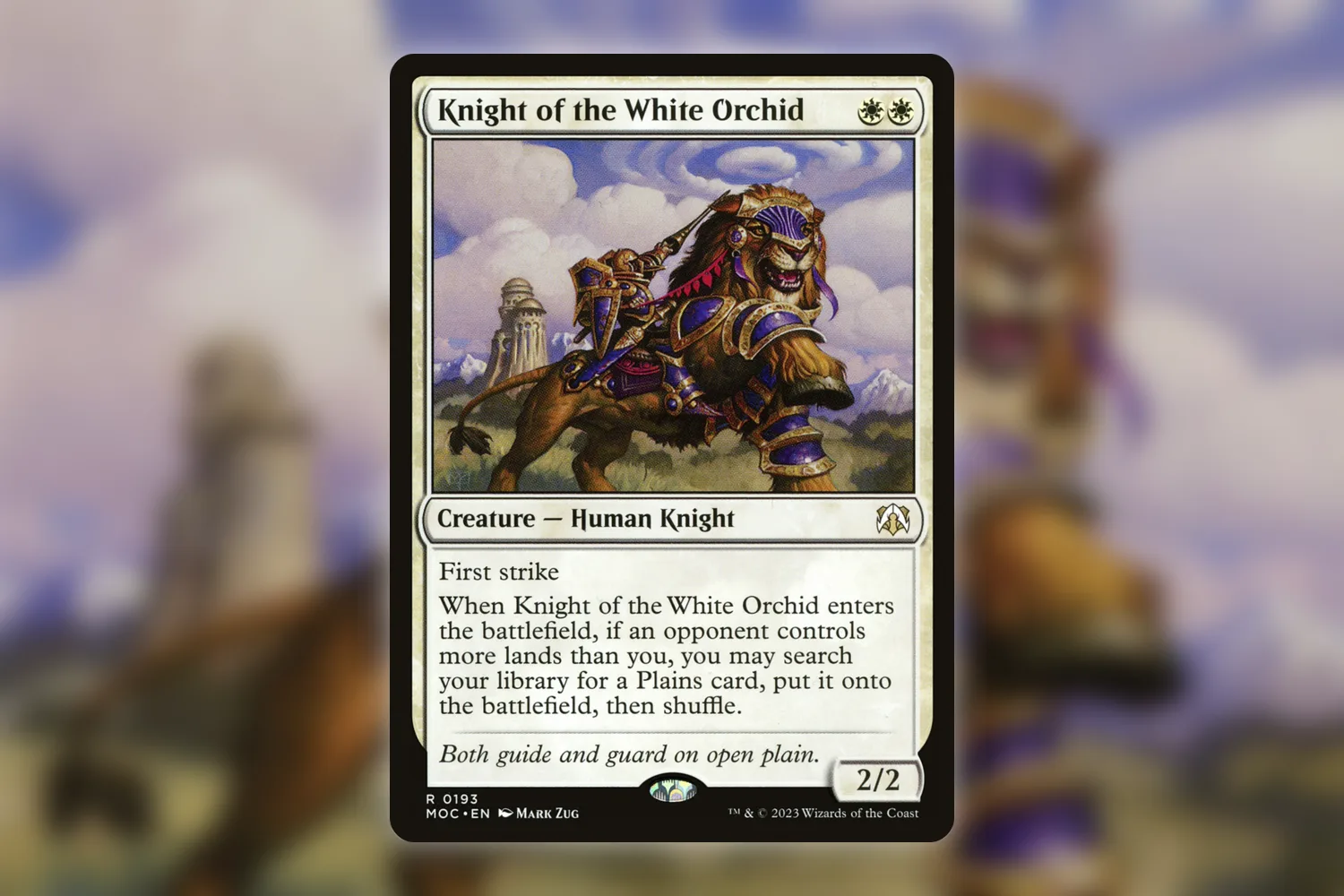
I’d give it a conditional-ramp note in the kit. During a solo test, write down the opponent’s assumed land count; automatically granting yourself the search every time makes the deck look rather smoother than it may be at the table.
Cards that put lands into your hand deserve a separate note too. They help you make future land drops. With the usual one-land-per-turn allowance, simply finding a land for your hand doesn’t put you ahead on mana-producing lands. Read where the search effect puts its card before assigning it a ramp slot.
Give the spare cards a location and a job
For the inventory, I’d record each card’s name, printing, quantity, and physical location. Add its full mana investment, the colors it supplies or fetches, and the earliest turn I realistically expect to use the extra mana. “Two to cast; creature; wait to tap” would keep the Ornithopter’s limitation visible without rereading it every time.
I’d also mark copies that are already assigned to decks. Owning three Signets across three sleeved decks gives me a different set of choices from finding three loose ones in a box. In Eldwyn, I can check the copies I’ve logged, then identify which ones I’m willing to move. The physical kit can be a short reference list if I prefer leaving those cards in their existing storage.
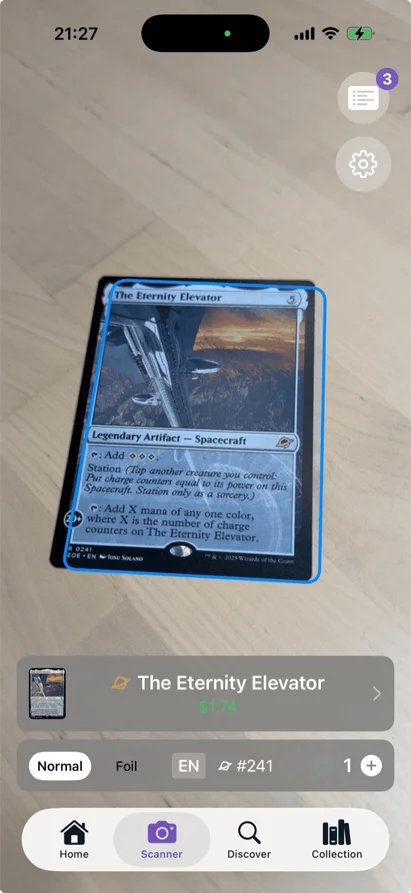
Okay. Found the Bauble. Found the Hart. Found another Mind Stone. Great. Now where’s the one I took out last week? This is why I’d write the location down while the cards are still on the desk. I can remember owning the thing for years and completely forget which deck box I put it in yesterday.
When choosing a package, I’d start with the turn I want to cast the commander and the colored symbols that cost requires. Pick from the kit to meet that goal, then leave the land count alone while trying the changes. Missing early land drops is a separate problem worth recording. Adding more artifacts that require two mana to cast won’t help a hand that’s stuck on one land.
I’d resist automatically using every two-mana rock I’ve found, too. Michael Celani’s argument for playing less two-mana ramp makes a useful challenge: those cards compete with early plays that advance the deck’s own plan, and some later ramp offers useful extra effects. I still like accelerating into a four-mana commander. I’d be less convinced when the deck has no productive four-mana play to make afterward.
Try a few opening hands through the first several turns, then play some actual games. Note the specific failure: couldn’t make the second white, spent the turn activating Hart while the board got out of hand, or drew ramp when the deck needed something to do with its mana. I don’t know which of those will happen most often in your group. Keep the notes beside the kit and check any proposed purchases against the cards you own before ordering replacements. Put the unused candidates back where the list says they live.