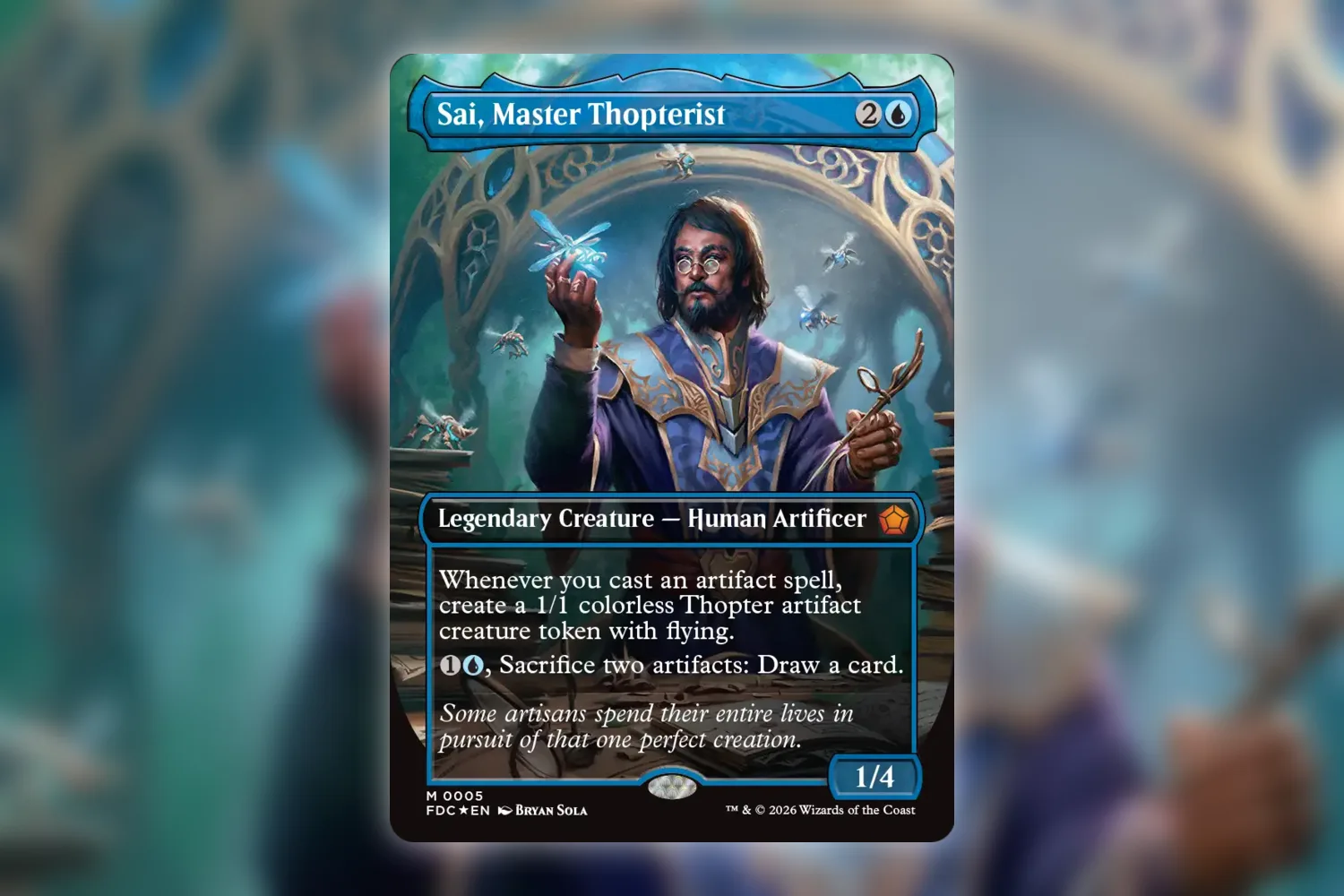
The most useful card in a Halloween Horror deck might be an unassuming two-mana Nightmare you left in a Duskmourn box. I’d start there, with the draft leftovers, before looking at anyone’s hundred-card shopping list. There are probably enough enormous monsters in the average collection already. Finding things to cast before turn five is the less glamorous job.
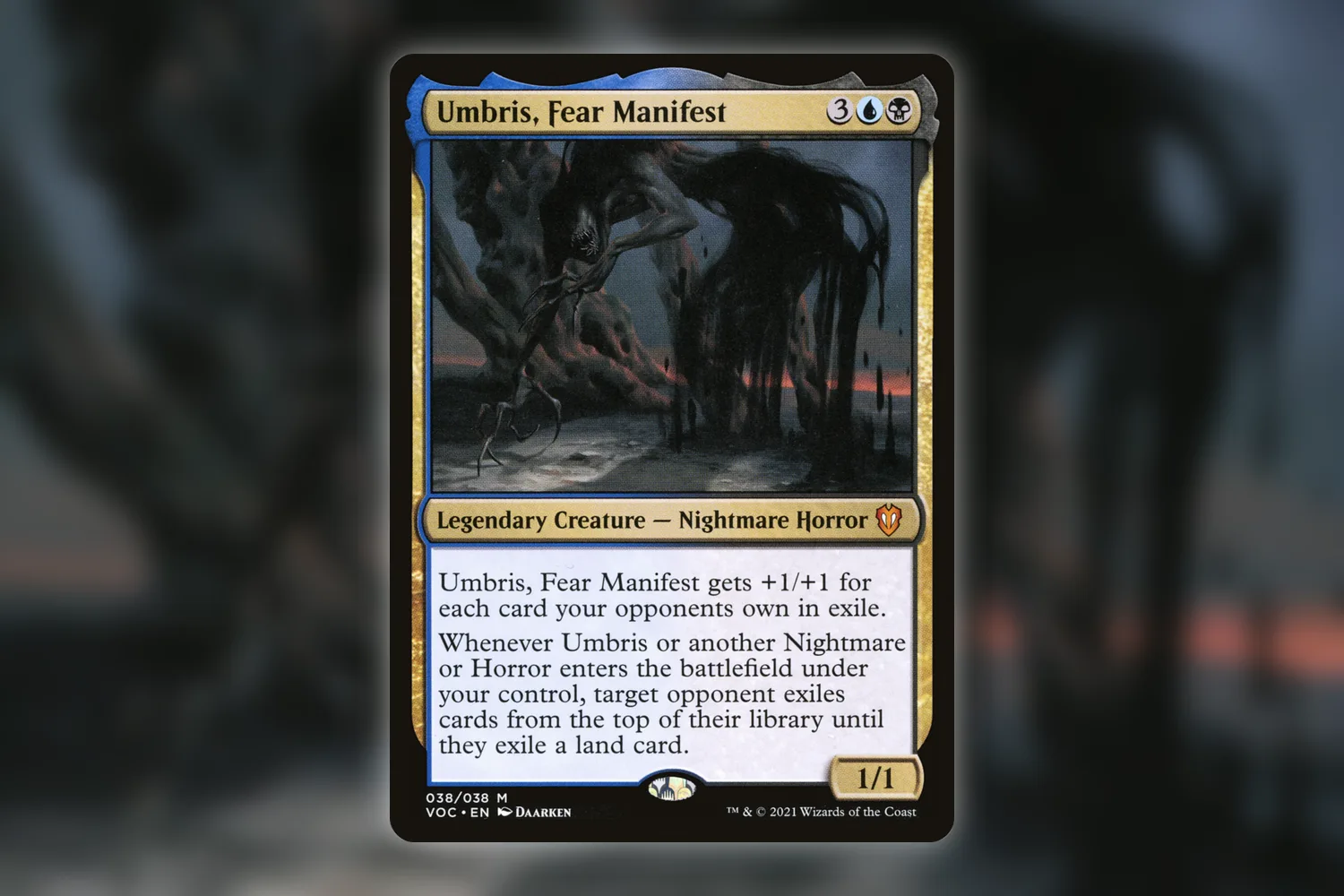
Umbris, Fear Manifest gives that pile a direction. Whenever Umbris or another Horror or Nightmare you control enters, a targeted opponent exiles cards from their library until they exile a land. Umbris gets +1/+1 for every card your opponents own in exile, including cards put there by other effects. Gatherer’s ruling confirms that broader count.
The commander costs five mana and starts as a 1/1. You can make it enormous, but I’d want a collection with cheap creatures and enough useful work happening around them before buying a copy. The regular Crimson Vow Commander printing is $12.23 when I check on October 22, which is a noticeable part of a deck built around leftovers.
Start your Halloween Horror deck with the type line
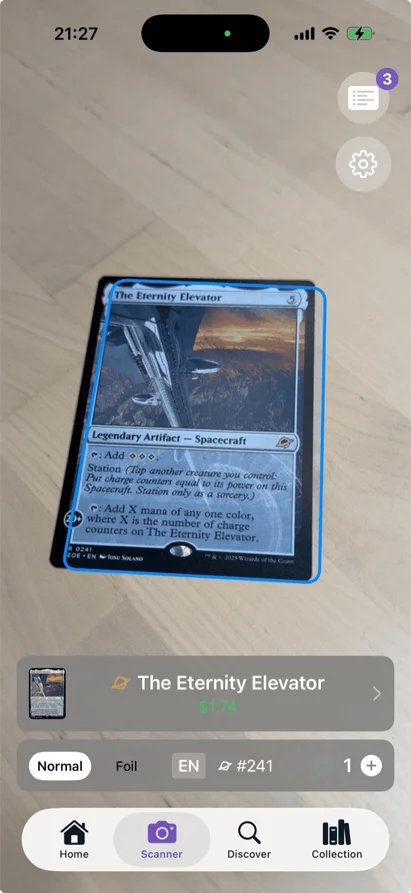
Pull the blue and black cards from Duskmourn, Innistrad sets, older core sets, and any dismantled Horror deck. Search an inventory for Horror and Nightmare if your collection tool supports creature-type searches. If you’re using Eldwyn to log the pile, check the recognized printing and read the card before putting it in the deck stack. A frightening illustration won’t trigger Umbris on its own.
Umbris has a blue-black color identity, so the final list stays within those colors and colorless cards. Changelings also qualify: Changeling Outcast has every creature type, costs one black mana, and can’t be blocked. It also can’t block, which is occasionally an inconvenient detail when you’ve kept a hand full of clever little creatures.
I’d use EDHREC’s Umbris page to jog my memory after searching the collection. Reading recommendations with the cards already on the table makes it easier to spot an available substitute. The site’s general collection-first Commander guide covers the broader process; here I’d be fussier about the creature costs and the actual types.
These are the sorts of cards I’d pull. Any printing with the same current rules text does the job; the links identify the examples I checked.
| Card | What it contributes | Detail to keep in mind |
|---|---|---|
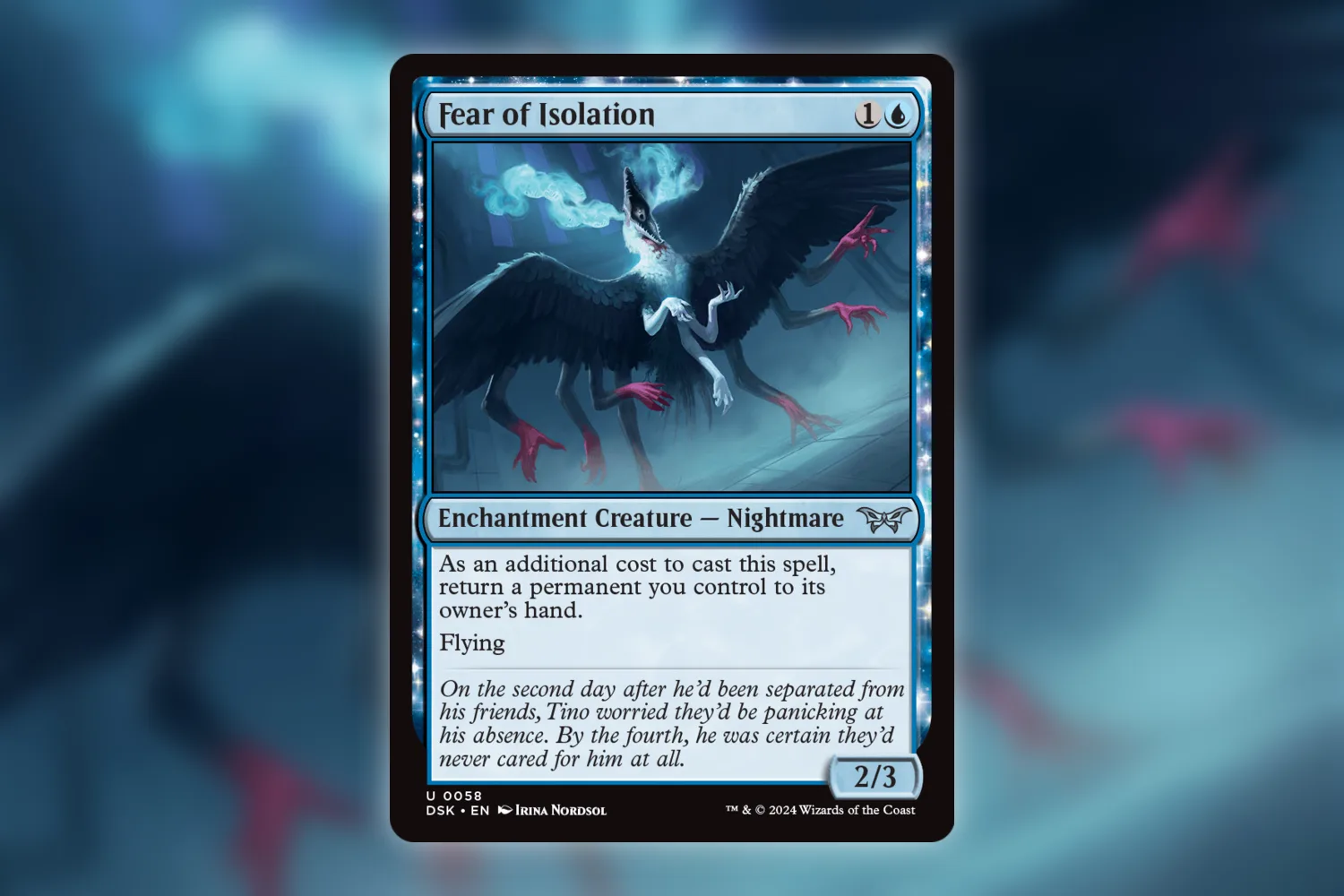
| Fear of Isolation | A two-mana flying Nightmare that can return another useful permanent for replay | Returning a permanent is an additional casting cost, so you must pay it before the spell resolves |
| Fear of Lost Teeth | A one-mana Nightmare you can cast after Umbris | Its small death trigger won’t carry a multiplayer game by itself |
| Ravenous Chupacabra | A Horror and an enters-trigger creature answer | Four mana is a substantial follow-up to a five-mana commander |
| Grazilaxx, Illithid Scholar | A Horror that offers combat draw and lets you rescue blocked attackers for replay | Draw triggers once per player your creatures hit, rather than once per creature |
| Sludge Monster | A Horror that can weaken opposing creatures when it enters or attacks | The ability suppression applies to non-Horrors carrying slime counters |
| Chasm Skulker | A Horror that grows with your draw and can leave creatures behind when it dies | The resulting tokens are Squids, so their entry doesn’t trigger Umbris |
I once packed a Ravenous Chupacabra from Rivals of Ixalan into a box of board-game pieces while clearing the table. Found it months later beside some plastic sheep, in a sleeve I’d apparently decided was adequate identification. I spent longer checking whether the sheep belonged in that box than wondering how the Chupacabra got there.
Give the small monsters room in the list
I’d begin with this allocation for a casual first version. Use one copy of each card name, apart from basic lands. Each physical card gets one row in the count, even when it performs several jobs.
| Job | Slots |
|---|---|
| Umbris in the command zone | 1 |
| Lands | 37 |
| Mana acceleration | 10 |
| Dedicated draw and selection | 10 |
| Dedicated interaction, including some broad answers | 10 |
| Horror, Nightmare, and changeling core | 24 |
| Protection, evasion, recursion, and other flex cards | 8 |
| Total | 100 |
Those 24 core slots are a starting preference for this build. I’d try to fill roughly twelve with creatures costing three mana or less, then check whether the four- and five-mana cards are earning their space. If the collection supplies only eight small creatures and sixteen expensive ones, I’d cut back on the expensive monsters before ordering more of them.
A Chupacabra in the creature core already supplies an answer. Grazilaxx already helps with draw. Once the first pile is assembled, you can move a few dedicated slots toward whichever job feels thin, keeping the total at 100. I’d still retain draw that works with an empty battlefield and answers that reach troublesome artifacts or enchantments. The removal-kit audit is useful for checking those blind spots.
For the lands, start with the blue-black fixing available in precon leftovers and enough basics to cast your early spells. Colorless utility lands compete with colored sources. Grazilaxx asks for two blue mana on turn three, and a land with a cute activated ability won’t help pay that second blue symbol.
Leave something to cast after Umbris
Creatures you played earlier won’t produce retroactive Umbris triggers. A cheap Nightmare in hand can be more useful than one already on the battlefield when your commander arrives. Umbris triggers for its own entry, then each later qualifying creature gives you another trigger aimed at one opponent. A creature with both Horror and Nightmare types produces one trigger for that entry.
Fear of Isolation can return an inexpensive creature so you can cast it again. You pay for the Nightmare and the replayed creature, and you briefly lose whatever you returned. Bouncing a land instead can leave you short for the next turn. I’d look at the mana available before getting too enthusiastic about repeating the loop.
Look, the first attempt can be clumsy. Cast the commander. Realize the rest of your hand costs four or more. Pass. Watch three opponents look at the exile trigger and decide they’d prefer you stopped doing that. I’d rather hold a one-mana creature and have the option to wait until six mana than assume Umbris will survive the entire table.
Soul-Guide Lantern gives the deck a useful second way to add to that exile count. Its enters ability exiles one card from a graveyard. You can later tap and sacrifice it to exile every opponent’s graveyard, potentially making Umbris much larger while answering graveyard plans. Its separate draw activation costs a mana as well as the tap and sacrifice; you choose which sacrifice ability you need.
Reality Shift exiles a creature and gives its controller a manifested card. That replacement body can block, and a manifested creature card may later turn face up. I’d count the spell as interaction, with a small contribution to Umbris’s size, and remember the new blocker when planning combat.
Chasm Skulker is the card I keep wavering on. The Squid tokens miss the commander trigger, which initially makes me want another Nightmare in that slot. Then I remember the board wipes. A creature that leaves bodies behind can be useful when you’re rebuilding, and the tokens’ islandwalk may even finish a damaged opponent. I’d keep it if the list has enough draw to grow it. A mostly empty hand and a lonely 1/1 Skulker would change my mind.
Price the gaps after you can see them
Umbris has no built-in evasion. Twenty exiled opposing cards make the unmodified commander a 21/21, but a small blocker can still stand in its way. Under the Commander rules, 21 combat damage from the same commander makes a player lose, so getting that damage through deserves some of the flex slots.
Swiftfoot Boots supplies haste and hexproof. It leaves the blocking problem intact. Rogue’s Passage can make Umbris unblockable for the turn, at the cost of four mana plus tapping the land. That’s a sizeable commitment while you also want to cast creatures or hold up protection.
If the collection is missing the commander, graveyard interaction, protection, and evasion, this is one possible gap list. These are October 22 Scryfall USD market snapshots for regular nonfoil copies, before shipping.
| Missing job | Example printing | Price |
|---|---|---|
| Commander | Umbris, VOC 38 | $12.23 |
| Graveyard interaction | Soul-Guide Lantern, THB 237 | $0.24 |
| Protection and haste | Swiftfoot Boots, M12 219 | $1.76 |
| Evasion | Rogue’s Passage, RTR 245 | $0.44 |
| All four, if needed | $14.67 |
Use a card you already own that fills the job before buying that example. Other printings may cost less, and splitting a tiny order across sellers can make the postage ridiculous. I’d check the want list against the collection and physically retrieve the available copies before checking out.
If filling the creature core would require another twenty purchases, I’d put the idea aside until the next pass through the boxes. I don’t know whether your leftovers contain enough small Nightmares to support this commander; that’s the part the inventory has to answer. Keep a note of the promising cards and their locations, including anything already assigned to another deck.
For a first test, I’d watch for stranded expensive creatures, turns spent paying commander tax, and attacks stopped by a single blocker. Record the actual cards that felt awkward. The next shopping list might be one cheap creature and a protection spell, which is a manageable amount of Halloween preparation when the sleeves still need finding.