A Commander removal kit sounds like something you should buy in a little plastic box. I’d rather start with the cards left over from dismantled precons, the instants hiding in draft piles, and the three copies of Generous Gift that somehow ended up in three different places. Collect the answers you already own into a usable pool, then choose a package for each deck from there.
Card Kingdom’s roundup of 2026 removal and board wipes went up today, and those lists are dangerous for anyone with an unfinished deck and an open shopping tab. There are always new candidates. Before adding another one to a cart, I’d like to know whether the deck actually needs it. Sometimes the missing enchantment answer is sitting in a precon box under the spare sleeves.
This is a narrower job than building a whole Commander deck from your collection. Leave the lands and the exciting creatures alone for an evening. Pull out the cards that let you survive someone else’s exciting creatures.
A Commander removal kit needs a few different jobs
Searching your collection for the word “destroy” is a reasonable start. It’ll also find cards that destroy your own things, cards with restrictions you forgot about, and a pile of sweepers. Searching “exile” catches useful answers alongside blink effects and spells that send cards out of your own graveyard. Text searches produce candidates. You still have to read them.
For a first pass, I want four small piles: creature answers, artifact or enchantment answers, flexible answers, and board wipes. A card can belong in several piles. Put it in whichever one you need reminding about, or give it multiple labels in a spreadsheet or collection tool that supports them.
Swords to Plowshares goes in creature answers. One white mana, instant speed, exile a creature, its controller gains life equal to its power. It leaves artifacts and enchantments untouched. Four excellent creature-removal spells can still leave you watching an enchantment take over the game.
Nature’s Claim fills a different slot. One green mana destroys an artifact or enchantment and gives its controller four life. I like having something this cheap available because holding up one mana is much easier than passing with three. It’ll sit in your hand against a creature-only problem, though.
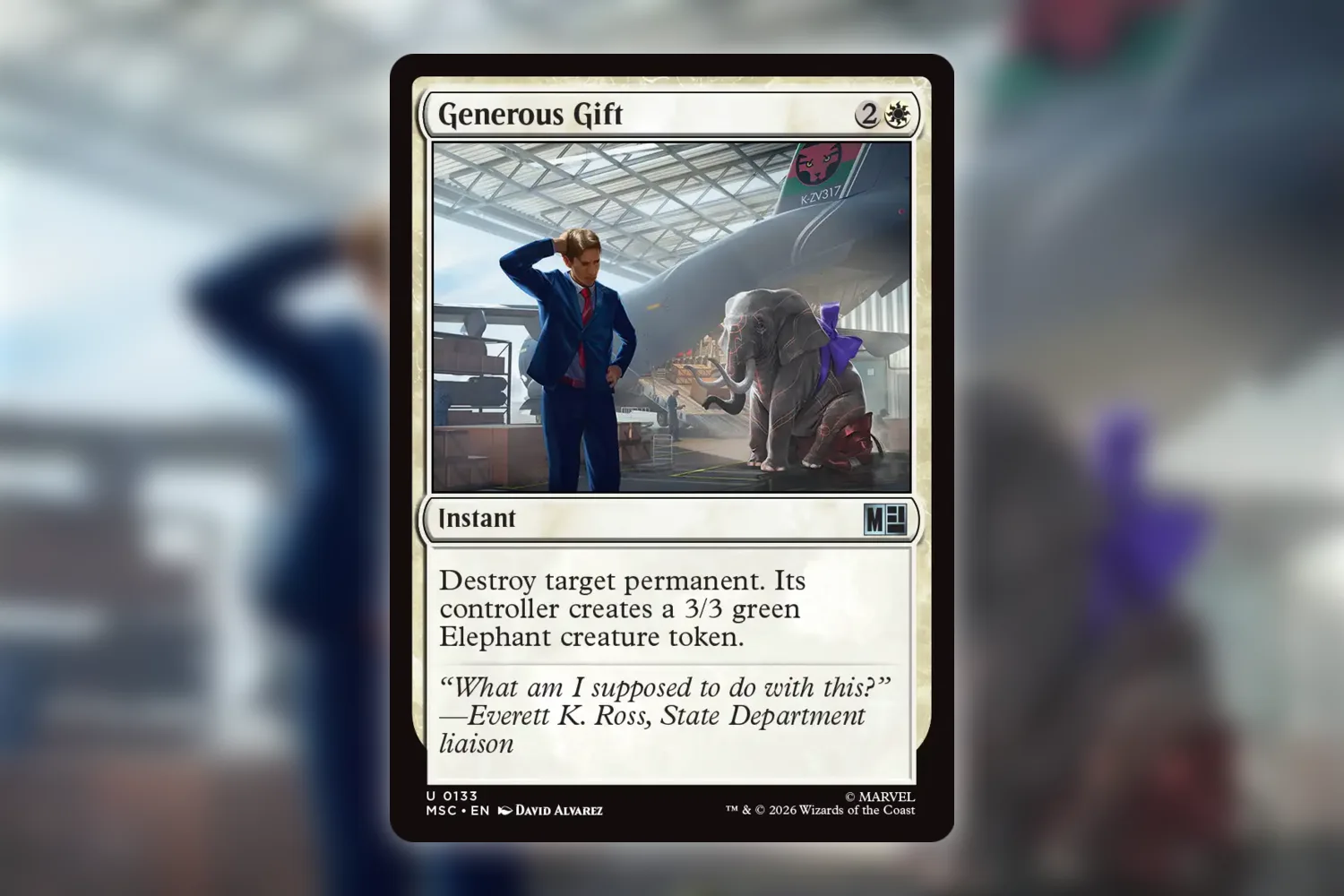
Generous Gift and Beast Within cover any permanent at instant speed for three mana, leaving behind an Elephant or Beast respectively. Creatures, enchantments, planeswalkers, even a troublesome land. They destroy the target, so indestructible stops that part of the spell. A creature that dies can also come back through somebody’s graveyard plan.
I’d write those limitations down next to the names. “Any permanent; destroys; three mana” tells me more while building than a label that just says “good removal.”
Read the inconvenient half of the card
Feed the Swarm is useful to keep in the black pile because it destroys a creature or enchantment an opponent controls. It’s a sorcery, and you lose life equal to the permanent’s mana value. It can remove an enchantment during your turn; it can’t interrupt a combo someone starts during theirs.
Chaos Warp gives red an instant-speed answer to any permanent for three mana. The owner shuffles it into their library, reveals the top card, and puts that card onto the battlefield if it’s a permanent. It can handle an indestructible permanent, though targeting restrictions still apply. Sometimes the replacement is worse than the original problem. There’s a small gambling habit tucked inside that text box.
For an ordinary, nonfoil copy, the exact printing doesn’t change these jobs. Keep your collection entry tied to the printing you actually own anyway, especially when the card is a fancy version you might trade later. The linked copies here are examples; another printing with the same current rules text fills the same role.
I can picture a thoroughly embarrassing Commander night: I’ve laid out a red deck, announced that I’m finally ready to play, and discovered that its only Chaos Warp is still sleeved in a different deck at home. Someone offers me a spare. It’s in bright pink sleeves. Now the entire table knows which card I’ve drawn. This is an imagined disaster, but it’s enough to make me want a location field beside the quantity.
That location problem belongs in the audit. If you own one copy and another built deck uses it, mark it as allocated. Decide whether you’re moving it, buying another, or choosing a substitute. Counting cards that live inside decks saves a lot of searching through boxes that never contained the card in the first place.
Choose a package for one actual deck
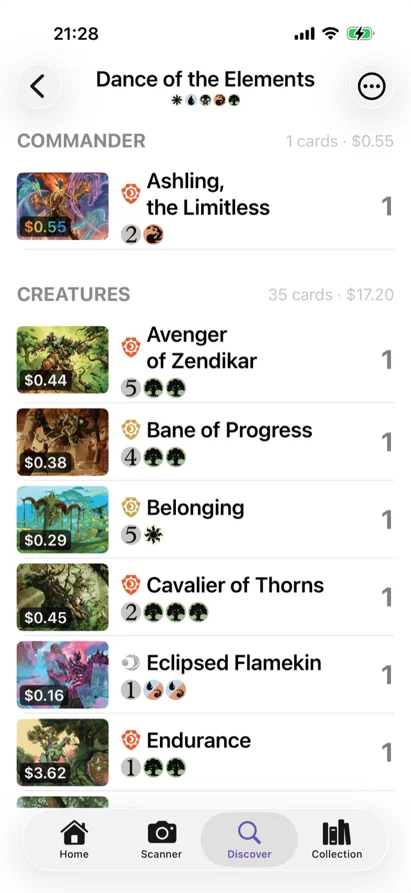
I’d start a casual deck with roughly eight to ten single-target interaction slots and two board wipes, then change that after playing. That’s a starting preference, not a format rule. Counterspells or removal attached to creatures can occupy some of those slots; count what your deck can reliably use.
For a green-white deck, a first attempt might reserve two slots for cheap creature answers, two for artifacts or enchantments, two for flexible permanent removal, and two for answers that suit its own plan. That’s eight cards with some overlapping coverage. You still have ninety-two slots to argue with yourself about.
Write the role before filling the slot. If your available green cards all destroy artifacts, the enchantment column needs another look. If every creature answer costs four mana, find something you can cast while continuing to build your board. The first version can use an awkward card you already own while you find out whether that awkwardness actually comes up.
So, okay. Open the box. Pull the answers. Read them. Yes, even the ones you think you remember. Then pick a deck. Just one. Otherwise this turns into six half-dismantled decks on the kitchen table and a very optimistic belief that you’ll remember which sleeves belong where.
I do waver on the “use what you own” approach when it encourages a bad compromise. An answer that costs six mana can be sitting in your collection for perfectly good reasons, and ownership alone doesn’t make it a fit for a fast deck. If the deck keeps losing before you can cast it, I’d buy the cheap replacement. I’d still test the first version with the available card when the table gives it enough time.
EDHREC’s discussion of whether to run more removal pushes back on universal advice for much the same reason: the deck’s plan and the people across the table affect what interaction accomplishes. I don’t know the right number for your group. Keep a note after games where an answer sat stranded in your hand, or where you needed one and had nothing relevant.
The board-wipe pile deserves its own check
Blasphemous Act deals thirteen damage to every creature. Its printed cost is nine mana, reduced by one generic mana for each creature on the battlefield, down to a single red mana when there are enough creatures. Damage still leaves indestructible creatures standing, and thirteen damage has a ceiling. Also, your own creatures receive it.
Austere Command costs six mana and lets you choose two modes: destroy all artifacts, all enchantments, all creatures with mana value three or less, or all creatures with mana value four or greater. Choosing modes can preserve parts of your own board. Check the mana values of your creatures before deciding which half you’re comfortable losing.
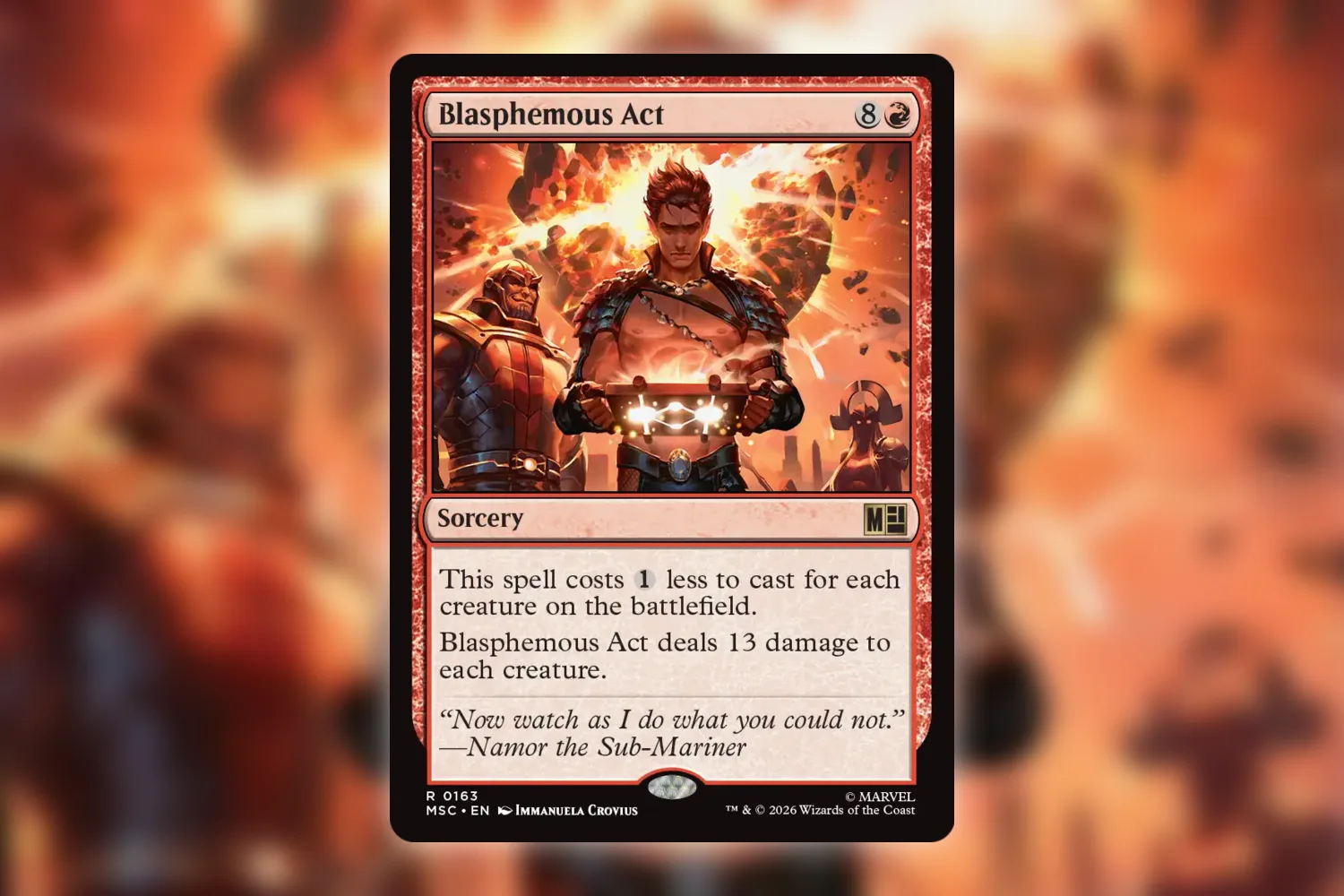
These are different reset buttons. A red deck full of creatures needs a plan for recovering after Blasphemous Act. A white deck loaded with mana rocks may find Austere Command’s artifact mode painful, even when an opponent has something you desperately want gone. During the audit, spread your likely survivors beside the sweeper and see what the next turn would look like.
If your group keeps losing to graveyard loops, simply putting more creatures into graveyards may help the wrong player. Exile effects or dedicated graveyard interaction deserve separate consideration. I haven’t included a whole graveyard package here because it would be a second shopping list, and you can make that decision after seeing what your regular opponents actually do.
I’d leave the spare answers in one labeled section of a box, with a divider for sweepers. A binder works too. In Eldwyn, logging those cards makes the inventory easier to check; physical dividers still help when you need to retrieve the copy. Use whichever searchable record you already maintain, then keep its quantities current when you move cards into decks.
The purchase list comes last. Write down the specific gap, such as “instant-speed enchantment answer in these colors,” and check that want list against your collection before ordering. Next time you dismantle a precon, return its removal to the same section. Put the divider somewhere you can find it without emptying the entire box onto the floor.