The creature is about to get exiled, you’ve got three cards that reward it dying, and your only way to sacrifice it costs two mana. You’ve left one untapped. That’s the sort of little failure I’d want a Commander sacrifice-outlet kit to catch before the deck gets sleeved.
I’d pull candidates from old precons, draft leftovers, and dismantled creature decks. Put their activation costs beside their names, then choose a few the deck can use when it needs them.
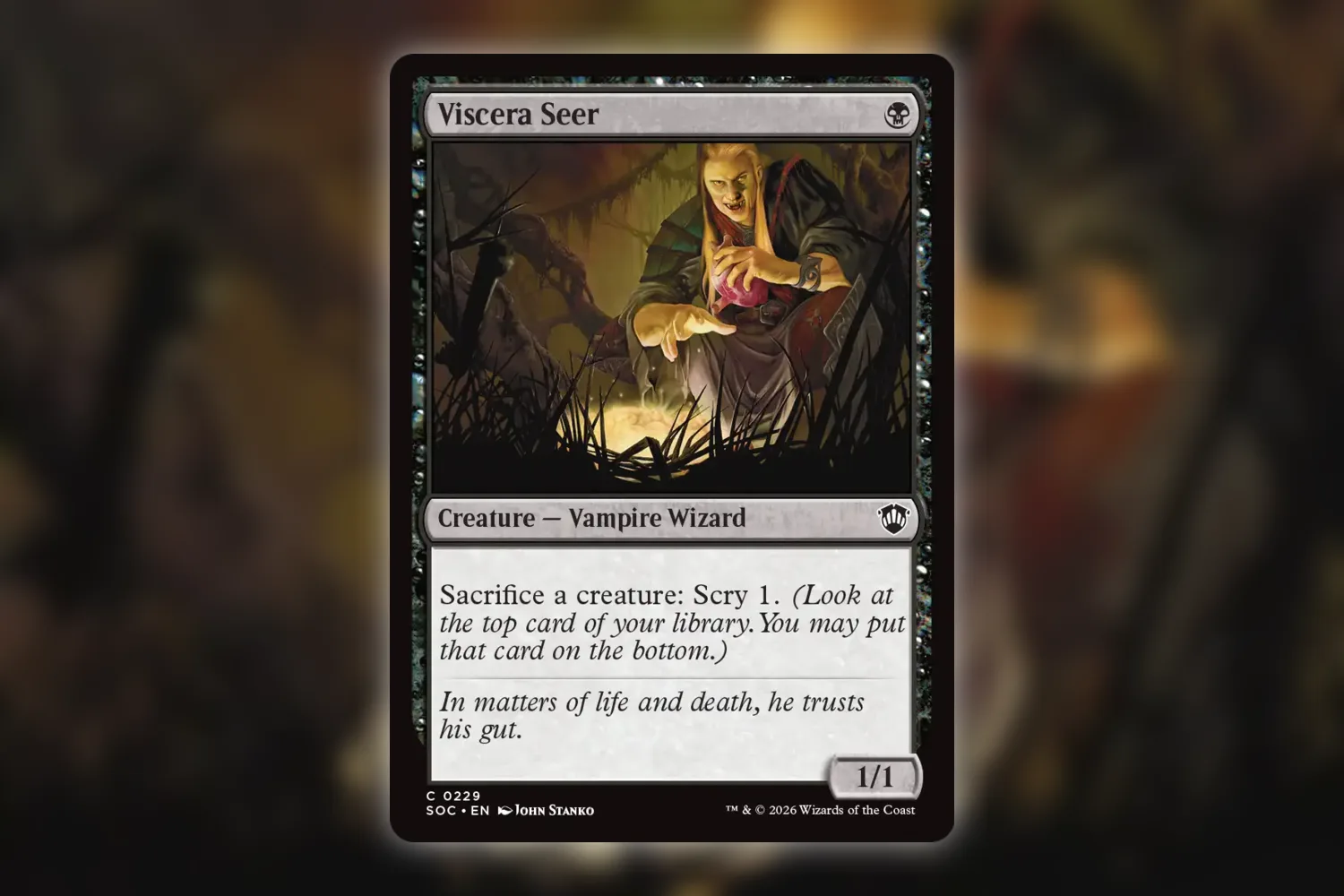
Viscera Seer is the first card I’d look for in the black section. One black mana to cast, then sacrifice a creature to scry 1. Each activation costs a creature, with no mana payment or tap symbol. It can start working the turn it arrives, assuming you have something you’re willing to feed it.
A Commander sacrifice-outlet kit needs the costs written down
I’m concentrating on sacrificing creatures. A search for “sacrifice” also finds cards that consume lands, Treasures, or themselves, and cards that make opponents sacrifice things. Read the whole cost: you can only sacrifice permanents you control, of the kind the instruction allows.
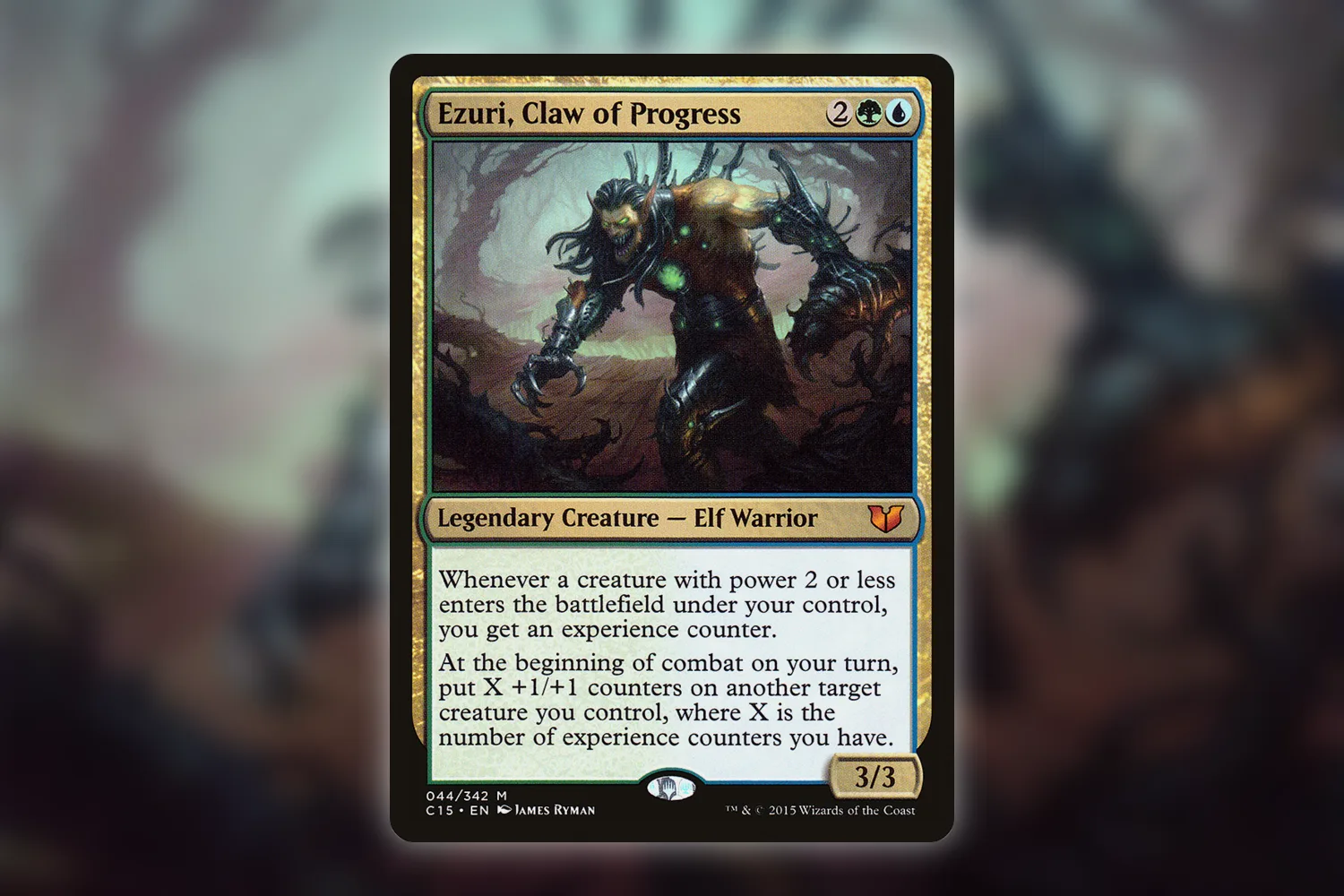
EDHREC’s look at nonblack sacrifice outlets makes a useful distinction between repeatable outlets and effects that only get to sacrifice something once. The available colors also change the pool quite a bit. This is a collection of candidates for different Commander decks; check color identity before choosing a package.
I’d note what each candidate consumes, what limits the next activation, and what you get. Seer’s scry can improve a future draw; it doesn’t put a card into your hand.
Carrion Feeder occupies a similar slot. It also costs one black and sacrifices creatures without a mana or tapping payment, adding a +1/+1 counter to itself each time. It can’t block. If the deck needs its early creature to hold off attacks, that sentence deserves a note beside the growing power and toughness.
Both creatures can sacrifice themselves because their costs say “a creature.” Feeder won’t receive its counter if you sacrifice it, though the event can still trigger other abilities.
The “free” label describes the activation’s mana requirement. You still spent mana casting the permanent and give up a creature every time.
Choose what the sacrificed creatures should produce
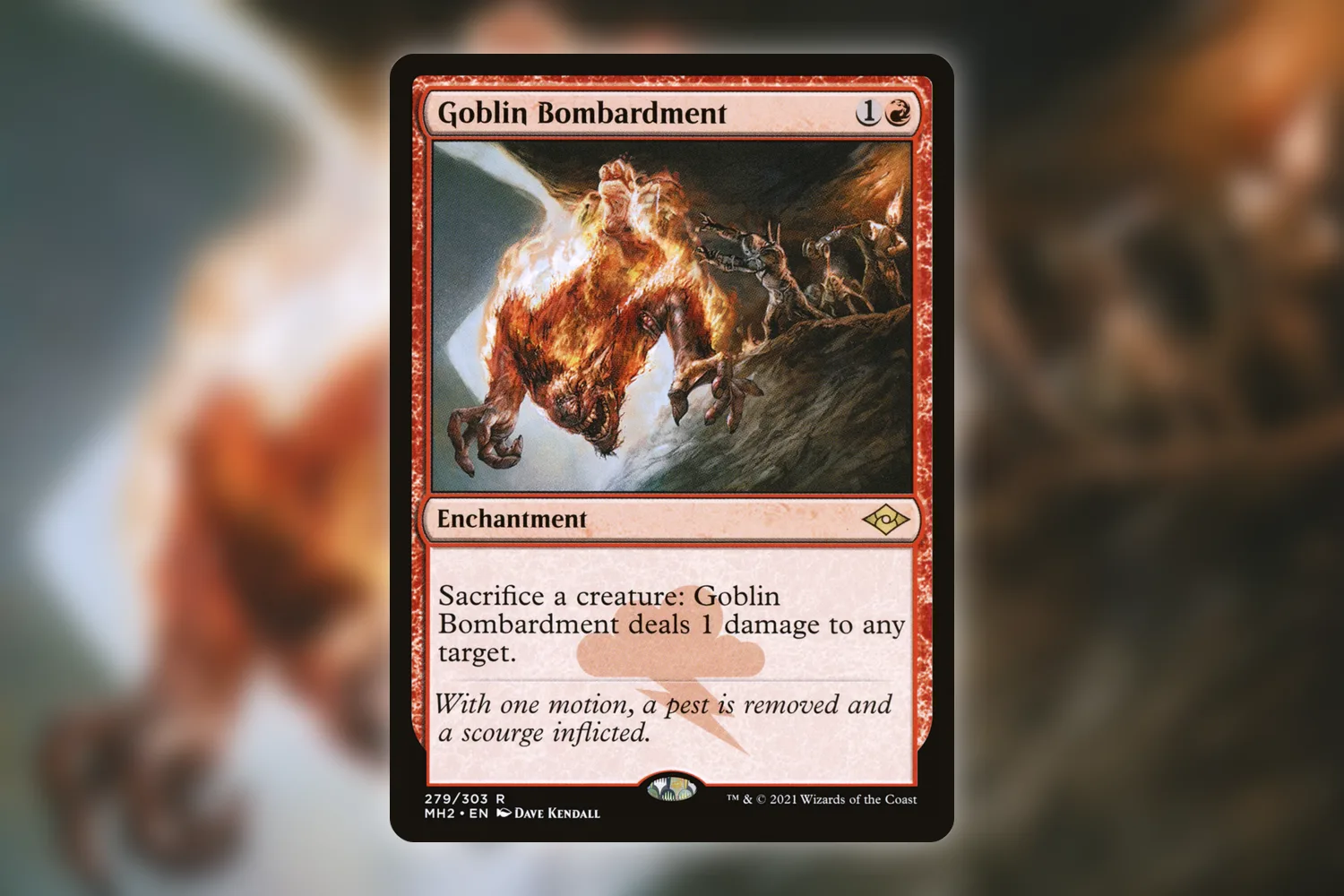
In red, Goblin Bombardment turns each sacrificed creature into 1 damage to any target. The enchantment costs two mana, including one red, and its activation needs neither mana nor tapping. It can turn expendable tokens into damage while leaving your creatures with useful abilities alone.
I’d mark its output “damage, targeted.” Each activation needs a legal target and its own creature. Four spare creature tokens can pay for four separate points of damage, with opportunities for opponents to respond to the abilities.
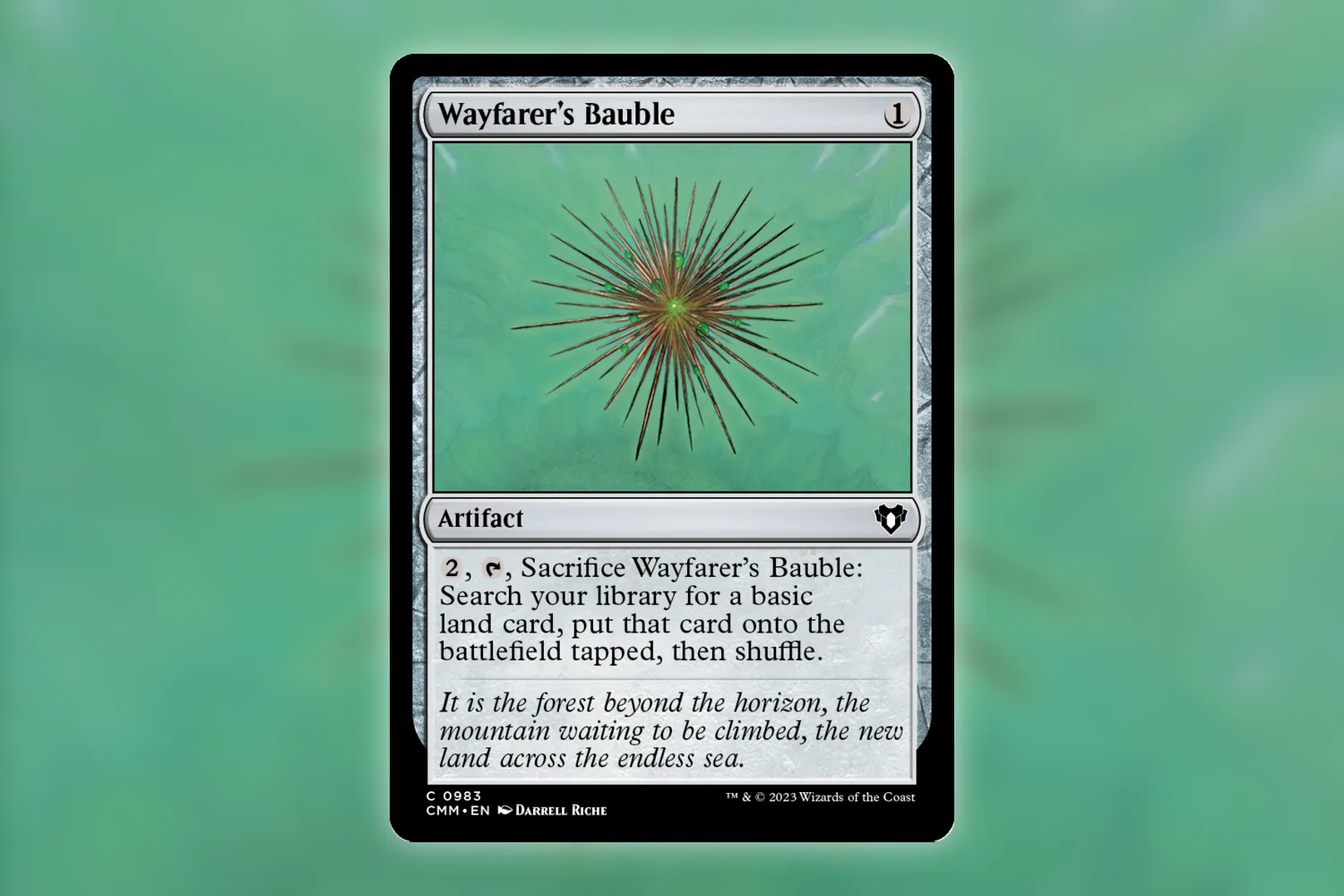
Ashnod’s Altar costs three mana and converts a sacrificed creature into two colorless mana. Its colorless identity makes it a candidate for decks without black or red. The mana it produces still won’t pay a black requirement you’re missing.
The Altar’s activated ability is a mana ability and doesn’t use the stack. Bombardment’s damage ability and Seer’s scry ability do. Wizards’ explanation of the stack covers the distinction, including why paying a sacrifice cost happens before another player gets to respond.
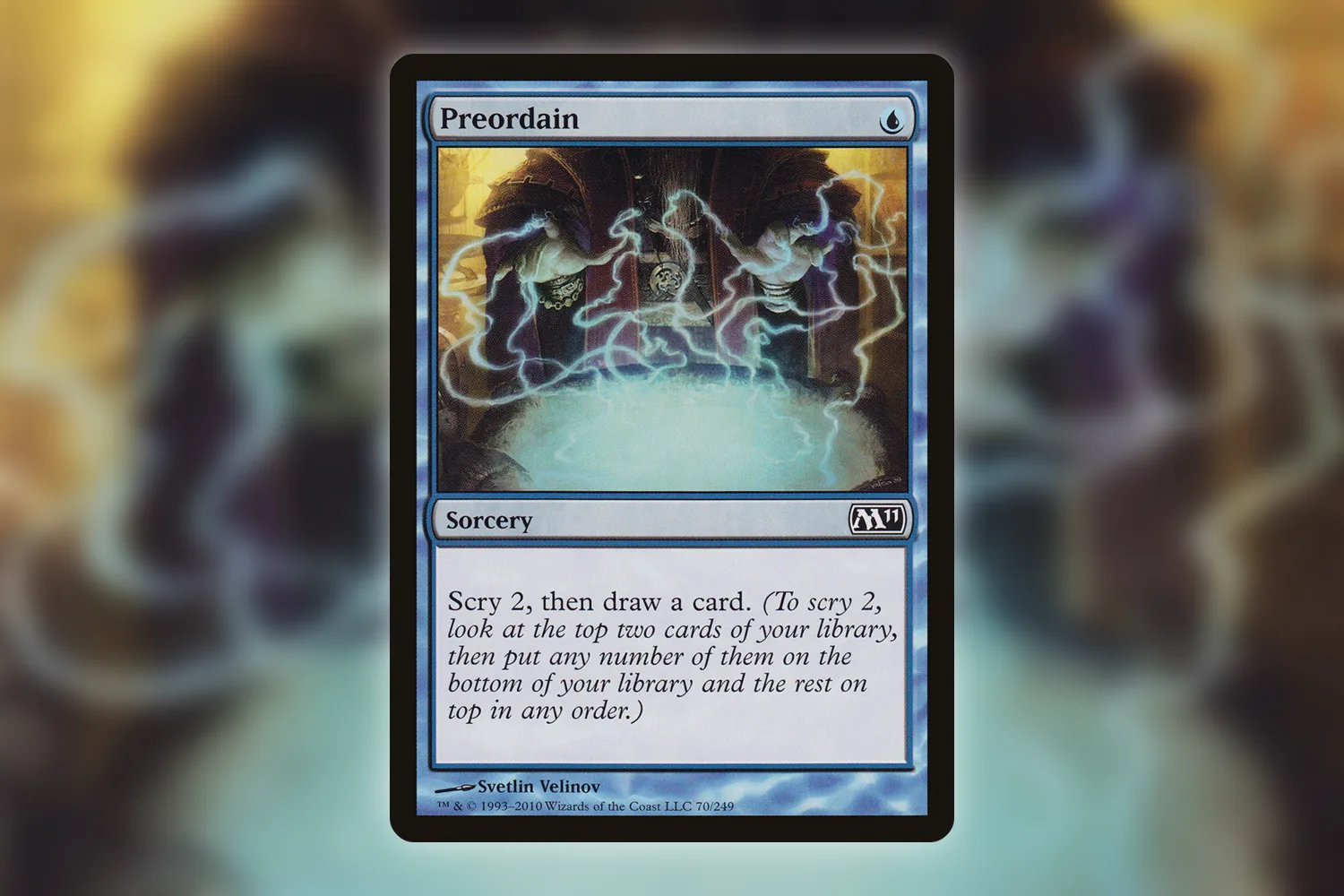
I’d usually prefer an outlet with no mana payment when sacrificing several creatures in a turn. Although, sometimes the deck is producing creatures happily and running out of cards. Then I’d consider Vampiric Rites: one generic and one black mana, plus a creature, to gain a life and draw a card.
It asks for spare mana while supplying draw you might otherwise need another permanent to provide. I don’t know which tradeoff fits your table. I’d try the copy I own and note when the activation sits unused.
One tapped land and one spell need different dividers
High Market can tap for colorless mana, or tap and sacrifice a creature to gain 1 life. With no mana payment on that second ability, it’s an appealing emergency outlet. The tap symbol limits it: once you’ve used the land, you’ll need to untap it before sacrificing another creature through it. Tapping it for mana earlier also uses up that opportunity.
It takes a land slot and supplies no colored mana. I’d check the deck’s colored requirements before making the swap, particularly in a list that already struggles to cast its early spells. A land that rescues one creature from an exile effect by putting it in the graveyard can be useful without being able to process an entire token army.
Village Rites belongs in a separate little pile. It’s a one-black-mana instant with sacrificing a creature as an additional casting cost, and it draws two cards when it resolves. Afterward the spell is gone. The deck may have ways to recover it, but I’d count it as a one-shot conversion when reviewing the available outlets.
You can only spend that creature once
Say you control Seer and Bombardment, and you have a spare creature token. Sacrificing it to Seer pays for one scry activation. Bombardment doesn’t also deal damage. Its ability requires a separate sacrifice payment, and the first payment has already moved the token off the battlefield.
A separate ability that triggers when a creature dies may trigger from that event. If an effect replaces the trip to the graveyard with exile, the creature was still sacrificed, but it didn’t die. Check what the payoff actually watches for. The graveyard-hate kit is useful reading when your death-based plan keeps meeting replacement effects.
When sacrifice is part of the cost, opponents can’t respond by destroying that creature before you pay. They’ve missed that particular window. They can still respond to a spell or non-mana ability on the stack, and a countered Village Rites leaves its sacrificed creature gone while denying the draw. You also need a legal opportunity to act; an outlet doesn’t let you interrupt the middle of a resolving spell whenever you’d like.
Pull the available copies before buying the gap
These are Scryfall nonfoil USD references checked October 29, 2026, for the linked printings. Another edition, finish, or condition can have a different price, and shipping changes what an individual replacement costs.
| Card | Printing | Nonfoil USD |
|---|---|---|
| Viscera Seer | soc/229 |
$0.57 |
| Carrion Feeder | mh1/81 |
$3.39 |
| Goblin Bombardment | mh2/279 |
$3.37 |
| Ashnod’s Altar | cmm/368 |
$16.19 |
| Vampiric Rites | fdn/615 |
$0.14 |
| High Market | soc/380 |
$0.50 |
| Village Rites | inr/137 |
$0.59 |
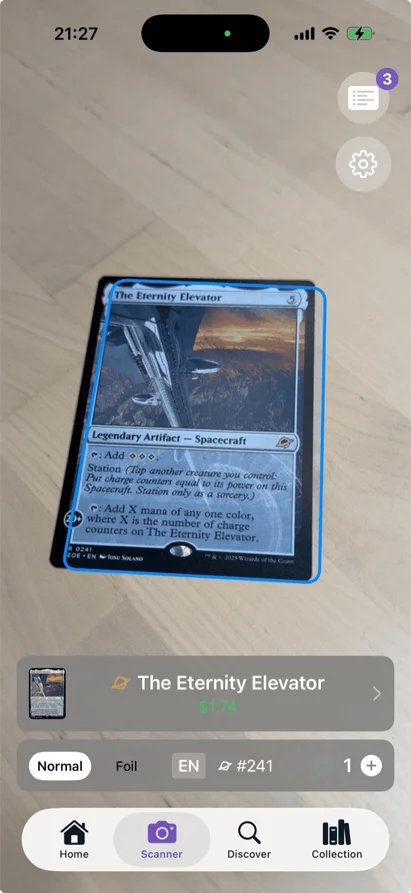
Check your copies in Eldwyn, then locate the physical cards. A copy already committed to another built deck needs a deliberate move.
For one test deck, I’d try two repeatable outlets that fit its colors and one draw conversion if it needs that job. That’s a starting experiment, and a commander that already provides an outlet can change it substantially. Look through the list for expendable creatures and recurring token production before reserving more slots for sacrifice machinery.
For a black-red token deck, Seer and Bombardment would give that trial two different outputs and two permanent types. A creature sweeper can take Seer along with the tokens while leaving Bombardment available for the next batch. High Market could cover an emergency sacrifice, but tapping it once won’t replace either engine. I’d test that smaller package before adding the Altar, especially if the deck has little use for a burst of colorless mana.
After a few games, record the failure: no creature to sacrifice, an outlet stuck tapped, insufficient black mana, or sacrifices with little payoff. Check the remaining pool, then put the unresolved role on a want list checked against your collection. Keep spare outlets together with their activation costs written on the divider.