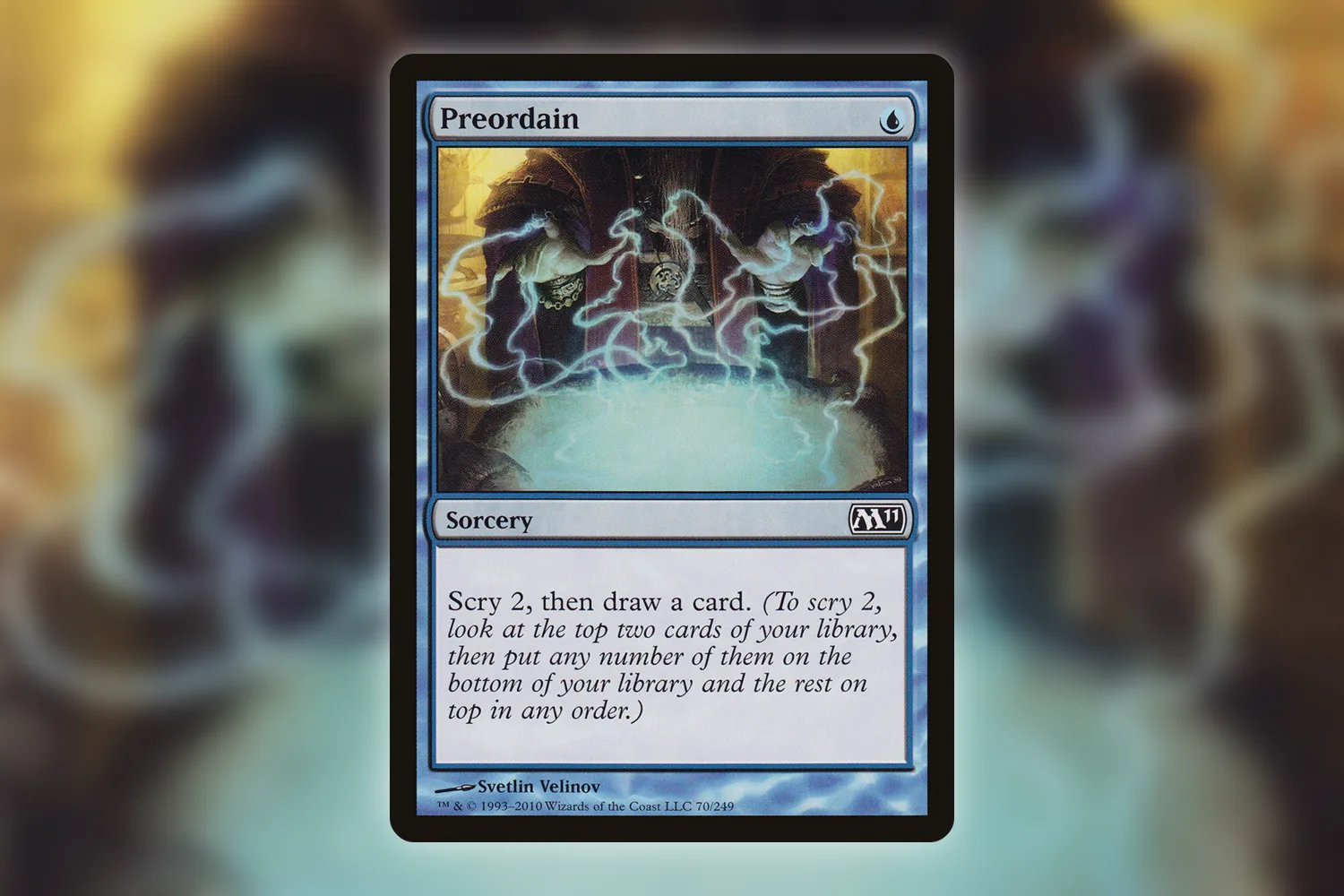
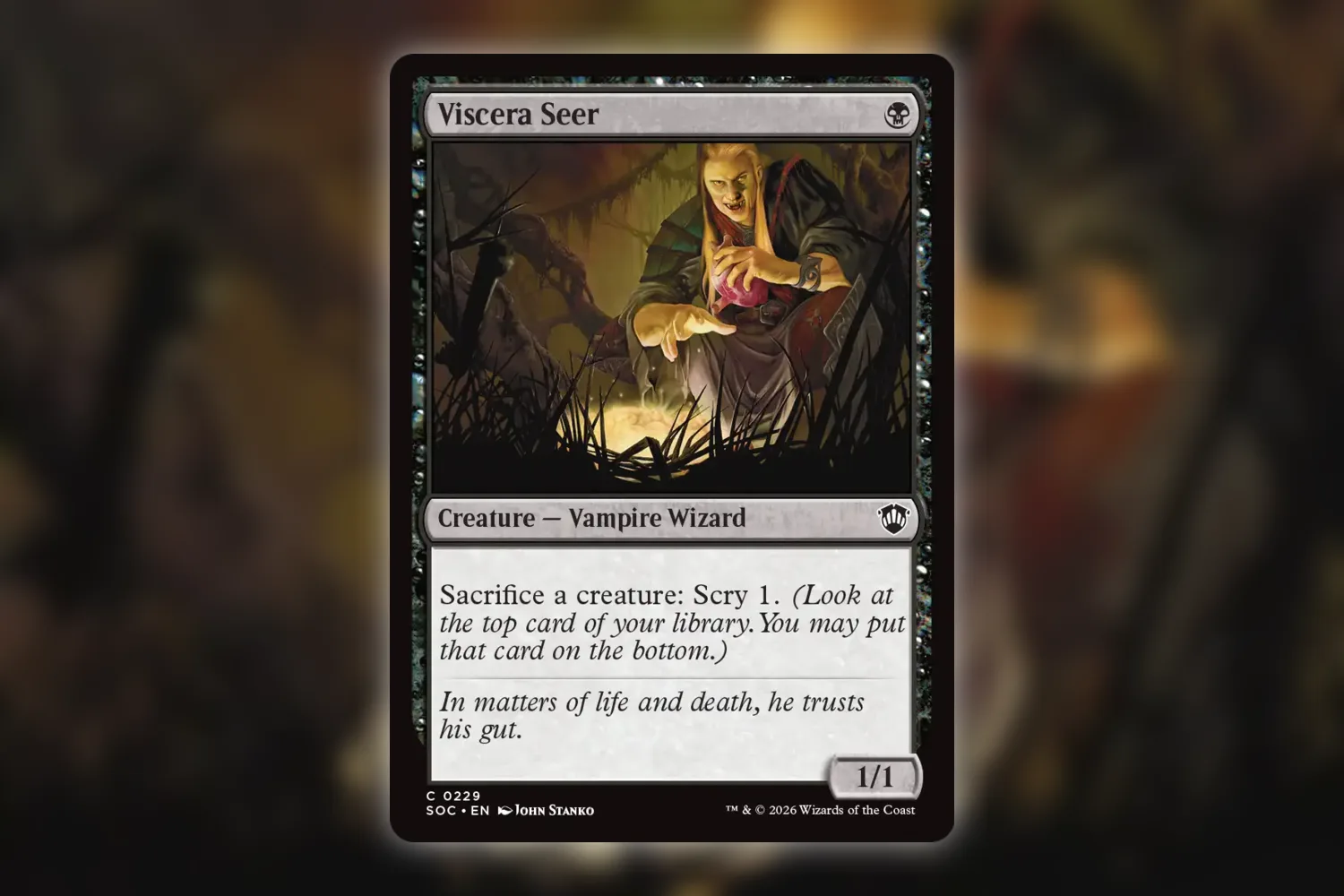
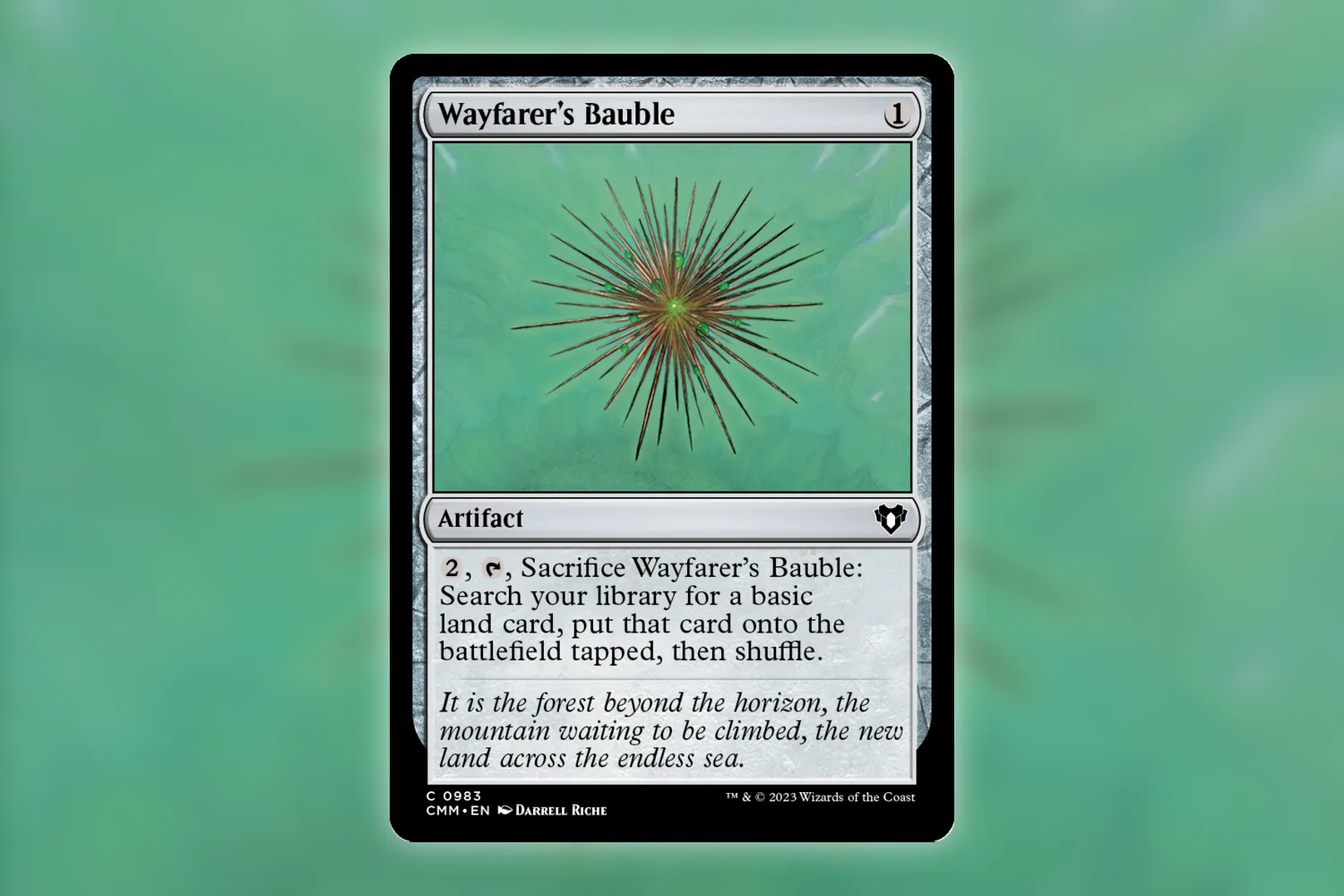
A creature can be a 17/17 and still spend an entire Commander game staring at somebody’s disposable token. That’s the problem I’d tackle in a Swell the Host upgrade, along with the expensive spells that leave Ezuri, Claw of Progress waiting for something small to enter. Four changes would be enough for my first pass through this old precon. I’d check the collection for the replacements before ordering any of them.
EDHREC revisited Swell the Host on October 23, rebuilding it under rules that preserve every card originally unique to the deck. I like that as a restoration project. My version is a smaller intervention: four one-for-one swaps against Wizards’ original Commander 2015 list, leaving the lands and most of its odd little creature package alone.
A Swell the Host upgrade starts before combat
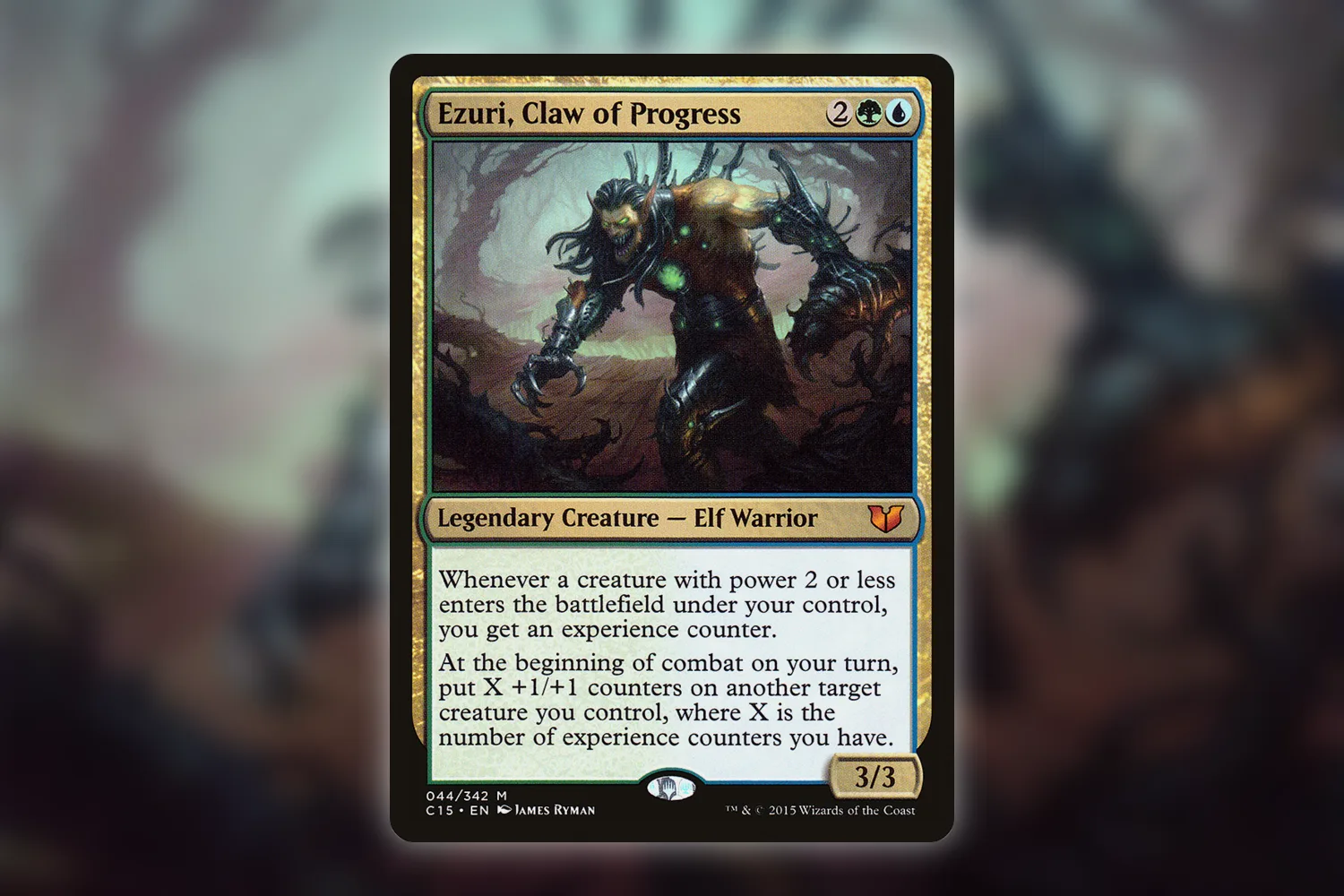
Ezuri costs four mana. While he’s on the battlefield, a creature you control entering with power two or less gives you an experience counter. At the beginning of combat on your turn, he puts +1/+1 counters equal to your experience total on another target creature you control. Those experience counters belong to you and survive Ezuri leaving the battlefield.
The timing is slightly annoying. A small creature cast in your first main phase can increase the experience total before combat. Cast it in your second main phase and the extra counters wait until a later combat. Ezuri also can’t choose himself as the recipient. I’d want a second creature available before committing four mana to the commander.
Printed power is only the starting point. A continuous effect that makes your creatures larger can cause a nominal 1/1 to enter with more than two power and miss the experience trigger. Counters added by a separate enters-the-battlefield trigger happen later. If you’re unsure which kind of boost you’re using, read that card beside Ezuri before counting the triggers.
Here’s the entire proposed change list. The prices are Scryfall’s regular nonfoil USD references checked October 26, 2026, for the linked printings, before shipping or condition adjustments.
| Remove from the original deck | Try instead | Replacement printing | Reference price |
|---|---|---|---|
| Desert Twister | Reclamation Sage | FDN 231 | $0.38 |
| Biomantic Mastery | Fathom Mage | NCC 339 | $0.84 |
| Orochi Hatchery | Scute Swarm | DSC 197 | $9.13 |
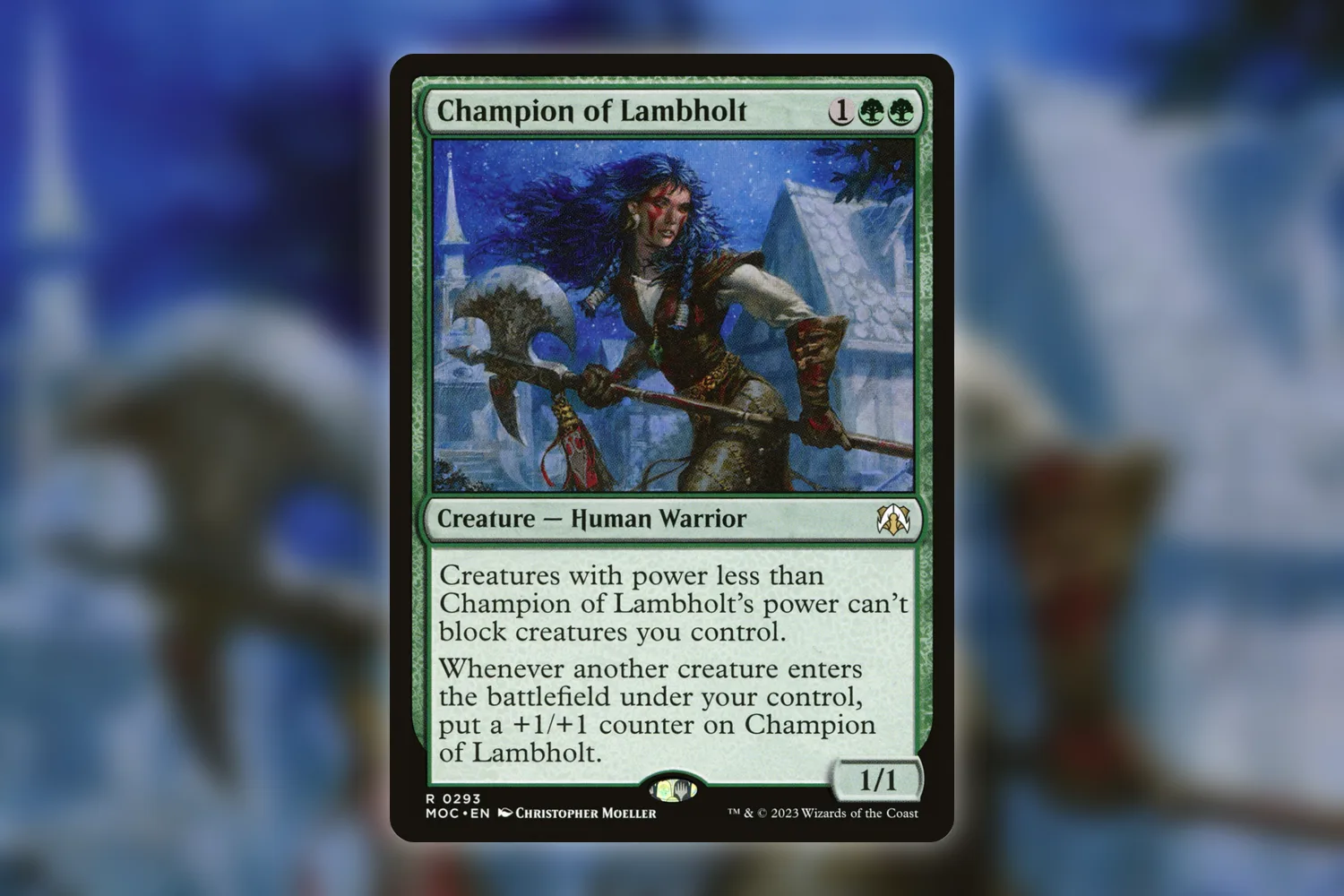
| Day of the Dragons | Champion of Lambholt | MOC 293 | $4.57 |
All four additions total $14.92 at those references. Nearly two-thirds of that is Scute Swarm, which makes the shopping decision rather different if the other three are sitting in your boxes already.
The six-mana answer is where I’d start cutting
Desert Twister destroys any target permanent for six mana at sorcery speed. That flexibility includes a troublesome land or planeswalker. Reclamation Sage costs three, supplies a 2/1 body, and can destroy an artifact or enchantment when it enters. With Ezuri present, that body also earns an experience counter.
I prefer Sage here because spending three mana leaves more room to develop the board. The tradeoff is narrower removal. If your regular opponents have a particular land that takes over games, check the remaining answers before making this swap. The Commander removal-kit guide is useful for checking those gaps without pretending every green answer does the same job.
Biomantic Mastery costs seven mana and draws cards based on the creature counts of two different target players. In a crowded game, that can be a tremendous refill. Fathom Mage asks for four mana instead and starts as a 1/1. Whenever a +1/+1 counter is put on it, you may draw a card, so Ezuri’s combat trigger can turn an accumulated experience total into a fresh hand.
Five counters put on Mage together produce five draw triggers. You can decline individual draws. Its evolve ability can add more counters when another creature enters with greater power or toughness, although increasing Mage’s size makes future evolve triggers harder to earn. The Scryfall rulings cover the multiple-counter interaction explicitly.
I’d cast Mage before combat when I can protect the opportunity to use it. A newly cast Mage can receive Ezuri’s counters immediately; summoning sickness doesn’t stop that ability or the resulting card draws. It does stop Mage attacking that turn unless something grants haste.
Actually, I’d miss Mastery. There’s something appealing about letting two opponents do all the creature-building and then drawing a frankly rude number of cards. Mage needs another permanent to cooperate and gives the table a creature to remove. I’d still try it first, but if the deck keeps losing its draw engine before combat, Mastery can go straight back in. I haven’t playtested these four changes together, and that would be the first thing I’d watch.
The Insect is the expensive experiment
Orochi Hatchery charges twice for its setup. Casting it with three charge counters costs six mana because its mana cost contains two Xs. Activating it costs another five and a tap, producing three 1/1 Snakes. Those bodies can feed Ezuri, but eleven mana before the first three tokens is quite a wait.
Scute Swarm costs three mana and starts as a 1/1. Each land entering under your control triggers it to make a 1/1 Insect. With six or more lands when the ability resolves, it makes a copy of Scute Swarm instead. Those copies have the same landfall ability, so subsequent land drops can produce a rapidly expanding collection of triggers.
Keep the sequencing honest: Swarm doesn’t trigger from a land that entered before it arrived. The copies from one landfall event also weren’t around to see that same land enter. They join in on the next one. With Ezuri present, each new 1/1 contributes its own experience trigger, assuming no other effect changes its entering power beyond his limit.
So, yes, the Insect. You find it. You sleeve it. Then somebody asks how many copies there are and you start counting the dice again. Wait, did the new ones see that land? No. Next land. I’d put the token count on paper once the dice stopped being helpful.
I can picture a particularly unflattering hypothetical Zendikar Rising sorting session: putting Scute Swarm under a basic land to flatten a curl, tidying the desk, then filing both in the land box. A perfectly efficient way to hide the card from every future creature search. Please check the physical pile before trusting a remembered inventory.
At $9.13 for the DSC printing, Swarm would stay on my optional list if I didn’t own one. Hatchery can remain in the deck while you test the other changes. Sheldon Menery’s older Ezuri upgrade article also singled out Hatchery’s setup cost, so there’s plenty of room to revisit that slot using whatever token producers your collection contains.
Champion gives the growing pile somewhere to go
Day of the Dragons costs seven mana, exiles your creatures when its enters trigger resolves, and replaces them with that many flying 5/5 Dragons. Ezuri can get caught in the exile too. The 5/5 tokens themselves are too large to trigger his experience ability even if you arrange to keep him around. There’s a recovery clause when the enchantment leaves, but I’d rather keep the small-creature engine available during ordinary turns.
Champion of Lambholt enters as a 1/1 for three mana. Each other creature you control entering puts a +1/+1 counter on Champion. Creatures with power less than Champion’s power can’t block any creatures you control. You can also aim Ezuri’s combat trigger at Champion to increase that threshold before declaring attackers.
An 8-power Champion prevents creatures with seven power or less from blocking your team. An opposing 8/8 can still block. The restriction works even when Champion stays home, including the turn you cast it, so you can improve attacks from creatures that were already on the battlefield.
Champion draws removal for understandable reasons. If an opponent removes it before blockers are declared, those blocking restrictions disappear. I’d keep that possibility in mind before sending everything across, particularly when the attack only works with Champion present.
Retrieve the copies before changing the list
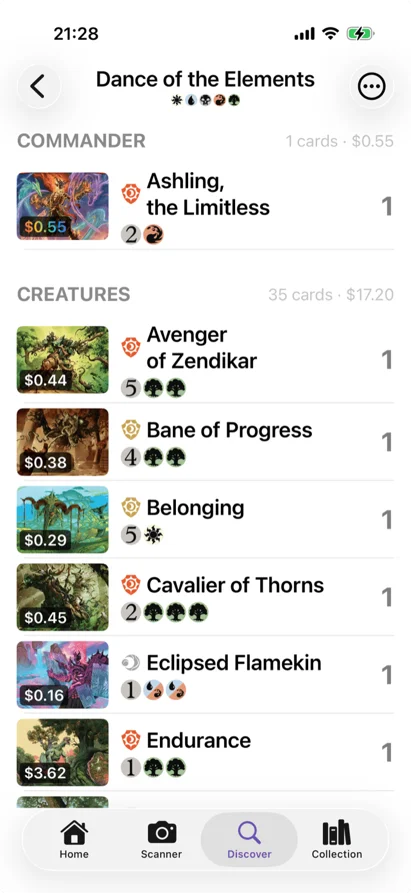
I’d search my logged cards in Eldwyn, then physically find the four candidates. Check the set code, finish, and location of each copy. A Champion assigned to another active deck needs a decision before it becomes an available upgrade here. The linked printing in the table is a price reference; an ordinary copy from another set can fill the same slot.
Keep the removed cards together with a dated note naming the replacements. The guide to tracking precon upgrades covers preserving the original list, which is especially helpful when an older deck has already absorbed several rounds of undocumented changes.
Then use the want-list check for the actual gaps. If Sage and Mage are available, I’d start with those two, play a few evenings, and note whether the deck runs out of cards or struggles to connect through blockers. Leave a space in the deck box for the cuts. Mastery might earn its sleeve back.