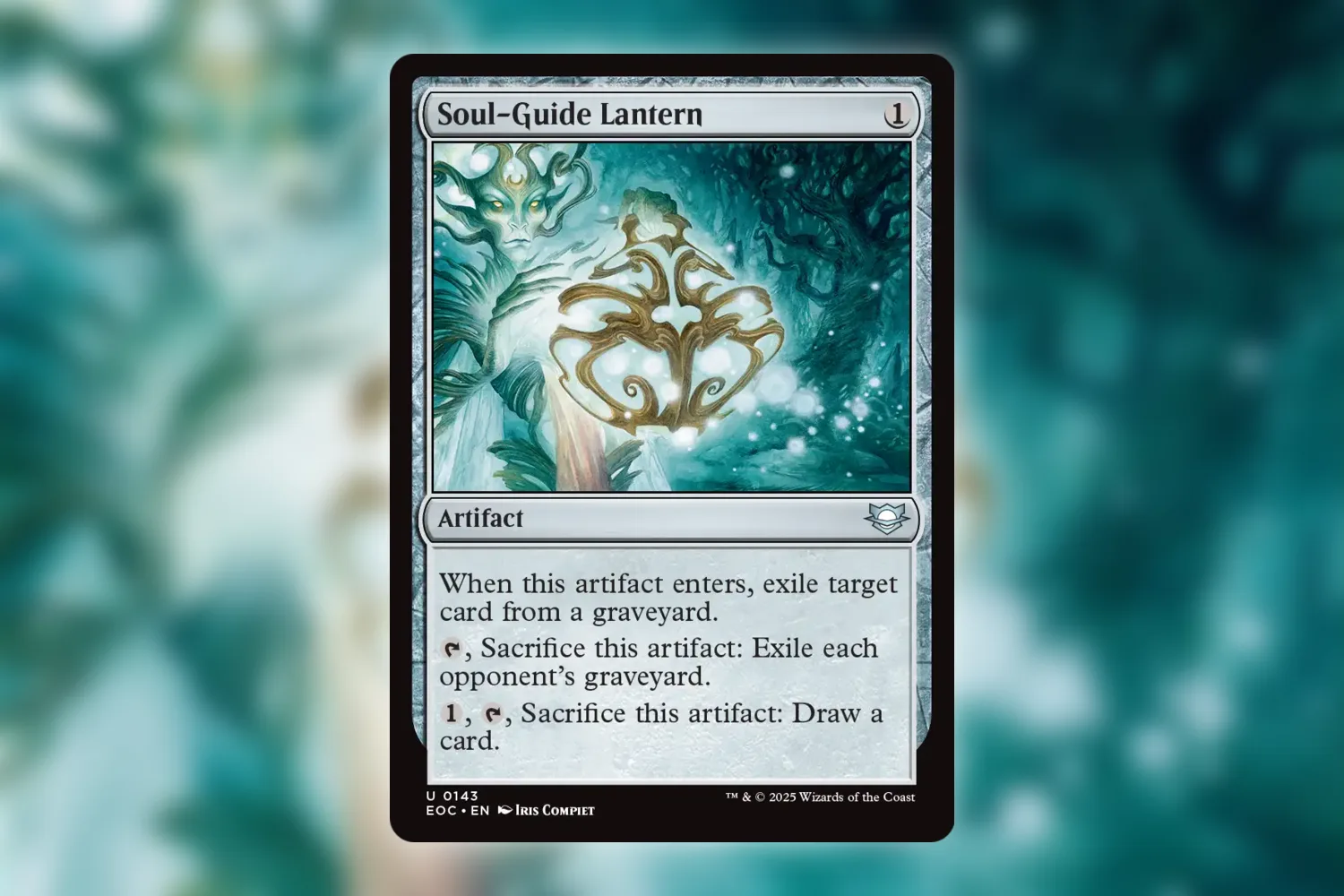
I keep wanting a tidy rule for Commander graveyard hate: one answer per deck, sleeve it up, problem handled. Then I look at Soul-Guide Lantern. It can pick off one card as it enters, clear every opponent’s graveyard later, or cash itself in for a card. Those are three different jobs printed on a one-mana artifact, and the one you need depends on what the other player is doing right now. So my Commander graveyard hate kit starts with the cards I own and a note about when each one works.
The removal kit I built from my collection stops at this edge. Destroying a creature may put it exactly where its controller wants it. I left graveyard answers out of that guide because picking one well takes a different sort of audit. I want to know which copy is free, which deck can cast it, and whether it can interrupt the play that keeps beating me.
Empty the box before making a want list
I’d search a collection for “graveyard,” “exile,” and “library,” then pull the physical candidates. The text search is a net, not a verdict. It catches reanimation spells and cards that exile their own graveyard, and it misses a card whose current wording differs from what you remember reading on the printed copy. Check the current card text before you assign a job.
Look through dismantled precons and the sideboard cards you kept after a deck stopped seeing play. A card in an active deck counts as owned, but it isn’t available for three other decks at the same time. Tracking cards already sleeved into decks is useful here; “one in collection” is a lousy answer when that one is in a bag across town. Mark the location beside the card name. Box, binder, deck, loaned out. It’s boring bookkeeping until you need the card on game night.
I’d make three piles on the table. The first holds answers you can leave up and use in response to something. The second holds cards that keep graveyards small while they remain on the battlefield. The third holds slower cards you cast on your own turn. This isn’t a ranking. If a deck already wants a certain land or creature, an awkward answer attached to that card may earn its slot more easily than the supposedly perfect artifact.
Start with the zero- and one-mana artifacts. Tormod’s Crypt costs nothing to cast and taps and sacrifices to exile one player’s entire graveyard. Soul-Guide Lantern costs one mana, gives you a small exile trigger on entry, and can sacrifice to exile each opponent’s graveyard. That last wording matters in a four-player game. Neither asks for colored mana at activation. The Crypt is very good at sitting there making someone wait; the Lantern can make a different choice if nobody gives you a reason to crack it.
I dislike how often “I’ll save it for later” turns into never using it. Fine. That’s a me problem, and it’s also why I like a card with a draw mode. I don’t actually know whether I’m too patient with these effects or merely playing against people who wait for me to tap out. The audit can record the option; the next few games tell you if you use it.
An answer can be ready or merely present
Someone casts a spell targeting a creature card in their graveyard. If your answer can be activated while that spell is on the stack, exile the targeted card before the spell resolves. If the spell no longer has a legal target, it won’t bring that creature back. A tap ability needs its permanent untapped, and an activation cost may need mana held open. “It’s in my deck” is several steps away from “I can use it now.”
Unlicensed Hearse is a useful small-tool example. It taps to exile up to two target cards from a single graveyard. That can remove the one creature about to be reanimated, or two pieces of a loop. It doesn’t sweep three opponents at once. Scavenging Ooze can repeatedly exile a target card, but every activation costs green mana. A green deck that spends all its mana in the main phase may have the Ooze on the table and still watch the relevant card return.
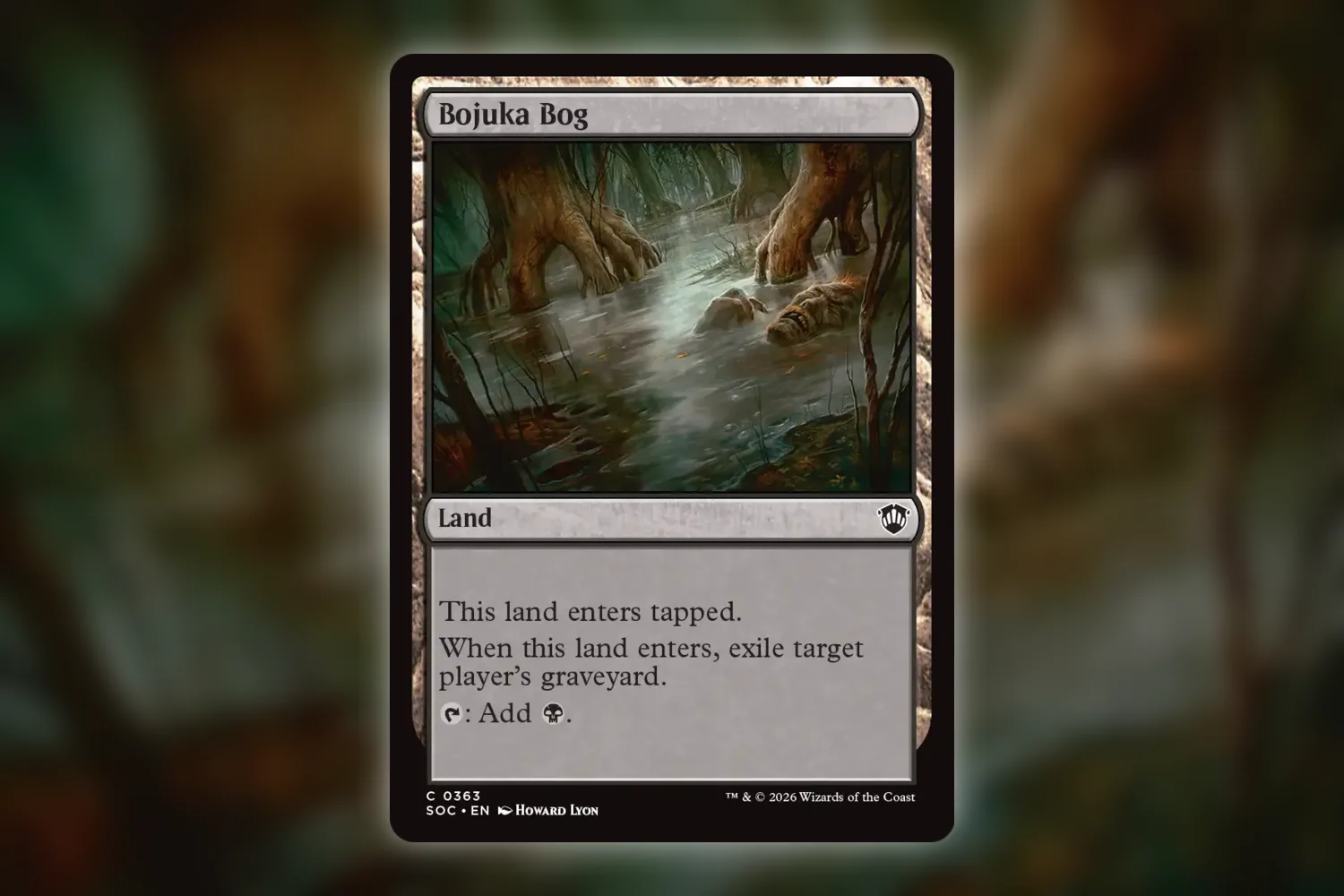
There’s a temptation to fill every deck with the colorless artifacts and call the kit finished. I get it. They fit everywhere. But the cards already suited to a deck’s plan are worth a second pass. In black, Bojuka Bog occupies a land slot and exiles one target player’s graveyard when it enters. It enters tapped, and a land you normally play on your turn doesn’t answer a reanimation spell somebody casts on theirs. I like the Bog when I can afford that tapped land and want a broad reset during my own turn. I reach for a ready artifact when the opponent waits until the end step.
Yes, I know. “Just hold up the Crypt” is easy advice when I can see it in the opening hand. In a real Commander deck, one copy out of ninety-nine hides for entire evenings. Adding redundant answers helps, though I wouldn’t count two cards as redundant if one of them only operates at sorcery speed. I want different windows covered, not six ways to do the same thing during my own main phase.
Endurance belongs in another little corner of the kit. Flash lets it respond to a graveyard play, and its enter-the-battlefield ability puts up to one target player’s graveyard on the bottom of their library in random order. That removes the cards from the graveyard without exiling them. If your own deck cares about its graveyard, you can also choose yourself. It’s an excellent emergency tool for a green deck, with a much more demanding casting cost than a Crypt. I wouldn’t buy it just because a list called it a staple; first I’d check which problem needs that timing.
The cards that stay are a different commitment
Rest in Peace clears every graveyard when it enters and then exiles cards and tokens that would go to a graveyard. That’s powerful and symmetrical. In a deck trying to reuse its own creatures, the enchantment can turn off half the plan. In a deck that barely touches its graveyard, that’s much less of a sacrifice. Dauthi Voidwalker only replaces cards going to opponents’ graveyards while it’s around. It can later let you play one of the exiled cards, but it doesn’t remove the graveyard that was already there when it entered. I would not mark those two with the same “graveyard hate” label and stop reading.
Farewell has a graveyard-exile mode alongside its other sweeper modes. Six mana and sorcery speed make it a reset you plan for, not a trap you spring in response. If a white deck already runs Farewell, count that coverage. Then look honestly at whether it has any answer before turn six. The number of cards labeled graveyard hate can look reassuring while every one of them waits for your turn.
One opponent’s reanimation deck may need you to stop a single target. Another player’s plan may use the whole graveyard as a resource. EDHREC has written about the range of graveyard-focused cards; I wouldn’t build for every possible opponent after reading a list like that. I’d start with the games I actually lost, and write down which card or loop did the work. That gives this kit a job instead of letting it become a museum of silver bullets.
Put the kit back where you’ll find it
Choose one deck, put its current graveyard answers beside it, and ask a plain question: if someone tries to bring back a creature on another player’s turn, what do I do? If the answer is “draw Farewell eventually,” try one ready artifact from the spare pile. If the deck already has Soul-Guide Lantern and Bojuka Bog, play a few games before buying a third answer. I can’t tell you a universal number from a deck list. The table decides a lot of that.
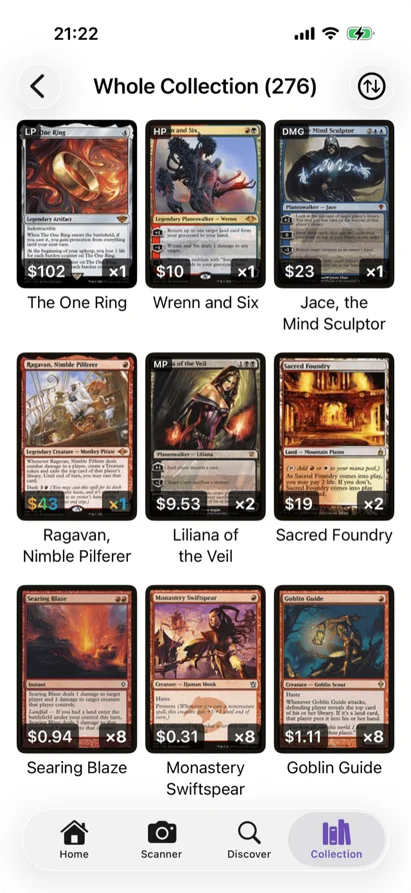
Keep the unused cards together in one labeled section of a box and keep their locations accurate in your collection record. A small note beside each entry helps: “one card at a time, needs green mana,” “whole graveyard, my turn,” or “ready on the table, hits all opponents.” When you move a card into a deck, update the location rather than assuming you’ll remember. Then make a want list from the gaps that remain. The graveyard card you needed might already be in the precon you took apart last winter.