A card appearing in 15% of decks can deserve more attention than one appearing in 70%. That’s the slightly uncomfortable bit of EDHREC’s Lift score: the bigger inclusion number and the more distinctive recommendation can belong to different cards. I like that. I also think it’s an excellent way to talk yourself into buying something your deck has absolutely no use for.
On October 1, EDHREC replaced Synergy with Lift on its commander, tag, and combo pages. Card pages had already made the change. The October 9 developer interview explains the motivation: the old metric leaned too heavily toward popular cards, while Lift helps surface cards unusually associated with a particular commander or theme.
I’d use the new recommendations to choose experiments from my collection before making a shopping list. There are two things to get straight first: what the number measures, and what the deck actually needs.
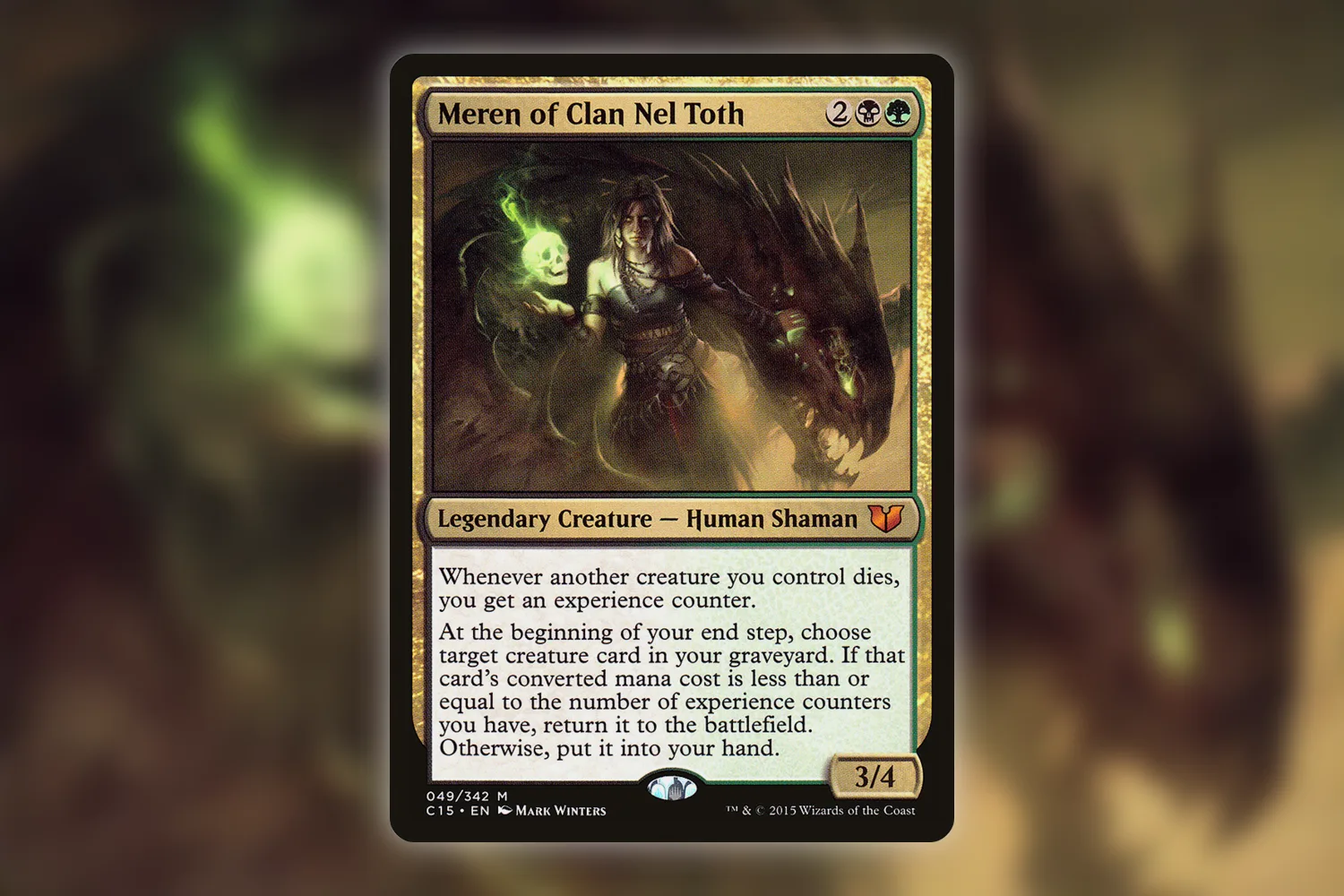
Take Meren of Clan Nel Toth, because her ability gives us something concrete to check against the statistics. Creatures dying earn experience counters, and her end-step trigger brings a creature back to the battlefield or your hand, depending on its mana value and your experience count. You can read a suggested card and ask where it fits in that sequence.
Reading EDHREC’s Lift score without turning it into a grade
On commander pages, the useful shorthand is:
Lift = inclusion rate with this commander ÷ inclusion rate in the comparison population.
EDHREC’s changelog describes the change as division replacing subtraction. The old Synergy percentage was centered on zero. The current Lift ratio is centered on one. A Lift of 1 means the pairing appears about as often as the baseline predicts; 2 means twice as often; 0.5 means half as often.
That comparison population takes some work to construct. EDHREC accounts for color identity and when cards first became available to deckbuilders, and its FAQ explains how potential decks follow active filters. You can’t reproduce the site’s exact calculation by dividing two percentages pulled from unrelated pages.
Here’s an invented example, using round numbers purely to show the arithmetic. These aren’t live EDHREC statistics or measurements of named cards.
| Hypothetical card | Inclusion with your commander | Baseline inclusion | Lift |
|---|---|---|---|
| A widely played staple | 70% | 60% | 1.17 |
| A narrow engine piece | 15% | 1% | 15 |
| A card builders tend to leave out | 5% | 10% | 0.5 |
The narrow engine piece has a much higher Lift despite appearing in fewer of the commander’s decks. It deserves a look because its association with this commander is unusually strong. The table gives you no evidence about which of those decks wins more games.
I find that distinction easier to remember with Sol Ring. A card can be broadly useful across Commander and have relatively little to distinguish its relationship with one particular commander. If its Lift sits near the baseline, that alone gives me no reason to cut it. EDHREC’s original mathematical explanation specifically discusses the problems ubiquitous cards caused for the older card-to-card Synergy metric.
One small trap if you’re reading older explanations: the original write-up also discusses displaying logarithmic Lift, where zero represents the baseline. The October rollout describes the ratio centered on one. Check which scale an example uses before applying its numbers to the current page; a log-lift of 1 and a ratio of 1 mean very different things.
The high number still has to earn a slot
Sakura-Tribe Elder is an easy Meren recommendation to understand from its text. It sacrifices itself to find a basic land and put it onto the battlefield tapped. With Meren out, that death earns an experience counter. With enough experience, the end-step trigger can return the Elder to the battlefield for another use later.
You can explain the interaction without looking up a single inclusion percentage. That’s the level of explanation I’d want before buying any unfamiliar high-Lift card.
Spore Frog also sacrifices itself, this time to prevent combat damage for a turn. Meren can recur it once you have the required experience counter. That can be useful at a creature-heavy table, and it can also become a repetitive little arrangement your friends get tired of watching. It helps much less against a deck winning through noncombat damage or another route entirely.
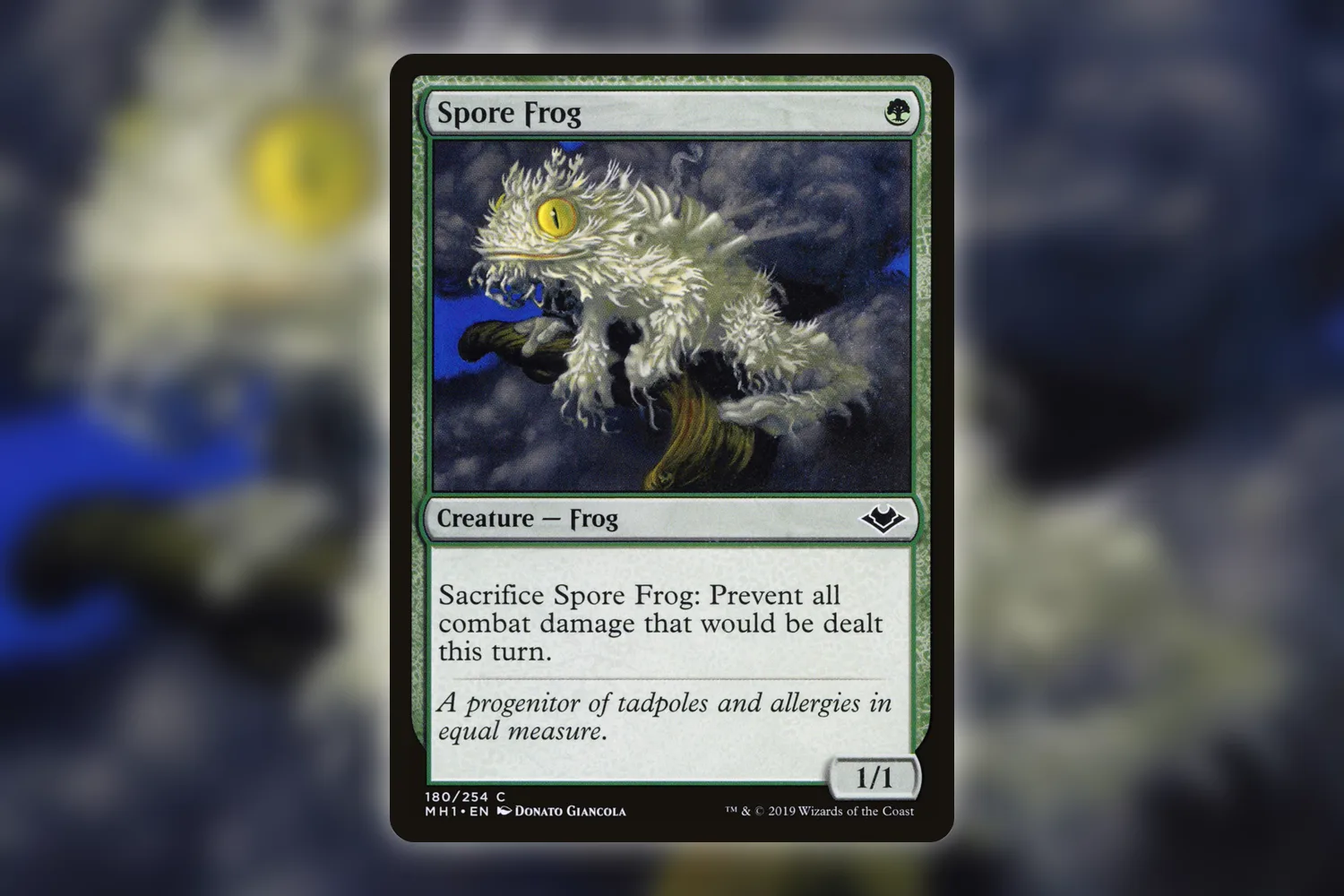
I don’t know whether your table would welcome the Frog or immediately start saving removal for it. A recommendation page can’t answer that either. The interaction and the social decision are both part of choosing the card, especially if you’re trying to keep a familiar group happy on a Tuesday evening.
There’s a version of this advice that’s too cautious. Sometimes buying the odd card is the fun part. A recommendation that makes you reread a neglected common can send a deck somewhere you’d never have taken it yourself, and I’d hate to filter every surprise out of Commander. I’d just give that purchase an experimental slot rather than pulling out a reliable draw spell because a different number looks impressive.
Lift also inherits the limitations of the decklists behind it. EDHREC’s original explanation acknowledges that user-submitted lists vary in quality and that recommendations can influence future lists, reinforcing the same associations. A popular package can spread because people keep seeing it recommended. A small cluster of specialist builds can reveal a real interaction while telling you very little about your version of the deck.
I’d be particularly wary of a huge ratio paired with a tiny number of appearances. That’s a reason to investigate the package and read the cards around it. I wouldn’t set a universal cutoff, though. A niche commander and a long-established favorite offer very different amounts of evidence.
Pick the deck you’re building before reading the recommendations
EDHREC’s developers point out that the first high-Lift cards you see on a commander page may belong to a theme you aren’t building. They recommend selecting relevant tags. Budget and bracket filters provide other ways to narrow the lists feeding your recommendations.
For a Meren deck built around sacrificing creatures and recurring useful bodies, I’d start with the relevant theme, then use the available budget and bracket filters to get closer to the intended table. I’d still read the selected cards individually. Tags are approximate categories; EDHREC’s FAQ says their definitions are developed separately and can miss decks a person would reasonably place in that theme.
And, okay. You found a weird card. It has a big number next to it. You own one somewhere. Fine, pull it out. Read the whole thing, including the sentence at the bottom you skimmed the first time. What are you cutting? Yeah. That part.
Writing down the cut forces a comparison the recommendation page can’t make for you. If the newcomer needs creatures dying, do you have enough ways to make that happen? If it consumes mana every turn, which turns can spare it? If your current list struggles to draw cards after a wipe, another payoff that needs a full battlefield may leave you with exactly the same problem.
The broader process of building Commander decks from cards you already own starts earlier, with choosing a commander that fits your holdings. This is a narrower job: you’ve already got the commander, and you’re evaluating a handful of proposed changes.
My shopping list would stay short
I’d take five interesting recommendations and check ownership first. In Eldwyn, I’d look up the cards in my collection, then check where the copies actually live. A card already sleeved into another deck has a borrowing cost that the owned count doesn’t show; counting the cards in assembled decks saves a surprising amount of confusion here.
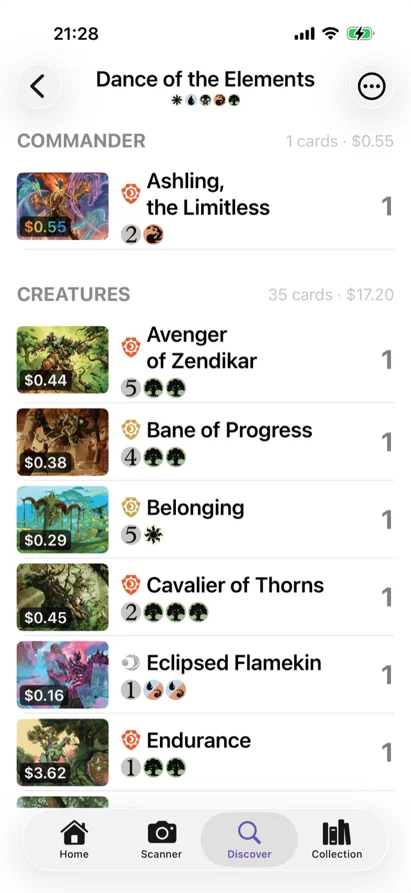
For each candidate, I’d keep a short note: its proposed job, the card it replaces, and whether a copy is available. An owned alternative can fill the same job even if its Lift is lower. Sakura-Tribe Elder and Spore Frog both sacrifice themselves, for example, but replacing one with the other changes your access to mana and your defense against combat. Similar-looking interactions can occupy different slots.
After a few games, I’d check whether the experiment did the thing I expected. Did the card sit in hand waiting for another piece? Did I have to spend a whole turn setting it up? Would the card I cut have been more useful in the same situation? A few games won’t establish a win-rate improvement, but they can reveal an awkward mana cost or a condition the deck rarely meets.
Any remaining purchases can go through the usual want-list check against your collection. I’d leave the experimental notes attached until the next round of changes. Especially the proposed cut. It’s very easy to buy the upgrade, admire it for a week, and discover you’ve somehow built a 104-card deck again.