I counted eleven Command Towers last month. Not on purpose. There’s a shoebox of precon leftovers that’s been under my desk since roughly the Kaldheim Commander decks, and I finally sat down and scanned the whole thing, and when the list came back sorted by quantity there it was at the top. Eleven. Six Arcane Signets. Five Evolving Wilds. An upsetting number of Command Beacons I have never once cast.
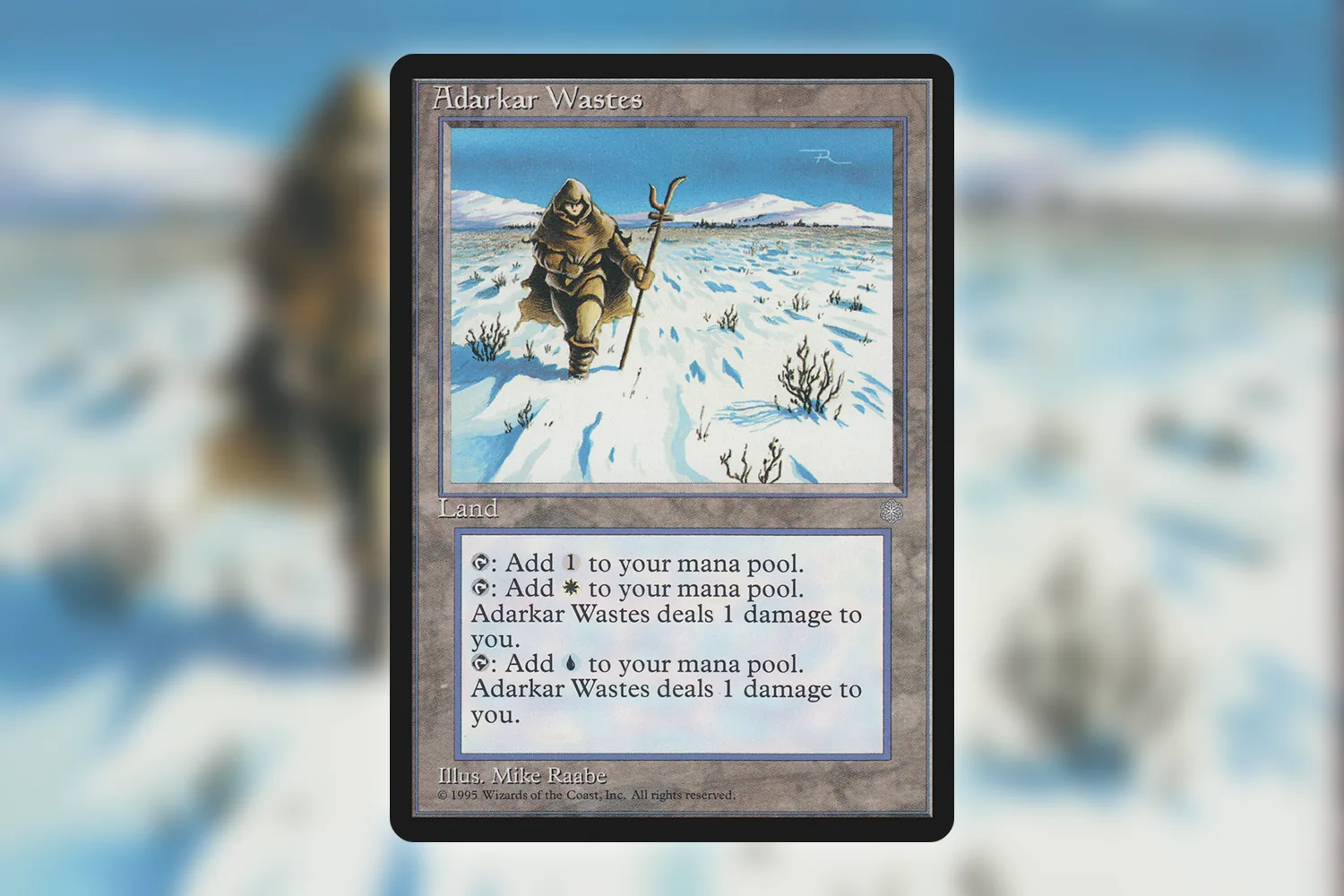
And one Adarkar Wastes with an Ice Age set symbol on it, which I did not remember owning and cannot account for.
Two of those eleven Command Towers I bought. Separately, months apart, because I was assembling a deck and needed one and it was thirty-five cents so who cares. That is not a financial tragedy. But it’s a symptom of something that costs real money over a few years, and it’s the thing every “best budget lands for Commander” article on the internet quietly makes worse.
Budget Commander lands are cheap because they’re precon filler
Look at where these cards actually come from. Command Tower has been printed something like a hundred and sixteen times. Glacial Fortress has twenty-five printings, Temple of Malady twenty-four, Adarkar Wastes twenty. The pain lands, the check lands, the temples, Command Tower, Myriad Landscape, Evolving Wilds — every one of these cycles has been stuffed into Commander precons on a rolling basis for years.
Run the most recent printing of any of them and you land in the same four or five products. Adarkar Wastes: Edge of Eternities Commander. Temple of Malady: Secrets of Strixhaven Commander. Glacial Fortress, Command Tower, Evolving Wilds: Marvel Super Heroes Commander. These aren’t cards Wizards prints because players are clamoring. They’re the mana base filler that makes a precon function, and they get re-slotted into every precon cycle forever.
Which is exactly why they’re cheap. Adarkar Wastes is $0.35. Temple of Malady is $0.32. Glacial Fortress is $0.36. And it’s also why, if you’ve bought precons in the last three or four years, you own a lot of them already. Probably in multiples. Probably in colors you’ve never built in.
I’ve said before that the mana base is the big gap when you build a Commander deck from what you already own, and I’d walk part of that back now. The good untapped fixing is a gap. The functional 80% version of it is sitting in a box with a Marvel logo on the side.
The list articles never account for this. They’re written as shopping lists, which makes sense because most of them are attached to a store. But the shopping list framing is wrong for a format where the recommended cards are the exact cards that fall out of the product you already bought.
The cycles don’t live anywhere
Here’s the actual friction, and I don’t think there’s a clean fix for it.
A land cycle is a functional category. Pain lands are ten cards that share a rules template and nothing else — no set, no color, no name pattern you could sort on. Karplusan Forest and Llanowar Wastes and Adarkar Wastes are the same card conceptually and they’d be in three different boxes under any sorting scheme a normal person uses. Sort by set? They’re scattered across thirty years. Sort by color? Duals are two colors, so pick one, and now half the cycle is in the wrong drawer. Sort alphabetically and they’re as far apart as it’s possible for ten cards to be.
So when you sit down to build a Simic deck and you want to know whether you already own a Hinterland Harbor, the honest answer is that finding out takes longer than buying one. It costs thirty cents. Checking costs twenty minutes of digging through boxes. Everyone makes the rational choice and everyone ends up with eleven Command Towers.
This is genuinely the use case that made me start scanning things in the first place. Searching a scanned collection for “pain land” doesn’t work either, to be fair, because that’s slang and not a card type. But searching for the ten card names takes about ninety seconds, and I can do it before I open a checkout page instead of after. I’ve written before about running a want list against what you already own and this is the same idea applied to the most boring cards in the format.
Actually, let me push back on myself. There’s a real argument that this doesn’t matter. We’re talking about cards that cost less than a dollar. If you re-buy four budget lands a year at forty cents each, that’s a coffee. Nobody’s retirement is riding on Temple of Malady. And there’s something a bit joyless about auditing your bulk before every deck build, like doing inventory on your own hobby.
I still think it’s worth doing, though not really for the money. It’s that the twenty minutes of digging is what stops you building the deck at all. Every Commander deck I’ve abandoned at 80% got abandoned because the mana base was a chore.
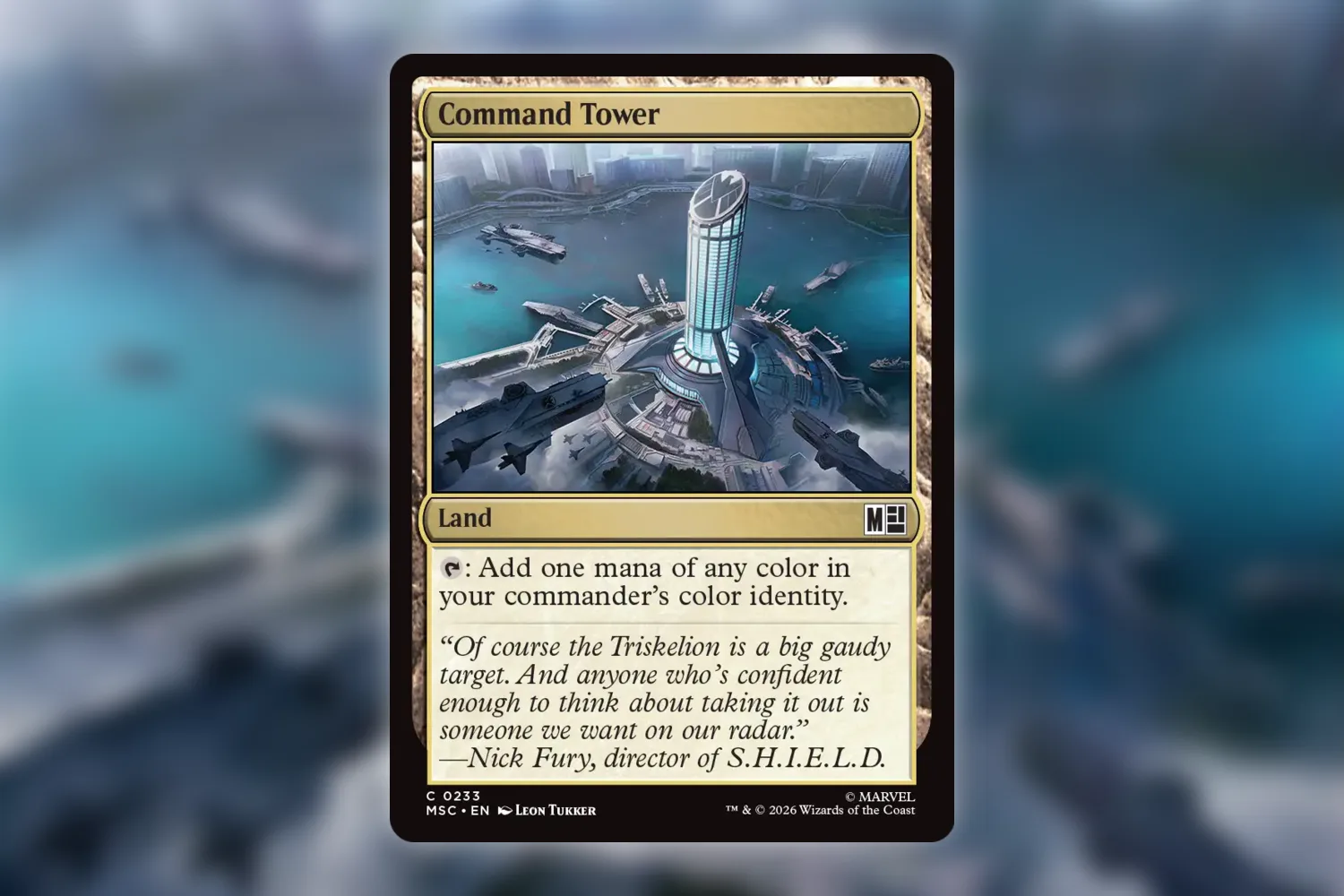
Sorry, quick tangent
So, the Command Beacons. I have four. Four. I don’t play a single commander with a mana value above five. I have no idea how this happened except that Command Beacon is in a lot of precons and I’ve been buying precons since Commander 2018 and I clearly just fanned them into the shoebox without looking. At some point in 2022 I remember thinking “I should build a Kozilek deck” and never doing anything about it, so maybe that. Anyway. Four Command Beacons, and they’re about $10 each in the Tarkir Commander printing, so that’s forty dollars of cardboard sitting in a shoebox doing nothing. Which is more than the rest of the box combined and rather undercuts the point I was making.
One of them isn’t cheap, and one of them might be worth twenty-five dollars
Two wrinkles that the budget-lands lists flatten out.
The first: the cycles aren’t uniformly priced. Underground River is the blue-black pain land and it’s $2.36, which is seven times what its cyclemates cost. It’s not a better card. Dimir is just the most-built color pair in the format and the reprints haven’t kept up. If you’re pulling a pain land package together on the assumption that all ten are pocket change, that one will surprise you.
The second is the one I actually care about. That Ice Age Adarkar Wastes in my shoebox is $25.93. The Tenth Edition printing is $5.74. The Edge of Eternities Commander printing, which is the one I’d actually sleeve up, is thirty-five cents. Same card, same text, seventy-plus times the price depending on which piece of cardboard you happen to be holding.
I nearly put the Ice Age copy in a deck. Not because I was being reckless, but because when you’re building at 11pm and you find the card you need, you sleeve it and move on. Nothing on the card says “this one is different.” The set symbol does, if you know Ice Age’s symbol, which I only half do. This is the whole argument for reading the bottom line of the card before it goes in a sleeve, and I say that as someone who ignores my own advice constantly.
Old printings of budget lands are a weird little pocket of value in a lot of long-running collections. The pain lands go back to Ice Age and were in every core set through Tenth Edition. The check lands start in Magic 2010. If you were playing in those eras and your cards from then are mixed into general storage, some of what looks like bulk fixing is a $5 to $25 card wearing a very ordinary frame.
What I’d actually do
Scan or otherwise inventory the precon leftovers first. Not the whole collection, just the precon boxes, because that’s where the density is. Every Commander precon since about 2019 contains Command Tower, Exotic Orchard or Path of Ancestry, Myriad Landscape, Evolving Wilds or Terramorphic Expanse, and two to four cycle duals in the deck’s colors. Five precons gets you most of a budget mana base for any two-color deck in the format.
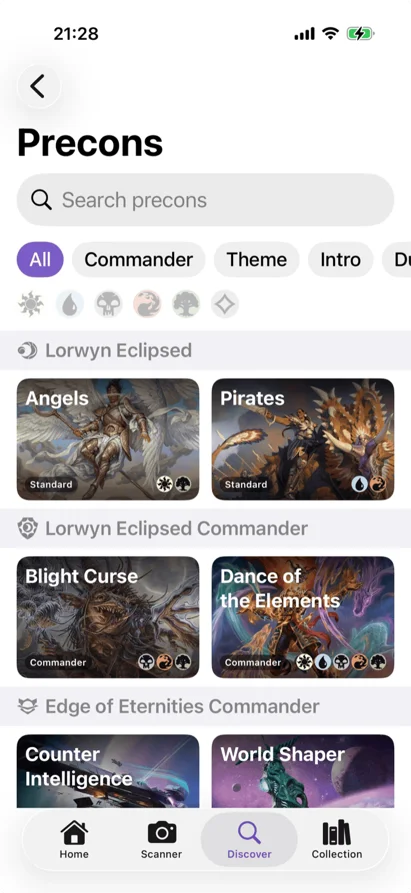
Then when you find duplicates of an old printing, check it before you sleeve it. That’s it. Two steps.
The one place I’d still spend money is the untapped fixing you can’t precon your way into. Shock lands are $7.37 for something like Hallowed Fountain and every one of them is getting reprinted in Star Trek in November, so I’d wait on those. Reflecting Pool at $15.71 is the real jump for three-plus color decks and no precon is handing you one.
For everything else, the honest first move is going through what’s already under the desk. Mine had eleven Command Towers and a card from 1995 in it, and I’d been quietly buying replacements for both.