Eight untapped lands, one creature, an empty hand. There’s a particular sort of Commander turn where you count everything twice, as though the second count might produce a spell. Commander mana sinks give those lands something useful to do, and I’d check the spare utility lands and repeatable abilities in a collection before ordering another expensive engine.
Card Kingdom’s recent look at white mana sinks got me thinking about the cards that sit beside the obvious upgrades. An ability tucked under a land’s mana ability is easy to forget while deckbuilding. Once it’s in play, you can use it without drawing another card. Whether the effect deserves a slot depends on what your deck can actually pay and what you expect to have on the battlefield.
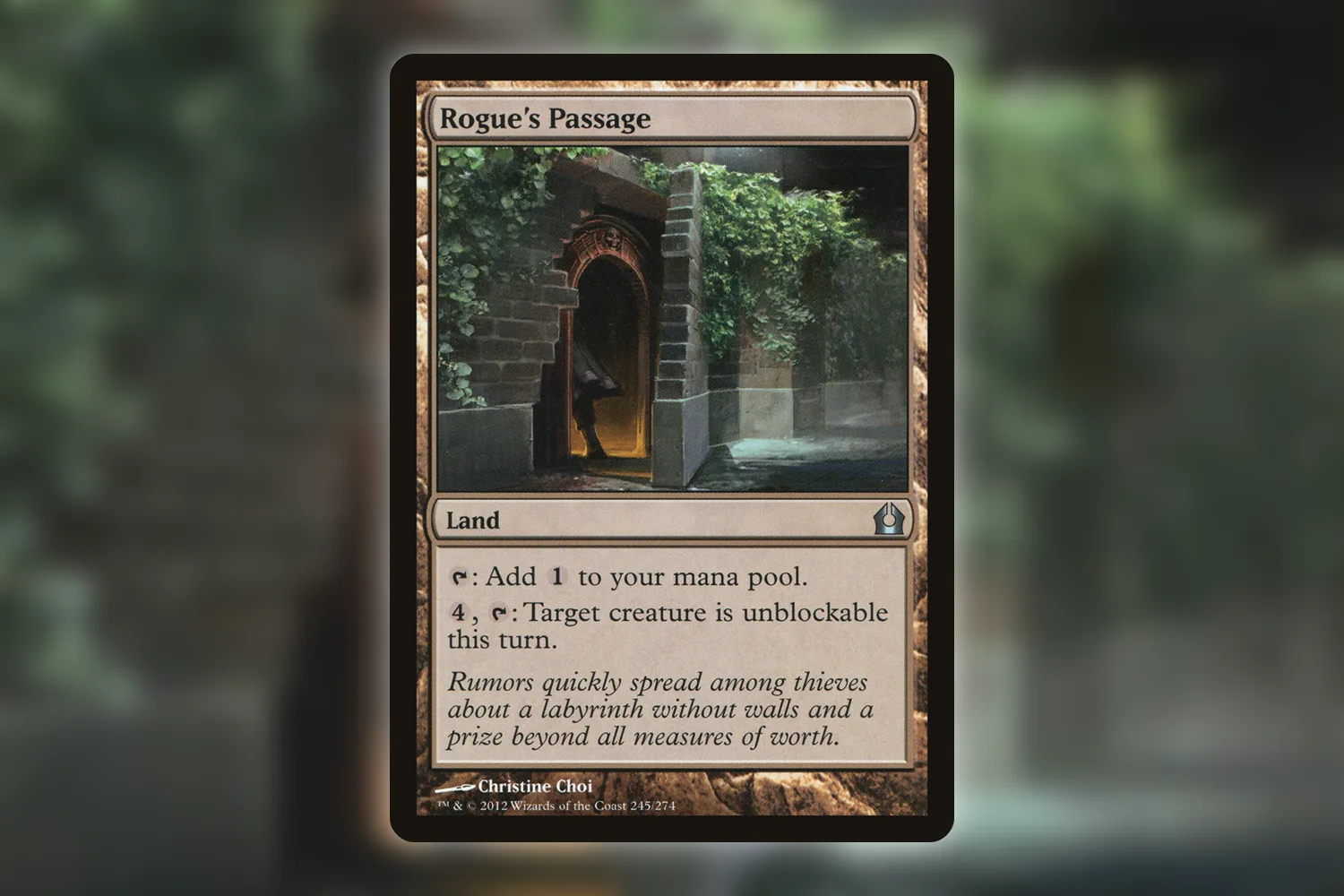
I once sorted a Return to Ravnica Rogue’s Passage into a stack of Islands late at night. Found it months later while counting basics for a draft. I have no explanation beyond the blue-grey artwork and a sorting system that apparently stopped reading words after midnight. There were two Swamps in there too.
Commander mana sinks have two different costs
Rogue’s Passage asks for four mana and a tap to make a target creature unable to be blocked that turn. That means four mana from somewhere else, plus the Passage itself. With ordinary lands producing one mana each, you’re committing five lands to that attack.
If you have five lands total, you’ve spent your entire land-based budget getting through. If you have eight, you’ve got three left for something else. I’d write “four plus this land” in a deckbuilding note because “four-mana ability” keeps making the turn look more generous than it is.
War Room has the same accounting wrinkle. Pay three, tap it, and pay life equal to the number of colors in your commanders’ color identity to draw a card. Four ordinary lands are occupied. A mono-color commander means one life per activation; three colors means three life, regardless of which colored permanents you currently control.
Bonders’ Enclave also costs three and a tap to draw. It requires you to control a creature with power four or greater before you can activate it. A creature-heavy deck might meet that condition routinely. After a wipe, you may be staring at the Enclave while trying to draw the creature that would turn it back on. The card-draw kit guide goes further into choosing draw that works from an empty battlefield.
Here’s the arithmetic I’d keep beside the candidates. These totals assume each land would otherwise produce one mana, with no cost reductions or untapping tricks.
| Card | Activation payment | Lands committed | What needs to be there |
|---|---|---|---|
| Rogue’s Passage | Four mana, tap the Passage | Five | A creature whose attack is worth the expense |
| War Room | Three mana, tap War Room, pay the required life | Four | Enough life to make the payment |
| Bonders’ Enclave | Three mana, tap the Enclave | Four | A creature with power four or greater |
| Kessig Wolf Run | X mana plus red and green, tap Wolf Run | X plus three | A creature that benefits from extra power or trample |
| Gavony Township | Two generic, green, white, tap Township | Five | Creatures to receive the counters |
Wolf Run gives a target creature +X/+0 and trample until end of turn. You can choose zero for X and still give it trample, paying red and green and tapping the land. That can be enough when a large attacker is being held back by a small blocker. With more spare mana, you can increase X.
Township puts a +1/+1 counter on each creature you control. Five lands committed to improving one creature can feel slow; spreading counters across six bodies is a much more appealing use of the same resources. Those counters remain after the turn ends. I’d lean toward Township in a deck that already makes several creatures, particularly if those creatures tend to survive a trip around the table.
The forgotten creature might fit better
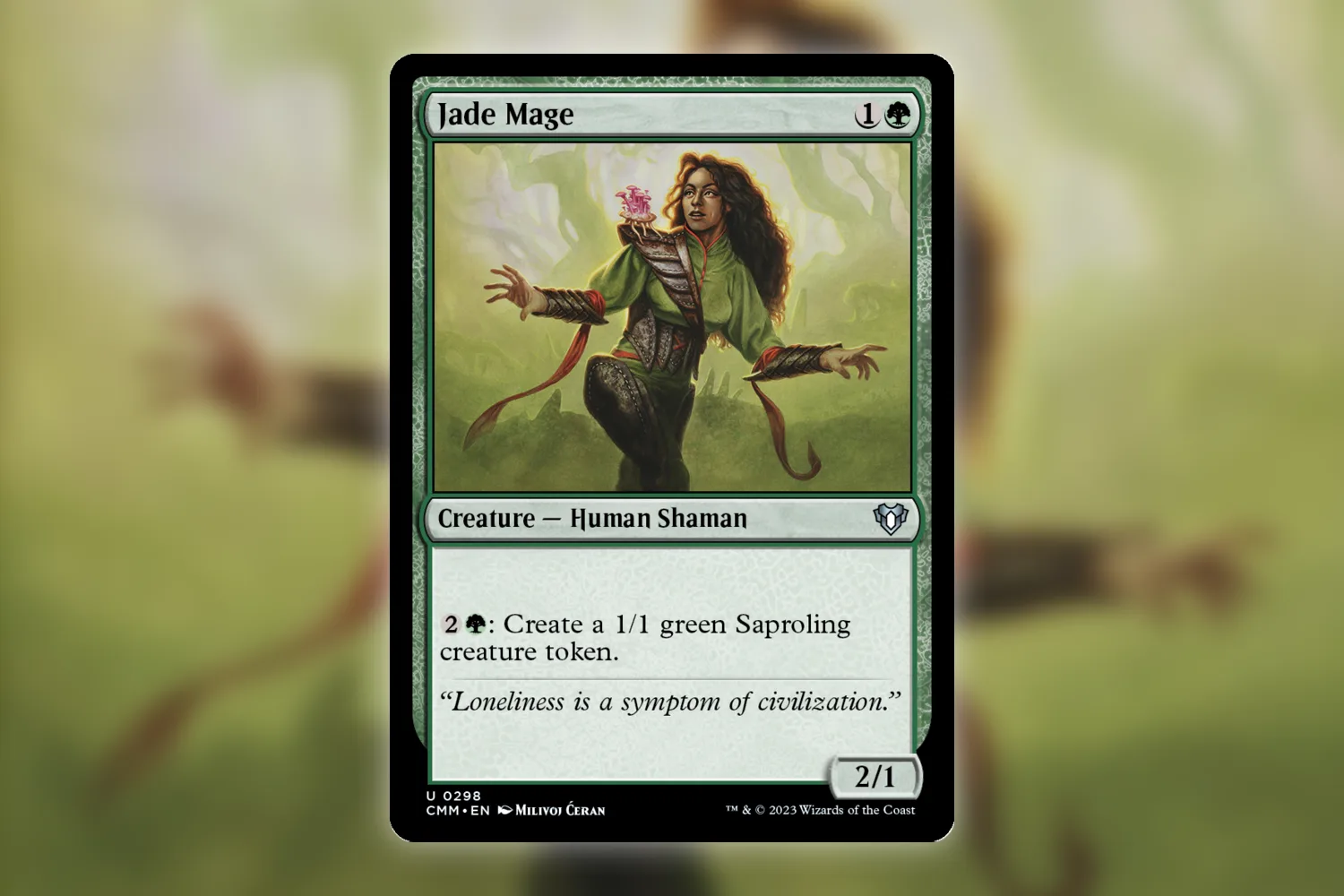
Jade Mage costs one generic and one green to cast. Its activated ability costs two generic and one green to make a 1/1 green Saproling. There’s no tap in that cost, so you can activate it repeatedly, including the turn the Mage enters if you have mana left.
Six spare mana produces two tokens. Three spare mana produces one. If your usual turn leaves exactly two mana unused, the Mage won’t spend it for you. This sounds painfully obvious written out, but I find “repeatable token production” much more seductive than “how often do I have three available?”
I’d look at Jade Mage in a deck that already rewards creatures entering, uses bodies for sacrifice costs, or makes small creatures relevant in combat. Spending three mana on a 1/1 is a harder sell when the deck has no further use for it. A token can block, of course. Sometimes that’s all you need for another turn.
Dawn of Hope gives white decks two payments to think about. The enchantment costs one generic and one white. Whenever you gain life, you may pay two to draw a card. Separately, three generic and one white makes a 1/1 white Soldier with lifelink.
The Soldier ability works whenever you have priority and can pay. The draw payment needs a life-gain trigger. You can’t simply pay two whenever you fancy a card, and creating the Soldier doesn’t gain life by itself. It has to deal damage, or you need another source of life gain. Even after that happens, you still need the two mana available when the trigger resolves.
In a deck already gaining life during normal play, Dawn can catch small amounts of spare mana. In a deck starting from nothing, you’re paying four for a body, arranging for life gain, then paying another two for a card. I’d be much more interested in the first situation.
Okay, you’ve found the enchantment. You own it. Lovely. Now put it beside the actual deck. Where’s the life gain? Oh, the one creature you cut last month. Right. Leave it out for now. Finding an owned card can make me weirdly determined to use it, even after the reason it might work has wandered off.
The basic land you removed was doing a job
All five lands in that table tap for colorless mana. Kessig Wolf Run still needs red and green to activate its second ability; Gavony Township needs green and white. Those symbols also give them red-green and green-white color identities for Commander deckbuilding. A land can look colorless and still belong outside your commander’s permitted colors.
For an eligible deck, the next question is which colored source leaves. Replacing a Forest with Wolf Run preserves the land count while reducing the number of lands that produce green. Adding several utility lands this way can leave a deck with plenty of mana and too few sources of the color its early spells require. EDHREC’s mana-base guide discusses the room mono-color decks have for these lands and how that space tightens as colored requirements increase.
I’d start with one change. Keep the removed basic beside the deck box. If the opening hands start producing awkward color combinations, it’s easy to reverse the swap without reconstructing last week’s list. The existing budget Commander lands article is useful for finding spare fixing if the mana base already needs attention.
I do wonder whether I’m being too cautious here. A deck that spends half its games drawing lands can afford some ambition. An occasional awkward opening might be an acceptable price for a land that turns a stalled board into a winning attack. I don’t know that trade for your deck. I’d want to see both kinds of turn before deciding the basic stays out.
Try the activation on an ordinary turn
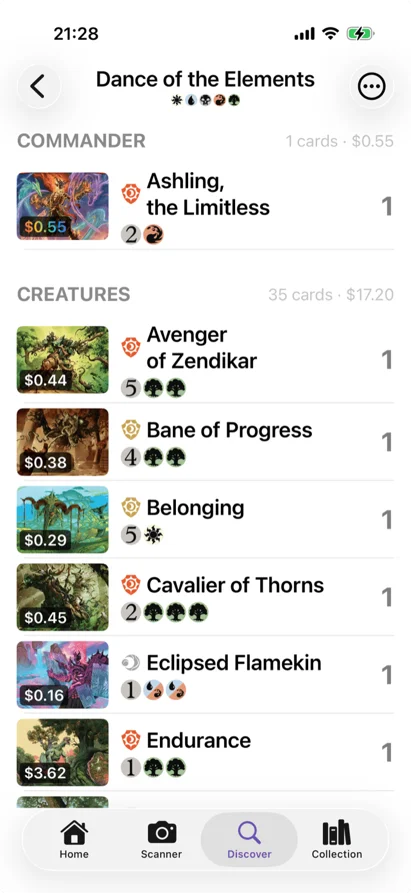
Pick the deck that actually floods, then look up these candidates in the collection you’ve logged in Eldwyn or your existing inventory. Check the physical copy’s location before moving it. A land in another assembled deck needs a deliberate swap; the guide to counting cards in decks covers that particular inventory trap.
For the next few games, I’d keep a tiny note beside the life pad: mana left unused, whether the candidate’s condition was met, and what you’d have given up to activate it. Three spare mana with no creatures makes a different case from seven spare mana behind a crowded battlefield. Waiting until the last opponent’s end step often lets you keep interaction available longer, provided the ability has no timing restriction and you still have what it needs.
There’s no obligation to spend the mana just because you can. Making a Saproling before your turn may be convenient; holding those three mana for the removal spell in your hand may keep you alive. Rogue’s Passage needs its payment during the turn you want to attack, before blockers are declared. Put the ability on the turn where it can help.
I’d try the one or two candidates whose conditions match those notes. If the spare card doesn’t earn its place, put the original back and record why. “Couldn’t keep a four-power creature around” will save you more time on the next build than another list of cards to buy.