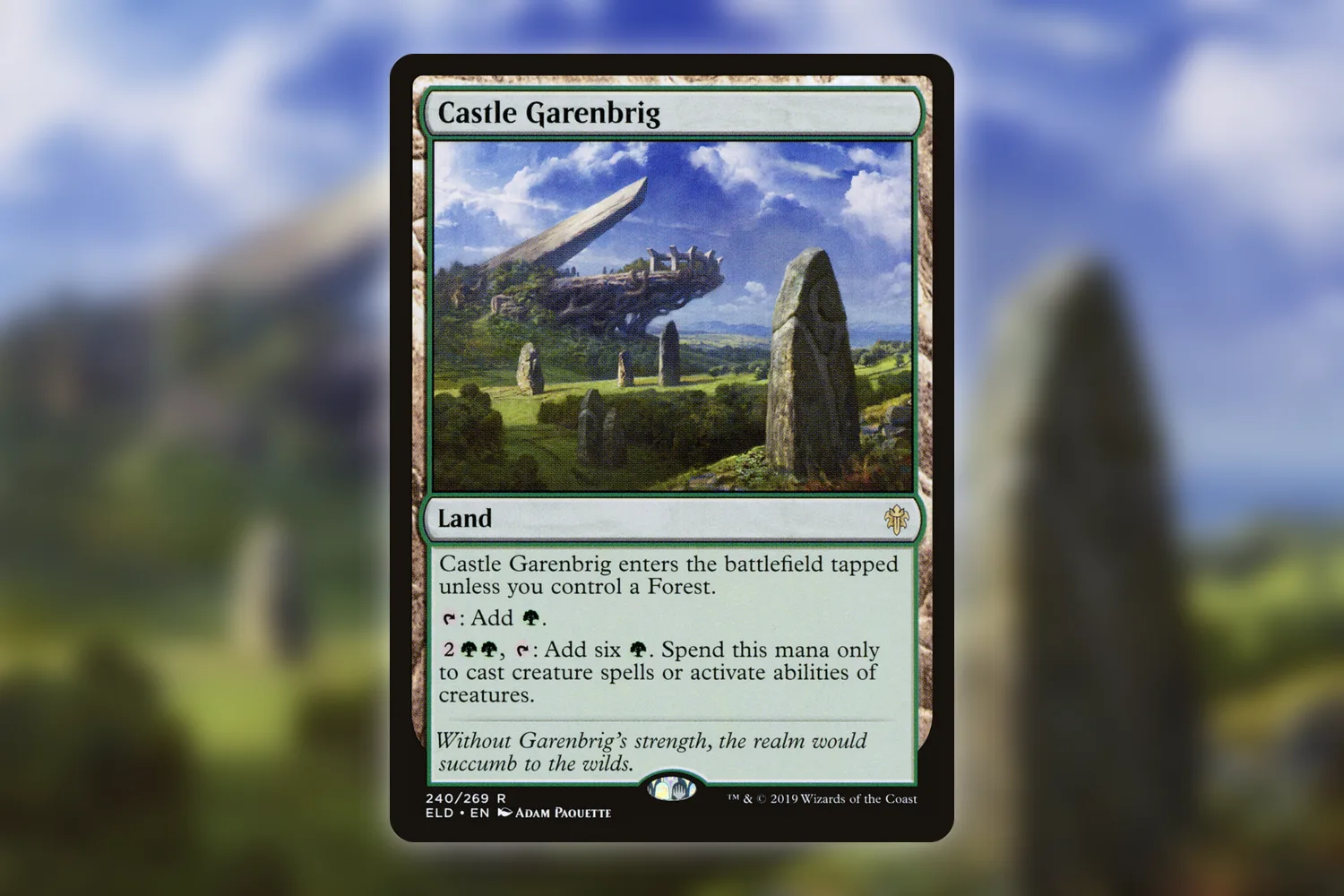
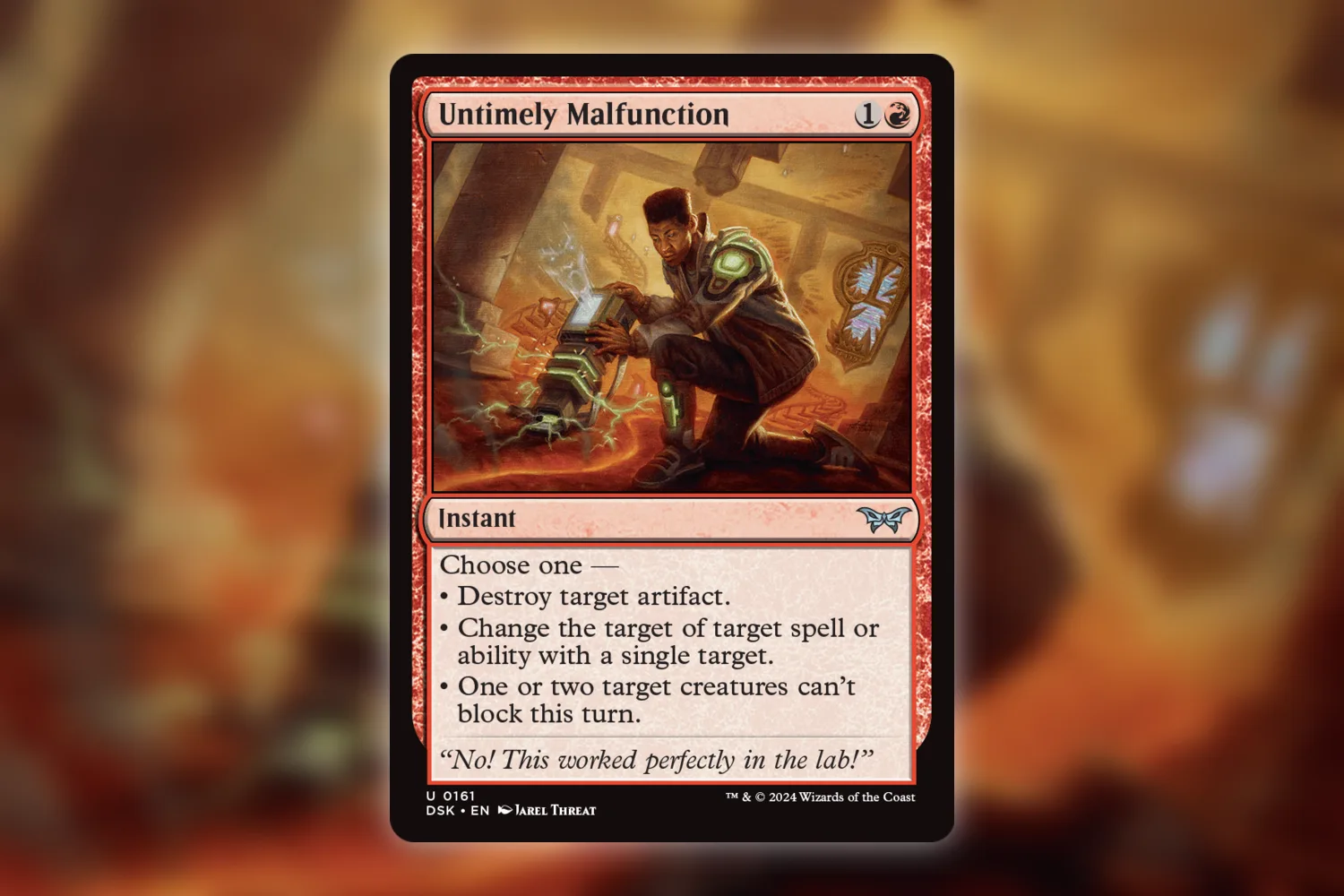
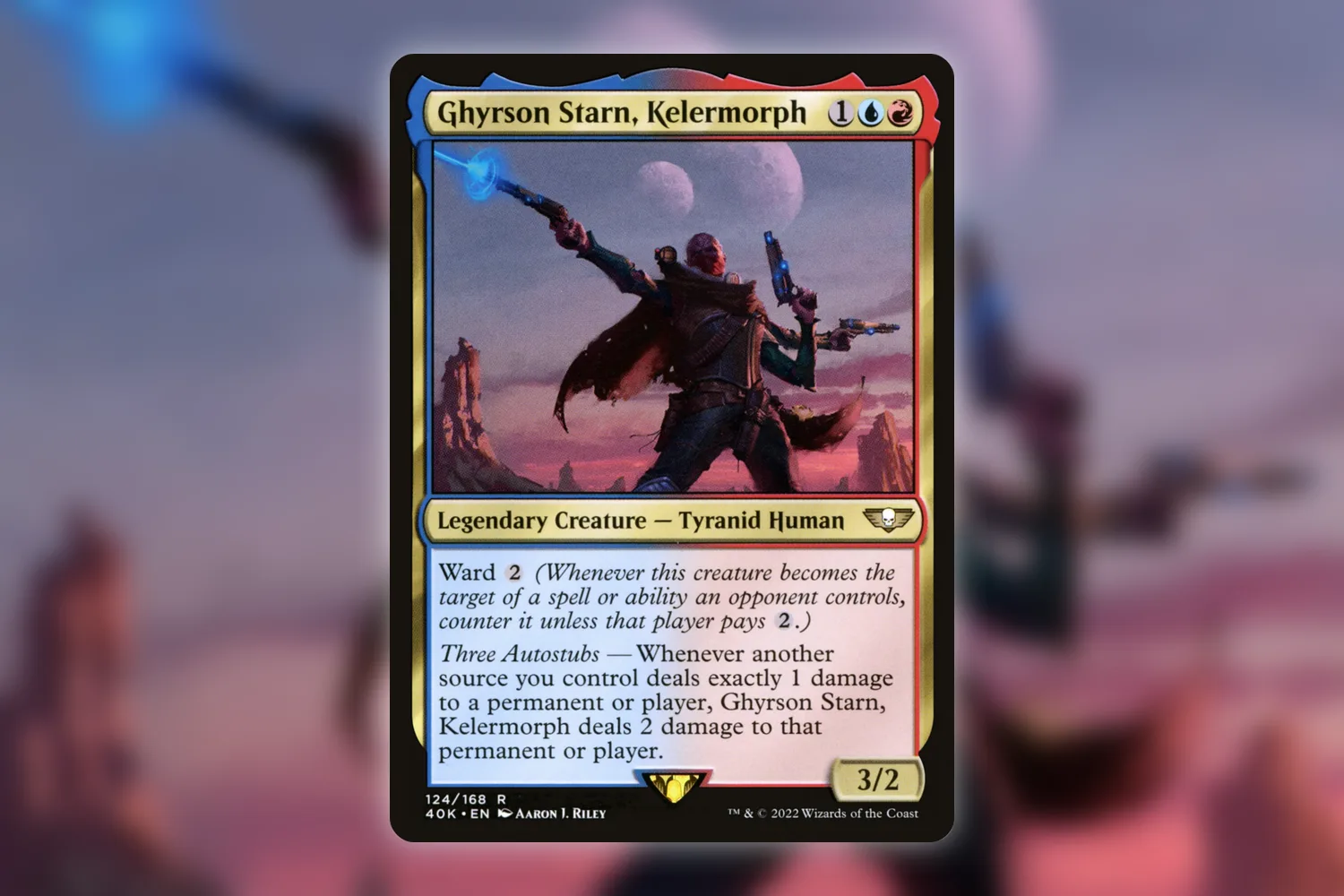
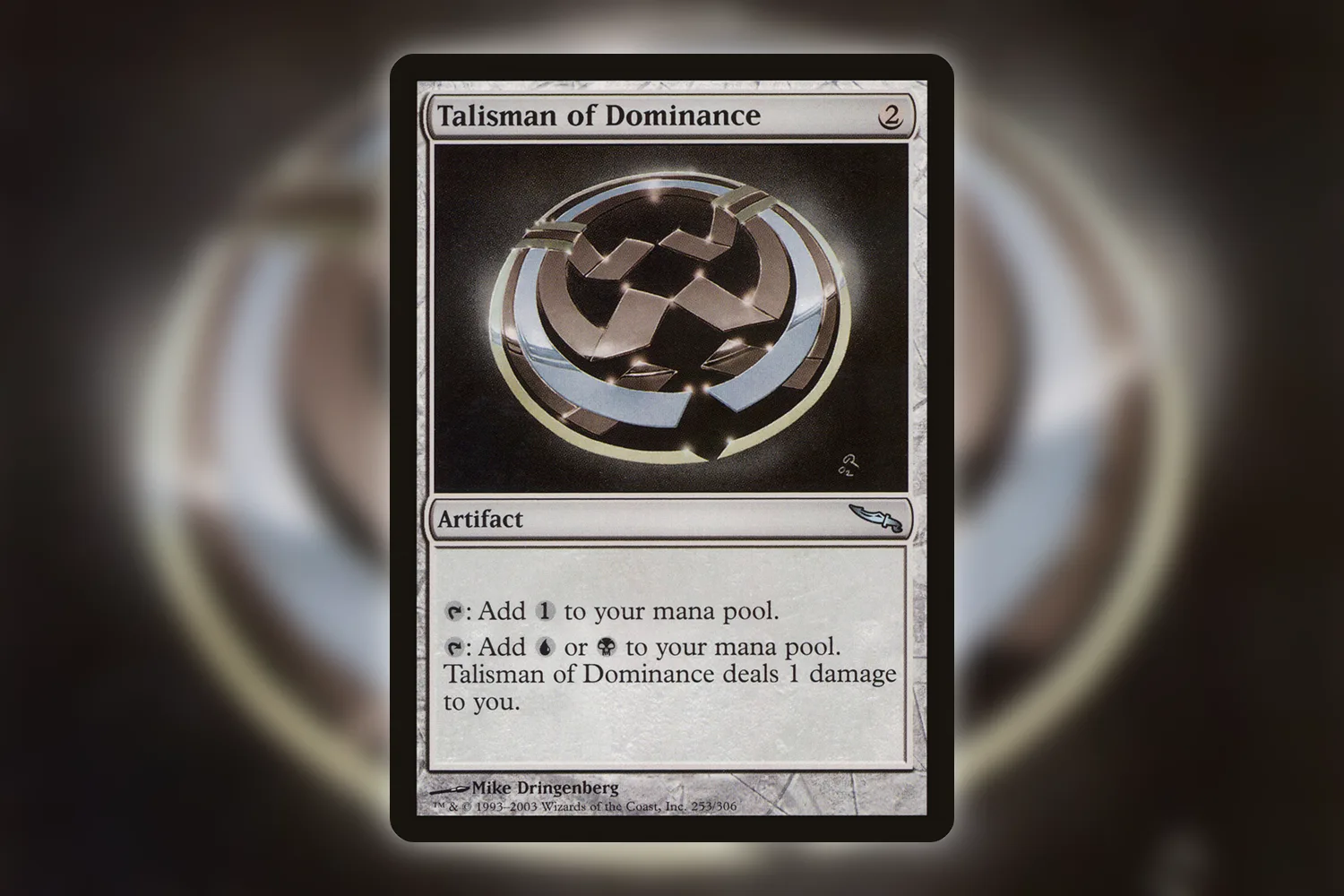
Talisman of Dominance costs $29.29 as a Mirrodin foil. The Reality Fracture Commander nonfoil is $0.47. Completing the MTG Talisman cycle can therefore be a small rummage through precon leftovers or a project where one shiny card costs more than the entire ordinary collection.
I priced both versions of that project on October 12, 2026: one inexpensive nonfoil of each of the ten cards, and one traditional foil from the set where each card first appeared. The totals are $4.63 and $148.05, respectively, before postage and tax. Picking the boundary before buying changes the shopping list quite a bit.
Completing the MTG Talisman cycle means ten cards
There are ten two-color combinations in Magic, and this cycle covers all ten. Each Talisman costs two mana. It can tap for colorless mana without hurting you, or for one of its two colors while dealing one damage to you. An ordinary copy has the same abilities as an original foil.
The first five appeared in Mirrodin in October 2003. They cover the allied color pairs. Modern Horizons supplied the five enemy-color pairs in June 2019, nearly sixteen years later. A complete original-set collection consequently contains five MRD cards and five MH1 cards. You can’t finish this particular project by collecting only Mirrodin.
I like the scale of it. Ten slots are enough to make a satisfying little collection, and few enough that you can name the missing cards without opening a spreadsheet. Compared with completing a full MTG set, the denominator stays mercifully still.
For the inexpensive version, any released paper nonfoil printing counts. For the original-foil version, the set and finish both have to match. Later retro-frame versions, Secret Lairs, and the Strixhaven college promos belong to other collecting targets. You can absolutely collect those instead; write that choice down before paying for the first one.
The whole shopping list, priced
These are Scryfall USD prices checked on October 12. For the inexpensive column, I compared the priced, already-released printings returned for each card and selected the lowest nonfoil figure. The foil column uses the original MRD or MH1 printing exclusively. A missing price wasn’t treated as zero.
The codes in each cell link to the exact printing. These are reference-price totals, rather than a checkout quote from a seller with all ten in stock.
| Card | Colors | Inexpensive nonfoil | Original-set foil |
|---|---|---|---|
| Talisman of Progress | White–blue | $0.30 (frc/64) | $27.09 (mrd/256) |
| Talisman of Dominance | Blue–black | $0.47 (frc/62) | $29.29 (mrd/253) |
| Talisman of Indulgence | Black–red | $0.47 (frc/63) | $27.52 (mrd/255) |
| Talisman of Impulse | Red–green | $0.41 (tdc/332) | $17.57 (mrd/254) |
| Talisman of Unity | Green–white | $1.01 (scd/284) | $14.29 (mrd/257) |
| Talisman of Hierarchy | White–black | $0.45 (fic/365) | $7.93 (mh1/233) |
| Talisman of Creativity | Blue–red | $0.45 (frc/61) | $11.41 (mh1/231) |
| Talisman of Resilience | Black–green | $0.41 (m3c/314) | $3.35 (mh1/234) |
| Talisman of Conviction | Red–white | $0.34 (msc/217) | $5.05 (mh1/230) |
| Talisman of Curiosity | Green–blue | $0.32 (drc/140) | $4.55 (mh1/232) |
| Total | All ten pairs | $4.63 | $148.05 |
Nine of the inexpensive copies are below fifty cents. Unity is the exception at $1.01, and even that leaves the whole cycle below five dollars in card value. Four of the selected copies come from Reality Fracture Commander, released this month: Progress, Dominance, Indulgence, and Creativity. If you’ve just opened Multiverse Reforged, check its contents against the list before ordering those cards separately.
Postage can overwhelm that $4.63 total. Chasing the lowest reference price on every individual card makes little sense if it produces ten envelopes. I’d happily take a slightly more expensive printing from a seller who also has the other gaps, or pull the lot from an LGS singles box. Compare the delivered total after you’ve chosen the cards.
The original foils have a different concentration of cost. Mirrodin’s five add up to $115.76, roughly 78% of the $148.05 project. Modern Horizons contributes $32.29. Dominance, Indulgence, and Progress alone total $83.90, more than half the bill for all ten.
That means getting seven out of ten can leave you with most of the spending still ahead. A nearly full binder page can be financially misleading in a very small collection.
The older foils are doing most of the work
An original Modern Horizons foil Curiosity is $4.55. An original Mirrodin foil Progress is $27.09. Both fill one slot, and both make two colors of mana, but their supply histories and printing premiums are very different. The total alone hides that split.
I wouldn’t use these numbers to claim old foils are appreciating, either. This is one dated snapshot. It tells us what Scryfall reports now, and it gives us a way to compare the collecting targets. It doesn’t establish what anyone paid last year or what a copy will sell for next week.
The art makes the original-set option more appealing to me than the arithmetic does. Mirrodin’s five are illustrated by Mike Dringenberg, while the Modern Horizons five are by Lindsey Look. Hipsters of the Coast’s report on Look’s original Talisman paintings describes the physical models she made as references, using painted clay and Swarovski crystal. I like knowing there was an actual little object involved, though that may just be my weakness for tiny impractical things.
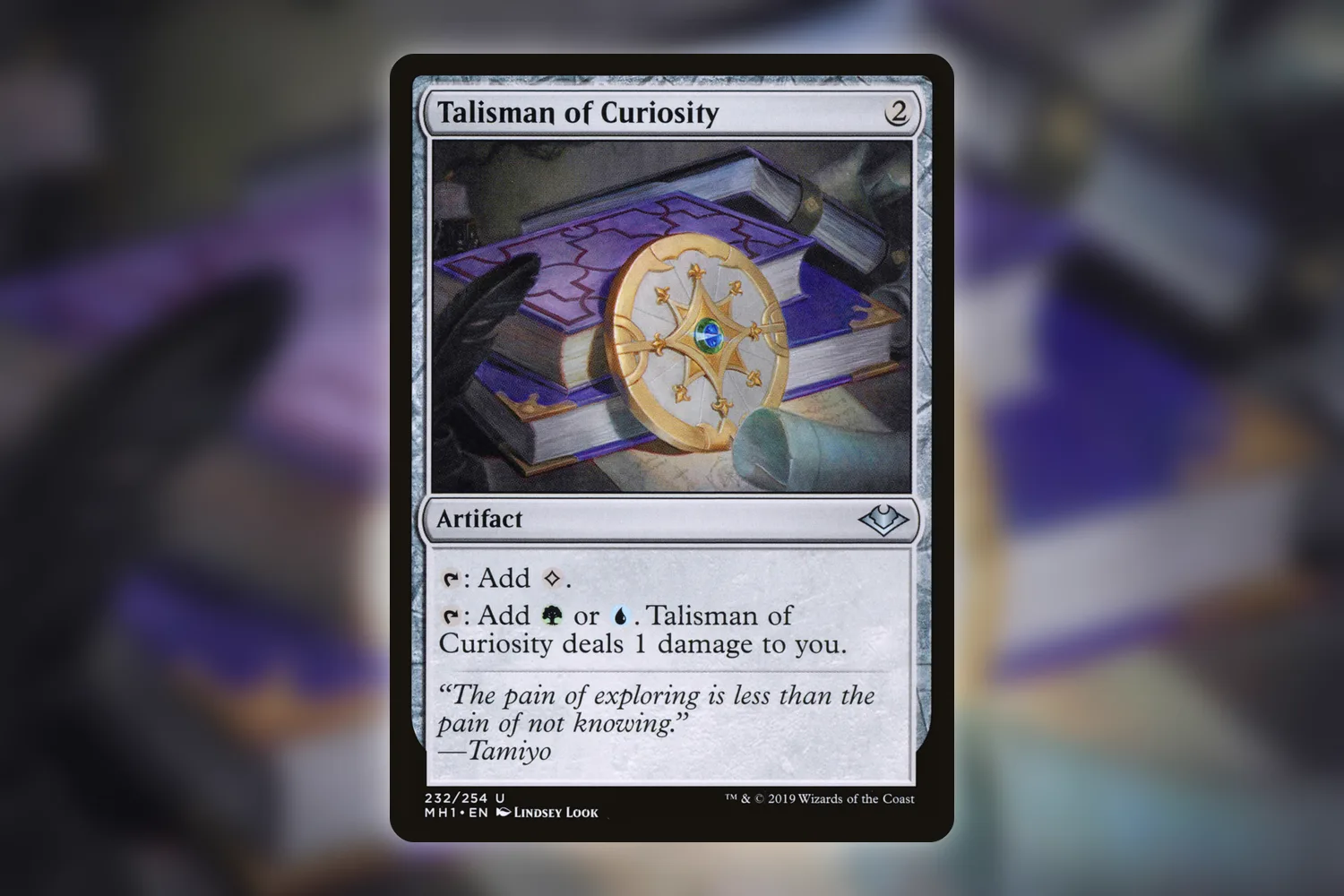
Calling the inexpensive cycle the sensible choice is easy. Then I look at the original artwork together and start wanting the foils anyway. A matching collecting rule has its own appeal, even across two sets. I still think I’d fill the ordinary ten slots first, but I’m considerably less firm about that after looking at Curiosity again.
There’s also the condition problem. A foil from 2003 has had plenty of time to acquire scratches, cloudy surfaces, or edge wear. If you want all five Mirrodin cards in a consistent condition, a reference-price sum won’t guarantee that the copies you like are available at those numbers. Ask for clear front and back photographs when the condition makes a difference to your purchase. A cloudy foil can look respectable in one photograph and rough in another.
I used a Mirrodin Dominance at a kitchen table in 2004 and carefully subtracted a life every time I tapped it, including for colorless. A friend eventually asked why I was announcing my life total so often. I’d been making the card worse for an entire evening and feeling very responsible about tracking it. Reading the first ability would have helped.
The Codex Bundle’s college Talismans have their own artwork and foil appeal, but owning one doesn’t fill an original MH1 foil slot. It does fill the corresponding card-name slot if you’re collecting one playable copy of each. Keep those two answers separate when you’re checking the binder.
Ten names, then ten specific slots
I’d make a checklist with a row for each full card name. Beside it, record the printing you own, its finish, and its location. For an ordinary cycle, the first two fields mainly help identify and value the copy. For original foils, they decide whether the slot is complete.
Here’s a hypothetical Curiosity entry: Aetherdrift Commander, DRC 140, nonfoil, in a green-blue deck. That completes an any-printing Curiosity slot. If the target is MH1 232 in foil, Curiosity remains on the want list. The card in the deck is useful ownership information, but buying an MH1 nonfoil would still leave that foil slot empty.
So. You search for “Talisman.” There are six results. Great, six out of ten? Maybe. Open them. Three might be Dominance. One might be a card whose name happens to contain the word. You have to count the actual ten names once. After that, the list gets easier to maintain.
Start with your precon leftovers and the decks you’ve kept sleeved. In Eldwyn, check the matching names and printings, then note where the copies live. Before purchasing, run the missing-card list against what you already own. A Talisman in an active deck still belongs to you; decide whether that copy counts toward the collection or whether you want a separate binder copy.
For example, suppose an original-foil collector already owns all five MH1 foils and Mirrodin Unity and Impulse. Today’s missing-card subtotal is $83.90 for the remaining three Mirrodin foils. Someone who owns seven arbitrary nonfoils has a completely different gap list. Seven out of ten is only useful when you know which seven.
Keep a dated price beside the missing slots if you’re spreading the purchases out. You can then compare a future offer with a real earlier record, rather than a memory that every Talisman used to cost about a dollar. I wouldn’t feel obliged to buy the expensive three together. Check the condition, check the delivered total, and leave the spaces empty until copies you want turn up.
And if you’re using a nine-pocket page, decide where the tenth one goes before you start arranging them. That part of this project is annoyingly resistant to budgeting.