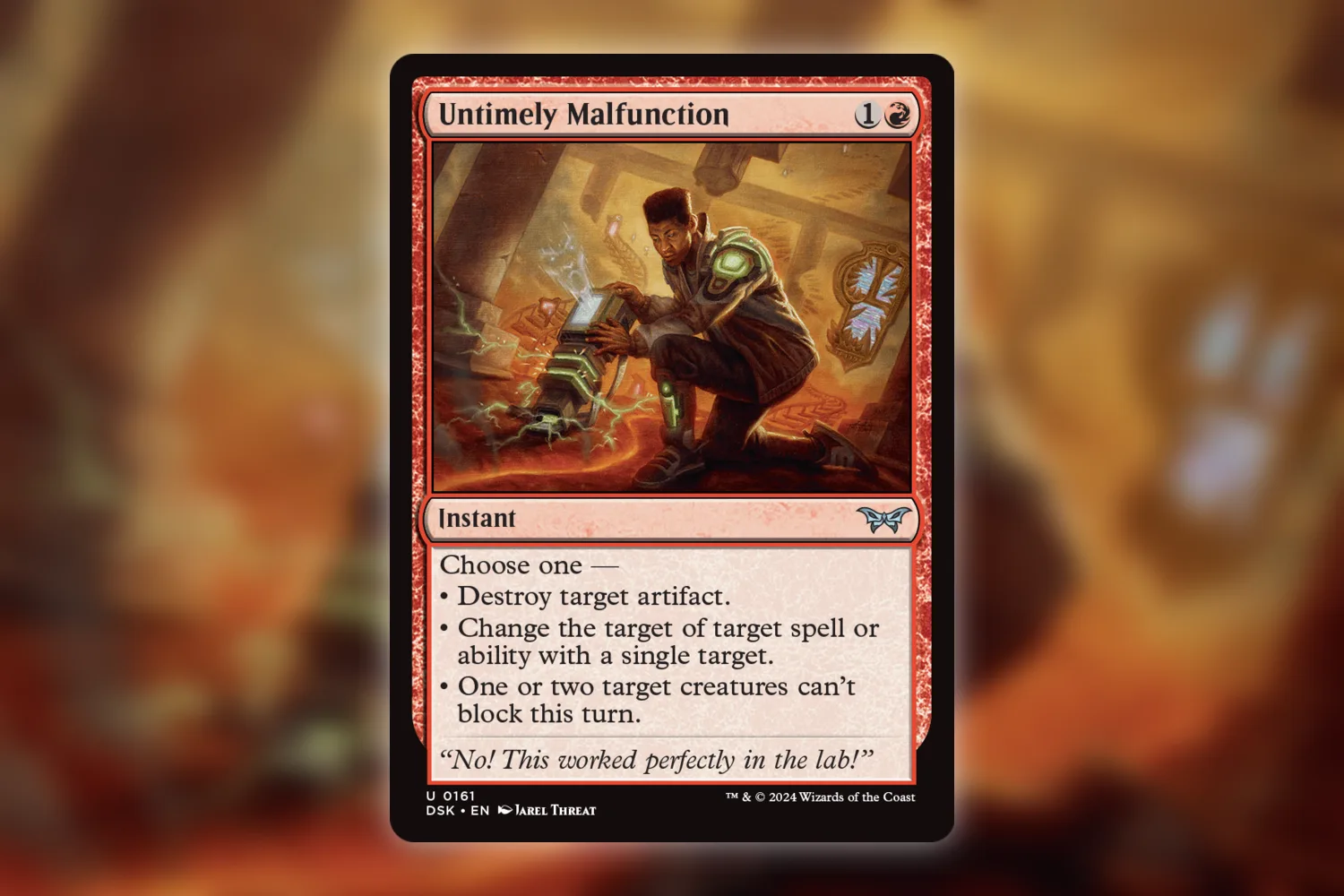
A nine-dollar uncommon is an irritating thing to discover after you’ve carefully pulled every mythic from a draft box. The Duskmourn valuable cards list has one: Untimely Malfunction, $9.10 for the ordinary nonfoil copy as I check it on October 9. It’s the kind of red instant I’d have put behind a divider marked “removal” and then forgotten about until I needed an artifact answer.
Duskmourn released on September 27, 2024, according to Wizards’ collecting guide. Two years is plenty of time for a draft pile to become a storage system you no longer understand. October seems like a reasonable excuse to open the haunted-house box again, preferably before buying cards that are already in it.
I’d spend the first pass looking for useful regular cards, then check the treatments on anything shiny or oddly framed. This is a current-price sorting exercise. I don’t have a consistent release-day price record for these printings, so I’m leaving the “which cards beat their preorder price” argument alone.
Duskmourn valuable cards I’d pull first
The table below uses specific regular-frame DSK printings. Prices are Scryfall’s USD reference values checked October 9, 2026; nonfoil and foil are separate prices for the same collector number. Condition, shipping, fees, and an actual buyer will affect what you get paid. If you’re preparing a sell pile, the difference between market value and a buylist offer still applies.
| Card | DSK number | Nonfoil | Traditional foil |
|---|---|---|---|
| Overlord of the Balemurk | 113 | $18.82 | $21.63 |
| Valgavoth, Terror Eater | 120 | $18.23 | $25.94 |
| Enduring Tenacity | 95 | $14.87 | $14.54 |
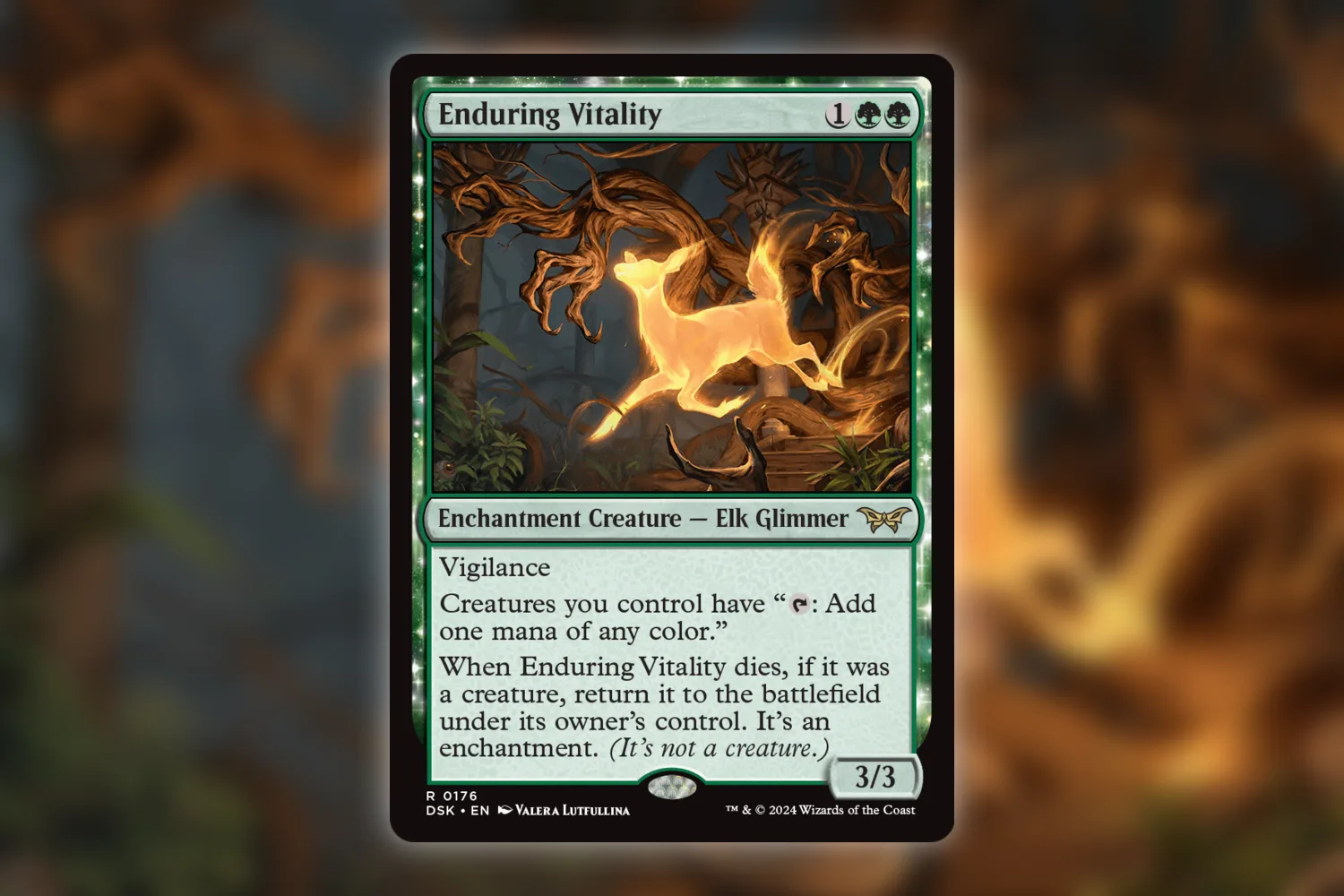
| Enduring Vitality | 176 | $14.32 | $20.32 |
| Blazemire Verge | 256 | $10.95 | $11.25 |
| Gloomlake Verge | 260 | $10.80 | $11.01 |
| Untimely Malfunction | 161 | $9.10 | $10.71 |
| Enduring Curiosity | 51 | $6.93 | $7.42 |
| Thornspire Verge | 270 | $5.94 | $5.29 |
This is a short pull list, rather than an exhaustive ranking. It includes an uncommon, three enchantment creatures, three lands, and two obvious mythics. If you’ve sorted by rarity already, they’re probably in four different places.
Untimely Malfunction costs one generic and one red mana and gives you three choices: destroy an artifact, redirect a spell or ability with a single target, or stop one or two creatures blocking for the turn. The redirect mode is the reason I’d read it twice before putting it in a deck. A spell with multiple targets falls outside that wording. There’s enough flexibility here to justify checking whether you own a copy, without pretending every red deck needs one.
The card text explains the utility. It doesn’t, by itself, explain exactly why the market has settled at nine dollars. I don’t have the sales data to assign some percentage of that price to Commander, another percentage to competitive formats, and the rest to people discovering a card they missed. I’d be suspicious of a confident explanation that arrived without any of those numbers.
I once brought a Duskmourn draft deck home with all the red cards still sleeved because I’d decided the deck was too good to dismantle. It had gone 1–2. I left the lands in as well, which gave it the impressive storage efficiency of a brick. There are probably worse ways to preserve a mediocre evening, but I haven’t tried them.
The Enduring creatures have jobs outside a set binder
Enduring Vitality is the one I’d check against creature-heavy green decks first. It gives your creatures the ability to tap for a mana of any color. EDHREC’s green set review identified its usefulness for creature-token strategies when the set came out. That’s a functional reason to keep a copy even if the price later moves around.
There’s a limitation worth remembering before you picture a freshly made token army paying for everything: creatures generally need to have been under your control since your turn began, or have haste, to use an ability with the tap symbol. Vitality doesn’t grant haste. Vitality itself has vigilance, so once it’s able to tap, it can attack and still make mana afterward if it survives.
Enduring Tenacity converts each life-gain event into that much life loss for a targeted opponent. In Commander, you choose which opponent receives that trigger; the ability doesn’t automatically drain the whole table. Enduring Curiosity draws a card when a creature you control deals combat damage to a player. Multiple creatures connecting can generate multiple triggers, which gives a deck full of small attackers a reason to want it.
All three have the same useful recovery clause. When one dies as a creature, it returns under its owner’s control as an enchantment, with its ongoing ability available. Exile removal bypasses that death trigger. Once it’s returned as an enchantment, destroying it again won’t repeat the trick unless something has made it a creature.
I’m inclined to keep my first copy of a card with a clear job and sort spare copies into the trade pile. Then again, “a clear job” can become a very generous phrase when I’m trying to justify keeping everything. A deck you actually have is a better test than a deck you’ve been meaning to build since 2024. Running a want list against your collection gives the keep pile a little more discipline.
Those Verge lands deserve the same check. Blazemire taps for black unconditionally and adds red once you control a Swamp or Mountain. Gloomlake starts with blue and checks for an Island or Swamp to add black. Thornspire starts with red and checks for a Mountain or Forest to add green. The Verge itself lacks those basic land types, so a lone Verge doesn’t satisfy its own condition.
A mana base with lots of the relevant typed lands can make good use of them. One padded with utility lands may need a closer look. I’d set the lands aside while sorting and decide where they belong after looking at the actual deck, rather than upgrading three mana bases from memory.
A foil label won’t identify the expensive elk
Enduring Vitality #176 is $14.32 nonfoil and $20.32 in traditional foil. The English Japan Showcase #394 is $83.86 in foil. The English fracture-foil #404 is $340.27. Those are separate collector numbers with separate markets, even though the rules text is the same.
Wizards’ collecting guide places the Japan Showcase treatments in Collector Boosters and distinguishes traditional foil from fracture foil. If your pile came entirely from Play Boosters, those particular Collector Booster treatments aren’t something you should expect to find. A mixed collection bought secondhand can contain either, which is one reason its original box tells you so little.
Okay. The elk is shiny. Fine. Which number? Turn the card toward the light, find the tiny line at the bottom, check the finish. If the app matched the familiar artwork, take another second. A picture of the right creature still leaves room for the wrong version.
The ordinary foils in the table also resist the lazy “foil means more” assumption. Thornspire’s foil reference price is $5.29 against $5.94 nonfoil, and Tenacity #95 is $14.54 foil against $14.87 nonfoil. Small gaps can reflect available market data and can reverse. I’d record the finish you actually own and use its current quote, even when the result feels backwards.
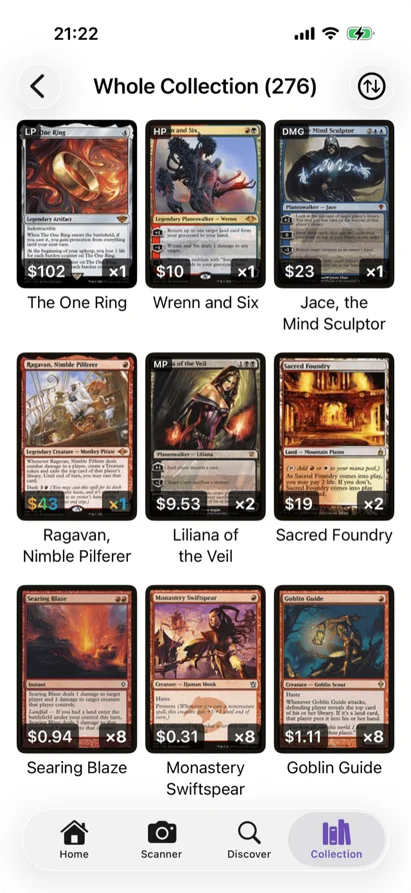
For the physical pass, pull the named cards without stopping to price every common. Keep alternate frames and unusual foils together until you’ve checked their collector numbers and set codes. DSK is the main set; DSC identifies the Commander release, and SPG identifies Special Guests. Cards opened from the same product can belong to different database sets.
Scan the keep and trade piles into Eldwyn, check the matched printing and finish, then record where each copy ended up. For a dated comparison, save a separate note or export with the prices you used today. I wouldn’t use the October table as a permanent sticker on the box lid. Write the card names there if you want a reminder; look the prices up again when you’re ready to trade.