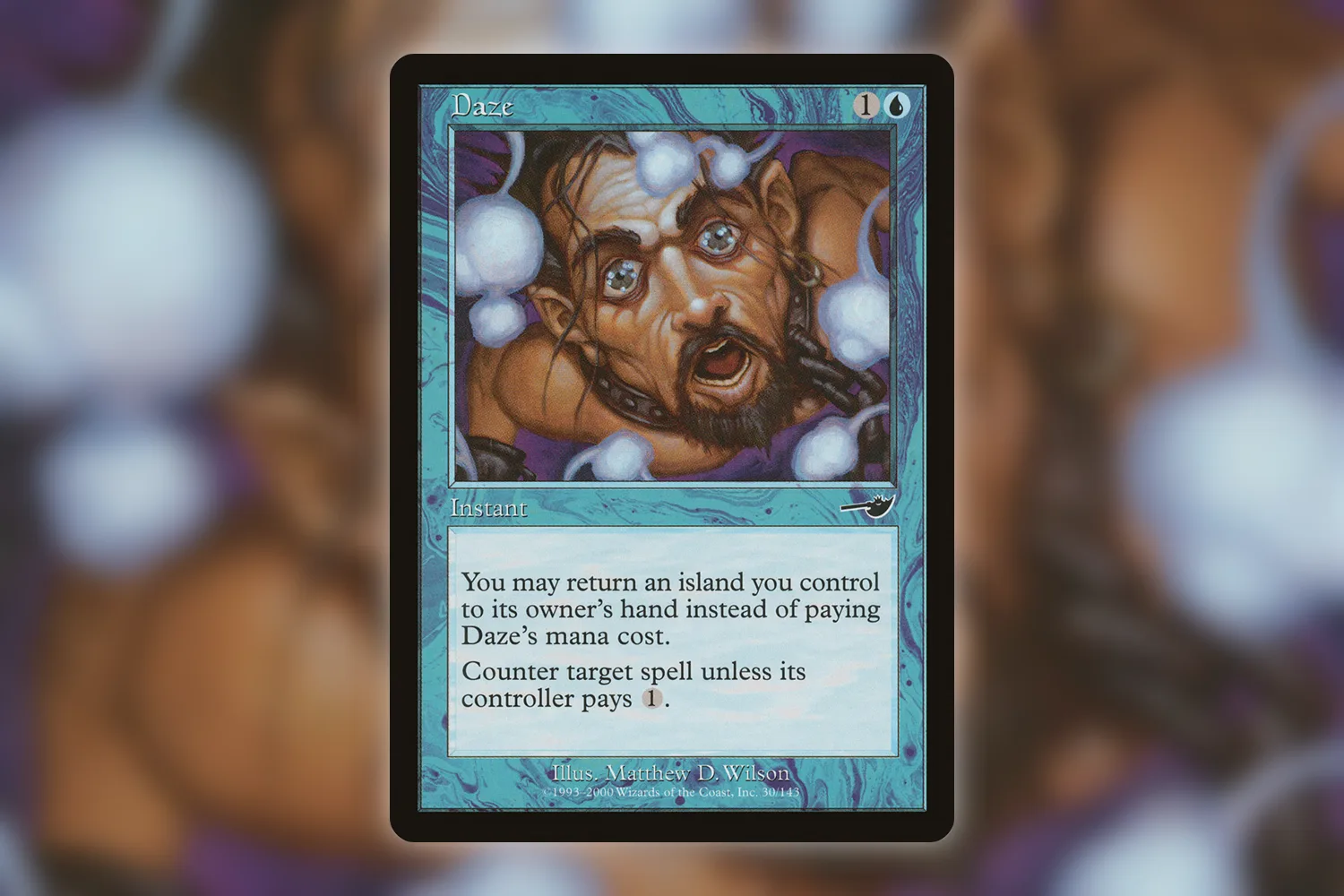
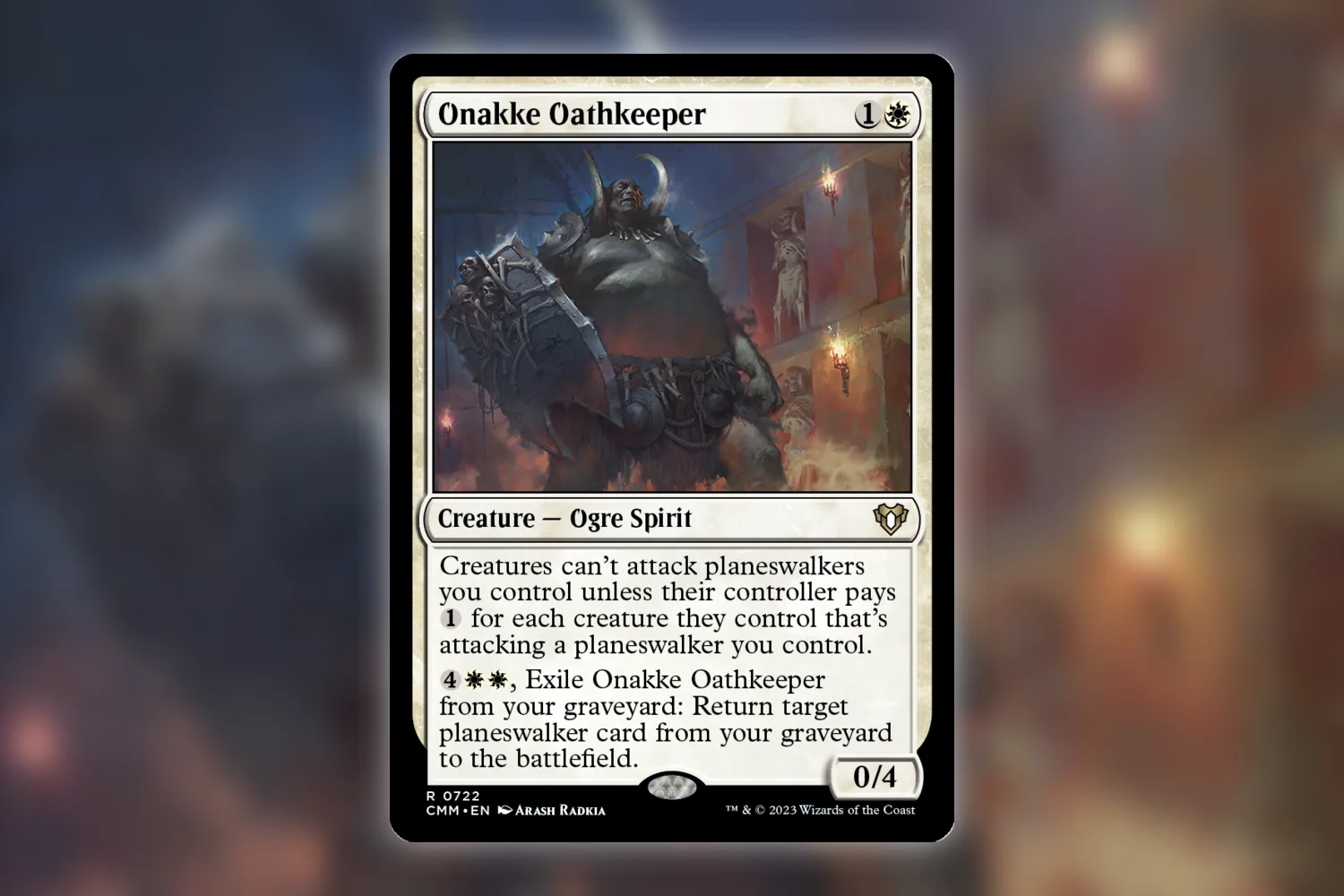
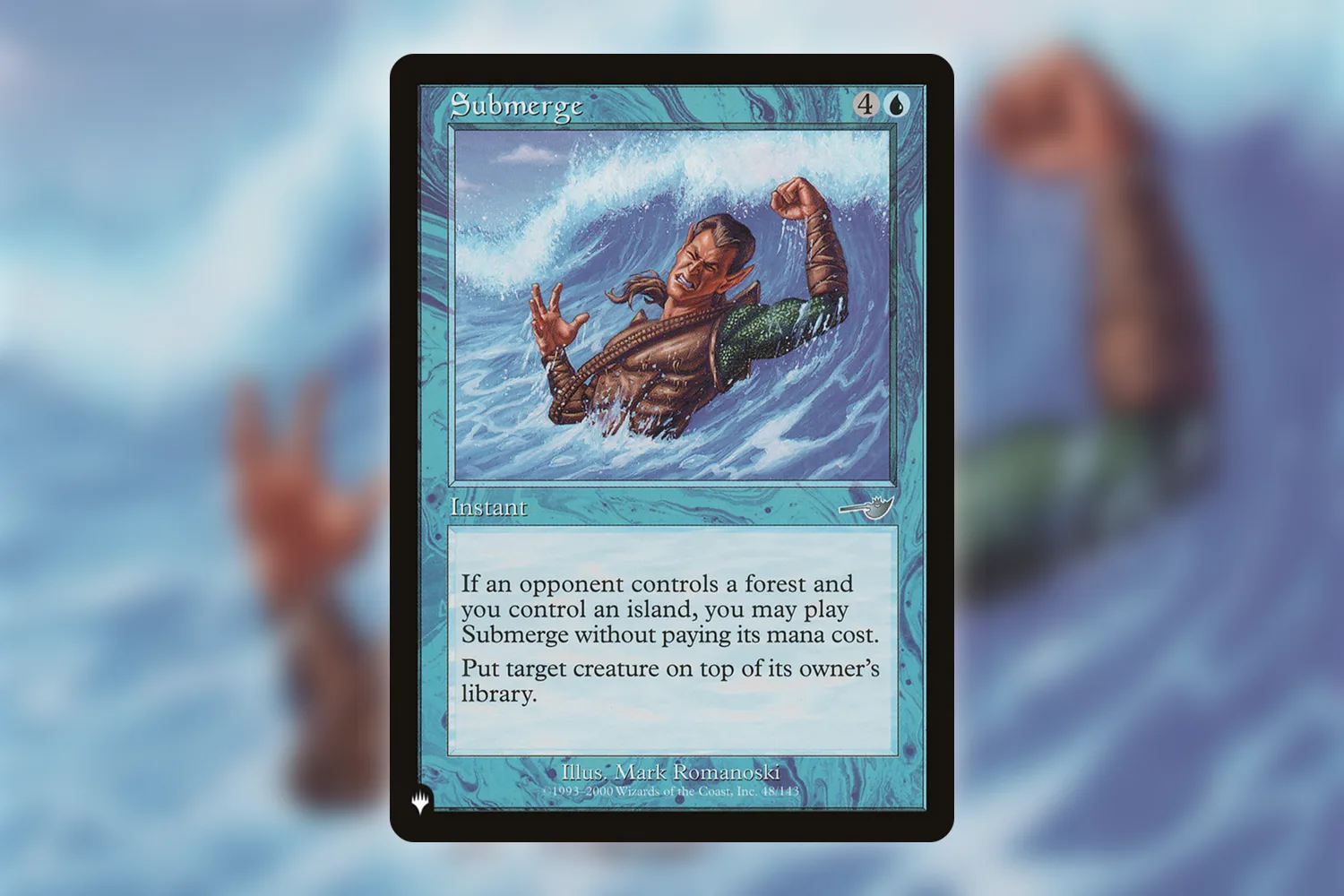
There’s a French Serra Angel in the front pocket of my rare binder and I don’t actually know what it’s worth.
Scryfall quotes it at $39.00. Scryfall also quotes it at €6.10. Same card, same 1994 Foreign Black Border print run, two numbers that disagree by a factor of six. The dollar figure comes from TCGplayer, where some American seller has exactly one and prices it like a curio. The euro figure comes from Cardmarket, where European players have been passing these around since before I owned a deck box. Neither number is lying. They’re describing two different rooms.
That gap is the honest answer to most questions about foreign-language MTG cards, and it took me an embarrassingly long time to understand it.
The Japanese Liliana problem
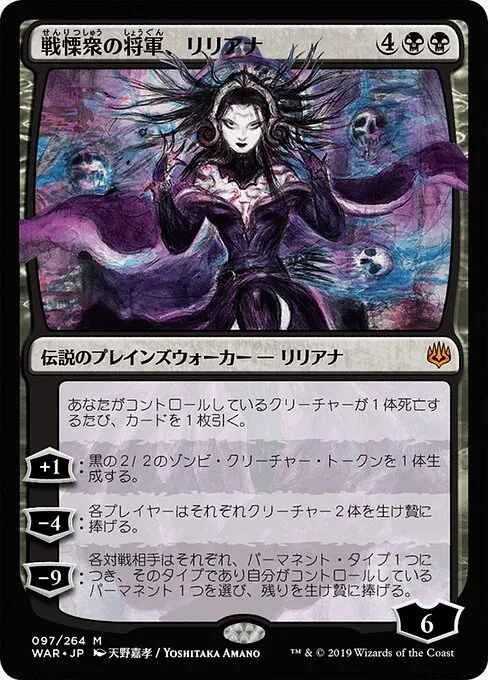
War of the Spark shipped a run of Japanese-exclusive alternate-art planeswalkers. Scryfall tags them jpwalker internally. Yoshitaka Amano drew the Liliana, and it looks like nothing else in Magic.
English Liliana, Dreadhorde General: $9.15. The Japanese alternate art: $112.06.
Twelve times. Which means Japanese cards carry a premium and you should go dig through your binder immediately. Except Nicol Bolas, Dragon-God is $4.57 in English and $3.17 as a Japanese alt-art. Teferi, Time Raveler is $6.20 English and $4.24 Japanese. Two of the most recognisable cards in the same subset, and the Japanese ones are the cheaper ones.
The foils flip it back around. Japanese foil Bolas is $39.24. Japanese foil Teferi is $87.17. And the Amano Liliana in foil, priced in euros over on Cardmarket, is €1,455.41, which I read three times before I believed it.
So the premium isn’t attached to the language. It’s attached to one card, in one finish, wearing art that exists nowhere else. Liliana clears a hundred dollars because Amano painted her and because that painting was never printed in English. Bolas doesn’t, because the Japanese Bolas art is good and the English Bolas art is also good and nobody is chasing it.
Mystical Archive did it again, sort of
Numbers, quickly. English Demonic Tutor from Strixhaven’s Mystical Archive, collector number 27: $85.62, foil $135.25. The Japanese printing, collector number 90: $303.65, foil $527.24. Swords to Plowshares runs $5.46 for English #10 and $28.58 for Japanese #73.
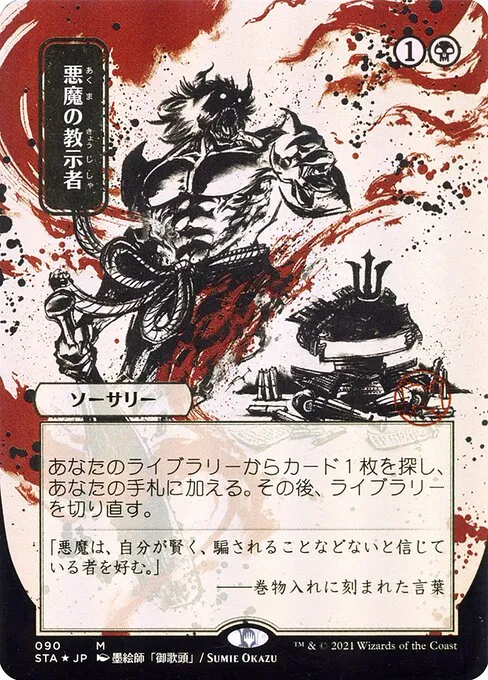
The Mystical Archive cards at least give themselves away. Japanese Demonic Tutor is collector number 90 and the English one is 27, printed right there along the bottom edge, which is the whole reason I’ve argued before that the collector number tells you which printing you’re holding.
The War of the Spark planeswalkers do not cooperate. Look at the bottom of that Japanese Liliana above: 097/264. Now look at an English copy: 097/264. Identical. Scryfall bolts a star onto the number in its own database, 97★, purely to keep the two apart, and the physical card offers you nothing. The art is different and the text is in Japanese, and that’s your entire set of clues on a card worth twelve times its English twin. So much for the collector number.
Where foreign-language MTG cards stop having prices
Sol Ring, Commander 2021. English: $1.76. German, French, Italian, Japanese, Korean, Russian, Portuguese, Spanish, and both Chinese printings: no price. Not zero. Null. Scryfall has the card, the art, the oracle text, the release date, and a completely empty price field.
Mana Drain from Legends, English, is $249.61. Italian Legends Mana Drain: nothing. The Tabernacle at Pendrell Vale, a Reserved List card that runs $2,899.99 in English, has no price attached to its Italian printing anywhere Scryfall can see. Those Italian cards exist. People own them. They sell. There’s a rule of thumb that’s been floating around the finance forums for a decade or more that Italian Legends trades at roughly 70% of the English equivalent, which sounds about right and which nobody can really prove, because the sales happen in European shops and eBay auctions and DMs between two guys who already know each other.
So, yeah. Pricing. You open a shoebox of somebody’s old Italian cards and every tool you own just shrugs at you. TCGplayer doesn’t stock them. Your collection app matches on card name plus set code, finds Legends, finds Mana Drain, shows you $249.61, and looks very confident about it. Mine does this. I’m not thrilled about it.
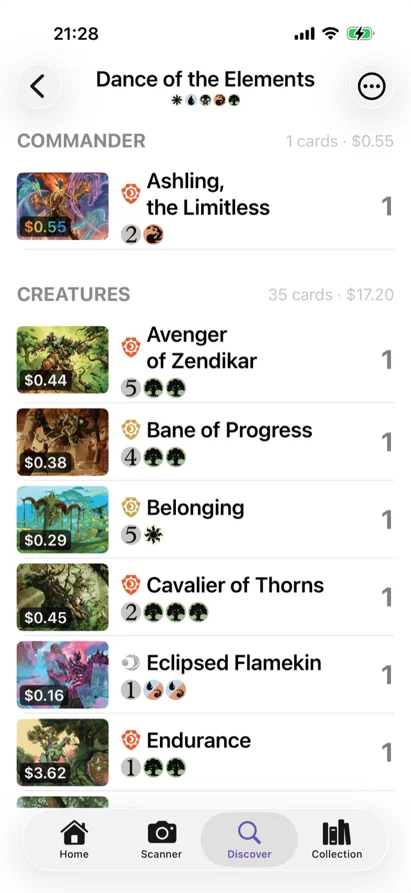
I keep going back and forth on whether the empty field is a bug at all.
A price is a claim about liquidity. It says somebody will hand you this many dollars, roughly now, without much argument. If no marketplace will quote a number for your Italian Tabernacle, then in a real sense the number doesn’t exist yet, and manufacturing one by borrowing the English figure is exactly the sort of self-flattery I’ve complained about when pricing a collection. Null is information. Null is the database declining to make something up.
Except that’s too tidy, and I don’t think I believe it. Null also lands on every Japanese Sol Ring ever cracked out of a Japanese precon, cards with an obvious and busy market, and folding those into your collection total at zero is its own species of lie. My French Serra Angel is not worth nothing. It’s worth somewhere between six euros and thirty-nine dollars, and I would much rather look at that range than at a blank.
What I do with mine
If it’s an ordinary translation of an ordinary card, I treat it as a play card and stop thinking about it. A German Llanowar Elves is a Llanowar Elves. (They’re legal in every sanctioned event, incidentally, as long as you’re not using the language to mislead an opponent about what the card does. The head judge gets the final say, and the head judge has heard this question before.)
If it’s Japanese-exclusive art, I price it as its own printing, foil and non-foil separately, and I check Cardmarket before I check TCGplayer. The European market is deeper for almost everything printed outside English, and for the old black-bordered stuff it’s the only market that behaves like one.
And if a tool tells me a foreign card is worth exactly what the English one is worth, I assume it’s guessing.
Scanning these is its own adventure, by the way. Recognition keys on the art, so a Japanese-exclusive alt-art has to be a printing the scanner already knows about, otherwise it confidently hands you the English card. Same failure mode as alternate-art foils, which I’ve moaned about at length.
Years ago my LGS got a Japanese box of Dominaria mis-shelved with the English ones, and we drafted the thing before anyone noticed. Pack one, pick three, I took a blue common I was fairly sure was a counterspell. It was a bounce spell. I found this out in round two by returning my own Llanowar Elves to my hand on my opponent’s end step, for no reason, with great confidence. A guy at table four who actually read Japanese explained it to me afterwards, kindly, and then told everyone.
The art is the tell. Not the text, not the number at the bottom. If you’re sorting a stack of these and you don’t read the language, go by what the picture looks like and check it against the set gallery.