There’s a specific kind of despair that hits around 11pm when you’re holding a Secrets of Strixhaven pull in one hand and a nine-pocket page that’s already full in the other. You know the page you need is four sleeves back. You know moving it means shifting the next thirty cards down one slot each. You do it anyway, because you’re the kind of person who owns a label maker, and forty minutes later your back hurts and you’ve reorganized exactly one card’s worth of collection.
I did this roughly every two weeks for about a year before I admitted the system, or lack of one, was the problem. Not the cards. Not the binder. The fact that I was making sorting decisions with a physical card already in my hand, under time pressure, at the worst possible moment to think clearly about where anything belongs.
the reorg spiral is a planning problem, not a storage problem
Most binder advice treats this as a hardware question. Get side-loading pages instead of top-loading. Buy the nine-pocket instead of the twelve. Switch from a D-ring to a zippered binder so pages don’t sag. All true, all useful, none of it touches the actual failure mode, which is that you’re designing your layout one card at a time as new cards arrive, with no view of the whole page until it’s already built.
The fix I landed on, after enough failed reorganizations that I stopped counting, was embarrassingly simple: stop touching physical cards until the layout is decided. There’s a small crop of digital binder planners now (AuraBinder is the one I’ve spent the most time in, though there are a couple of Discord-adjacent spreadsheet versions floating around too) that let you search a card database, drag results into a mock 3x3 or 4x3 page, and see the whole thing before you commit to anything. You move each card exactly once, in real life, after the digital version already looks right.
It sounds like a small thing. It changes almost everything about how the binder actually gets built.
the four ways people actually sort, and my honest ranking
By set, chronological. This is the default for a reason. It’s fast, it never requires a judgment call (“where does this go” has exactly one answer), and it’s how most price guides and checklists are structured anyway. The downside is that a mono-red aggro binder ends up scattered across forty different sets in forty different spots, which is fine if you’re archiving and useless if you’re actually building decks out of the binder.
By color identity. This is what I run now, mostly. Five color piles plus multicolor plus colorless, each sorted alphabetically inside. It makes deckbuilding trivial. It makes “how much white do I even own” an answerable question in about ten seconds. It falls apart a little at the edges, because where does a card like an artifact land creature actually belong, and I’ve genuinely changed my mind on that one three separate times.
By Commander deck. Some collectors just build physical binder sections that mirror their actual decks, staples and all, so the binder doubles as a deck box you can flip through at the table. I like this in theory. In practice I found it meant duplicating cards across sections or constantly cannibalizing one deck to fix another, and the binder stopped being a reference and started being a live construction site.
By value tier, kept separate from everything else. High-dollar cards in one binder or one zippered pocket, bulk and playables in whatever system you like elsewhere. This isn’t really an alternative to the other three, it’s a filter you run on top of them, but it’s the one piece of advice in this whole post I’d call close to mandatory. Keep your Reserved List stuff and your $40 mythics away from the box you’d hand a kid at a table.
the part where the digital layer actually pays off
Here’s the thing the AuraBinder-style planners get right that a spreadsheet doesn’t: you’re looking at the actual card art while you decide. Sorting by “feels right next to each other” is a real organizing principle for a lot of collectors, especially anyone building a binder to show off rather than just to store, and that’s genuinely hard to do from a text list of card names.
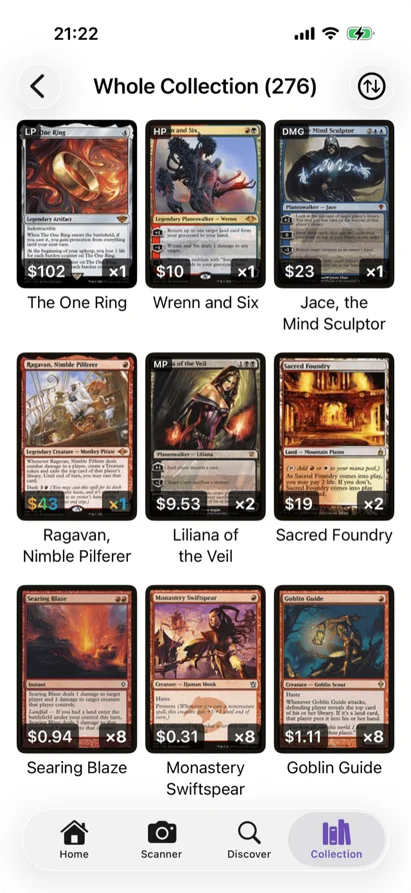
Where this connects to scanning your whole collection first is pretty direct. Once you’ve got a database of what you actually own, tags and all, deciding on a layout stops being a physical-world guessing game and starts being a filter you apply to data you already have. I run my collection through Eldwyn mostly for pricing and set tracking, but the side effect is that when I do want to replan a binder section, I already know exactly what I own in that color or that price range without pulling a single sleeve. That’s the whole value of scanning first, honestly, not just knowing what things are worth but being able to ask “what do I have” and get an answer before you’ve touched a card.
I’ll admit I go back and forth on whether the digital-first approach is actually worth it for a casual collector versus someone with a few thousand cards. If you’ve got two hundred cards in a shoebox, just dump them on the floor and sort them, you don’t need a planning tool for that, you need twenty minutes and a decent podcast. The mockup step earns its keep once you’re past a few binders’ worth, once the cost of a wrong guess is real time lost, not just a shrug.
the Card Kingdom method, which I stole part of
Card Kingdom’s own staff have written about their internal sorting system, and the piece that stuck with me wasn’t the binder-vs-box debate, it was splitting the collection into functional categories before worrying about alphabetical or color order at all. Valuable cards. Commander staples. Tokens. Decks in progress. Bulk. Everything else can wait, but knowing which of those five buckets a card belongs to first cuts the sorting decision in half before you’ve even opened a binder page.
I do something close to that now. Decks-in-progress get their own deck box, not binder real estate, because a card that’s actively rotating in and out of a build doesn’t belong wedged between two cards it’ll never see again. Tokens live together because nobody sorts tokens by color with a straight face. Everything else gets the color-identity treatment described above.
So yeah, the reorg spiral. Every collector’s been there. I want to say I’ve fully solved it and now my binders are pristine forever, but that’s not true, there’s still a stack of Marvel Super Heroes commons sitting on my desk from a draft two weekends ago that I haven’t sorted into anything yet, they’re just sitting there, judging me.
what actually breaks the cycle
The mistake I kept making wasn’t picking the wrong system, it was picking a system and then improvising every time a new set landed instead of planning where the new cards would go before I opened the box. New set drops, you already know roughly what colors you drafted or opened, you already know which of those cards are keepers versus trade fodder versus bulk. Sort mentally, or digitally, before the cards physically exist in your hands. Once they’re in your hands you’re back to making decisions under the worst conditions for making decisions.
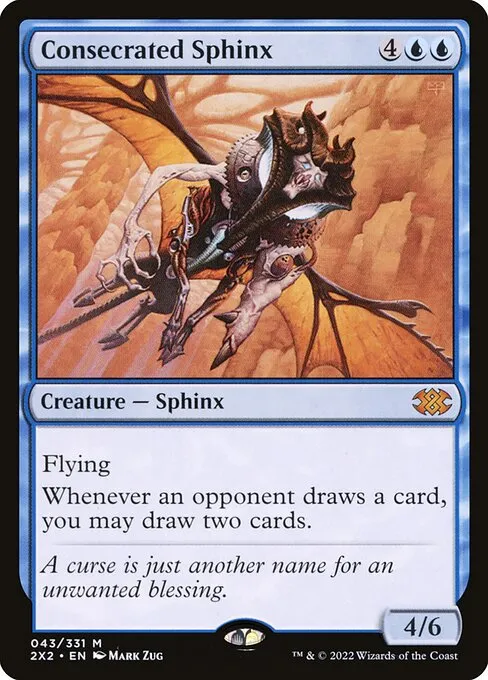
If you’re starting from scratch, or starting over, the order I’d actually recommend is: scan or catalog everything first so you know what you have and roughly what it’s worth, split into the five rough functional buckets, then only after that pick a sorting principle for the “everything else” pile that’s going to end up in binders. Skipping the first step is how you end up, like I did, discovering a near-mint Consecrated Sphinx sitting loose in a shoebox of Kamigawa commons a full year after I’d apparently pulled it and forgotten entirely.
The scanning workflow for tricky foils and alt-arts matters more here than people expect, because a binder full of foils that scan wrong is a binder you can’t trust the data on later. And once you’ve actually got a value on what you’re sorting, it’s worth reading through how to price a collection without lying to yourself before you decide which cards earn a spot in the high-value section versus the everyday binder. The sleeve, toploader, or slab question is really the same decision from a different angle, just applied per card instead of per page.
None of this is glamorous. It’s mostly just deciding, once, where things go, so you stop deciding it fresh every single time a new card shows up at 11pm with nowhere obvious to live.