The dangerous thing about sorting MTG mana creatures is how quickly they start looking interchangeable. Small green creature. Tap symbol. Add mana. Into the same stack as the other little Elves, and then somebody offers a bulk rate for the whole box.
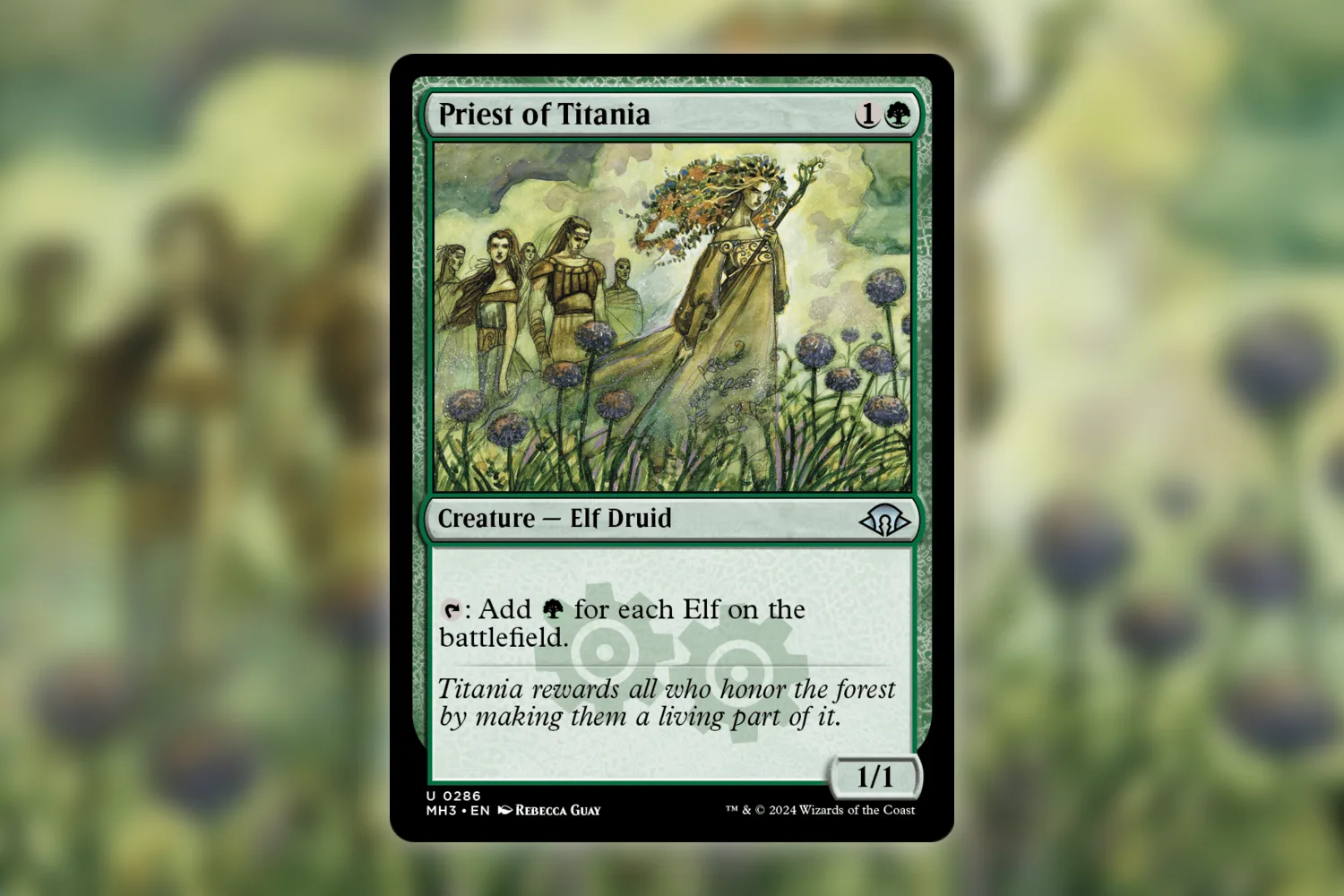
Priest of Titania is a good reason to slow down. The ordinary Modern Horizons 3 copy is $1.52 in Scryfall’s current USD data. The 2003 Friday Night Magic foil is $206.91. Same mana ability, very different decision about where to put the card while you’re clearing the table.
I’d make two passes through this pile: identify the printings that deserve individual pricing, then keep a useful supply for decks. Prices below were checked October 27, 2026, using the exact Scryfall printings linked. They’re reference prices; condition and the price someone will actually pay still need attention, especially on an old promo.
The MTG mana creatures I’d pull for a closer look
Priest’s original Urza’s Saga printing is number 270, currently $3.75. The MH3 copy is $1.52, or $2.55 in traditional foil. That’s already three distinct price entries before you get to the FNM promo. Calling a card “foil Priest” leaves a fairly expensive question unanswered.
The promo has an old frame and Friday Night Magic identification. Its Scryfall set code is f03, collector number 5. If you’re checking a collection export or an app result, those are the identifiers to confirm. A regular Urza’s Saga copy can’t acquire the promo’s value because it shares the art, name, or age of somebody’s favourite Elf deck.
MTGStocks tracks the FNM printing separately, including its price history and buylist information. I’d inspect that sort of market detail before treating the headline number as cash. I don’t know what a buyer will offer for your worn copy; a clean database entry can’t settle the condition of the card on your desk.
Llanowar Elves provides an even easier sorting mistake. Foundations number 227 is $0.30 nonfoil and $0.73 foil. The Seventh Edition foil, number 253★, is $143.19. Scryfall gives that foil its own printing entry, separate from the ordinary Seventh Edition card.
Seventh Edition’s regular cards have white borders; the foils have black borders. If you find a shiny black-bordered copy with the Seventh Edition symbol, pause before pricing it as the familiar white-bordered version. I wouldn’t use a remembered illustration or an automatic name match to decide which one it is. Check the set and the finish together. The collector-number guide is useful when the little line at the bottom becomes the whole job.
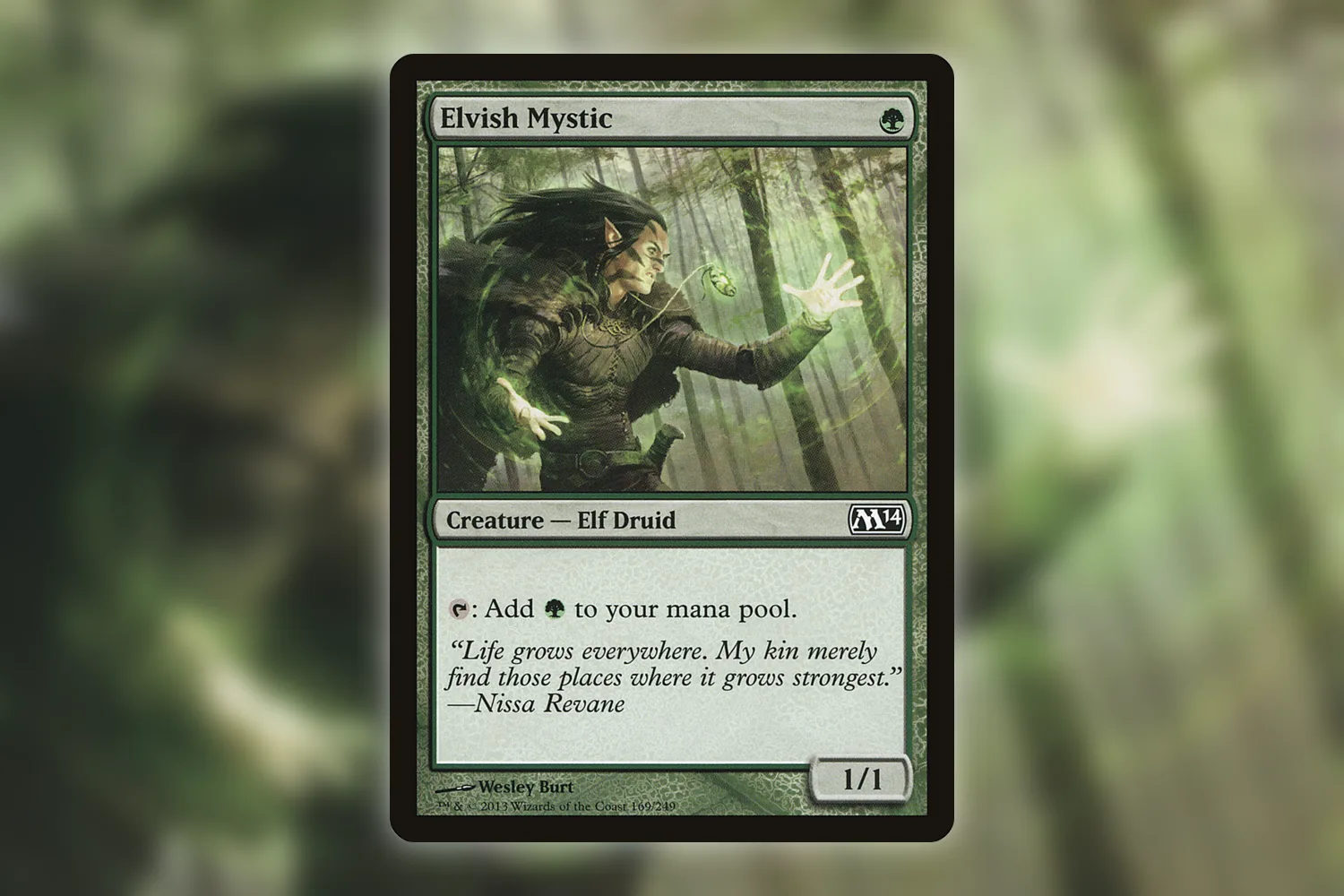
The less spectacular examples are probably more relevant to an average box. Elvish Mystic from Magic 2014 is $0.61 nonfoil and $6.02 foil. Fyndhorn Elves from Commander Legends, number 228, is $1.59 nonfoil and $8.83 foil. Neither ordinary copy suggests the foil price just by sitting next to it.
I like these middle-sized differences because they’re the ones you can actually miss during a hurried clear-out. A card with an old frame and a conspicuous promo treatment might get a second look anyway. A slightly curled foil from a set you remember drafting? Easy to leave with the ordinary copies.
Some of the pile was never bulk
Birds of Paradise from Marvel Super Heroes Commander is $8.26. That’s an ordinary nonfoil copy from a recent Commander product. You don’t need a rare historical treatment for a one-mana creature to deserve individual pricing.
Flying occasionally gives Birds another job, though its zero power limits the obvious attacks. The reason I’d keep it readily available is the ability to produce any colour of mana for a single green mana upfront. A multicolour deck can use that in ways a creature producing only green can’t cover. You still need a green source to cast Birds in the first place.
Bloom Tender from Lorwyn Eclipsed, number 166, is $13.53 nonfoil and $13.82 foil. The tiny premium here is a useful interruption to the old-foil treasure hunt: sometimes selecting the foil barely changes the number.
Its mana output needs a board check. Bloom Tender produces one mana of each colour among permanents you control. Alone, its own green colour gives you one green mana. A multicoloured permanent can add several colours to the output, while colourless permanents add none. The colours in your commander’s colour identity don’t automatically appear on the battlefield, and a commander still sitting in the command zone contributes nothing to the ability.
I’d price those two cards before trying to decide whether the deck needs them. If you own a spare Tender and don’t have a suitable multicolour build, that’s a different sorting decision from keeping a few cheap green accelerants handy. The site’s Lorwyn Eclipsed retrospective discusses Tender’s earlier price context; the figures here are today’s separate snapshot.
The inexpensive copies still need somewhere to go
Llanowar Elves, Elvish Mystic, and Fyndhorn Elves each cost one green mana and tap for one green mana. In Commander, their different names let a green deck use all three under the usual singleton rule. Their creature types can matter too: all three are Elves, and Priest of Titania counts every Elf on the battlefield, including itself and opponents’ Elves.
That makes Priest a much more specific keep than “two-mana ramp.” In a deck with one or two incidental Elves it can be underwhelming. In an Elf-heavy build, every extra Elf can increase its output. EDHREC’s discussion of Elfball shows how mana creatures become part of the deck’s creature plan, with board wipes as an obvious point of failure.
These creatures normally need to wait before using their tap abilities. Unless haste or another relevant effect changes things, a creature you just cast can’t tap for mana until you’ve controlled it continuously since your most recent turn began. Plan that opening hand accordingly. One green land and a handful of creatures that all cost two mana won’t turn into a fast start by optimism alone.
And look, a late-game Elf can feel awful. You’ve got plenty of mana. You need something to do. You draw a small creature that makes more green. Fine. That’s a real cost, and I’d rather admit it while choosing the pile than pretend every deck wants the same package.
My first instinct is to save every efficient mana creature, because surely the next deck will need them. Then the keep box fills with copies of cards that never leave it. I’d keep enough ordinary copies for the decks you’re actually building, plus a modest spare supply. An expensive printing can go into the trade binder even when you like the card’s function; a less expensive copy can do the playing.
Creature-heavy ramp also needs a recovery plan. A creature sweeper can take the mana creatures and the threats in the same turn. Land-based ramp often survives that particular kind of removal. If your table clears creatures frequently, consider the balance before transferring the entire Elf pile into your next green deck. The Commander recovery kit covers ways to rebuild from cards you may already own.
Give the sorted cards a destination
I’d start with a small tray or three labelled dividers. Individually priced cards go together, ordinary deck-building copies go together, and surplus copies wait for the eventual bulk decision. Keep the foils apart from the nonfoils until you’ve recorded what they are.
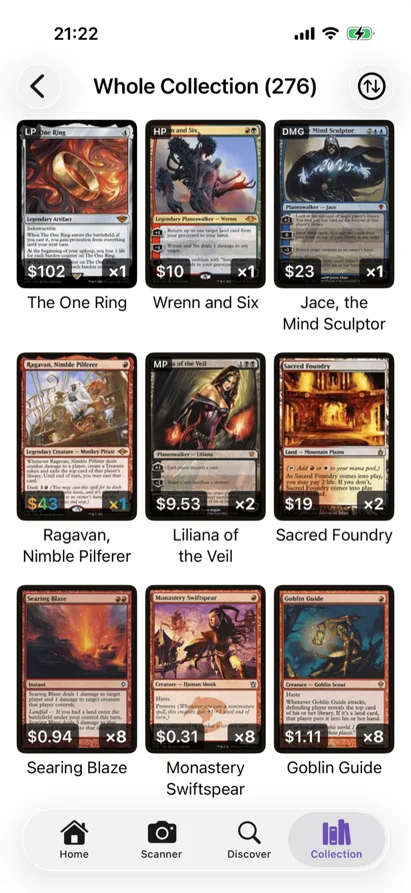
For each individually priced card, check the set code, collector number, finish, language, and condition. In Eldwyn, scan the card and verify the selected printing and finish before adding its quantity. Reflective surfaces can make recognition awkward; the foil scanning guide covers lighting adjustments before you spend ten minutes tilting the same Elf toward a lamp.
Record a useful physical location too. A collection entry that says you own a Priest is less helpful if the ordinary copy is in an Elf deck and the promo is loose in a box labelled “green.” Keep those printings separate in the inventory, then put the valuable one somewhere you can describe without pointing vaguely at a shelf.
For the inexpensive copies, write down how many you’re keeping and put them with the other deck-building cards. You can make the surplus decision after that. I’d leave the sorting tray out until the next day, personally. There’s usually one foil that looked ordinary under the evening light.