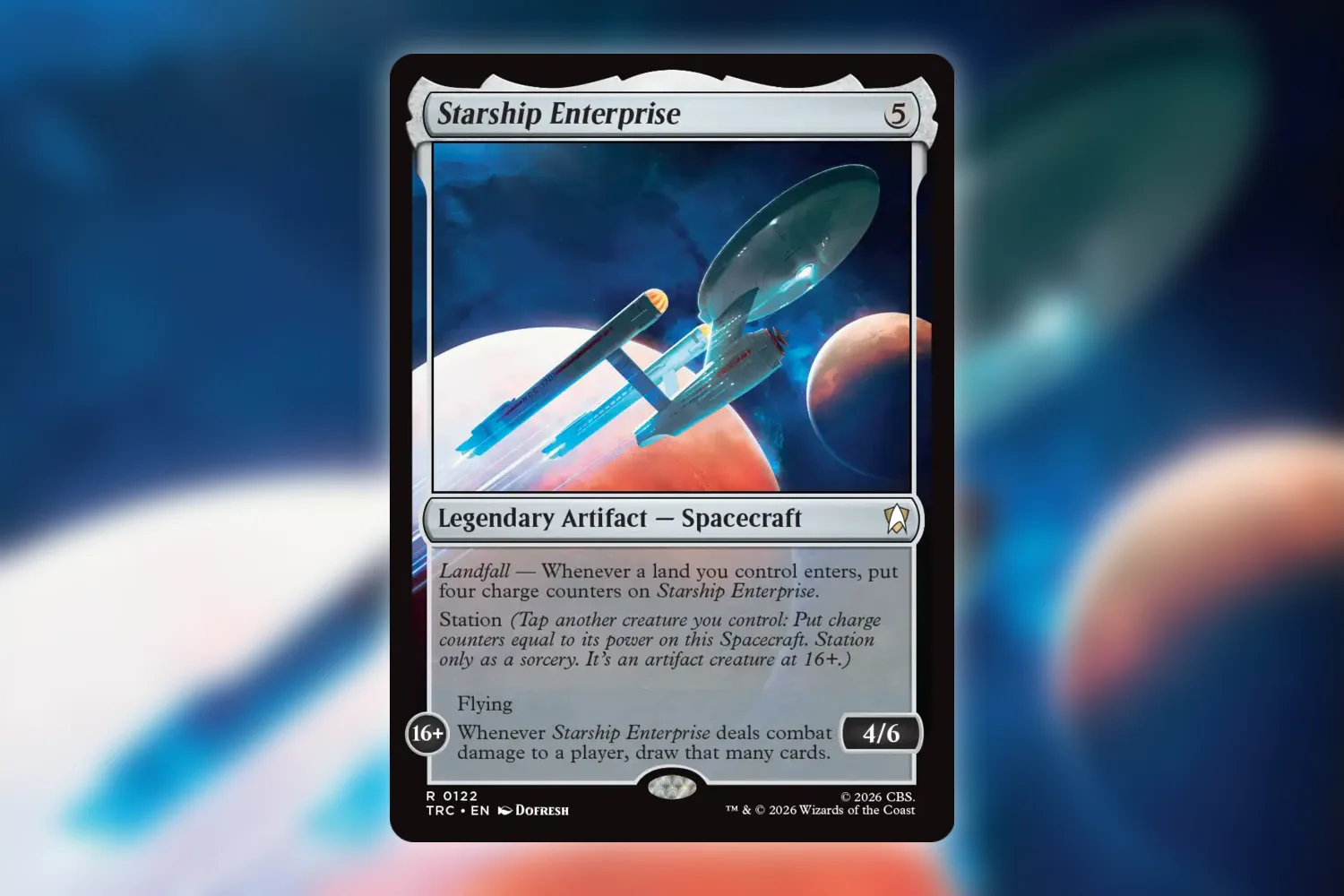
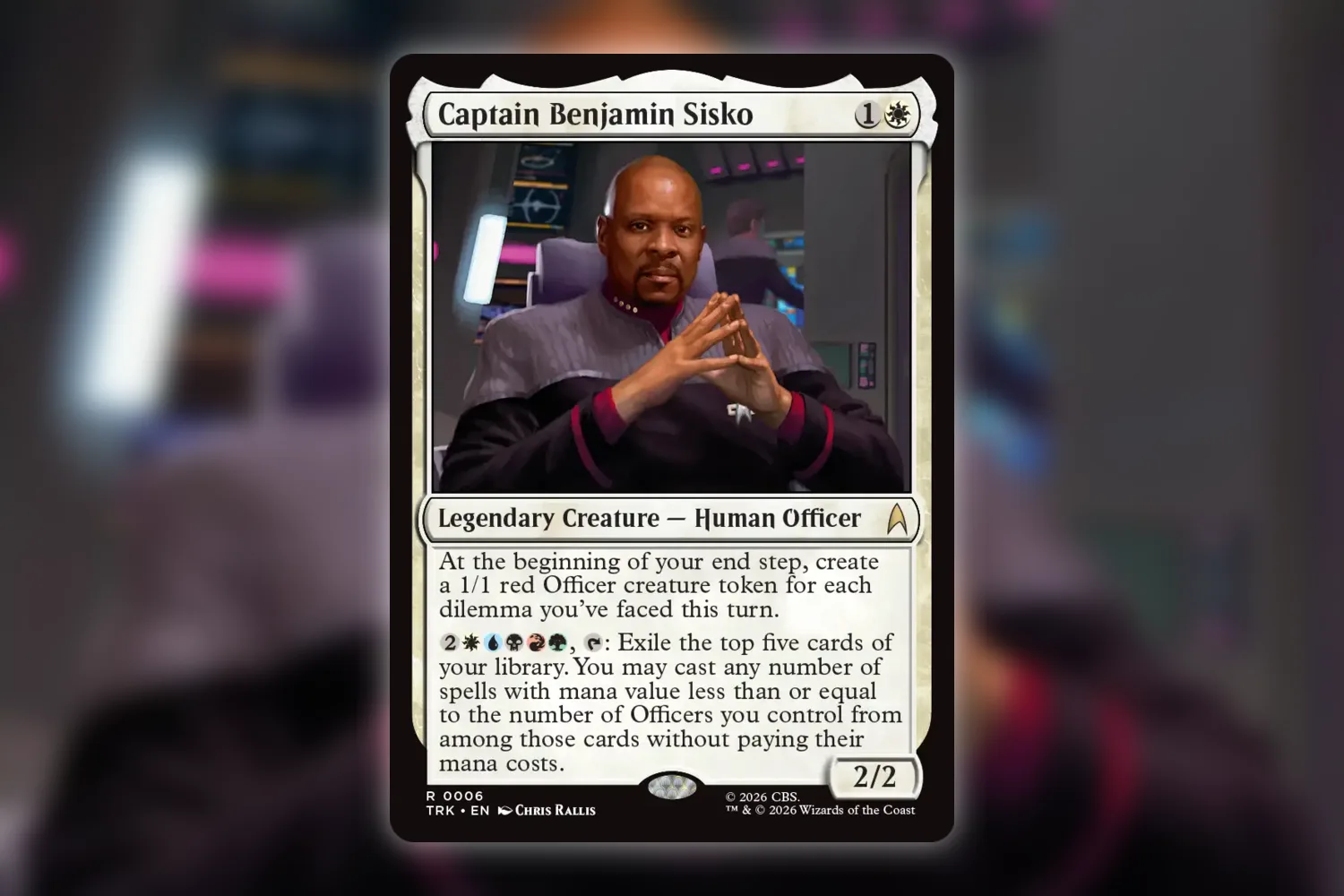
Three green reprints pulled me toward Landing Party before I’d finished reading its commander. That’s a slightly embarrassing way to choose a Star Trek Commander precon, with four crews to choose from and an entire franchise’s worth of sentiment involved. But if I’m spending money to expand a collection, I want to know where the cards could go after the first deck comes apart.
My default pick is Landing Party for someone building out green Commander decks. We Are the Borg moves ahead for an artifact player. Klingon Fury suits an attacking collection, and Federation Fleet makes more sense when you want its particular historic-permanent engine or its crew. Those are judgments about reusable packages, with the number of useful duplicates still to be checked.
The official decklist page, updated October 29, now has all four lists. Landing Party was still missing when I wrote about the regular versus surge-foil editions. That gap is closed, so we can finally put the four lists beside each other.
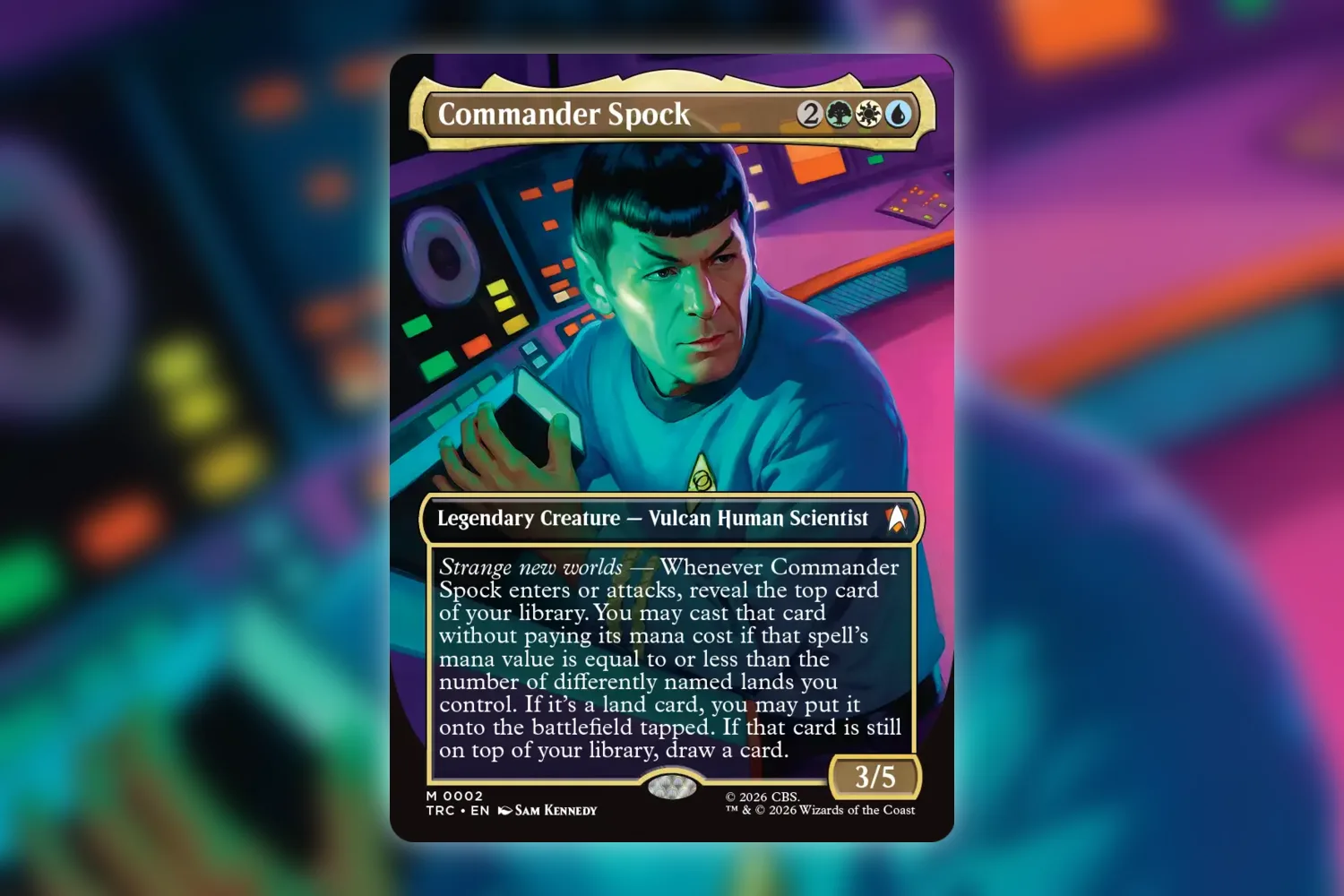
My Star Trek Commander precon pick starts with green
Commander Spock rewards differently named lands. When he enters or attacks, he reveals your top card. A spell within the land-name limit can be cast for free, a land can enter tapped, and a card still on top goes into your hand. He costs six mana. I’d keep that last detail in view while getting excited about the free spells.
Landing Party includes Exploration, Guardian Project, and Heroic Intervention. I like that these fill three separate jobs. Exploration gives an additional land play each turn. Guardian Project draws from qualifying nontoken creatures entering. Heroic Intervention gives your permanents hexproof and indestructible for the turn.
There are limits on all three. An extra land play needs a land in hand. Guardian Project cares about names on your battlefield and in your graveyard, and token creatures won’t trigger it. Heroic Intervention won’t stop a sweeper that exiles everything. I’d want the cards because those jobs fit decks I intend to build, after checking the actual lists.
That’s a useful starting package for a collection with green creature decks and a few obvious gaps. It also has a plausible life outside Spock’s original hundred cards. If the Trek deck gets dismantled, I can name somewhere to put each of those effects without inventing a new project to justify the purchase.
I might be underrating the pleasure of keeping this whole deck together, though. Taking apart a themed deck immediately can be a miserable little optimization exercise. You buy a crew, remove half the crew, and then wonder why the finished thing feels less like the thing you wanted. Someone buying Spock because they want Spock should give that preference room in the budget.
The Borg package has a narrower address
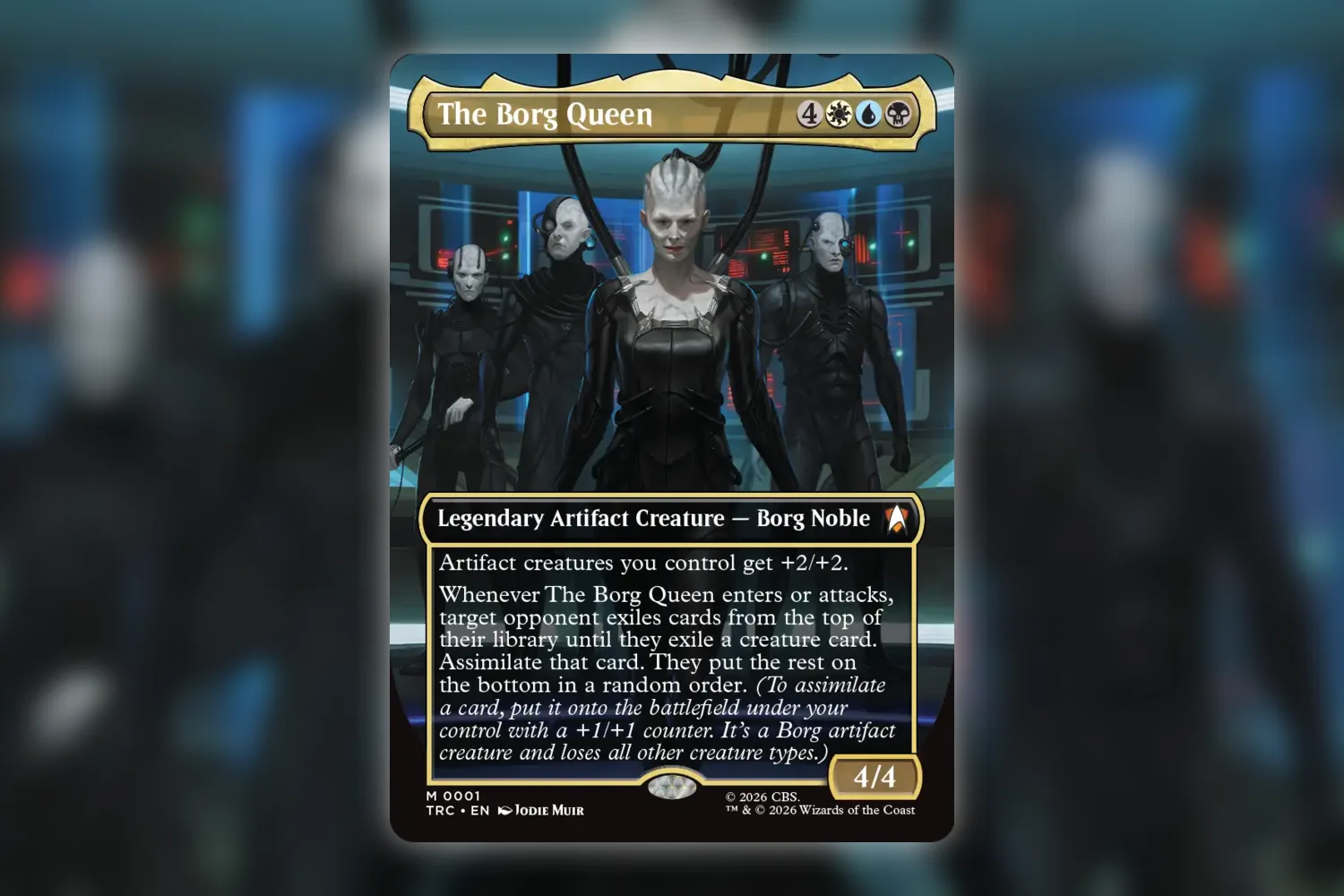
The Borg Queen costs seven mana, gives your artifact creatures +2/+2, and assimilates a creature from an opponent’s library when she enters or attacks. The assimilated card becomes a Borg artifact creature under your control, with a +1/+1 counter. That’s enough to tell me which part of a collection I’d open first.
We Are the Borg includes Skullclamp, Unwinding Clock, and Academy Ruins. Skullclamp turns equipped creatures dying into two cards. Unwinding Clock untaps your artifacts during each other player’s untap step. Academy Ruins puts an artifact from your graveyard on top of your library for a blue activation and a tap.
An artifact deck with useful tap abilities can get much more from that Clock than an ordinary creature deck. The extra untaps don’t give creatures haste or override summoning sickness. Academy Ruins also uses up your next draw unless something else draws that card sooner. I’d check the engine those cards would join before giving them full credit in a shopping comparison.
This is the deck I’d move to first if my existing projects involved artifact creatures, artifact recursion, or mana rocks doing overtime. It falls behind Landing Party for someone whose collection is mostly green creatures and land decks. That’s where a universal ranking starts getting awkward.
I don’t actually know how evenly these four decks will play against one another out of the box. Reading the lists hasn’t supplied that evidence, and this is a buying comparison rather than a playtest report. The Queen’s mana cost alone would make me cautious about promising that the deck gets its main plan online quickly.
Worf and Picard have different leftovers
Worf, Defiant Commander brings a hasty Klingon Warrior token when he enters. His battlefront trigger exiles cards according to the number of opponents you attacked, with permission to play them until the end of your next turn. Attacking several players helps keep options available, provided you can afford to use them.
Klingon Fury’s reprints include Shared Animosity, Professional Face-Breaker, and Ruinous Ultimatum. The first rewards attacking creatures that share types. Face-Breaker produces Treasure from combat damage to players and lets you sacrifice Treasure for temporary access to another card. Ultimatum destroys your opponents’ nonland permanents, at the fairly demanding cost of seven colored mana.
Those are attractive leftovers for a collection already pointed toward combat. Shared Animosity needs enough creatures sharing a type, and Ultimatum needs the right three colors. I wouldn’t count the latter as a useful addition to every red deck just because its text is spectacular.
Jean-Luc Picard, Luminary draws when another historic permanent with mana value three or greater enters under your control. Drawing your second card each turn lets him distribute a creature counter and Spacecraft charge counters. Artifacts, legendary permanents, and Sagas qualify as historic, so there are several ways into the deck beyond the named crew.
Federation Fleet has Alhammarret’s Archive, Grand Crescendo, and Fractured Identity. Archive doubles life gain and most draws, excluding the first draw in each of your draw steps. Crescendo makes Citizen tokens and gives your creatures indestructible. Identity exiles a nonland permanent and gives each player other than its controller a token copy.
That last card is such an invitation to make the table irritating. Pick something with an ongoing effect, hand copies around, spend the next ten minutes remembering who controls what. I can picture a game grinding to a halt over it. I also want to cast it.
For a collection with existing draw engines, token decks, or white-blue interaction gaps, Picard deserves a closer look than my green-first preference suggests. His package spreads across several themes. Worf’s is easier to place when you already know you want to attack.
Count the copies that would actually get used
The Wizards buyer’s guide lists regular decks at $74.99 US MSRP and gives November 13, 2026 as the release date. Each contains a hundred-card deck and ten double-sided tokens. Actual delivered prices depend on the shop and region. I’m comparing regular editions here.
I checked Scryfall’s TRC entries on October 30 for the twelve reprints discussed above. None had a USD quote for that printing. So there’s no defensible TRC singles total in this article. Older printings could help estimate the cost of getting playable copies, but they wouldn’t establish what these Trek versions will sell for.
For an existing collection, I’d start with this smaller worksheet:
| Deck | First package I’d check | Collection that gives it somewhere to go |
|---|---|---|
| Landing Party | Exploration, Guardian Project, Heroic Intervention | Green creatures and land-based decks |
| We Are the Borg | Skullclamp, Unwinding Clock, Academy Ruins | Artifact engines and artifact creatures |
| Klingon Fury | Shared Animosity, Professional Face-Breaker, Ruinous Ultimatum | Combat decks and shared creature types |
| Federation Fleet | Alhammarret’s Archive, Grand Crescendo, Fractured Identity | Draw engines, tokens, and white-blue interaction |
This deliberately leaves most of each deck off the page. Open the full list for your two favorites, then mark cards you want to keep in the Trek deck, cards with a destination elsewhere, and copies that would sit unused. Our want-list comparison workflow is useful for checking the second group against what you already own.
So, okay. You own two copies already. Where are they? One in a deck, one spare? Fine, maybe the third has a job. Both in a box, waiting for the same imaginary deck? I’d pause there. I’ve just assigned a card to a future project twice in the same sentence.
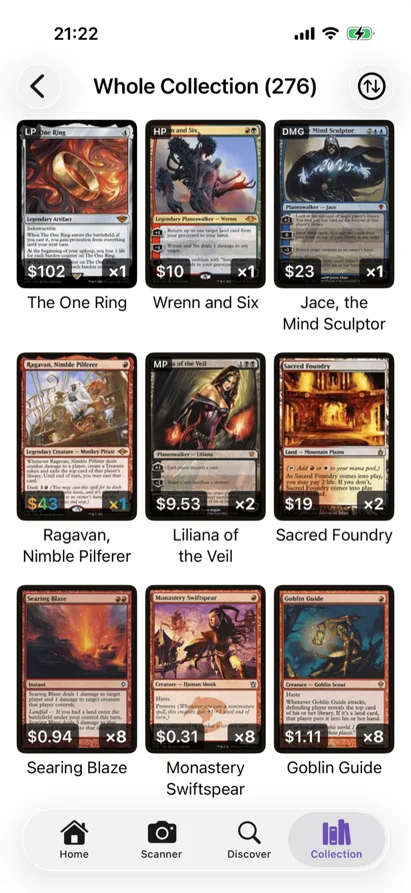
When prices become usable, compare the delivered cost of the sealed deck with a cart containing only the missing cards you actually want. Keep any money you expect from selling leftovers separate until you’ve allowed for fees and shipping. The longer precon-versus-singles calculation covers that part.
My first two lists to open would be Landing Party and We Are the Borg. I’d put the green package beside my owned copies, then do the same for the artifact cards. If the cards that attracted me were already sitting unused in storage, I’d go back to the crew I most wanted to play and check what the local shop was charging for that one.