The best card I ever pulled that turned out to be worth almost nothing was a miscut Llanowar Elves. Kitchen-table draft, a Dominaria pack, maybe 2018. The cut was way off, a full third of the card below it riding along the bottom edge, so you could read the top of an Opt underneath. For about ninety seconds I was sure I’d opened something special. Then a guy at the table who actually knew things looked at it, shrugged, and said “miscuts on commons go for five bucks if you find the right weirdo.” He was being generous.
That’s the whole tension with MTG misprints. The card in your hand is genuinely rare, a one-in-however-many factory accident, and your brain runs the rarity-equals-value math on its own. But rare and valuable are two different axes, and misprints live in the gap between them more than almost anything else in the hobby.
What actually sets a misprint’s price
There are two dials, and you have to read both.
The first is the card underneath the error. A miscut on a Brushwagg (a real card, a literal bulk common worth about a dollar) is worth a dollar and change to the three people on Earth who collect miscut Brushwaggs. The exact same miscut on an Underground Sea, a Revised dual that already runs close to a grand in normal shape, is worth the base price plus a fat premium, because people building high-end vintage-flavored decks want a card they can show off. The error rides on top of demand that already exists. No underlying demand, no premium.
The second dial is the type and severity. Miscuts are the most common error there is. A slight off-center shift barely moves the needle these days, though enough collectors have warmed to off-center cards that even those have a small market now. What people actually pay for is a miscut severe enough to show a chunk of the neighboring card, or one from the edge of the print sheet with a clean white bar where the next card should be. And if you somehow end up with both halves of a single miscut, two cards that physically fit back together, that’s a trophy. Crimps, those pinched indents from the pack-sealing machine, are usually a five-dollar-ish curiosity on a common. Square-cut corners, where the cutter never rounded them, book a little higher. Ink and color errors are their own rabbit hole: albino cards missing whole color channels, splotches and smudges, the “Charlie Brown” Tempest Medallions that picked up residue from a press that had been running Peanuts comics.
Then there’s the blank stuff, which I love for no rational reason. Cards that went through the machine without getting printed on one side, so you get a totally blank front or back. Filler cards, blank on both sides, an actual empty piece of Magic cardstock you can buy for the novelty. Double-faced cards that got the wrong back, so a Sink into Stupor comes out looking like it flips into a completely different card. None of these are playable and most aren’t expensive, but they’re the kind of thing that makes a binder page fun to flip through.
The famous ones are usually the cheap ones
Here’s where my own instinct steers me wrong every single time, and maybe yours too. The misprints that look the most dramatic are often the least valuable.
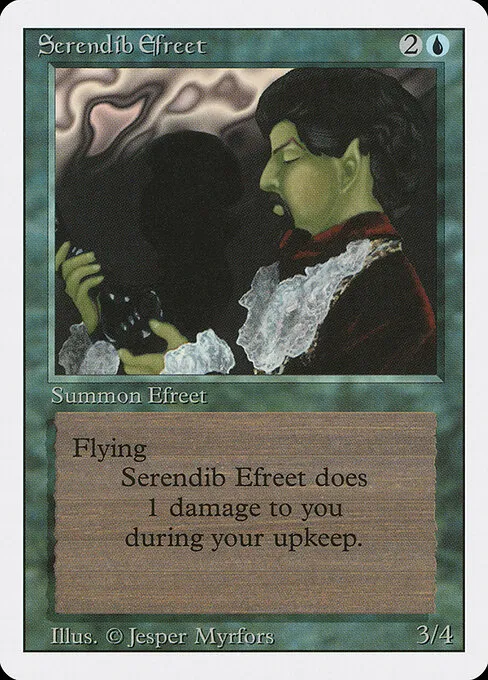
Take the card at the top of this post. The entire Revised print run of Serendib Efreet shipped with the wrong art and a green frame borrowed from Ifh-Biff Efreet. A blue creature wearing a green border, one of the most recognizable errors in the game’s history. And it’s cheap, because “the entire print run” means the things are everywhere. Every copy of Revised Serendib is the misprint. When a mistake is baked into the digital file, it isn’t rare, it’s just the card. Same story with the foreign-language oddities people love to quote, the Portuguese Braids that costs one less black pip, the Spanish Meloku that makes 2/2 tokens instead of 1/1s. Fun, quotable, and mostly worth a normal-card premium at best, because there’s a whole run of them sitting in binders around the world.
So the money isn’t in the famous errors. It’s in the one-off factory accidents, the physical kind that happened to a single sheet or a single card, sitting on top of a card people already want. Which is annoying, because those are exactly the ones you can’t look up.
Figuring out what yours is worth
There’s no Scryfall page for your specific miscut. TCGplayer has no line item for it. The market for MTG error cards is small, thin, and moody, the kind of market where a card sells for fifty dollars one week and twelve the next with no explanation, and half the listings never sell at all. Any misprint “price guide” is really just somebody’s memory of what a similar card did once.
The one method that works: eBay, sold listings only, completed sales filter on. Don’t search the name of your card. Search the error. “mtg miscut,” “mtg filler,” “mtg crimp,” “mtg albino,” then scroll until you find something visually close to what you’re holding, on a card of roughly similar desirability. That sold price is your ballpark. Active listings are useless here, because anyone can ask three hundred bucks for a smudged Grizzly Bears and let it sit for three years. If it comes to actually moving the card, the same sold-comps discipline applies.
The r/mtgmisprints crowd and a couple of big Facebook misprint groups are the other real resource, half for pricing and half just for naming the thing. So much of this is using the same word the collectors use. If you call your card “weird” and I call mine an “edge-of-sheet miscut,” I’m going to have a much easier time finding a comp. (That little white dot in the corner, by the way? Registration dot. Not an error. Normal part of the sheet. I have watched people try to sell those, and I have felt bad for them.)
One thing to rule out before you get excited. Make sure what you have is a genuine factory error and not just damage or a fake. A card left in a sunny window fades and can look like an albino to a hopeful eye. And plenty of “misprints” floating around online are just counterfeits that came out wrong, which is a different and much sadder category. A real misprint feels like a real Magic card, passes the blacklight and rosette tests, and simply happens to be built wrong.
If you do land a genuinely valuable one, grading is the move, and it’s one of the few places misprints and the grading companies actually get along. CGC will note the error right on the slab label, which matters enormously when you’re selling to someone who wasn’t in the room when you pulled it. A labeled, authenticated misprint is a far easier sell than a raw one you’re trying to describe in a listing.
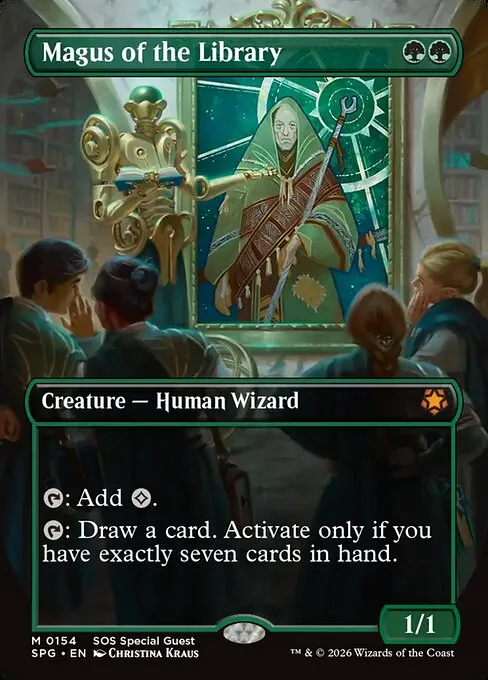
Stamp errors are having a real moment, too. Last year a chunk of Secrets of Strixhaven cards came out of the factory wearing the holo-stamp from Star Wars: Unlimited, tiny X-wings where the planeswalker symbol should be. I got into that whole mess separately, but it’s a clean example of the pattern that actually pays: a genuine error, on cards people want, in small enough numbers to matter.
The part where you catalog it
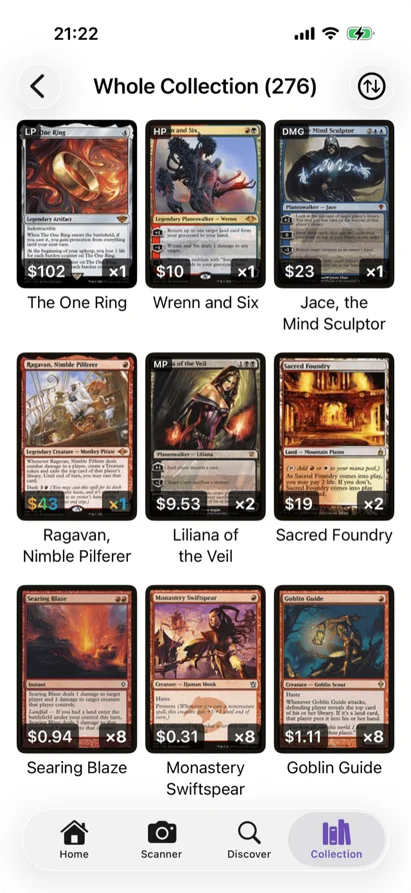
The practical headache with all of this is that a misprint doesn’t fit in a normal collection tracker. It isn’t a printing Scryfall models, so when I scan one into Eldwyn it reads as the base card, correct name, correct set, normal price. Which is fine, honestly. The “real” value is a coin flip anyway, and I’d rather log it as the base card with a note attached than pretend I know what a miscut is worth on a given Tuesday. My miscut Llanowar Elves lives in the collection as a plain Llanowar Elves with a note that says “miscut, kitchen table, 2018.” That’s about the right amount of ceremony for it.
So yeah. Misprints. Worth money? Sometimes. Mostly no. The odds that the weird card you just pulled is a Blue Hurricane, the scrapped-Summer-Magic unicorn that every old player can name and basically nobody owns, are effectively zero. The odds it’s a five-dollar curio with a good story attached are pretty solid. And the story is the better part anyway. I’m never selling the Elves.