My old Lathliss deck came out of a Core Set 2019 box I split with a friend. He took the green cards, I took the red ones, and for about a month I thought casting a seven-mana Dragon was the cleverest thing anyone had ever done. Then I brought it to Commander night, ran into one sweeper, and spent the next three games staring at a hand of expensive fliers while everyone else rebuilt. The deck did its thing once, then I untapped into three lands and a Dragon I couldn’t cast.
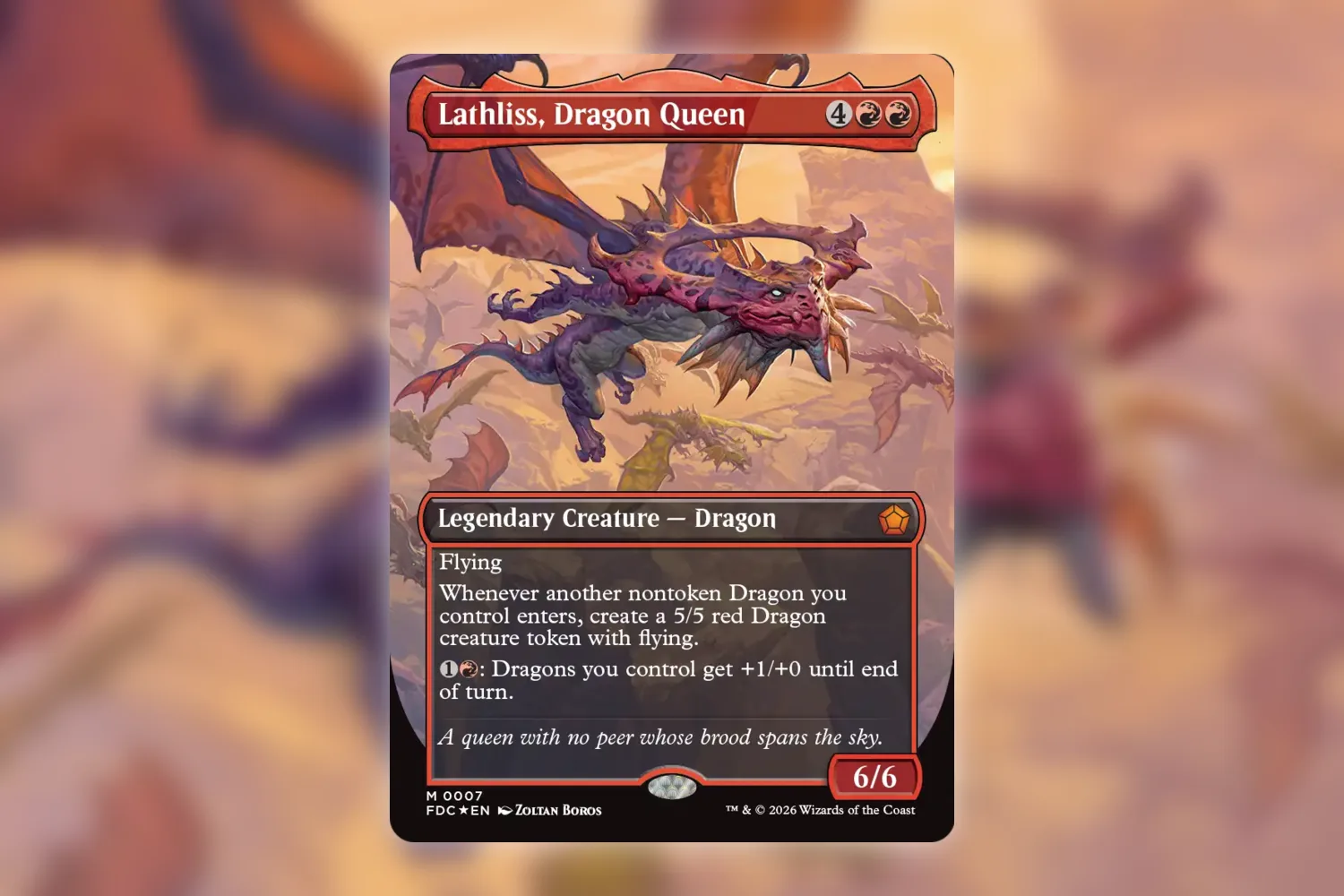
Reign of Dragons is the red deck in the Foundations Commander lineup. Wizards’ confirmed decklist is 38 lands, 27 creatures, and a pile of Dragons at five mana or more. Lathliss, Dragon Queen costs six and turns every other nontoken Dragon into a 5/5 token. The commander is worth building around. The turns around her need help.
Five swaps make the deck reach Lathliss more consistently and keep the cards coming after her first wave. The reference copies total $8.76 at the Scryfall prices I checked on October 18, 2026. Start by checking your collection; a copy you own makes that total smaller.
Five cheap Reign of Dragons upgrades
These cuts start from the unmodified deck. Prices are Scryfall USD snapshots for the exact non-foil printings linked below, before shipping. An older printing with the same rules text works fine.
| Take out | Put in | Why try it | Price |
|---|---|---|---|
| Firespitter Whelp | Gadrak, the Crown-Scourge | A bigger three-mana Dragon that can turn a wiped board into Treasure | $0.35 |
| Minion of the Mighty | Universal Automaton | One mana makes a 5/5 once Lathliss is already out | $0.57 |
| Goddric, Cloaked Reveler | Sarkhan, Fireblood | Repeatable mana for Dragon spells, plus a way to filter the expensive ones | $0.46 |
| Rapacious Dragon | Ganax, Astral Hunter | Trades two Treasure now for Treasure on every later Dragon | $4.86 |
| Count on Luck | Idol of Oblivion | Turns Lathliss tokens and Treasure into cards | $2.52 |
The first four cards affect the turns before and around Lathliss. The last one gives the deck something to do with the tokens once she lands. That split is what makes this a more useful first pass than simply swapping in five more Dragons.
Get to Lathliss with fewer dead turns
Gadrak is a three-mana Dragon, which matters because it can trigger Lathliss without costing six mana itself. Firespitter Whelp does the same job now, but its one damage per spell adds up slowly and the 2/2 body trades with almost anything. Gadrak is a larger flier, and its end-step trigger creates a Treasure for each nontoken creature that died that turn. A sweeper that catches three of your creatures pays you back after the fact.
Gadrak can’t attack unless you control four or more artifacts. The precon starts with thirteen, and Treasure counts, so the deck reaches that number often enough to test it. Even when Gadrak stays home, it still enters as a nontoken Dragon and makes Lathliss’s 5/5. If your games keep ending before four artifacts show up, keep the Whelp.
Universal Automaton looks like a joke next to the rest of the deck. A one-mana 1/1 changeling is not what Dragon tribal usually wants. After Lathliss is on the battlefield, though, it is a one-mana Dragon that creates a 5/5 and triggers the deck’s other Dragon payoffs. Minion of the Mighty can do something much flashier by cheating a Dragon into play, but it needs an attack, six total power, and a Dragon still in your hand. I’d rather have the card that works with one mana on a normal turn.
Before Lathliss, Universal Automaton is nearly blank. You’re making the commander’s turns better at the cost of one weak topdeck, and there are already plenty of huge creatures in the deck to draw later.
Sarkhan, Fireblood attacks the mana problem directly. His first loyalty ability adds two mana for Dragon spells, and Lathliss qualifies. That can turn a hand with five lands and a two-mana rock into Lathliss a turn earlier. His other +1 lets you discard a card and draw one, which is useful when your hand contains an eight-mana Dragon and the game is going to end before you cast it.
Goddric can become a 4/4 flying Dragon for three mana, but only when two or more nonland permanents entered under your control that turn. The deck can set that up with a mana rock and a Dragon, or with Treasure, but it isn’t automatic. Sarkhan asks less of the rest of the hand. He also dies to almost anything, so don’t count the mana as guaranteed.
Some games the curve works. You play a rock, a reducer, Lathliss, then another Dragon and a token. Great. Other games you keep four lands and a handful of six-drops, miss the fifth land, and sit there watching everyone else develop. That’s the version I kept running into with my old list. Gadrak and Sarkhan don’t fix every draw, but they give the deck more ways to move before the expensive part.
Ganax makes the Treasure scale
Rapacious Dragon is honest. It costs five, enters, and gives you two Treasure. Ganax costs the same and makes one Treasure when it enters, then one for every Dragon after it. Drawing even one more Dragon turns Ganax ahead on mana, and casting Lathliss afterward gives you both the Treasure and her 5/5 token.
Ganax also makes the deck less dependent on one huge turn. Lathliss dying used to leave you with a hand full of Dragons and whatever lands survived. Ganax turns the next Dragon into part of the cost of the Dragon after that. It isn’t card draw, and a well-timed removal spell still ruins the plan, but the deck needs more than two Treasure before it runs out of gas.
The comparison isn’t completely fair in the other direction. Rapacious gives you the mana immediately, which can matter if you’re trying to chain several spells in one turn. If your pod ends games quickly, the two Treasure up front may be better. I’d still test Ganax first because the deck’s longer games are the ones where it needs help.
Idol of Oblivion draws from the tokens you’re already making
Idol of Oblivion taps to draw a card if you created a token this turn. Lathliss makes one whenever another nontoken Dragon enters. Treasure also counts as a token, which means the deck can turn on the Idol without the commander. Rapacious Dragon, Gadrak, Goldlust Triad, and several other cards in the box can all activate it.
That distinction matters after Lathliss dies. Count on Luck gives you one card to look at each upkeep, but it can show you a land you don’t need or a Dragon you can’t cast. Idol gives you an unconditional draw once you’ve done something the deck already wants to do. It costs two mana, so it can come down before the six-drop and start working as soon as the first Treasure appears.
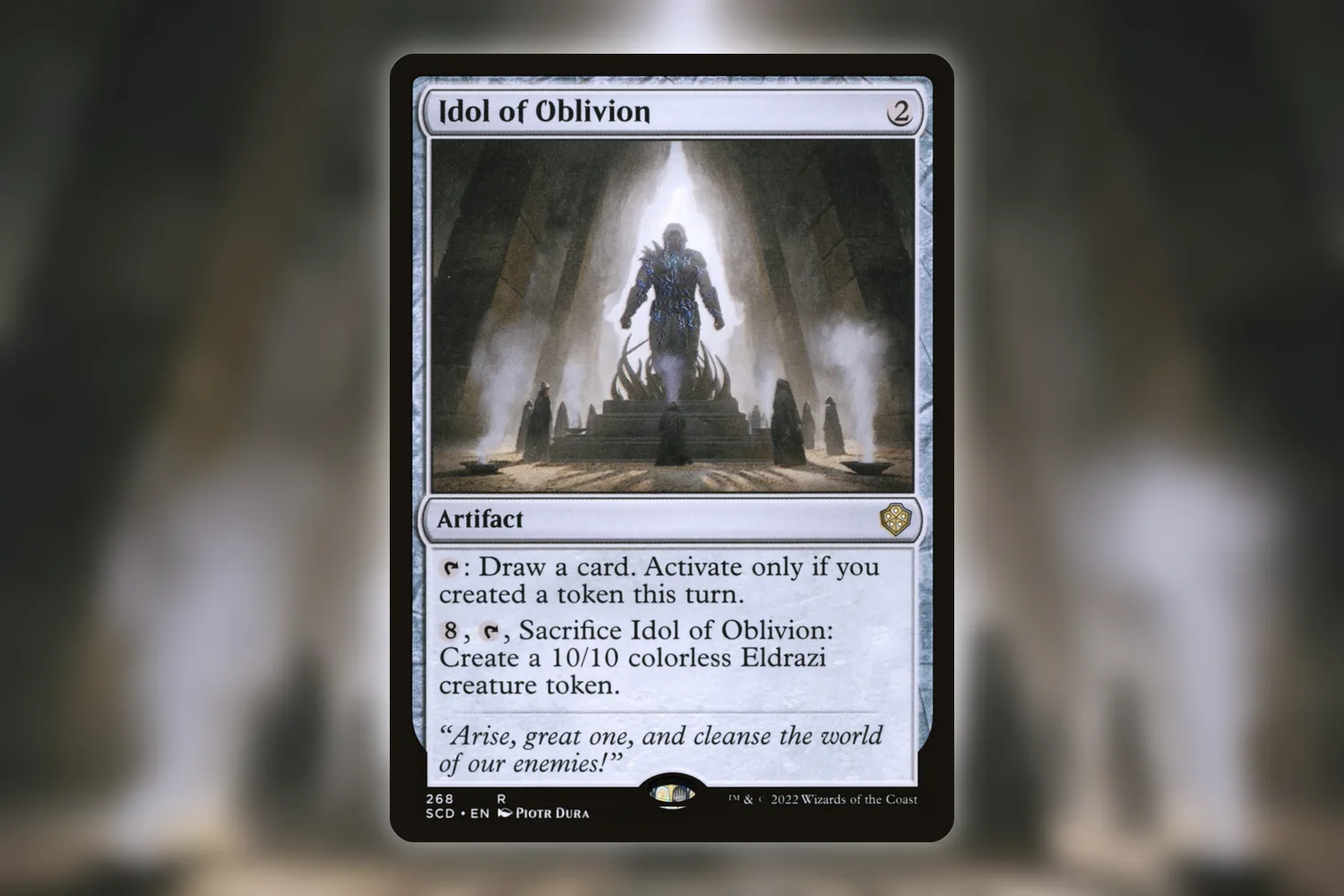
I went back and forth on this cut. Count on Luck is not a bad card, and in a slower pod the extra card every turn can pull ahead of the Idol. The deck already has several effects that reward casting Dragons, though, and Idol asks less of the top of your library. It also gives you a reason to keep making Treasure after Lathliss is gone. If your first five games consistently have no token on the turn you need the draw, put Count on Luck back.
There will still be empty turns. Idol doesn’t create the token itself. You need a Dragon, a Treasure-maker, or a spell that leaves a creature behind. The deck can do that in most games where it’s functioning, but this is an upgrade to the engine rather than a replacement for the entire draw package.
What I’d leave alone
The deck has a handful of board wipes and several expensive Dragons. I’d resist cutting all of them at once. Blasphemous Act and Chandra’s Ignition are part of how a mono-red deck answers a wider board, and Breath Weapon can be useful against the other Foundations precons. The five swaps above are enough of a first experiment. If a card consistently sits in your hand without being castable, that’s the next cut.
I’d also leave the land count at 38 for now. Lathliss costs six, the deck has several five- and six-mana Dragons, and some of the utility lands enter tapped. The first version should find its mana before anyone starts trimming lands to add a fifth expensive spell.
Before ordering anything, check the cards you already own. The want-list check against your collection is the quickest way to stop a cheap upgrade from becoming a second copy of a card sitting in another deck. Keep the removed cards with the original list so you can reverse a swap; the precon upgrade tracking guide covers that. I’d also scan the deck as its own list if you haven’t already, because a card counted in your collection isn’t necessarily available for this one.
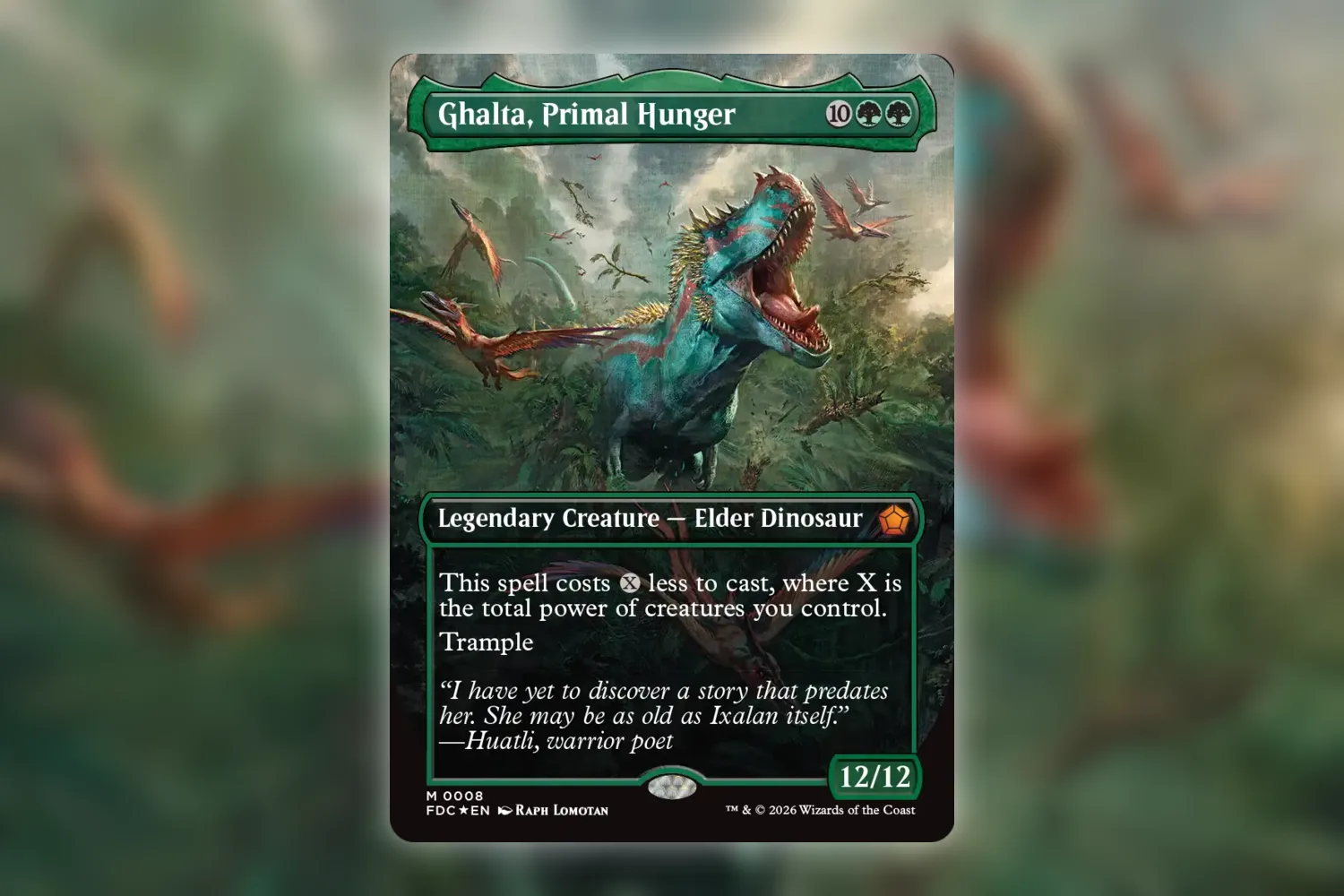
The other Foundations decks are worth the same treatment. I did a collection-first pass on Tramplesaurus Rex, and the earlier overview of all five decks is a useful starting point if you’re deciding which one to buy.
Play a few games and keep track of the problem that actually shows up: Lathliss arriving too late, running out of cards after a wipe, or drawing a Dragon you can’t cast. Those notes will tell you whether the next upgrade should be cheaper acceleration, more draw, or a different commander entirely. I’d especially like to know whether Gadrak ever gets to attack and whether Idol draws more than Count on Luck did.