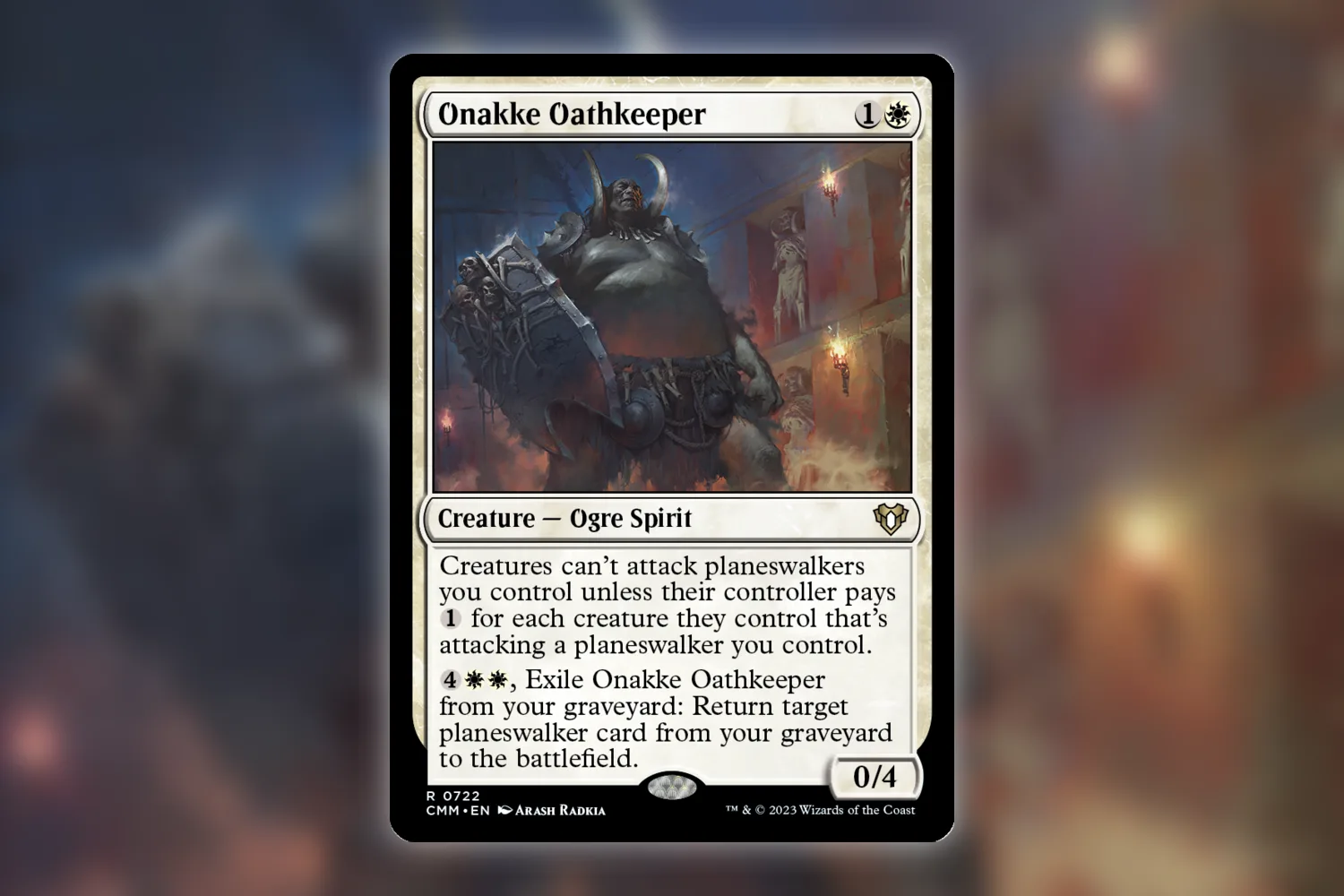
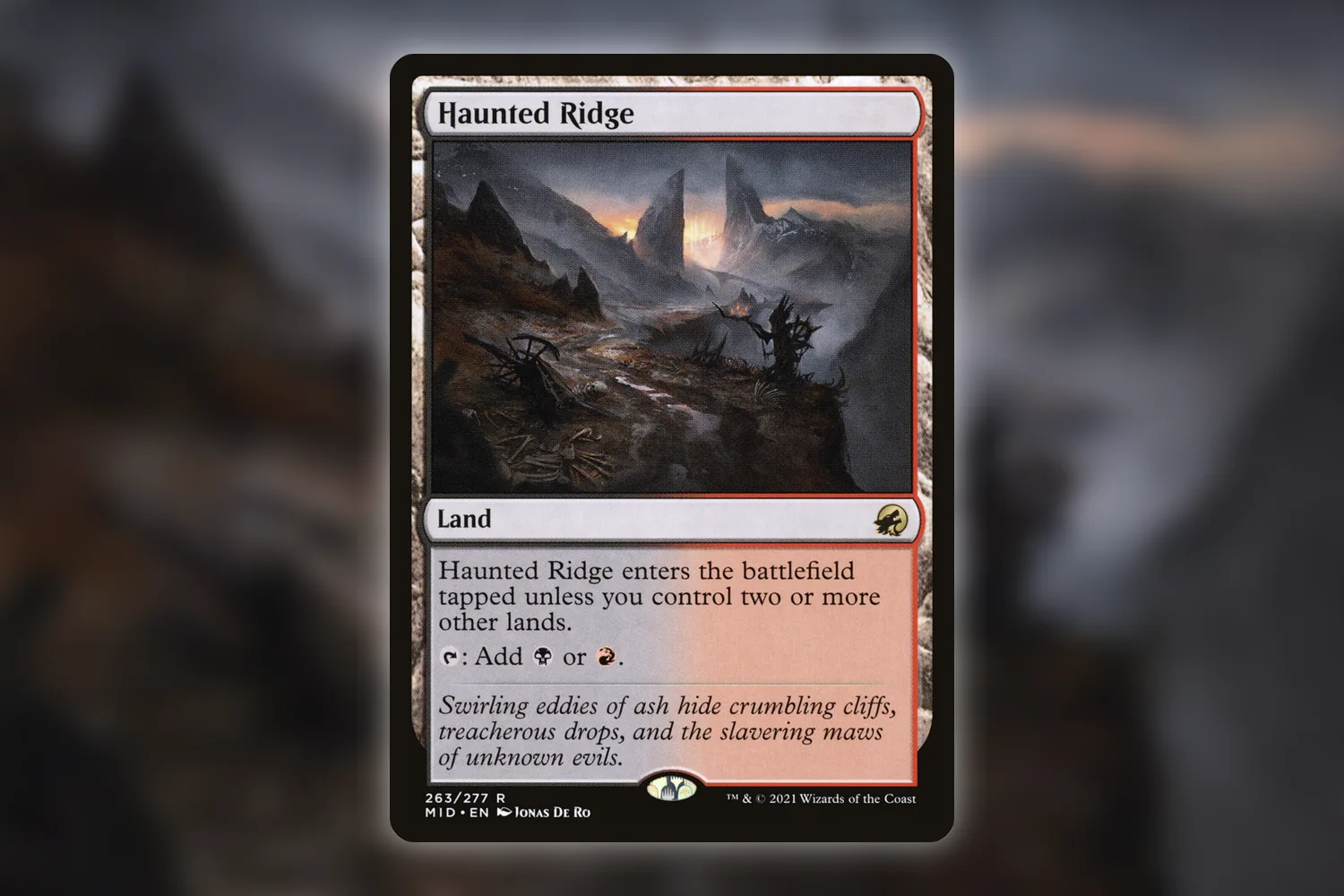
Haunted Ridge is $8.03 in its ordinary Midnight Hunt printing. It’s a rare land with a brownish landscape, the sort of thing that can disappear into a divider marked “dual lands” for five years. I’d probably remember pulling The Meathook Massacre. Remembering which box claimed my spare red-black land feels considerably less likely.
One nonfoil copy of each of this set’s five rare dual lands adds up to $24.76 at today’s prices. Meathook is $24.87. If your old draft box has already had its famous mythics removed, there’s still a fairly specific reason to open it again. October helps. The box with the werewolves on it was practically asking.
I’d start with the lands and a few cards with useful jobs, then check the exact versions of the foils. Everything below uses prices checked on October 21, 2026, with collector numbers attached so you can match the cardboard in your hand.
The Midnight Hunt cards I’d pull first
These are Scryfall’s USD reference prices for the regular MID printings listed. Each foil price belongs to the same collector number as its nonfoil neighbor. Condition and selling costs will affect what a buyer actually pays you; the distinction between market prices and buylist offers still applies to a box full of apparently forgotten money.
| Card | MID number | Nonfoil USD | Foil USD |
|---|---|---|---|
| The Meathook Massacre | 112 | $24.87 | $28.45 |
| Haunted Ridge | 263 | $8.03 | $8.49 |
| Shipwreck Marsh | 267 | $5.96 | $7.93 |
| Deserted Beach | 260 | $4.68 | $6.06 |
| Unnatural Growth | 206 | $4.35 | $4.39 |
| Adeline, Resplendent Cathar | 1 | $3.86 | $4.68 |
| Overgrown Farmland | 265 | $3.75 | $3.75 |
| Jadar, Ghoulcaller of Nephalia | 108 | $3.69 | $7.59 |
| Rockfall Vale | 266 | $2.34 | $3.38 |
| Moonsilver Key | 255 | $1.00 | $5.06 |
| Faithful Mending | 221 | $0.89 | $3.74 |
This is a working pull list. I’ve included two uncommons and left out several higher-priced mythics so the first pass catches different kinds of cards. A box you opened yourself might have all its rares in a binder already, with the interesting foils still among the draft leftovers.
The five lands share their entry condition: they enter tapped unless you control two or more other lands. Haunted Ridge makes black or red, Shipwreck Marsh blue or black, Deserted Beach white or blue, Overgrown Farmland green or white, and Rockfall Vale red or green. They have no basic land types.
On an ordinary opening sequence, your third land can be one of these and arrive untapped. As your first or second land, it’ll enter tapped. That’s comfortable enough for plenty of slower Commander decks and a genuine inconvenience in a deck trying to spend every mana immediately. I’d compare a spare with the lands actually sleeved in a deck before deciding it’s available for trade. Our guide to finding Commander lands you already own covers that broader search.
I lean toward keeping the first useful copy of each land. Although, hang on, that rule can swallow an entire collection. Keeping one of every dual for a deck that exists only as a name in a notes app is how the spare-land box becomes a second spare-land box. Check a real list. If all five of your decks already have the fixing they need, a duplicate Haunted Ridge is allowed to leave.
A few cards I’d read before assigning a pile
Unnatural Growth costs five mana, four of it green. At the beginning of each combat it doubles the power and toughness of each creature you control until end of turn. Each combat includes opponents’ combats, so it can change the blocking situation too. A green-heavy creature deck can make use of that; a multicolor deck with ambitious utility lands may have trouble producing GGGG when it wants to.
Adeline triggers whenever you attack, even if she stays home. In a four-player game with three opponents, that trigger creates three tapped, attacking Humans, one for each opponent or a planeswalker they control. Her own power scales with your creature count. I’d check her against a white token deck before treating the regular copy’s $3.86 price as the only interesting thing about her.
Jadar makes a 2/2 Zombie with decayed at the beginning of your end step if you control no creatures with decayed. The Zombie can’t block and gets sacrificed at the end of combat after it attacks. Leaving it sitting there can prevent the next replacement, so the card rewards a deck with something useful to do with a disposable creature. A sacrifice outlet helps. So does remembering your end step.
I once kept a Midnight Hunt prerelease deck assembled for weeks because I was convinced the black-white pile had potential. It had gone 0–3 at the shop. Jadar was still in a sleeve with a basic land tucked behind him, and I’d folded the life-total sheet into the deck box as though the evidence needed preserving. I don’t remember a single opponent’s deck. I do remember the score sheet being too thick to let the lid close.
Meathook can stay in a permanent-heavy black deck after its entry effect has done the clearing. Your creatures dying cause each opponent to lose life; opposing creatures dying gain you life. Those are separate triggers. The card’s $24.87 quote makes it an obvious sleeve candidate during sorting, even if the eventual decision about keeping it takes longer.
The foil uncommons deserve a second pass
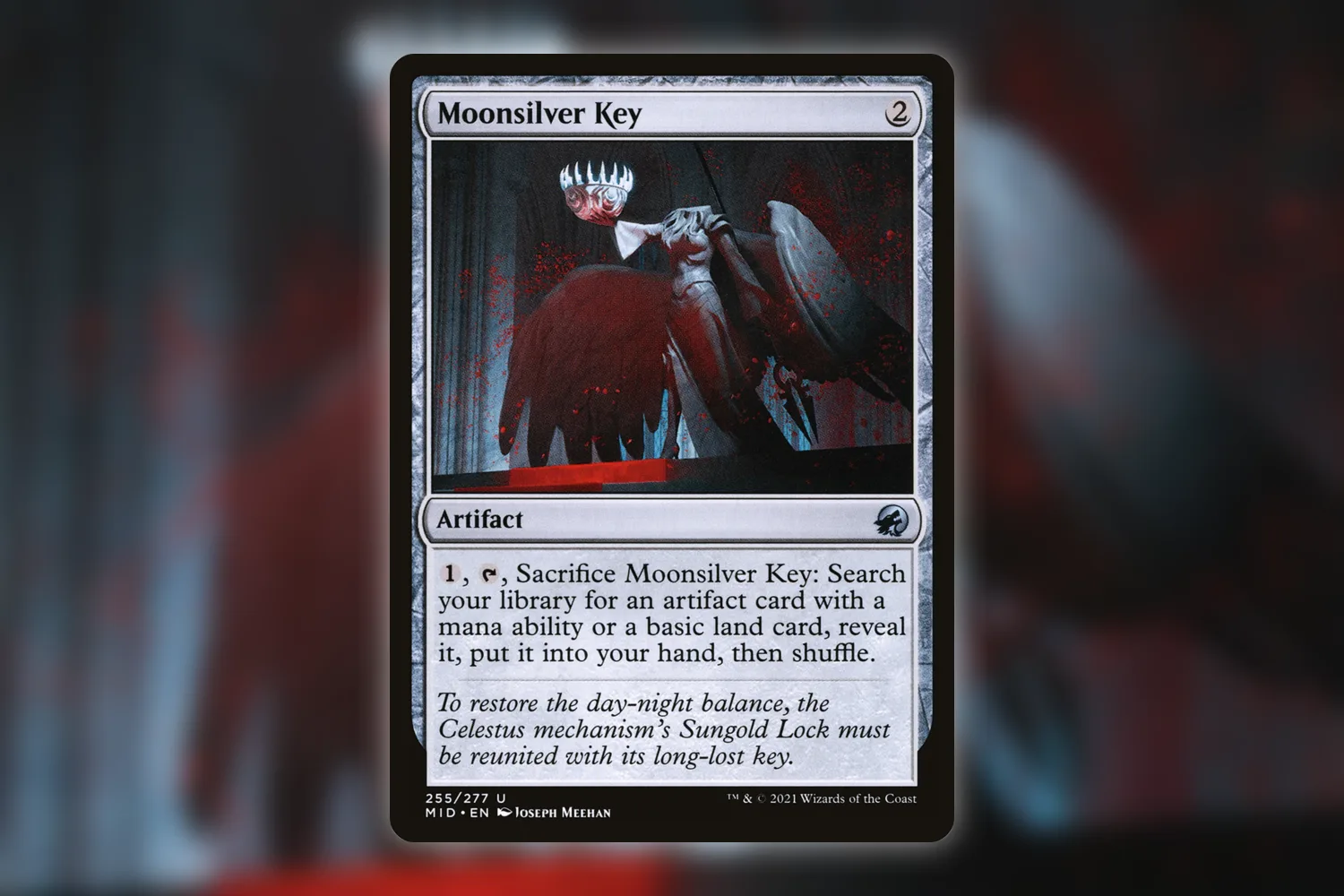
Moonsilver Key is the easiest card here to file away as a dollar artifact. Its regular MID foil is $5.06, against $1.00 nonfoil. It costs two mana to cast, then another mana, a tap, and sacrificing it to search for an artifact with a mana ability or a basic land. The card goes into your hand. That last step adds a delay if you’re picturing it fixing everything immediately.
Faithful Mending is $0.89 nonfoil and $3.74 foil. For white and blue mana it gains two life, draws two cards, then discards two, with flashback for three mana. A deck using its graveyard may be pleased to find a copy. A deck simply looking for extra cards should account for those two discards before getting excited.
I don’t have sales-volume evidence explaining either foil premium. Commander demand, other formats, and available supply can all affect prices, but the price fields alone won’t divide those causes up for us. I’d verify the current quote again when selling, especially if the foil has spent five years rubbing against other cards.
Same name, different little number
The borderless Haunted Ridge, MID 282, is $8.42 nonfoil and $13.15 foil. The ordinary 263 is $8.03 and $8.49. The nonfoil difference is small enough that I’d choose whichever art I liked; the foil difference deserves the correct entry in the collection.
Meathook’s extended-art version, MID 348, is $29.61 nonfoil and $36.05 foil. Then Adeline complicates the temptation to assign every special frame a premium. Her showcase eternal night version, MID 312, is $2.75 nonfoil and $4.41 foil, both below the regular printing’s quotes.
Wizards explains the division between Midnight Hunt’s showcase treatments: equinox went on Werewolves and Warlocks, while eternal night covered basic lands and the other legendary creatures. A black-and-white Adeline can therefore still be a MID card. The separate Double Feature release also uses black-and-white imagery and has its own silver screen foils. Read the set code before applying any price in this article to one of those.
Okay. Land pile first. Put the shiny Key somewhere safe. And the Adeline, yes, check the bottom of that one too. You can get the card name right and still have the cheaper frame sitting in front of you. Tiny print. Of course it’s tiny print.
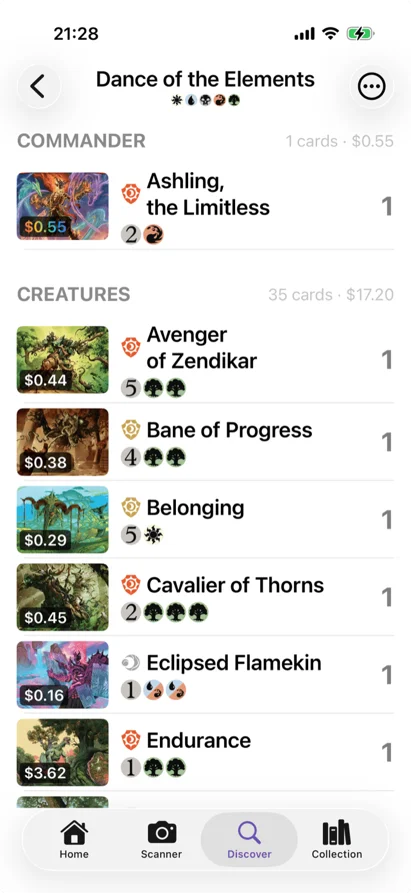
I’d scan the separated cards into Eldwyn, check the recognized printing and finish, and give the copies a location before moving them again. The collector-number guide is useful if you’re squinting at the bottom line. For this box, I’d leave a short checklist on the divider: five rare lands, the named creatures and enchantments, Key and Mending foils. Write the names there; look the prices up again when you’re ready to trade.