There’s a point in a long bulk-sorting session where your hands stop checking in with your brain. Card, card, card, reject pile, card. I was maybe nine hundred deep into a Dominaria United box back in June when a scan came back at over two dollars for something I’d been flicking into the bulk pile all evening.
I assumed the number was stale. Moved on. Found four more of the same card in that box over the next twenty minutes and didn’t think about it again until September, when I found out why.
The rule that decides which MTG commons are worth money
Pauper is a constructed format where every card has to be a common. Sixty cards, four copies each, the whole thirty-year card pool filtered by rarity instead of by date. It started on Magic Online, got sanctioned in paper, and since January 2022 it’s had its own format panel at Wizards that handles bans on a separate schedule from the main announcements.
The legality rule is the part worth internalising, and it’s stranger than people expect. A card is legal in Pauper if it has been printed at common in at least one official release, anywhere, ever. Paper or Magic Online. And the copy in your hand doesn’t have to be the common one. If a common printing exists somewhere in that card’s history, every printing of it is legal.
Rarity belongs to the printing. Not to the card.
Which means a card can sit at uncommon in the only set you’ve ever seen it in, get downshifted to common in some product you never bought, and the uncommon copy in your binder quietly becomes a Pauper card. Same cardboard, different price.
The September thing proved it in about four days
Wizards sold the Zeta Set at the start of September, a Secret Lair done up as randomised boosters full of fake playtest cards. Twelve of the cards in it landed at common for the first time. Gavin Verhey, speaking for the Pauper format panel, said at first that Secret Lair printings wouldn’t touch Pauper legality. Then the community argued about it for two days and the panel reversed, effective September 7. Two of the twelve got pre-banned on the spot. Four more went on a watch list.
I wrote about the Zeta Set when it dropped and said flatly that Secret Lair sits outside the Pauper rule. That aged badly in under a fortnight, so, you know. Take the rest of this with whatever salt you think it deserves.
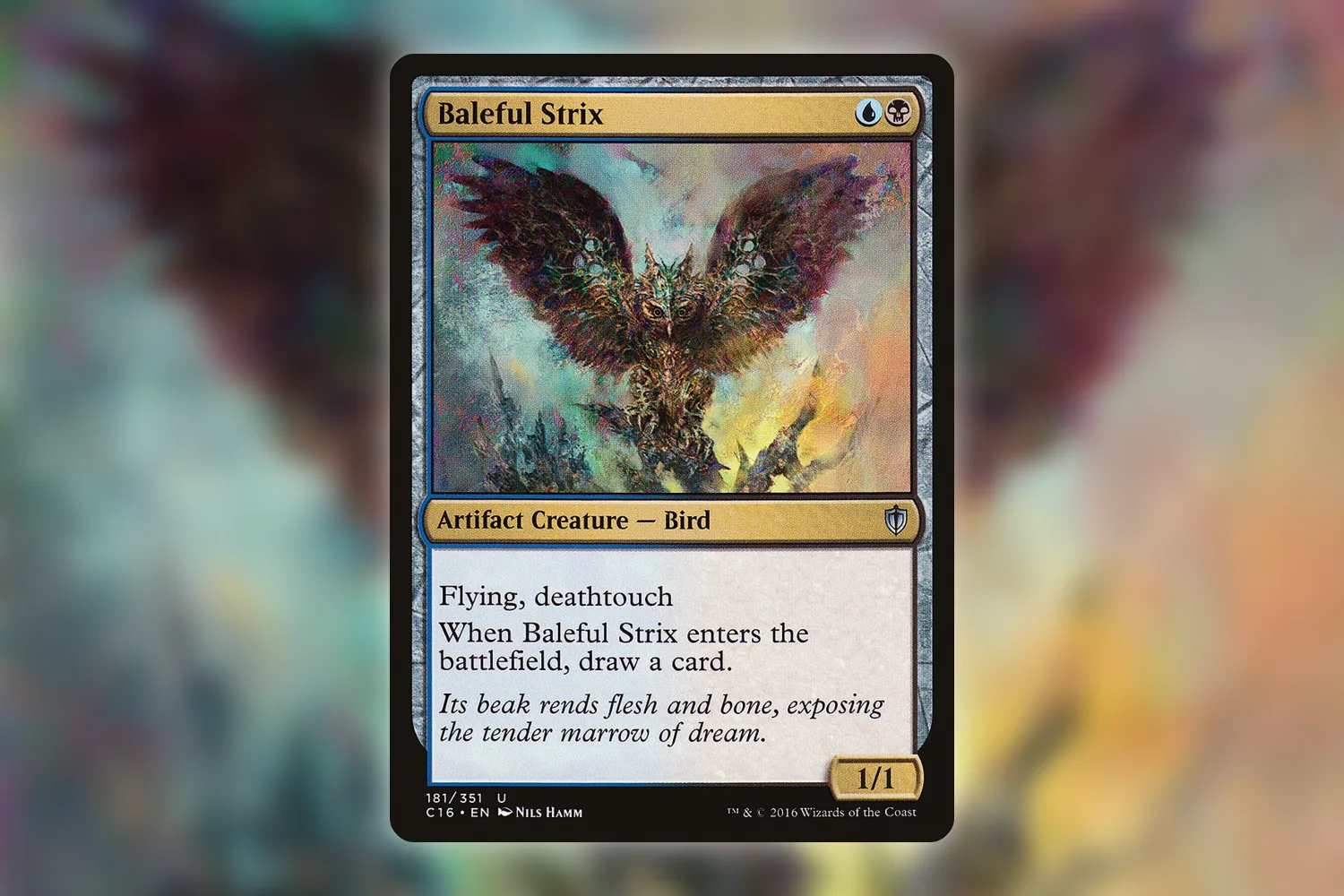
Baleful Strix is the card. That’s the two-dollar common I kept finding in my Dominaria United box, except it isn’t a common at all in any printing I own. It’s a two-mana artifact bird with flying, deathtouch, and draw-a-card stapled on, and it had nineteen printings before September, none of them common. The Zeta printing made every single one of those nineteen Pauper-legal at once.
The price did what you’d expect. Reports at the time had it going from around two dollars to north of ten, which is a 350% move on a card that had been stable for a decade. Draftsim ran the number at 972% against its floor.
Here’s where I’d normally tell you to go check your bulk. And you should. But the headline number is already wrong: the cheapest real Baleful Strix on Scryfall this morning is $3.32 in Commander 2016, with Eternal Masters at $3.51 and Double Masters at $4.46. The Bloomburrow Commander printing is up at $14.00, but that one was expensive before any of this happened. Two and a half weeks after the spike, most of it has bled back out.
Cut Down did the same dance from a smaller base. It jumped something like 600% on the announcement and sits at $2.66 in its Dominaria United printing now. The other two watch-listed cards, Dispatch and Vandalblast, went basically nowhere. Thirty-one cents and $1.16 in their Marvel Commander printings. Four cards, one rule change, two of them shrugged.
Most Pauper staples are still bulk, which took me a while to accept
So yeah. I spent a week after that reversal thinking I’d found the decoder ring. Pauper legality equals price floor, go forth and sort. Except then I actually went and priced the format’s best-known cards and, well. It doesn’t hold.
Gurmag Angler has been a defining Pauper threat for years. Twenty-seven cents. Chatterstorm, twenty-six cents. Basking Rootwalla, twenty-one. Deadly Dispute, one of the format’s premier card-advantage engines, thirty-four cents in its Marvel Commander printing. These are cards people build entire decks around and you could buy a playset of all four for less than a sandwich.
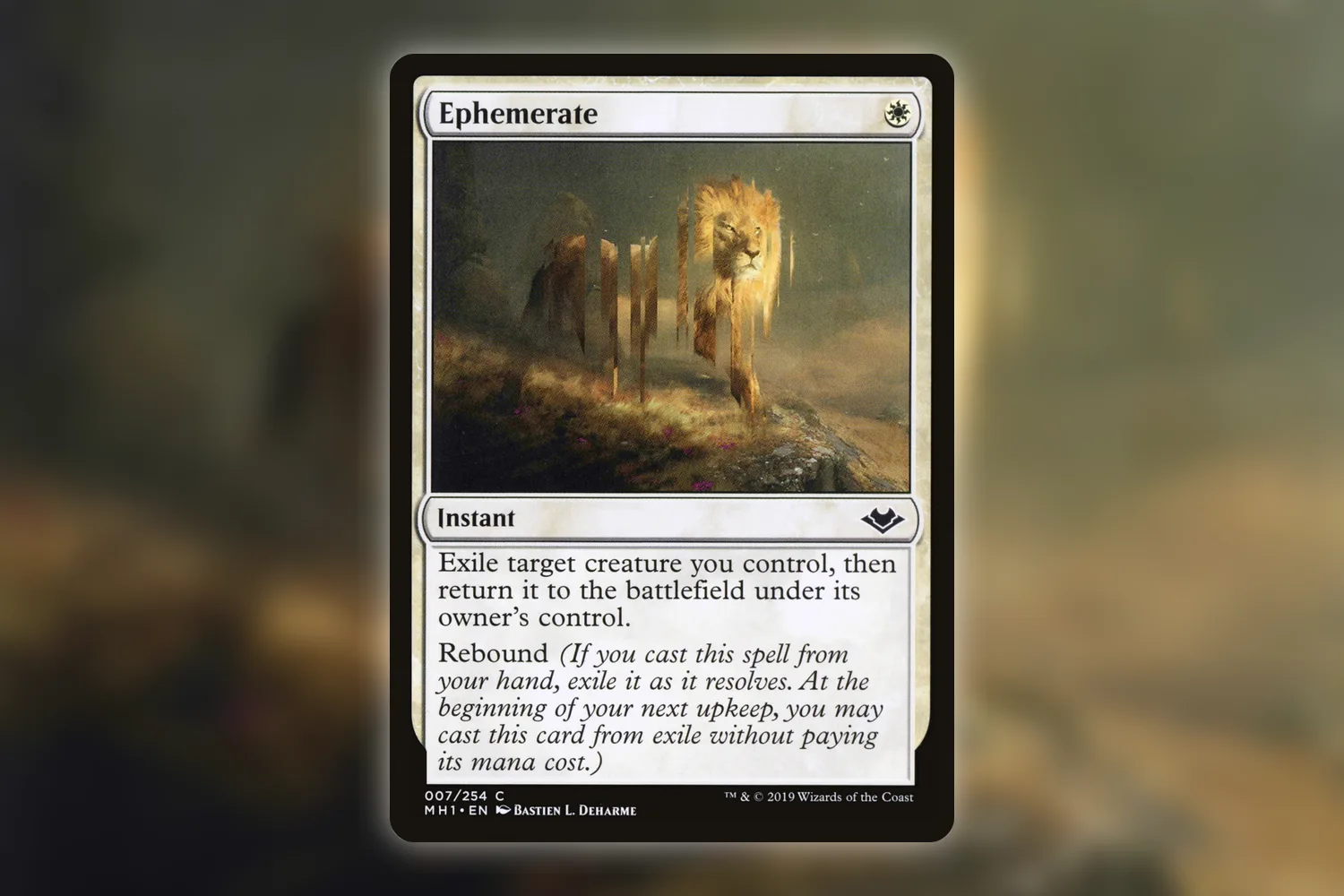
Format demand on its own doesn’t move a common. What moves it is demand meeting a thin supply of printings. Ephemerate is $5.06 because it’s the engine behind half the blink decks in the format and it has barely been printed outside Modern Horizons. Lórien Revealed is $4.80 for the same reason, an island-cycling common that every blue deck wants four of and that mostly exists in one Lord of the Rings print run. Gurmag Angler is in Ultimate Masters, Ultimate Box Toppers, two Jumpstarts, a Commander deck and the original Fate Reforged. Supply everywhere, no floor.
The other thing that makes an old common expensive has nothing to do with playability. Seeker of Skybreak is $6.59 and it got banned in Pauper back in the June announcement. It’s expensive because it’s a Seventh Edition card and nobody kept their Seventh Edition commons in sleeves. Age and scarcity do their own thing, independent of whether any format wants the card.
What I actually do with this now
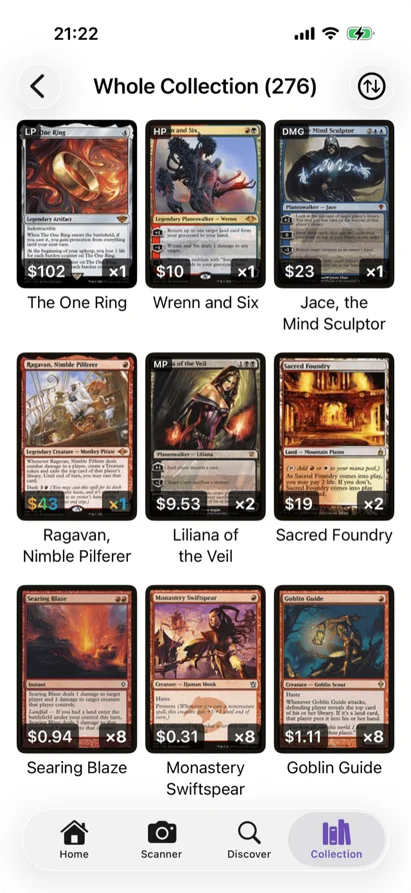
Rarity symbol isn’t a sorting signal for value, and I’d half-known that for years without changing anything about how I sorted. What I’ve started doing instead, when I hit a box of commons, is just scanning the whole thing rather than eyeballing for rares first. It’s not a clever technique. It takes the same forty minutes it always took. The difference is that the cards I would have flicked past get priced too, and about once a box that turns up something like the Strix situation, where a card is worth real money for a reason I had no way of knowing from looking at it.
The specific things I’d flag, if you want to be more targeted than “scan everything”:
A card with very few printings that shows up in Pauper decklists. That combination is the whole mechanism. Print count is right there on Scryfall and on the bottom line of the card itself if you know the set codes.
Anything that got a first-time common printing recently. That’s the downshift event, and it retroactively legalises every older copy you own. It also mostly doesn’t get reported as a price story until after the move.
And honestly, past those two, I’d leave the rest of your commons alone. The time math on combing four thousand of them by hand hasn’t changed just because a bird got legalised. I’m still not convinced the Strix thing wasn’t mostly luck on my part, given I’d already sorted the box in June and put the things in the reject pile without a second look.
The October Pauper update is the next thing to watch, since Baleful Strix and Cut Down are both still sitting on that watch list. If either gets banned the prices go back where they came from and my two-dollar commons return to being two-dollar commons, which would be a fittingly boring end to the whole episode.