I’ve got a Tarmogoyf in a binder I haven’t opened in years. Future Sight printing, the original, played to absolute death, soft corners and a scuff right across the bottom of the art. I paid something like fifty bucks for it at a shop near my old apartment during a Modern phase that, in hindsight, lasted exactly one FNM and one disappointing GP trial. It was a chase card the day I bought it. It is very much not a chase card now. Nobody warned me that could happen, and honestly I wouldn’t have listened.
That Goyf is the part of the chase card conversation people skip past. Everybody wants to know which new card is the chase. Almost nobody asks why, or whether it’ll still be one in eighteen months.
What a chase card actually is
A chase card is the card in a set everyone’s hoping to pull. The one that makes cracking a box feel worth it instead of feeling like you set forty dollars on fire. The marquee mythic, the splashy borderless treatment, the bonus-sheet reprint that’s worth more than everything else in the pack combined. You chase it. That’s the whole etymology. People will buy a sealed booster box hunting one specific card and happily ignore the other five hundred.
The thing I had backwards for the first decade of collecting: a chase card isn’t necessarily a good card. Power level and price are only loosely related, and sometimes they’re barely on speaking terms. Plenty of the most expensive cards in a given set are mediocre in actual games. They’re expensive because a lot of people want them and not many copies exist. Demand meeting scarcity. That’s the entire engine, and everything else is just a flavor of one of those two things.
What’s actually driving the number
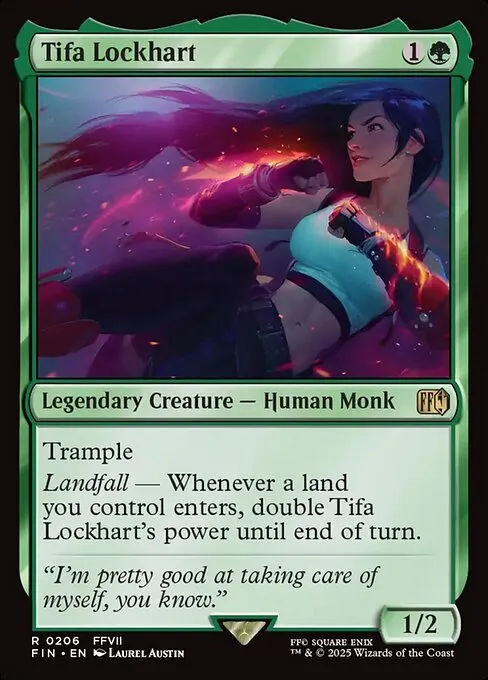
Take Tifa Lockhart from the Final Fantasy set. The plain version is a two-dollar card you’ll see in a hundred Commander decks. The borderless surge-foil Tifa is a different animal, sitting north of a hundred bucks. Same card. Same text. Same legality. The art treatment is the entire multiplier. That gap is the clearest possible illustration of why “chase” lives in the printing, not the card.
So scarcity comes in a few shapes. There’s the printing itself being rare, like Collector-Booster-exclusive treatments or serialized cards numbered to a few hundred copies. There’s bonus-sheet math, where a reprint shows up at something like 1 in 26 packs, which keeps supply thin even if the card’s been printed a dozen times before. And there’s the treatments themselves, the borderless and surge foil and textless versions that I’ve tried to keep straight elsewhere and still mix up half the time.
Demand is the other half, and demand in Magic mostly means Commander. A card that slots into thousands of EDH decks has a floor that a Standard-only card never gets. Stack a recognizable character or a crossover IP on top of that Commander demand and you get the cards that genuinely hold. The chase mythic that’s also a great commander is the one that climbs. The chase mythic that’s just pretty tends to bleed out once the hype packs up and leaves.
Then there’s reprint exposure, which is the quiet killer. My Goyf didn’t crater because anyone decided it was bad. It cratered because it got reprinted into Modern Masters and Ultimate Masters and a couple of other places until the scarcity half of the equation collapsed. A card on the Reserved List can’t take that hit. Almost everything else can, and Universes Beyond cards in particular can get a Secret Lair reprint dropped on them with about two weeks’ notice. I wrote a whole thing about why Commander spec cards crash after a reprint, and the short version is that the reprint is always coming, you just don’t know when.
So yeah. Demand, scarcity, reprint risk. That’s it. That’s the model. You can dress it up but it doesn’t get more complicated than three variables, and the third one is the one everybody ignores because it’s the least fun to think about.
Spotting one before the price settles
Here’s where I’ll undercut myself a little. Half of me thinks predicting chase cards is a mug’s game and you’d be happier just playing with the cards you like. The people who “called” the chase card of a set were usually right about three cards and quietly wrong about nine, and you only hear about the three. I’ve watched preorder darlings double, and I’ve watched them lose two-thirds of their value by the time the set was a month old. Preorder prices are basically a hype reading, not a value reading.
But if you’re going to try, the tells are consistent enough to be useful. The genuine chase card is the one where Commander demand and real scarcity overlap, and where a cheap reprint isn’t sitting right around the corner. A flashy treatment on a card nobody plays will spike at release and then sag. A plain-frame card that every third EDH deck wants will grind upward for a year. When both land on the same card, that’s your chase.
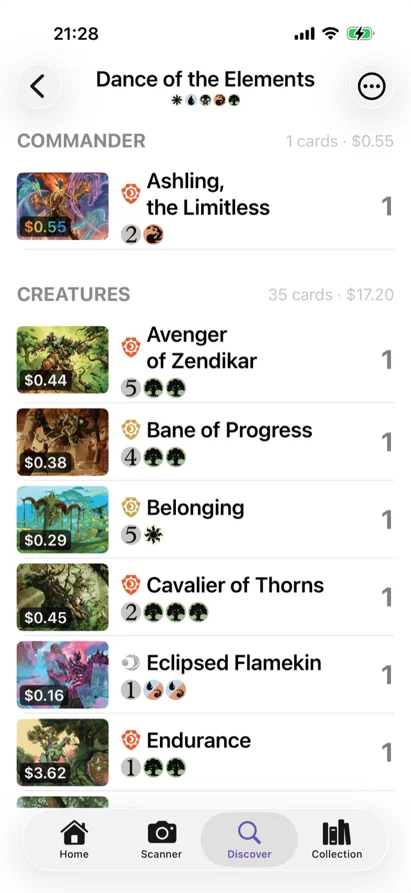
The practical move is less glamorous than the prediction game. When a set drops, log what you actually pull before you start reading price articles, because the articles will absolutely talk you into believing your bulk mythic is secretly worth money. I scan a box into my collection the night it comes out and let the prices fill in over the next week or two, which means I can watch a card’s number move instead of guessing at it. The Marvel logging post goes deeper on this, but the gist is that the card you opened on day one and the card it’s worth on day fourteen are frequently not the same card, financially speaking.
And the thing nobody admits about chase cards is that you might already own the thing you’re about to overpay for. I have bought, with real money, a card I had two copies of in a long box in the closet. Twice. So before you chase anything, it pays to actually know what’s in your collection, which sounds obvious and is apparently impossible for me to internalize.
I genuinely don’t know whether the current crop of chase cards holds. The Mind Stone out of Marvel Super Heroes is sitting at the top of every “biggest pulls” list right now, and the cosmic-foil version is the kind of card that, going by what the Soul Stone did out of the Spider-Man set, could be a tens-of-thousands-of-dollars lottery ticket. Or it could settle to a third of its preorder number by August. The set is a day old. Anyone telling you they know is selling something.
So I keep coming back to the boring advice, which is to re-price your collection every so often and let the chase cards reveal themselves over time rather than trying to snipe them at the starting line. The cards that were genuinely chase-worthy are still expensive a year later. The ones that weren’t quietly turn into the Tarmogoyf in your unopened binder, the one you paid fifty bucks for and now can’t give away. Ask me how I know.