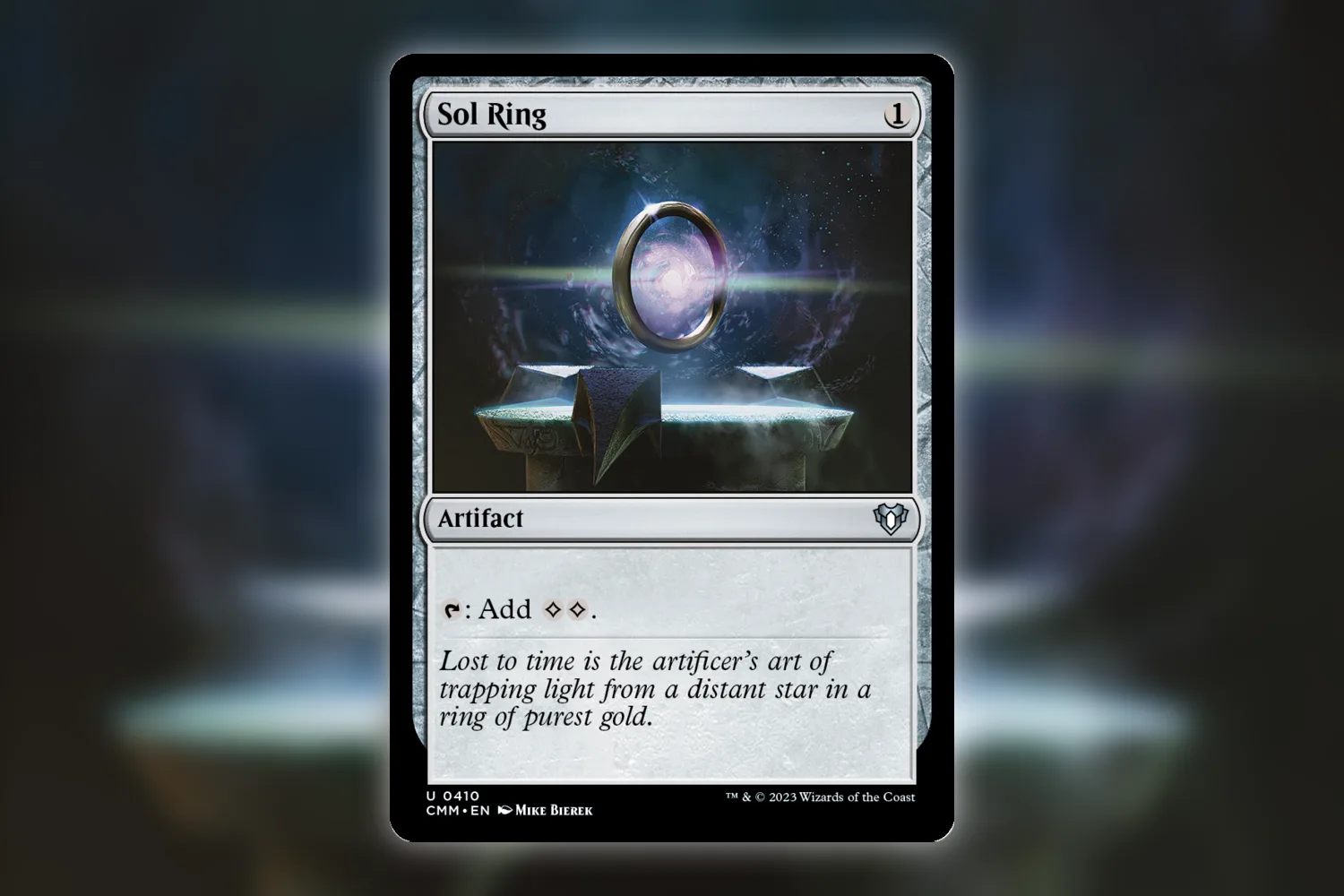
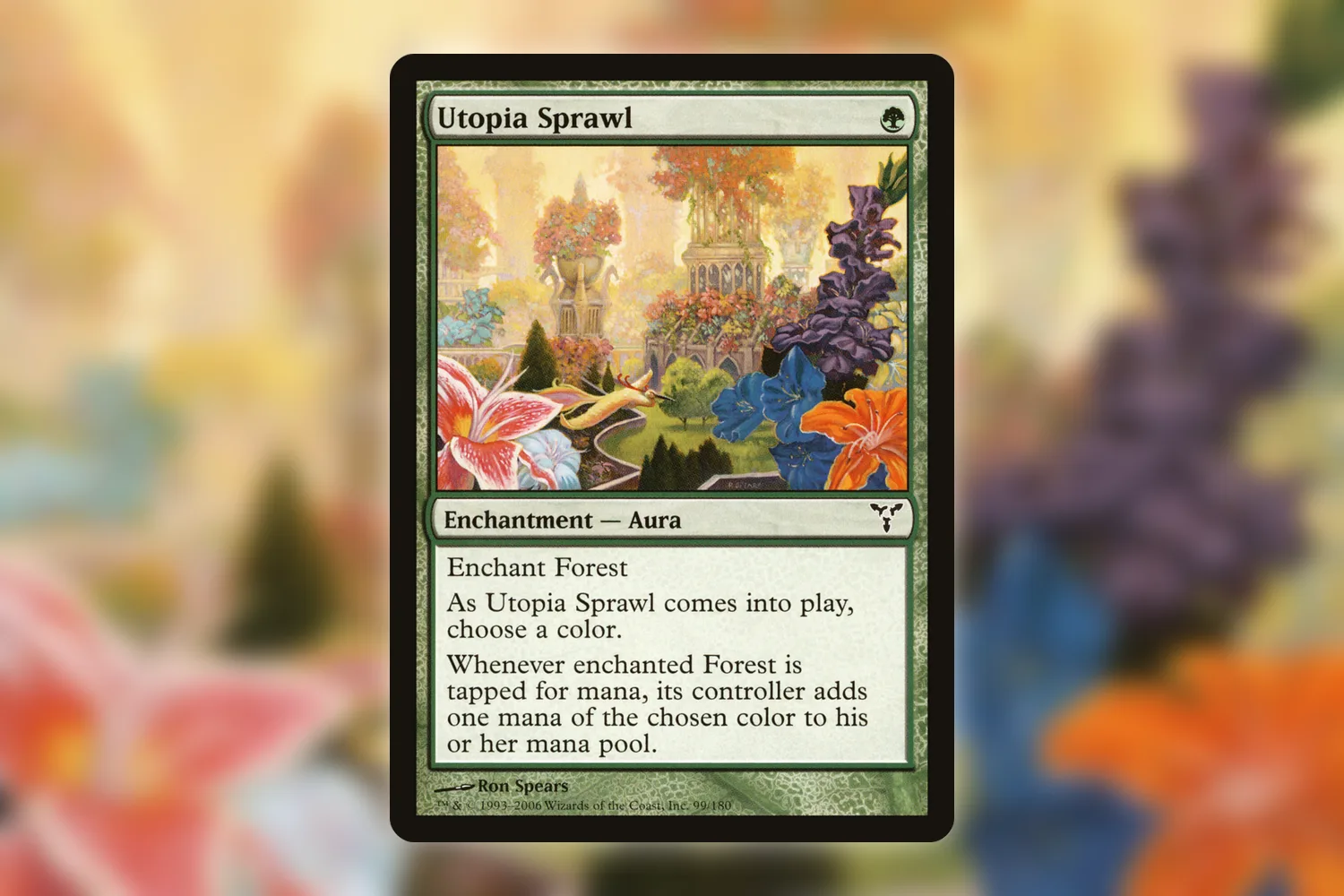
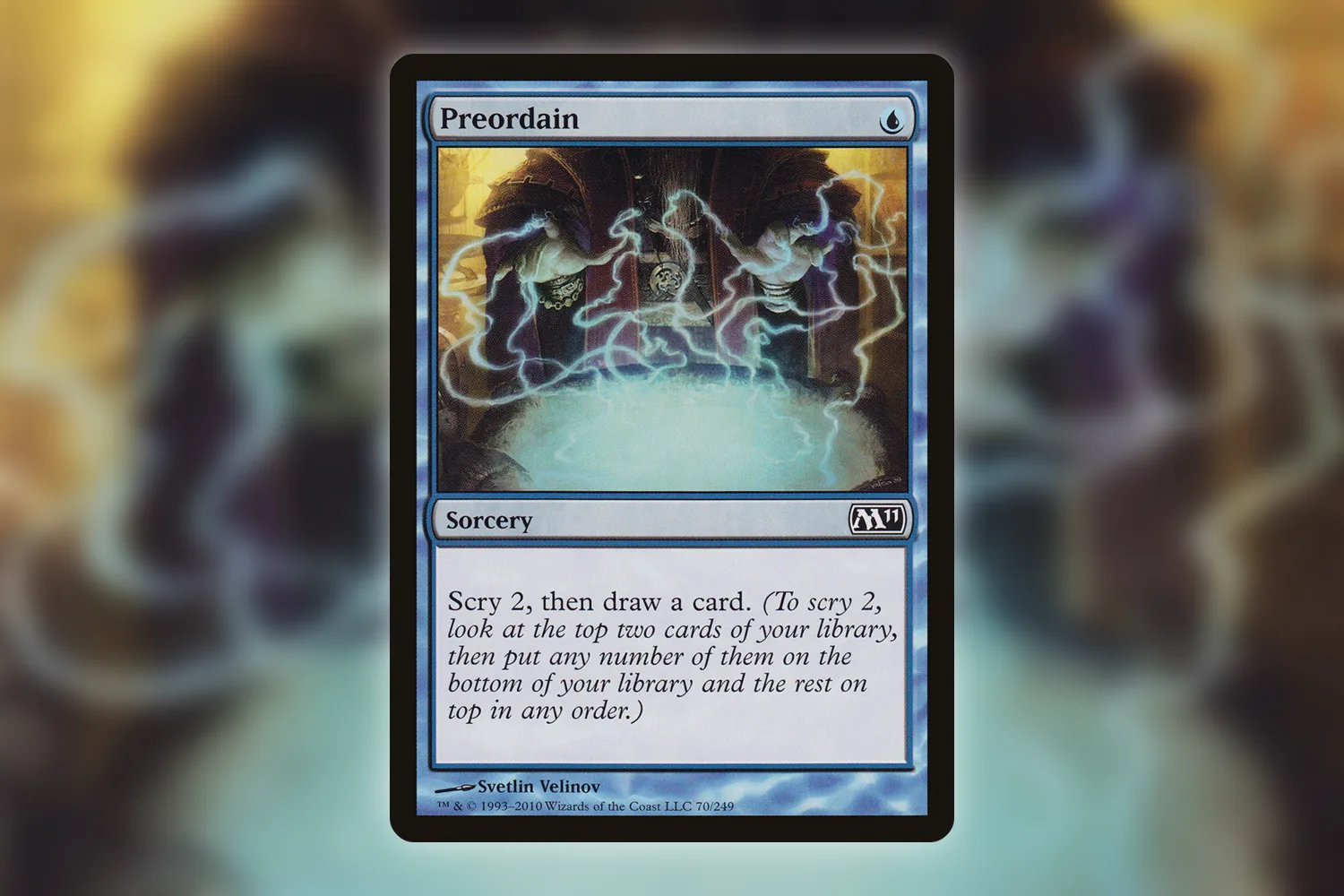
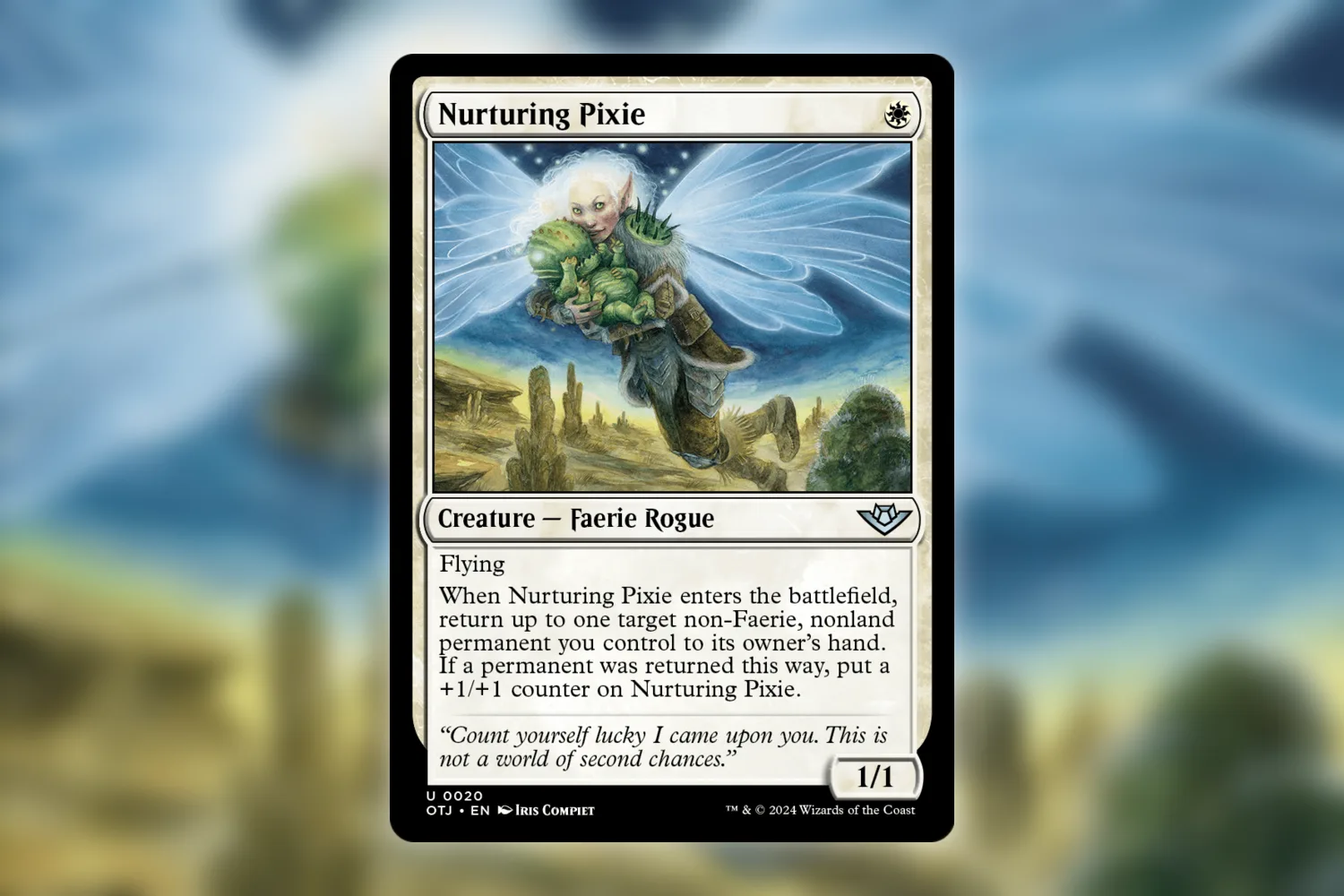
Your MTG collection probably contains a few cards you stopped thinking about the moment you put them away. Nurturing Pixie, for instance. A one-mana uncommon from Outlaws of Thunder Junction is an easy thing to lose among the leftovers from a draft.
Twenty-four players brought Boros Pixie to this weekend’s World Championship. I’d check the white cards before ordering anything.
Wizards’ November 12 metagame breakdown gives us a useful starting list for a small collection audit: find the cards appearing in the submitted decks, then work out which copies are actually available. I’m sticking to those two jobs here. Predicting Sunday’s winner sounds exhausting, and I’ve already got boxes to look through.
Start your MTG collection audit with three decks
World Championship 32 runs November 13–15 in Atlanta with 128 players. The three most-registered Standard archetypes are Boros Pixie with 24 players (18.8%), Selesnya Landfall with 19 (14.8%), and Dimir Control with 10 (7.8%). Wizards lists 29 archetypes altogether.
That’s plenty to narrow the search. I’d begin with whichever of those three overlaps most with sets I’ve opened or decks I’ve built. A box of green draft leftovers makes Landfall a more useful starting point than an hour spent hunting down every blue-black control card.
The official report says the full Standard decklists are scheduled to appear on the event page at the start of Round 4 on Friday, around 2 p.m. Eastern. Use the published lists when they’re available. An archetype name alone leaves too much room for guessing about the supporting cards.
Pick one list. Copy its card names and quantities into a note or spreadsheet, including the sideboard. If you’re checking two lists from the same archetype, record where they differ before combining anything. A one-copy sideboard choice deserves a different expectation from a card appearing four times across several lists.
Dimir Control is especially interesting for this exercise. It accounted for less than 1% of the previous week’s data in Wizards’ analysis, then attracted ten players at Worlds. The report highlights Deadly Cover-Up in that discussion. A Murders at Karlov Manor rare gives you a reason to revisit an older box while everyone else is looking at Star Trek.
I don’t know which of these decks will have the best Standard record by Sunday. Registration tells us what competitors chose to trust, and teams can arrive at the same clever idea together. I’ll want the match results before treating the biggest number in the table as a recommendation to build it.
Find the copies, including the ones in decks
Run those names against your inventory first. In Eldwyn I’d search for each card, check the matched printing, and confirm quantities. Anything you haven’t catalogued becomes a short physical search list. This is the same basic process as checking a want list against your collection, with a tournament deck supplying the names.
Leave the rest of the collection alone for now. Finishing one deck’s checklist is manageable; deciding to reorganize every uncommon you own is how this becomes a Sunday with no lunch.
For each match, write down the total owned, the location, and how many copies you want to reserve. Be specific about the location. “Black binder, back page” beats “somewhere with the removal.”
Say the inventory shows six copies of a card. Four belong to a Standard deck you still play, one is in Commander, and one is loose. Your available quantity is one. Selling three because a decklist only needs a playset means borrowing from yourself, and future you will probably have to pay postage.
Oh, and the sideboard. Check that too. The little pile behind the deck divider. It counts. It’s very easy to remember the main deck and mentally turn the other fifteen cards into spares because they weren’t on the battlefield last Friday.
If deck assignments are the missing part of your inventory, the guide to counting cards already sleeved into decks covers that problem. For this audit, a handwritten reservation beside each card is enough.
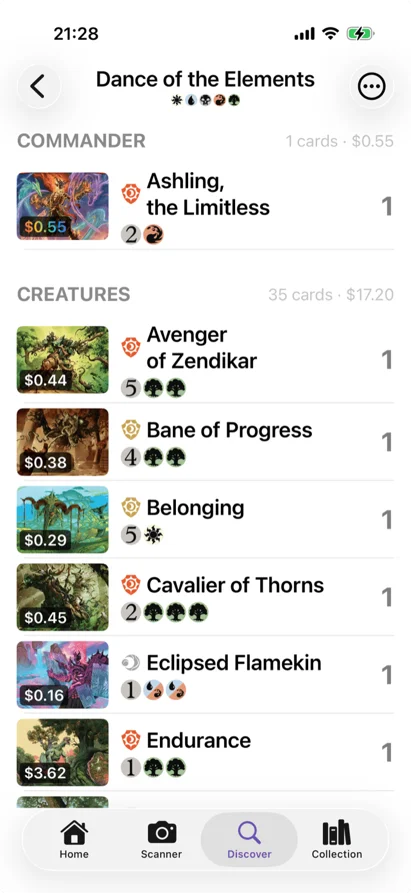
The trade pile can wait until you’ve checked the printing
Keep the tournament list’s required quantity separate from the printing you own. A list may display one edition while your playable copy comes from another. Check current Standard legality for the card, then record your actual set, collector number, finish, and condition when pricing it.
Nurturing Pixie’s ordinary OTJ printing was $0.33 in Scryfall’s USD reference data when I checked on November 13. Deadly Cover-Up’s ordinary MKM printing was $0.85. Both are useful audit targets without turning a handful of copies into a windfall. Shipping a cheap single by itself can eat most of the attraction.
I’d record today’s reference price beside any genuinely spare copies, then check an actual buylist or the price someone at the shop is offering. Market prices and buylist offers measure different things. Keep the date attached to the number so a weekend move has something concrete to compare against.
I’m inclined to leave cheap spares alone. Although, if someone at Friday Night Magic needs that final Pixie and has a card I’ve been looking for, I’d happily trade it. Saving someone a separate order is useful even when the reference price barely registers.
Before listing anything, put the cards you’re keeping back in their decks and put the available copies together. Bring the short list to the next game night. You can ask whether anyone needs them while they’re still shuffling.