There’s a particularly annoying way to own four double-faced MTG cards and end up with eight entries in a spreadsheet. Type the creature names into one list, the names on the backs into another, then combine both lists because you’re finally getting organized. Congratulations on the imaginary playset.
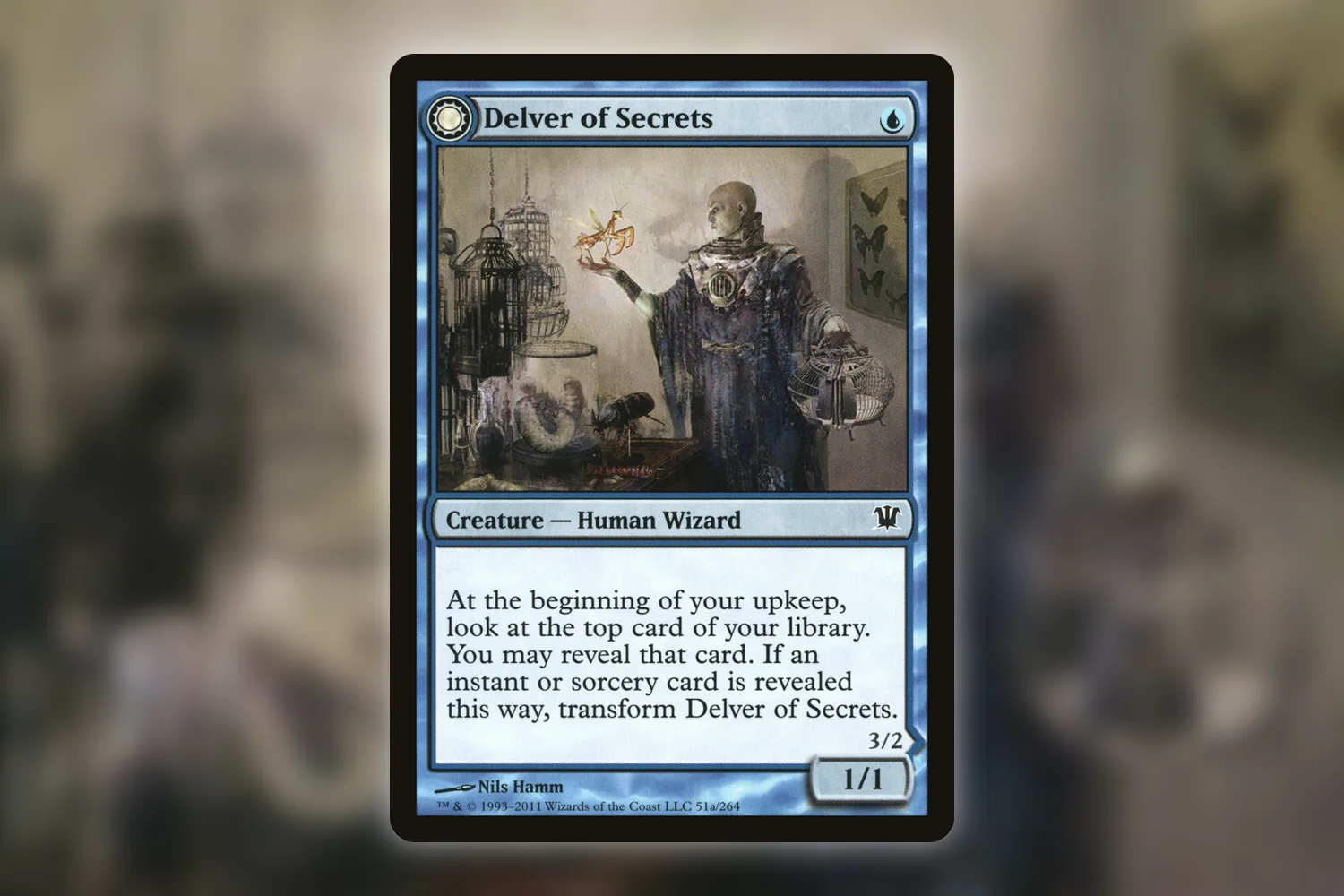
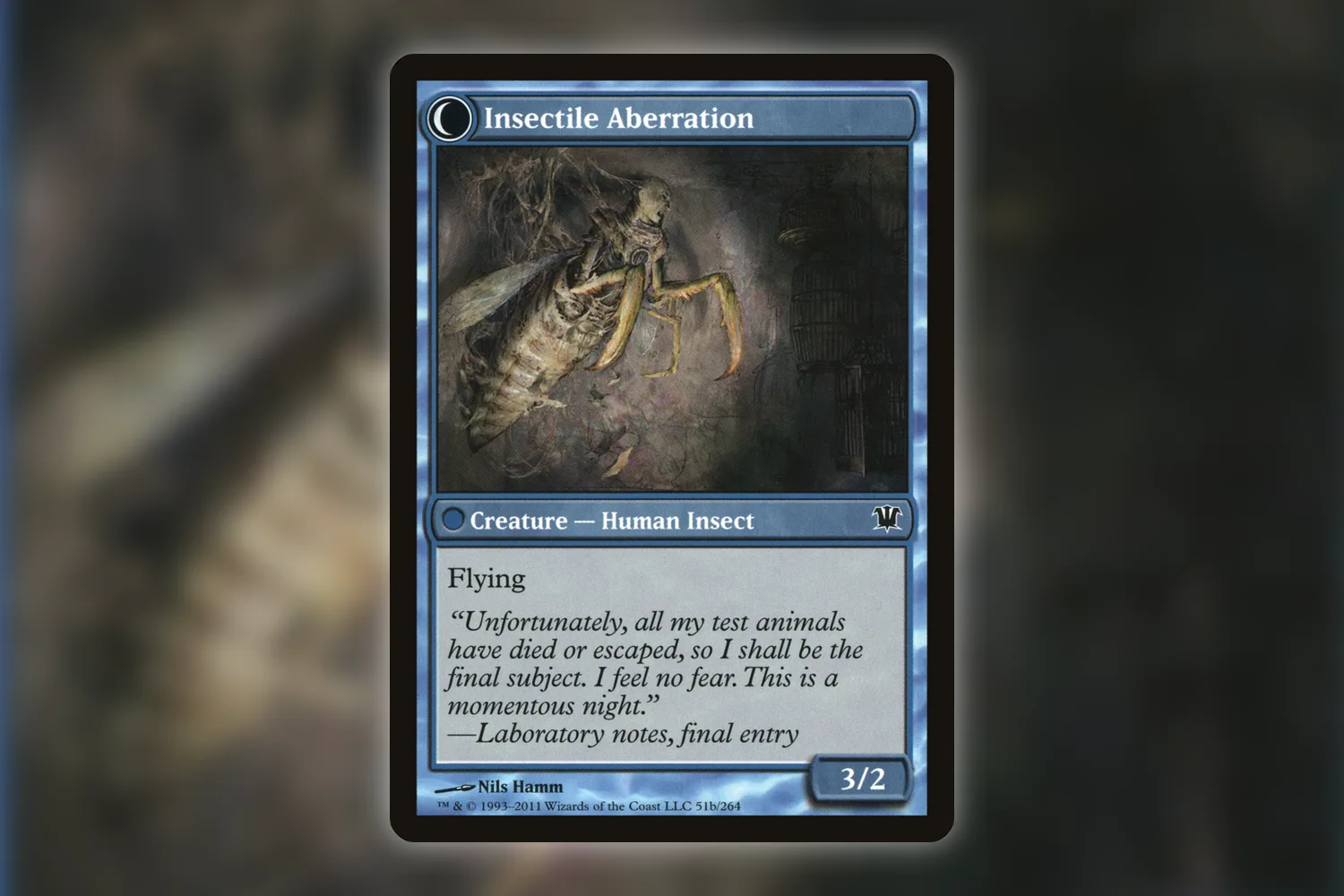
Delver of Secrets and Insectile Aberration are printed on opposite sides of the same piece of cardboard. Your inventory should count physical copies, with both faces attached to the same printing. That sounds obvious while you’re holding one. A list of names stripped out of a deck export makes it considerably less obvious.
Eldwyn already supports double-faced cards, including a flip control in the card detail screen. You can look at the reverse without adding another card to your collection. The bit that still needs your judgment is deciding how many actual copies you’re logging, especially when an old inventory has already split the names apart.
Two kinds of double-faced MTG cards, the same inventory problem
Delver is a transforming double-faced card. You start with the Human Wizard and follow its ability to turn it into the flying Human Insect. For a collection entry, the transformation changes nothing about how many copies you own. A transformed Delver sitting in a deck box is still a Delver you need to account for.
Bala Ged Recovery and Bala Ged Sanctuary work differently. They’re a modal double-faced card: you choose which face to play. Recovery is a sorcery; Sanctuary is a land. Wizards’ Zendikar Rising mechanics guide explains the distinction, including why these cards don’t transform.
The land face is where an otherwise sensible sorting system gets awkward. If you file every land under green lands, do you put this there? Or with green recursion spells? I prefer filing it under the front face, Bala Ged Recovery, because that keeps the physical sorting consistent with its collection name. But I can see the case for keeping spell/land cards together when you’re constantly rebuilding Commander mana bases. Either choice works if you can find the card afterward.
A deckbuilding tally can describe that copy as a possible land and a possible spell. Your owned quantity stays at one. If you put it in a deck, the card has moved out of whichever binder used to hold it; the land option doesn’t leave an extra copy behind.
The same applies to prices. The foil finish, language, condition, and printing belong to the whole card. You don’t need a separate value for Insectile Aberration to add to Delver’s value. When a collection total looks suspiciously generous after an import, duplicated faces are one place I’d check before celebrating.
What Eldwyn does when you flip the card
Open a double-faced card’s detail screen in Eldwyn, and there’s a circular-arrow button at the bottom right of the card image when a back-face image is available. Tap it to turn the card over. Tap again to return to the front.
The name, mana cost, type line, and rules text switch to the face you’re viewing too. With Delver, the detail changes from the Human Wizard to Insectile Aberration, including its flying ability and different power and toughness. You’re inspecting two sides of one card entry; the owned quantity stays where you set it.
That also makes the flip useful before adding a card. If the front looks familiar but you’re unsure about the reverse, you can check it in the detail screen rather than creating a second entry to look it up. For a spell/land card, it’s handy to read the land’s actual text before assuming it enters untapped. Bala Ged Sanctuary doesn’t.
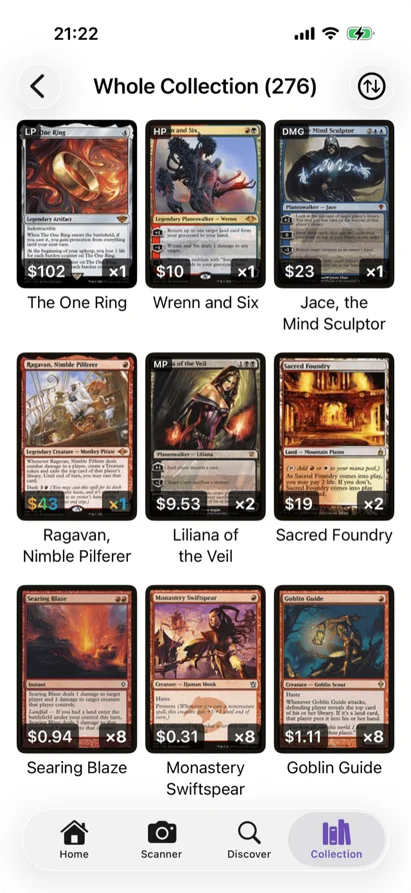
For scanning, I’d present the front face, check the result, and add the physical copy once. Eldwyn’s scanner has face-aware name matching, so a name on either face can match the combined card name. That’s useful recognition support, though I’d still check the selected printing when a card has several editions. The set code and collector number do more to settle that question than the name alone.
Don’t make a second scanning pass through the backs as another batch of owned cards. Looking at a reverse is harmless; adding it again can turn into another owned copy. A scanner can’t infer that the card you’ve put in front of it is the exact piece of cardboard you added five minutes earlier.
So, the little routine is: front up. Scan. Check the edition and finish. Set the quantity. Open the detail and flip it if you want to inspect the back. Done. No second pile of insects waiting to be counted.
The old list with both names in it
Eldwyn’s import code understands the relationship between a front-face name and the combined Front // Back name. That helps when one list says Delver of Secrets and another uses Delver of Secrets // Insectile Aberration. You don’t need to rename the card by hand just to make it recognizable.
It doesn’t answer a different question: did those two lines describe the same physical copies, or two separate stacks?
Suppose your old spreadsheet has four Delvers on a creatures tab and four Insectile Aberrations on a transformed-creatures tab. If both tabs were describing the same playset, the correct quantity is four. If you’ve got four copies in a binder and four more sleeved into a deck, it’s eight. Matching the names correctly can’t recover information the original spreadsheet never recorded.
I’d take a small sample before importing the whole file. Find one transforming card and one modal card you physically own, count them, and compare that count to the imported entries. Check their editions too. A foil from one set and a non-foil from another can legitimately need separate entries even though the names match. The broader collection migration guide covers the other fields that tend to disappear during this sort of move.
I’m less bothered by untidy names than by bad quantities. A spreadsheet showing only the front name can be perfectly accurate. An immaculate full-name export with every copy counted twice is a much worse starting point for a trade.
Meld cards are where you count two
Bruna, the Fading Light and Gisela, the Broken Blade are two separate physical cards. Their backs join to form Brisela, Voice of Nightmares. Wizards shows both halves in its Angels Commander deck announcement.
Log the Bruna copies you own and the Gisela copies you own separately, using the appropriate printing for each. One of each gives you two physical cards. Adding Brisela as a third owned card would invent something extra in the collection.
If you’re buying the pair, check that you’re actually getting both pieces. A photograph of the completed back is lovely, but the inventory needs to tell you which fronts are present. Owning Bruna alone doesn’t mean you own a complete Brisela pair.
The checklist and handwritten helper cards deserve their own small pile. Wizards calls these substitute cards: they stand in for a real double-faced card during play, and you still need the actual card. Its rules update explaining the name change is useful if you’ve been calling them checklists since Innistrad.
You can collect those accessories separately if you enjoy them. A helper marked “Bala Ged Recovery” doesn’t establish that you own another Recovery. If you’re inventorying a deck that uses substitutes, find the real cards stored alongside it before setting quantities. This is also an easy place to miss cards when part of your collection lives in built decks.
Keep the substitute with the deck, record where the actual copy lives, and give the real card a glance before closing the box. The handwritten land in the sleeve won’t help much if the sorcery it represents is still in somebody else’s binder.