A twelve-by-sixteen-inch print can give you a ten-by-fourteen-inch picture. The remaining inch on each side is white paper, and that distinction gets expensive if you’ve already ordered a frame. Collecting MTG art prints introduces a few measurements that never mattered when everything you bought fit in the same deck sleeve.
Martina Fačková’s Liliana of the Veil is the illustration above the rules box on Dominaria United card 97. It’s also one of nine artworks in the Studio Tommy collaboration announced on October 15, a release of signed prints that includes two illustrations from Reality Fracture. Looking at the artwork outside the card frame made me want to know rather more about the object being sold.
I’ve narrowed my checklist to two questions: what does this particular edition include, and what information will I wish I’d saved when the listing disappears?

Liliana artwork detail by Martina Fačková, from Studio Tommy’s promotional imagery. This is an illustration detail, rather than a photograph of a delivered print.
MTG art prints have their own edition rules
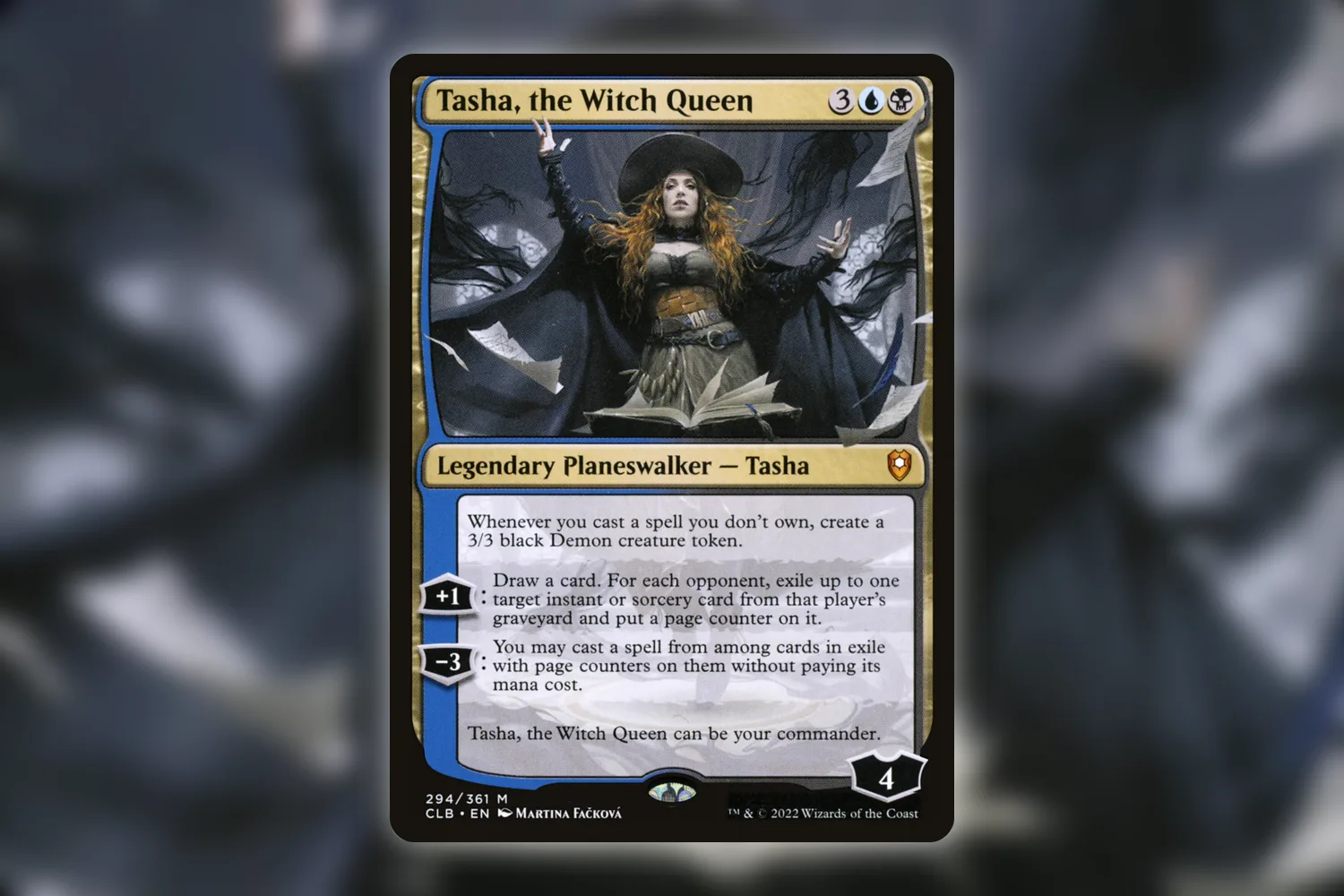
The Tasha, the Witch Queen listing makes a useful worked example. Studio Tommy’s collection page displayed the print at $67 when checked on October 20, 2026. That’s the price of the reproduction on paper. The playable card’s market price belongs to a separate object and a separate market.
The studio calls this a timed edition. Orders during a defined window establish the final number produced, after which the artist signs and numbers the copies. Its FAQ explains that process. A timed release can have a deadline while accepting every order received before it; you don’t automatically know the edition size when you buy.
A fixed edition gives you a different piece of information up front. Karl Kopinski’s collector print-set page describes a run of thirty sets, with five prints in each, signed and numbered certificates, and a named paper stock. That’s an example of a declared limit, rather than a live recommendation to buy that particular set.
An open edition generally leaves the total quantity uncapped. I’d still want to know whether it’s signed, whether different sizes exist, and who produces it. An unsigned open-edition print can be exactly what I want above a desk. I don’t need a fraction in the corner to enjoy the picture.
Although I do like the fraction. Annoyingly. A signature and a small edition make the object feel more connected to the artist, and I can imagine paying extra for that. Then I start asking how many other people will want this exact image, size, and edition later, and I have no useful answer. The number tells me the supply of that edition. It can’t tell me whether a buyer will appear when I need one.
The edition’s boundaries deserve a sentence in your records. Does the limit apply to this size, this paper, this signature color, or every reproduction of the image? If the listing leaves that unclear, ask the seller. A numbered small print and a larger open-edition version could be different offerings; reading one label won’t settle the other.
Read past the signature
For the Liliana print, the studio specifies a 12×16-inch sheet containing a 10×14-inch image, a cotton-rag paper substrate, and a giclée reproduction. It also says the edition will be signed and numbered by Fačková in gold. Those are much more useful details than a photograph of a nice-looking rectangle over somebody’s sofa.
Giclée describes inkjet printmaking for art reproduction; paper manufacturer Canson explains the term’s origins. I’d still look for the paper, ink information where supplied, dimensions, and who is making the reproduction. The word alone leaves most of that unanswered.
The printed picture of a signature and an artist physically signing your sheet are different things. Read which one is promised. If the art itself already contains a signature, the presence of that shape in a product photograph doesn’t establish that the copy will be hand-signed. Here, the written listing makes the commitment explicitly. I’d save it with the receipt.
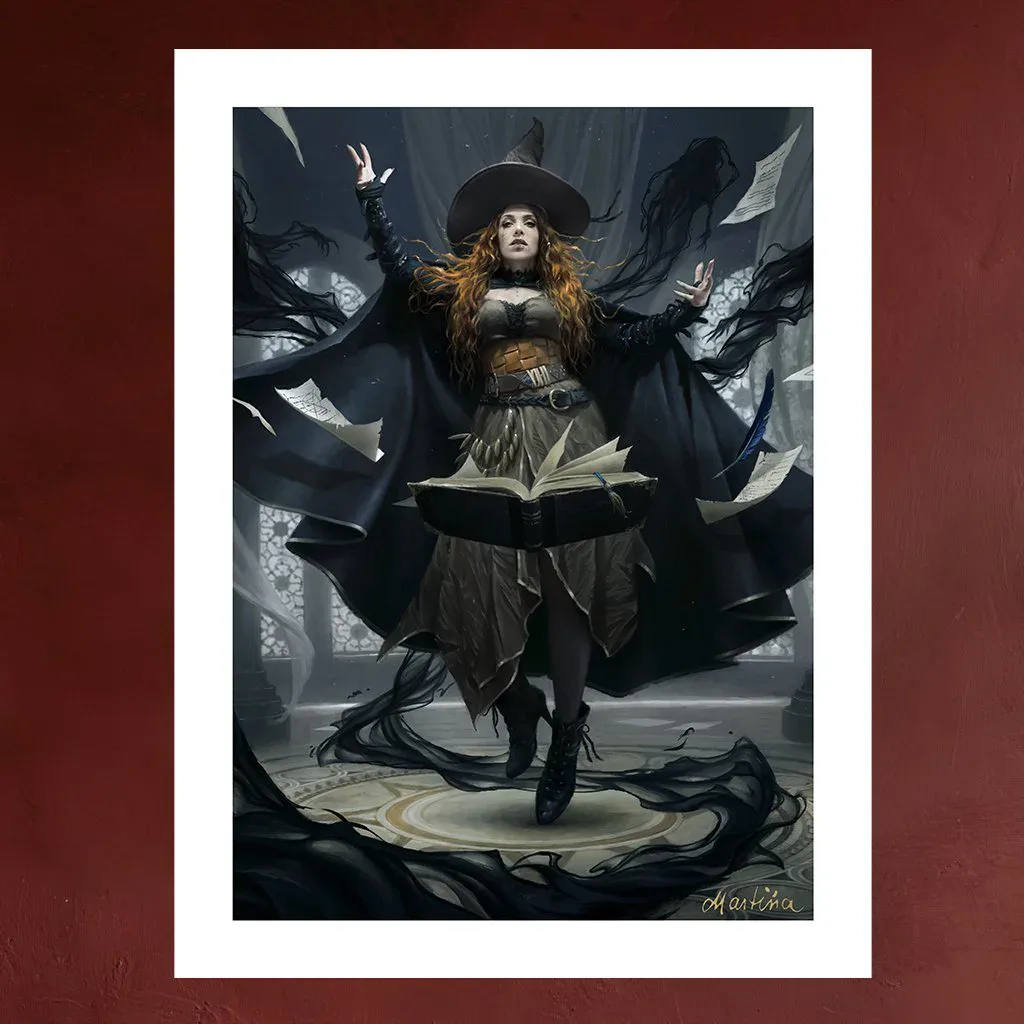
Promotional mockup from Studio Tommy’s Tasha listing. Artwork by Martina Fačková; the listing says finished copies will be signed and numbered after the order window closes.
I’d begin with the artist’s own website, then follow their links to a studio, agent, or gallery. That gives the order a traceable route. A familiar image on a marketplace listing needs more checking: who is selling it, who printed it, and where does the claim of artist involvement come from? Search results can put very different products next to one another.
The small blank-backed objects sold from artists’ binders are another category again. Our artist-proof guide covers those. For this purchase, I want a larger reproduction with its own production details, rather than another card-shaped object to identify.
After a Dominaria United draft, I brought home a shop’s leftover promotional poster and put it under the sofa overnight to flatten it. I found it again when I moved. The sofa had kept it wonderfully flat. The cat had removed a small crescent from one corner. I remember this whenever I start imagining that owning an archival print will somehow make me an archival person.
The listing price leaves a few things out
The Tasha page gave the order deadline as October 20 at noon EDT. I’m treating it as a dated example, rather than assuming an order button will still work when you read this. Its fulfillment wording allows up to six weeks, with shipment promised by the end of November. Shipment and arrival are separate dates, especially when the package has an international journey ahead.
There is also a regional catch. As checked on October 20, the studio’s FAQ says it is temporarily unable to ship to the EU. I’d resolve that before spending time choosing between illustrations. The product page also says destination-country charges are excluded from its international shipping price. Use the seller’s current checkout and delivery terms for your own address.
The $67 listing ships unframed. I’d get a framing quote before deciding the finished piece fits my budget, including the mat and glazing I actually want. A print that looks inexpensive beside a Collector Booster box can become a much larger purchase once it’s ready for the wall. That can still be a perfectly enjoyable purchase; I just want the whole amount in front of me.
Paper size, image size, frame size. Three numbers. Write them down. Then measure the wall. Yes, the actual wall. I have an incredible ability to imagine a comfortably sized gap between two shelves that turns out to be occupied by a light switch.
The card-display article covers more of the framing decision. For paper prints, the Library of Congress care guidance gives a sensible starting point: clean hands and a clear working surface, protection from light, and no self-adhesive tape or glue on the sheet. I’d take the print to a framer before experimenting with flattening or mounting it myself.
Save the listing before the tube arrives
I would give an art print a separate inventory entry from the card whose image it shares. In Eldwyn, my playable Tasha remains a card I can put in a deck. A print on the wall adds zero playable copies. A small spreadsheet or a folder of records works better for the print’s dimensions, edition information, and photographs.
My record would look roughly like this, with the actual edition number added after delivery:
| Field | What I’d save |
|---|---|
| Artwork | Card title, artist, and the specific illustration; a card can have several artworks |
| Edition | Publisher, release date, edition description, and the number on my delivered copy |
| Object | Printing process, paper, sheet dimensions, and image dimensions |
| Signature | What was promised, plus a clear photograph of the signature and numbering received |
| Purchase | Seller, order date, receipt, currency, print price, shipping, and any additional charges |
| Evidence | Saved listing or PDF, order confirmation, and photographs of the whole sheet and its back |
| Location | Where the print lives, its condition on arrival, and any later framing work |
The purchase-price tracking guide makes the same distinction for ordinary cards: the amount paid and an estimated current value answer different questions. I’d keep framing expenses identifiable within the print’s record. A costly frame doesn’t establish that someone else will pay the combined bill.
If the tube arrives damaged, photograph the packaging and the print before discarding anything, then follow the seller’s instructions. Keep the identifying photographs somewhere you can find without taking the frame apart. A picture of the front alone can leave out precisely the little inscription that distinguishes your edition.
For a first print, I’d pick one illustration I want to look at every day and one size I have room for. Save the listing, price the framing, and find somewhere to put the tube while you arrange it. Somewhere the cat can’t reach, ideally.