A guy I used to draft with had a foil Sheoldred, the Apocalypse zip-tied into a cheap frame from Michaels, hanging over his desk. This was maybe eight months after Dominaria United came out, so the card was still worth real money, and every time I visited I had a quiet please-don’t-fall-off-the-wall anxiety on his behalf. Then one visit I noticed the reds had gone kind of brownish. Not ruined, just duller than they should’ve been. His desk faces a west-facing window that gets full sun most afternoons.
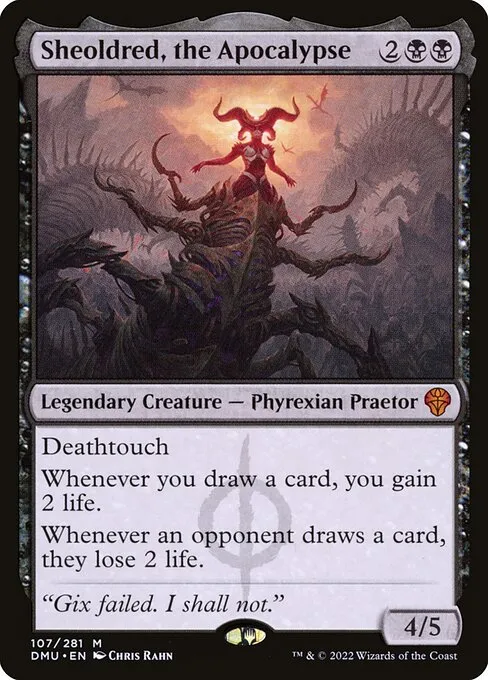
That’s basically the whole tension here, and I don’t think there’s a clean answer to it. You want to display your best pulls somewhere other than a binder page for the rest of eternity, and that urge isn’t a crime against the hobby. But actual sunlight, and a fair amount of indoor lighting too, does real chemical damage to card ink over time, and pretty much nobody warns you about it until the damage is already sitting on the wall.
What actually happens to a card behind glass
The mechanism is boring but worth knowing. UV light breaks down the specific molecules in ink that reflect certain colors back at your eyes, reds and yellows first, which is annoying because red and yellow show up in a huge share of Magic’s card frames. A cheap picture frame with ordinary glass, or an off-brand acrylic display case, blocks maybe a third of that light if you’re lucky. It looks completely fine for the first year. It’s the fifth year where you notice your favorite red spell has gone a little muddy and you can’t quite say when it happened.
Foils have it worse, and heat is the bigger villain there, not light. A frame mounted near a window or a heating vent turns into a slow oven for whatever’s behind the glass, and foil backing curls and separates under sustained heat the same way it does in a hot car. I’ve written about foil curling before, and hanging a foil on a sunny wall is basically running that experiment on purpose, just slower.
Which copy actually goes in the frame
Here’s the part that stops me more than the light does, honestly. Once a card’s out of its sleeve and mounted, taped, or glued into a frame, you’ve made a decision about it. Best case, you can pry it back out years later and it’s just been sitting flat behind glass the whole time. Worst case some frame kit used adhesive photo corners, or actual tape, and now there’s residue on the back of a card that would’ve graded Near Mint. Condition is most of what determines a card’s price, and “I had it framed for a few years” is not a sentence a buyer wants to hear on a four-figure card.
Although, let me push back on myself for a second, because plenty of expensive cards get handled and displayed constantly and the market doesn’t seem to punish it that hard. Signed and altered cards are worth real money specifically because someone did something irreversible to them. A tournament-played, slightly whitened Revised dual land still sells fine. Maybe the never-touch-it mentality is more collector anxiety than actual resale math. I go back and forth on this one. My honest answer is it depends entirely on which card and which owner you’re asking.
What I’ve actually landed on is a distinction between the card and the copy. If you own four Sheoldreds because you main-decked her in three formats and then drafted a fourth by accident, frame one. You don’t need four physical objects doing identical jobs inside sleeves, and one of them aging slightly over a decade of being looked at isn’t a financial event. If you own exactly one and it’s the valuable one, that’s a different conversation, and the better move is usually a cheap second copy, or even a decent proxy, for the wall.
Nobody frames the actual Black Lotus, which is the extreme version of this point. Scryfall doesn’t even carry a market price for it. It trades at auction houses, not on TCGplayer, and every serious owner I’ve read about keeps it in a safety deposit box, not on a shelf. The framed “lotus” hanging in someone’s game room is almost always a reprint, an alter, or a really good print run off some third-party shop’s site.
If you’re doing it anyway
So yeah, if you’re gonna display something, there’s basically three tiers here and I’ve messed around with two of them. The cheap tier is a magnetic one-touch case, the kind you can get five of for under ten bucks, and honestly the acrylic ones block more UV than people give them credit for, as long as you’re buying acrylic and not flimsy PVC toploaders dressed up as display cases. The middle tier is swap-frame kits, a wood frame plus a magnetic UV-treated insert, the same style you see MTG artists showing off proofs with at conventions. Then there’s actual archival picture framing, museum glass or UV acrylic glazing, acid-free mat board, the works, which is honestly the only option doing real, lasting UV protection instead of “better than a bare shelf.”
Ultra PRO sells an acrylic booster box display rated around 66% UV blocking, which is fine for sealed product you’re not emotionally attached to. Custom framing services built for actual art, the Framebridge and Level Frames types, and most local frame shops, offer glazing rated near 99% UV block, the same spec museums put in front of paintings. Cost scales mostly with size, not with what’s inside the frame, so one card in a generous mat runs about the same as a nine-card grid in a tighter one.
One more wrinkle worth knowing. If a card’s already graded and slabbed, you’ve mostly solved this problem already. A PSA or BGS slab is its own sealed display case, UV and adhesive concerns both handled, and there are stands built specifically to hold slabs upright on a shelf. The catch is grading only pencils out past a certain price point, so it’s not a universal fix, just one more option in the pile.
Picking what actually deserves the wall
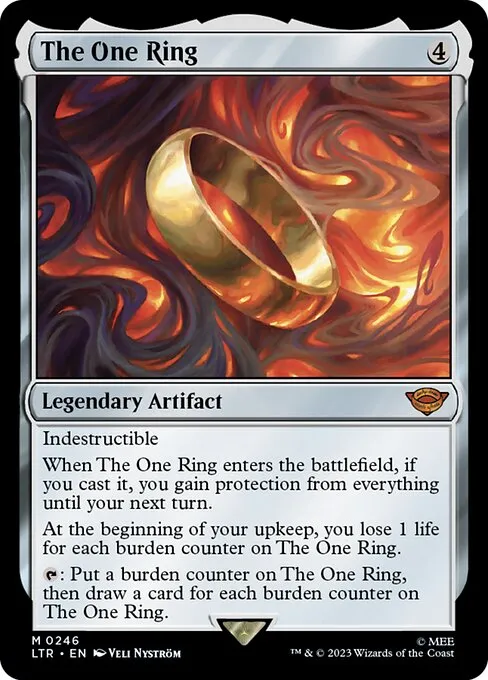
Value and “worth displaying” aren’t quite the same axis, either. A duplicate fetchland is worth more than most rares in a given set and nobody wants that on their wall, it’s tan cardboard with a landscape on it. The One Ring is worth displaying regardless of whether you own the plain pack version around $110 or one of the pricier treatments, because at this point it’s a cultural object, a card people who’ve never played Magic would still recognize. Iconic beats expensive for this particular call, in my experience, though I’m sure someone out there would die defending their foil Doubling Season.
The part I think about more than any of this, actually, is just knowing which cards in a big collection are even worth the conversation. I scanned my whole binder into Eldwyn a while back mostly out of curiosity, and it turned up a foil Words of Wind from Onslaught I’d completely forgotten I owned, sitting around forty bucks. Not framing money, though it did get me actually looking at the top of my collection by value instead of by memory, which turned out to be a pretty different list than I expected. Half my “obviously worth something” guesses were wrong, and a couple of genuine sleepers had been sitting in the bulk rare pile the whole time.
If you’re going to put something on the wall, pick from that real top-of-collection list instead of going off memory, and spend the extra money on the UV glazing instead of the frame with the nicer edges. The edges don’t do anything for the ink.