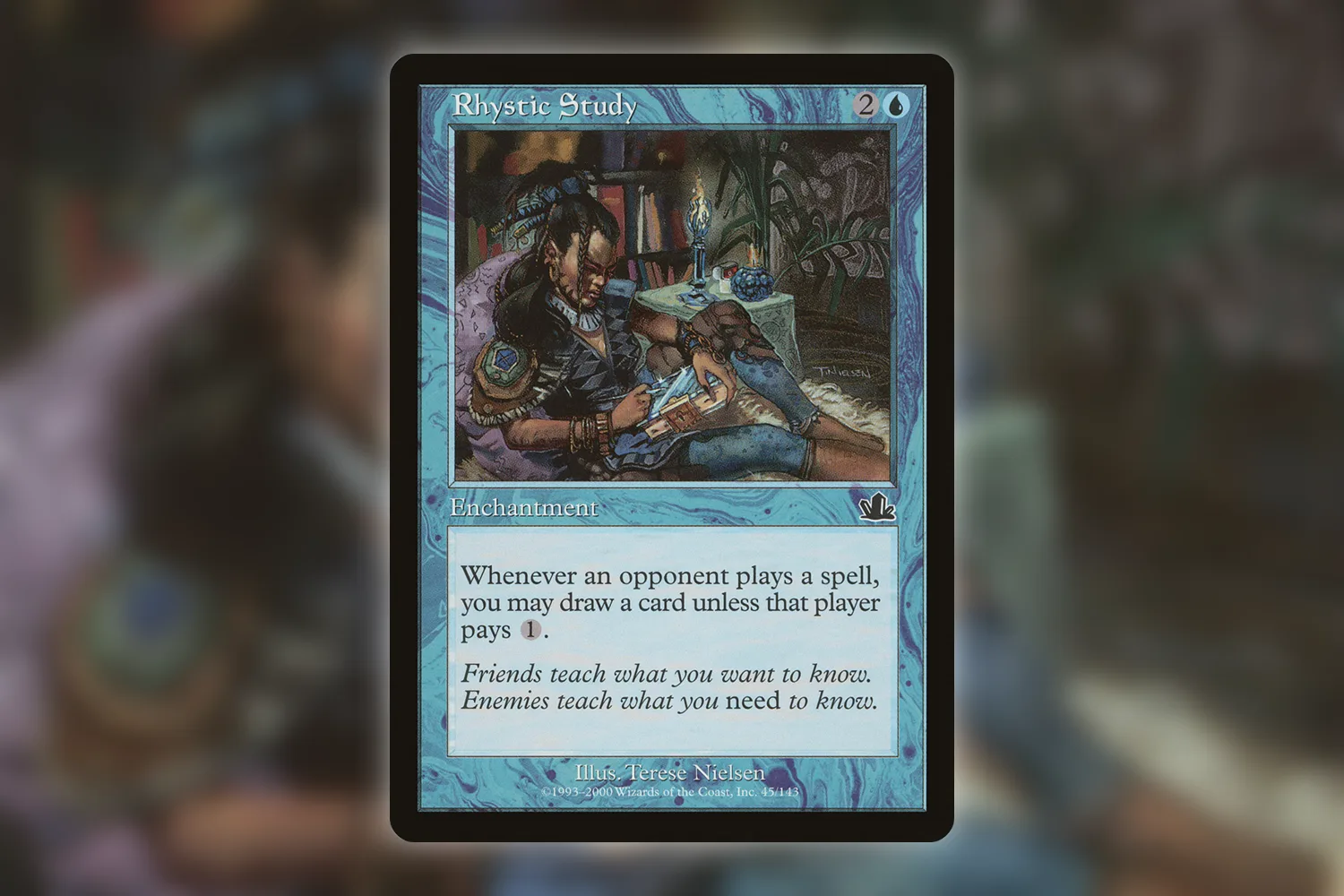
The message usually shows up in the store’s Discord on a weeknight. “Moving across the country, selling my whole collection, three binders and a couple of boxes, make me an offer.” No list. No photos except one blurry shot of a binder page with a Rhystic Study in the top left corner, which is doing a lot of work in that photo.
If you’ve ever answered one of those, you know the problem. You have maybe a day before someone else gets there first, and you’re looking at somewhere between 3,000 and 10,000 cards. Pricing every single one is out. Guessing is how you either insult the seller or lose a few hundred dollars. Buying a whole MTG collection comes down to pricing the right 5% of it carefully and treating everything else as bulk, then offering a percentage you can defend out loud.
Where the money in a collection actually is
Almost every collection I’ve looked at follows the same shape. A handful of cards carry most of the value, a middle band of one-to-five-dollar rares adds up to something real, and then there’s a mountain of commons that’s worth about what the box it came in is worth.
A typical quitting Commander player’s binder might have a Prophecy Rhystic Study (around $65), a Smothering Tithe from Ravnica Allegiance (about $55), a Return to Ravnica Cyclonic Rift (about $30), and then fifteen copies of Sol Ring from various precons at roughly $2 each. The first three cards are worth more than all fifteen Sol Rings put together several times over. And the Sol Rings are worth more than the 4,000 commons in the long box.
So the order of operations is triage first, pricing second.
Pull every rare and mythic, every foil, every card with a nonstandard frame (borderless, showcase, extended art, anything old-bordered), and every land that isn’t a basic. That pile is usually 300 to 800 cards, even in a big collection. Everything else goes in the bulk pile and gets valued by the thousand. If you want a system for the physical sort, I wrote up how I tackle an unsorted collection, and the same color-then-rarity pass works here, you just stop after rarity.
Scanning the pile that matters
This is the part that used to take a whole weekend with a laptop and a search bar. Now I sit down with the triage pile and scan it with Eldwyn, one card after another, and the running total builds up as I go. Five hundred cards is about an hour if you don’t stop to admire anything, which you will.
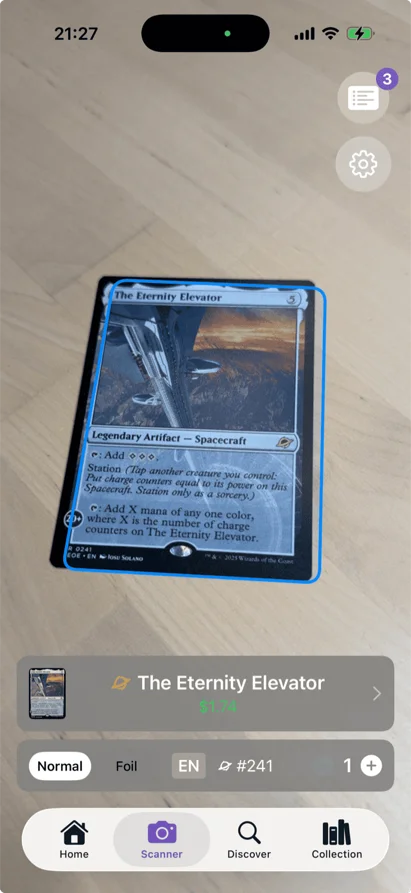
Watch the printing. The app reads the set symbol and collector number, but you still need to glance at each result, because the difference between printings is where a collection’s value quietly goes wrong. A Guilds of Ravnica Watery Grave is around $10. The original Ravnica: City of Guilds printing is closer to $17. Over a binder full of shocklands and staples, that adds up to a real gap between what you think you’re buying and what you’re actually buying.
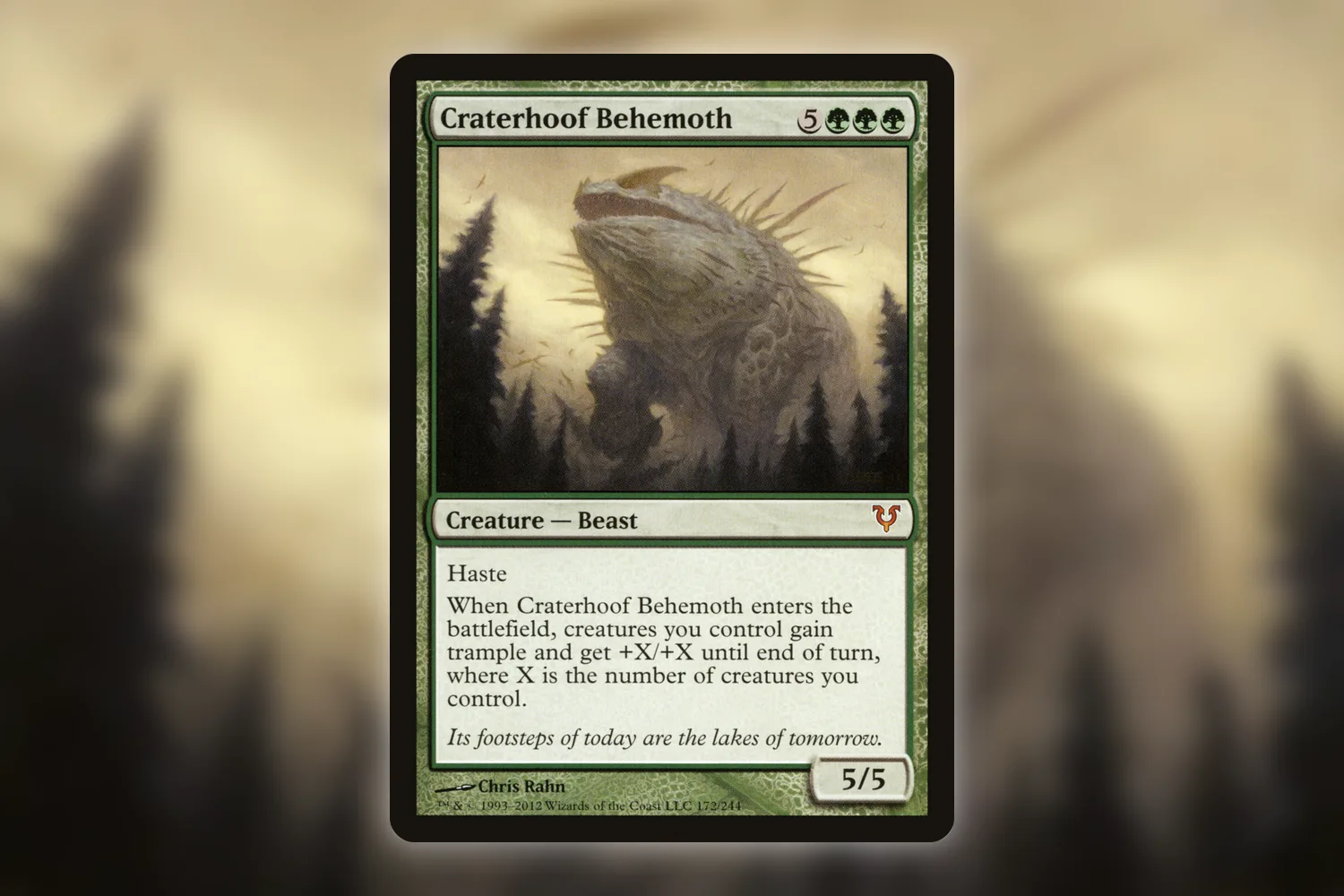
Foils are the other trap, and I have a personal history here. Years ago at a trade night I bought a small binder off a guy and the centerpiece was a Craterhoof Behemoth from Avacyn Restored, sitting in one of those holographic-backed sleeves that everyone used for about six months. I priced it in my head as a foil and paid accordingly. Got home, took it out of the sleeve. The sleeve was the foil. Non-foil Avacyn Restored Hoof is about $23 today, the foil about $55, and I’d basically paid foil money for a non-foil card plus a very shiny sleeve. I still have that sleeve somewhere. Not the Hoof, though, I traded that away for something I also overpaid for, I’m pretty sure.
While you’re scanning, flag anything worth more than about $100 for a closer look before you count it. Old dual lands, Revised especially, are counterfeited constantly. A Revised Underground Sea is around $1,080, which is the kind of card that’s either the best thing in the collection or the reason you lose money on the whole deal. The light test and the loupe check from our counterfeit guide take two minutes per card. If the seller won’t let you take a card out of the sleeve, that tells you something too.
How much to actually offer
Once the pile is scanned, you’ve got a market total. That’s the number the internet says these cards would fetch one at a time, listed individually, sold to strangers, shipped one envelope at a time. You’re not going to get that, and neither is the seller, which is why they’re messaging the Discord instead of listing everything on TCGplayer.
The benchmark I’d anchor to is the buylist. A store like Card Kingdom or your LGS will pay the seller roughly 40-60% of market on most cards, closer to the top of that range for heavily played Commander staples and closer to the bottom for casual rares nobody’s hunting. (There’s a longer breakdown of those spreads in where to sell your MTG cards.) That’s the seller’s real alternative. Your offer should beat it a little, because you’re saving them the shipping, the grading disputes, and the three weeks of waiting for a check.
Here’s how I’d split it:
- The top cards (anything over about $20): 55-65% of market. These are liquid, you can sell them quickly, and the seller probably knows what they’re worth.
- The middle band (roughly $1 to $20): 35-45% of market. This is the stuff that takes real effort to sell, and you’re the one taking on that effort.
- Bulk: by the thousand. Unsorted commons and uncommons go for around $3-5 per 1,000 between players (more on that math in the bulk lots post), and bulk rares maybe a dime each if you’re being generous.
Say the scan comes back with $700 in top cards, $700 in the middle band, and about 5,000 bulk cards. That’s 60% of 700, plus 40% of 700, plus about $20 for bulk. Call it $720 total, against a market total of roughly $1,420. Right around half.
Is half fair? I go back and forth on this. When it’s a stranger on Facebook Marketplace, half feels completely reasonable, since that’s more than a buylist pays and you’re doing all the work of reselling. When it’s someone from your own Commander table who’s moving away, though, half starts to feel stingy, and I’ve definitely rounded up for friends. But rounding up for a friend is a gift, and it’s fine to give one, I just think it’s better to know that’s what you’re doing instead of pretending the math says so. The math says about half.
Show them the list
So, the thing I’d actually do differently from most people. Show the seller your numbers. Like, literally hand them the phone. “Here’s what everything scans at, here’s the market total, here’s what Card Kingdom would pay you for the top twenty cards, here’s my offer.” People get weird about this because it feels like it weakens your position, but honestly it’s the opposite, it’s way harder to argue with a list than a number someone pulled out of the air. And if they come back with “I think the Tithe is worth more,” cool, now you’re talking about one card instead of the whole deal.
The other benefit is that it protects you from your own mistakes. I’ve had a seller point out a card I’d mis-scanned as the cheap reprint, which, yeah, cost me money on that deal, but it would’ve cost me more in trust if they’d found it later.
A few things that should make you pause or walk away:
- The seller won’t let you look through everything, only the binder pages they choose.
- The “collection” is pre-picked. The rare slot in every pack-shaped pile is suspiciously empty.
- The asking price is pinned to TCGplayer Market and they won’t move. At that point they want a retail sale, and they should list the cards themselves.
- Any high-value card that can’t come out of its sleeve or top loader.
None of those is automatically a scam. A lot of sellers just don’t know how buying a collection works, and they’ve seen a price online and anchored to it. But you’re the one holding the risk once money changes hands, so you get to be picky.
The last thing I’d say is to keep the scan after you buy. That list is your purchase record, which matters if you ever sell the good stuff and want to know whether you made money. Most people buy a collection, sell the top ten cards, and never actually find out if the deal was any good. I’d like to know, at least. Even when the answer is a shiny sleeve.