“I’ve got your blue card” is a terrible inventory system. Which blue card? The foil? The one you lent out last Friday, or the one that’s been living in somebody else’s Commander deck since spring? Tracking MTG card loans gets awkward precisely because the handoff feels too friendly and too small to write down.
I like lending cards. Someone gets to try a deck without buying the expensive bit, and a card that would’ve spent the evening in a binder gets played. I also think every card that leaves the room needs a return plan. Both opinions fit comfortably in the same conversation, usually while somebody is hunting for matching sleeves.
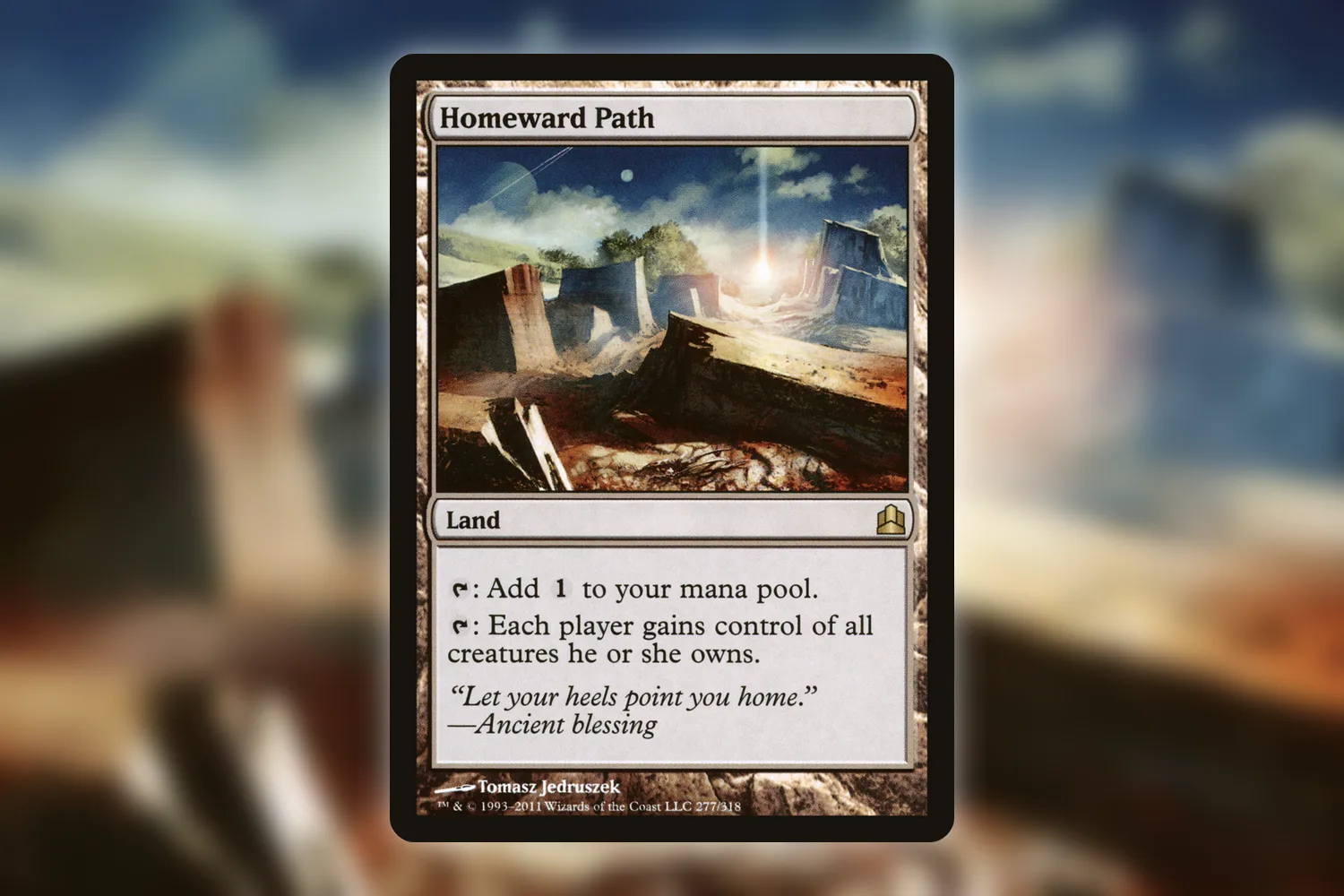
Homeward Path has the right general sentiment for this, although its actual ability only gives players control of creatures they own. Getting a borrowed instant out of a friend’s backpack requires a message.
Track MTG card loans while the card is still on the table
The useful moment to make a record is before the borrower puts the card away. Everybody can still see the printing, you can photograph the back if there’s a mark on it, and the reason for borrowing it is fresh. Trying to reconstruct the exchange three months later adds a surprising amount of detective work to a hobby about cardboard wizards.
My preferred record has a line per printing, with these fields:
- Card name, set code, collector number, language, and finish.
- Quantity and a brief condition note.
- Who has it, plus the date it left.
- Where it came from in your collection.
- When you expect it back and the loan’s current status.
The set code and collector number save you from a name-only record. “One Cyclonic Rift” could describe several different cards on a marketplace. “One English non-foil RTR 35” gives both people something concrete to check.
Here’s a fictional entry you can copy into a note or spreadsheet:
Loan: L-001
Borrower: Alex
Out: 2026-10-08
Card: Cyclonic Rift
Printing: RTR 35 / English / non-foil
Quantity: 1
Condition: small white mark, back lower-left; photos attached
Home: blue trade binder, page 4
Return: next Commander night, October 15
Status: out
Boundary: return this copy; ask before passing it to anyone else
One shared message can hold all of that. Ask the borrower to confirm it, then keep the message somewhere you can find it. A photo alone usually misses the return date; a text alone misses the little corner mark. Together they’re useful, especially when somebody owns another copy of the same card.
I’d keep the condition wording ordinary. “Small white mark” is something you can point at. A disagreement about whether a card qualifies as lightly played adds a second argument before you’ve resolved the first. If you need a starting point for examining a card, the condition guide covers the usual wear spots.
Owned, available, and currently with Alex
A loan changes where a card is and whether you can use it. Ownership stays with the lender. Your inventory needs to preserve those distinctions, or it’ll quietly tell you to trade something you can’t hand over.
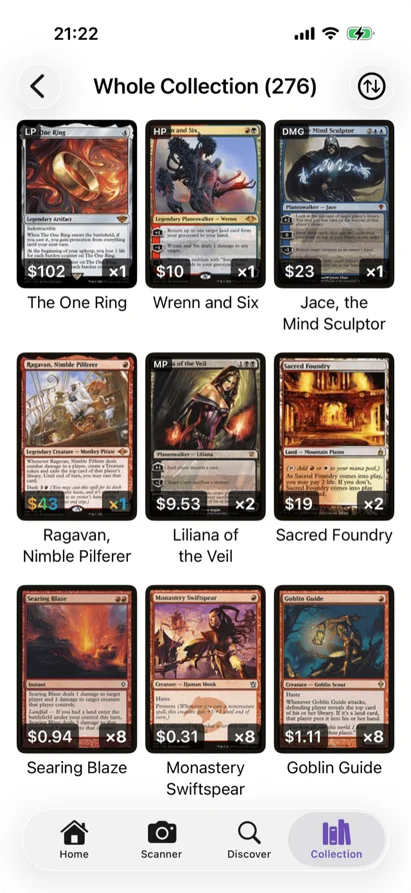
For a collection app or spreadsheet, I’d record three separate things: the owner, the current holder or location, and availability. A card can read “mine / with Alex / unavailable.” If your tool supports only folders, a folder named “Loaned out” can work, with the borrower and return date in whatever notes you have available. Check whether moving between folders actually moves the existing entry or creates a duplicate before doing a whole batch.
Keep the loaned copy in your owned total, exclude it from cards available for trade, and avoid adding another copy just to represent its temporary location. For cards you’ve borrowed, use a separate record that clearly identifies the owner and stays outside your own collection valuation. Some tools make that easy. Others need a separate sheet. I wouldn’t assume a folder automatically changes how an app calculates ownership.
This is close to the problem of cards tucked away in built decks, with an extra person attached. A deck location tells you where to look at home. A loan location tells you who to contact before building Friday’s list.
So, yes, write it down. Right there. Someone’s opening a snack, the next game is starting, your phone’s under the playmat. It can still be one message. “RTR Rift, non-foil, back Thursday?” Get the reply. Add the longer entry when you have a minute, while the details are still there.
A dedicated tool is optional. Lendcraft documents a purpose-built approach with lending and return events, while a shared spreadsheet can do the ordinary job perfectly well. Pick something you can check from your phone at the table. If the record lives on a laptop you open twice a month, the handoffs will outrun it.
A whole deck needs its own snapshot
Lending a Commander deck is a nice way to get someone into a game. Hipsters of the Coast’s case for playing precons more often includes that benefit: a spare deck lets someone try the format before buying one. I’d like that to stay an easy, generous thing to do.
For a deck that goes home with someone, save the list as it exists at handoff. A link to a deck you keep editing will eventually describe a different pile. Export or copy a dated version, record the exact printings of any cards you particularly care about, and include the commander, tokens, and accessories you’ve actually handed over. Note the box and sleeves too, if you expect those back.
Agree whether the borrower can make changes. If they’re trying upgrades, ask them to keep removed cards together in a labeled pocket or small box. Otherwise your deck comes home apparently complete, and three original cards are still in their sorting pile. A count can catch a missing card; only the saved list can catch a swap.
I’m tempted to say this is excessive for an unchanged precon. Actually, sometimes it is. For a deck lent across the table and returned after one game, a quick count and a glance through the cards can be plenty. I’d reserve the detailed snapshot for a deck leaving the venue or staying with someone for a while. I don’t know a universal price threshold where this becomes worth the effort; a favorite deck can be troublesome to rebuild even when its singles are cheap.
Decide how a replacement would work before you need one
An ordinary non-foil Return to Ravnica Cyclonic Rift was $31.66 in Scryfall’s USD data when checked on October 8, 2026. The foil of that same printing was $45.01. Those are reference prices, with shipping and condition still to account for. A record that says only “Rift” leaves room for two people to picture different replacement costs.
For a card you’re reluctant to lose, agree whether you expect the same printing and finish back, or whether another playable copy would be acceptable if something happens. Record a dated value if it helps explain the scale of the loan, and say whether that number is merely a reference or an agreed replacement budget. Prices can move during a long loan.
I’d also ask before letting a borrowed card travel to a third person. Your loan log can track Alex; it gets much less useful when Alex lends it to someone whose name you don’t know. Put that boundary in the original message so nobody has to guess.
Declining a loan is fine. A card with a signature or sentimental history may be one you want to keep with you regardless of what an ordinary copy costs. Offer a different copy if you have one, or help the friend find an alternative for their deck. There’s no need to invent a market-price excuse for wanting to keep your own card.
Check returns before you close the entry
When cards come back, compare the printing and finish, check the condition against any photos, then update the quantity returned. If three of four cards return, leave the fourth open on its own line. “Mostly back” is how a missing card disappears into a completed task.
Put the returned cards in their home locations and restore their availability. Keep the original loan record with the return date rather than deleting it, especially if a friend regularly borrows the same cards. The next handoff deserves a fresh entry.
For an overdue loan, I prefer a specific request: “Can you bring my RTR Cyclonic Rift on Thursday? I need it for the weekend.” It gives the borrower a card, a place, and a date to act on. If Thursday doesn’t work, agree a new date and change the record. A reminder that just says “my cards” sends both people back to guessing.
Before ordering a replacement for something you can’t find, check the open loans alongside your decks and binder. The want-list check gets more useful when it can distinguish a missing copy from one that’s due back next week. And if you’re the borrower, put a reminder on your own phone too. The lender would probably enjoy spending the next game night playing their cards.